


Research Center

Baltimore Reclaims Its Charm
Employment growth, coupled with the metro’s relatively affordable rental rates, should generate a solid absorption of the new apartment units coming online this year.

Change of Seasons
As the first quarter of 2017 passed, we have certainly faced multiple intersections, ranging from political shifts to demographic changes and from technological disruptions to accelerating urbanization. These alterations are placing tremendous pressures on global economies.

Top Real Estate Education Programs 2017
As the demand for higher education increases across industries, the number of universities with real estate-specific programs continues to grow. Here is the 2017 CPE-MHN Leaders in Real Estate Education.

Twin Cities’ Tight Quarters
Rent growth exceeded the national average over the last year, due to steady employment gains, an increasing population and limited housing supply, as apartment completions slowed in 2016.
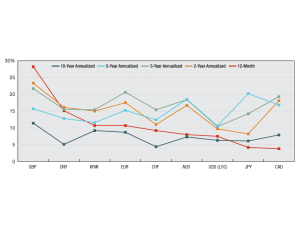
Currency Return
For U.K. based investors, the depreciation of the pound makes unhedged U.S. performance look rather attractive. For Canadian or Japanese investors by contrast, the picture changes depending on the return horizon.
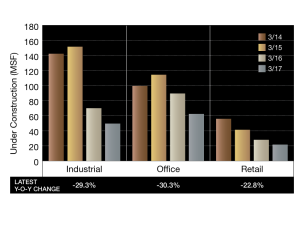
Development
Office construction peaked in March 2015 at 114.5 million square feet, but the sector experienced a 22 percent decline in construction in the following year.
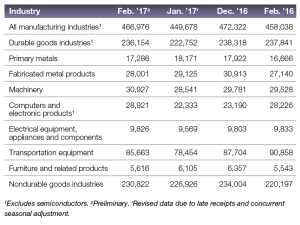
Industrial Demand
Furniture and related products ranked among the bottom categories for month-over-month new orders (down 8 percent), along with primary metals (down 4.9 percent).
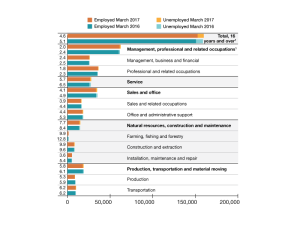
Employment Picture
For unemployment, the most significant decrease was in the installation, maintenance and repair occupations with 30 percent, followed by professional and related (-22.9 percent) and office and administrative support (-18.3 percent).
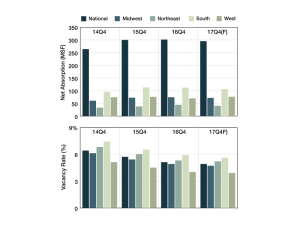
National Vacancies
Vacancy rates decreased year-over-year in all the regions, with the largest change occurring in the Northeast, which fell from 6 percent in the fourth quarter of 2015 to 5.3 percent in the fourth quarter of 2016.
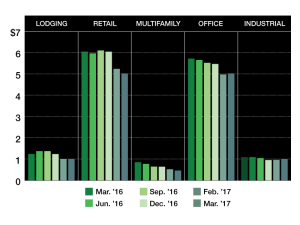
CMBS Delinquencies
Delinquencies continue to drop year-over-year from March 2016 to March 2017. Multifamily delinquencies had the largest decline of 46.1 percent or $392 million.