
The Best Office Amenity? Versatility.
From cafes morphing into cocktail bars to cozy focus spaces doubling as meeting rooms, adaptability is in high demand.
A 50-person boardroom used a few times a year is a cost neither tenants nor landlords can justify anymore. In a dislocated office market, flexible amenities have become a boon for both parties, replacing static square footage with shared spaces that earn their keep.
Buildings that provide flexible gathering and working areas free tenants from that cost, said Jamie Feuerborn, a senior managing director with Savills. “Ideally, landlords that offer flexible conference space also manage it, and provide high-end catering and technology for smooth meetings,” she added.
Still, landlords designing and managing shared spaces need to keep track of workplace trends and what tenants will actually use and value enough to warrant a premium.
“It’s important to design spaces for multiple services,” observed Lindsey Feesl, senior design manager of asset services at JLL Design, part of JLL’s project and development services business.
Many aspects of current coworking design reflect the flexibility some more traditional spaces are aiming for. Image courtesy of Industrious via CBRE 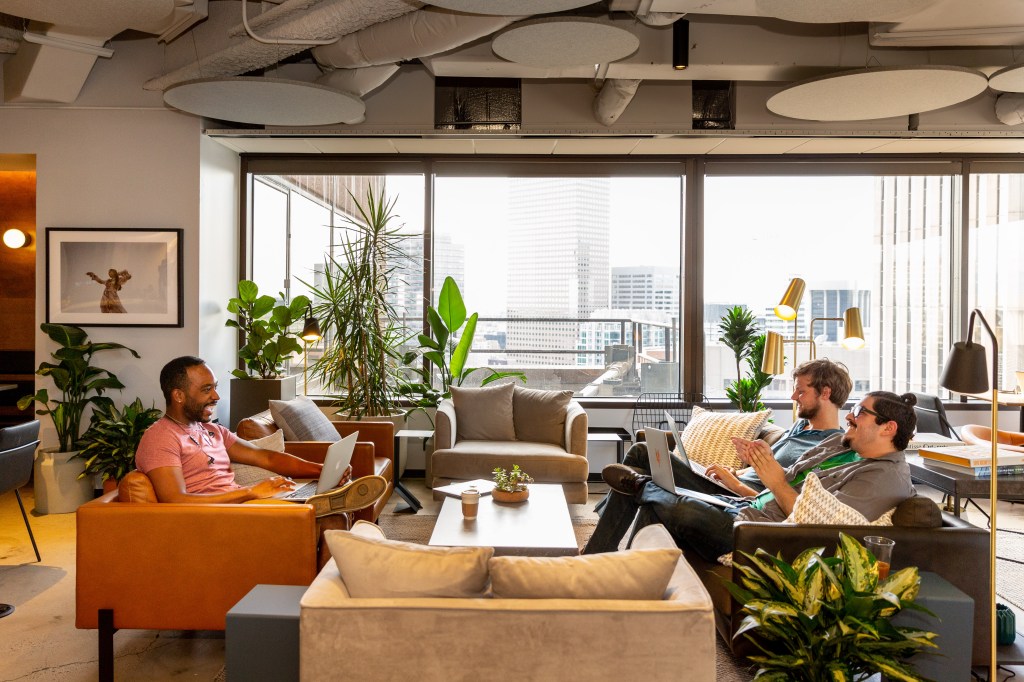
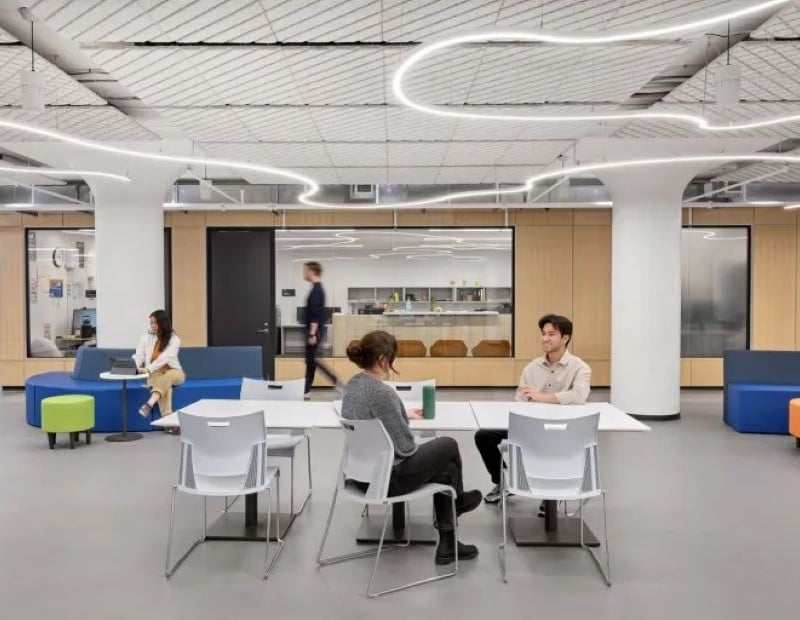
Versatility is often top of mind when it comes to redesigning common areas or collaboration spaces in office settings. Image courtesy of Industrious via CBRE 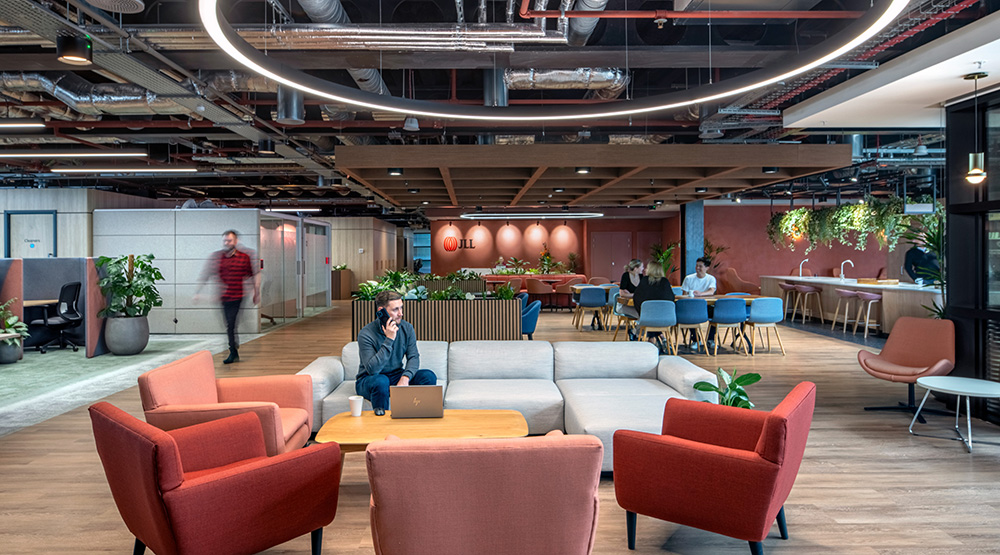
JLL’s regional office in Birmingham, England, was designed for future flexibility. Reconfigurable spaces include the Agora, which supports internal and external events, community gatherings, meetings, collaboration and social activities. Image by Jonathan Banks; courtesy of JLL 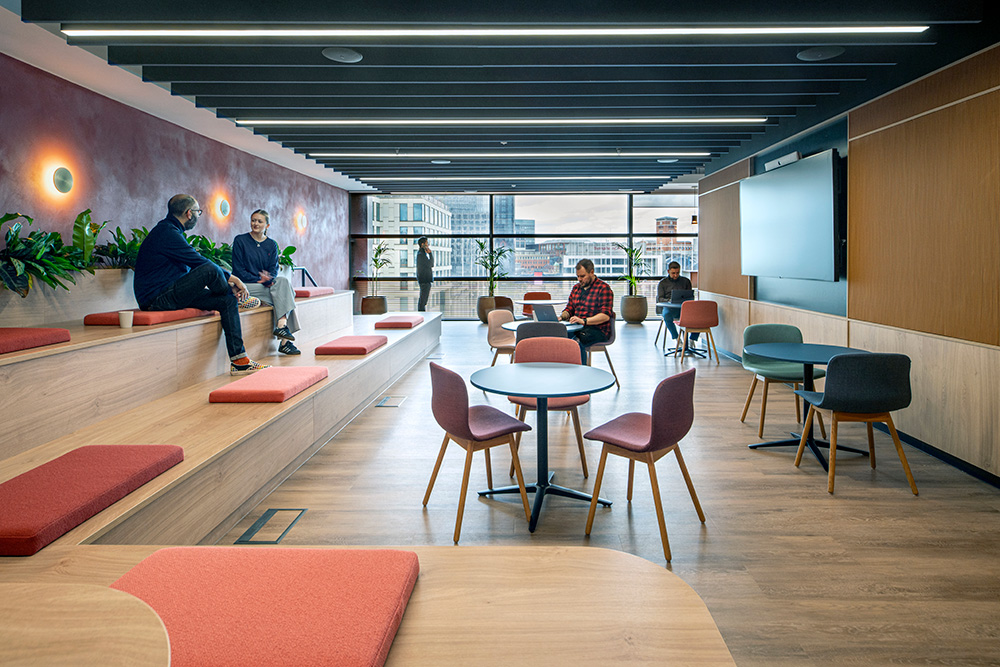
An other view of JLL’s regional office in Birmingham, England, was designed for future flexibility. Reconfigurable spaces include the Agora, which supports internal and external events, community gatherings, meetings, collaboration and social activities. Image by Jonathan Banks; courtesy of JLL 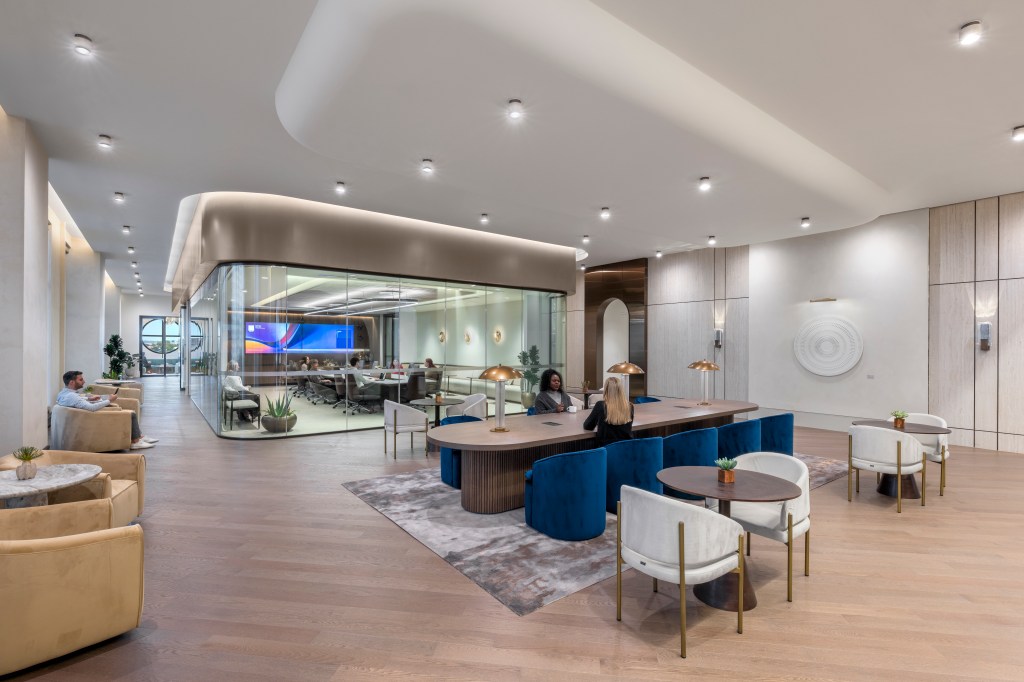
This Dallas CBRE office is a showcase of how flexible arrangements can accommodate the needs of today’s workforce. Image courtesy of Ware Malcomb via CBRE
“We design rooms with movable walls, modular millwork and wireless tech so a big cafeteria can become an event space, or a smaller wellness room can serve as a focus space with a movable desk. The more a room can be transformed, the more value it offers to tenants,” she detailed.
READ ALSO: AI-Driven Workforce Shifts Reshape Office Demand
Plenty of tenants are still working on enticing employees back to the office more often to collaborate, according to Greg Gomer, co-founder & CCO of HqO.
“We’ve found that employers and employees want fewer desks and more tables and lounge areas where they can meet informally,” Gomer noted. “Buildings that offer wellness space, podcast studios, coworking space and even nap pods are increasingly successful.”
The Bank of America Plaza in Atlanta has a reservable executive suite with views of the skyline, a bar for social events and tables for board meetings, shared Emily Botello, a managing director with CBRE Americas Consulting. The owners host tenant events such as “Wine Down Wednesdays” to drive community connections among companies.
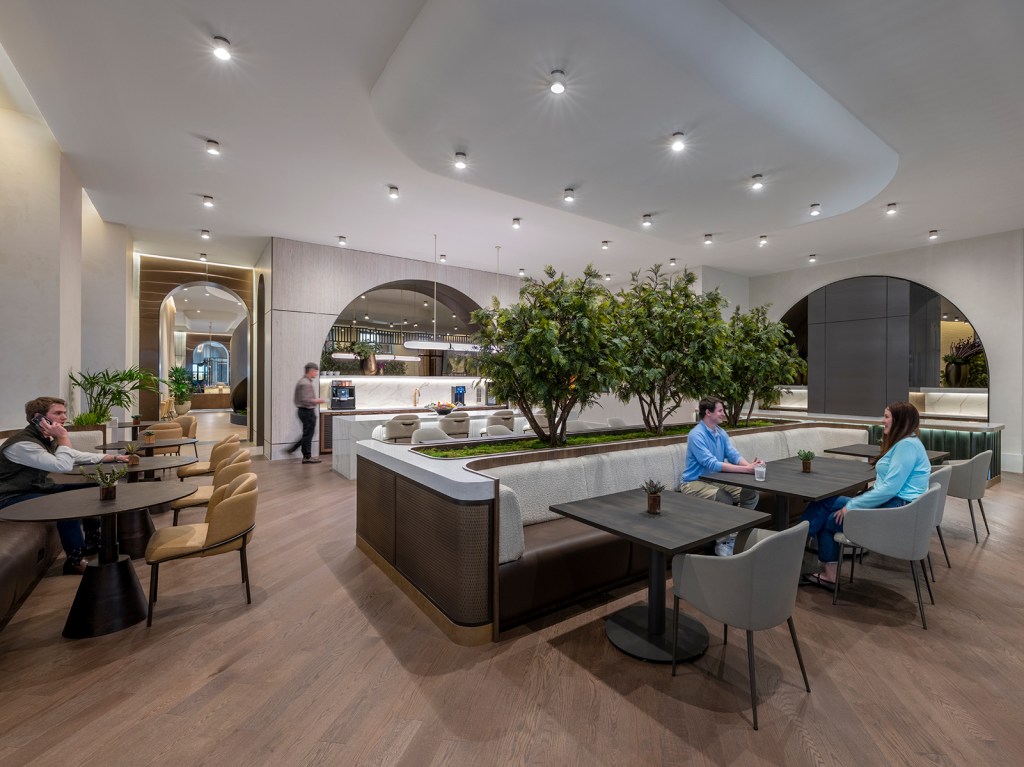
“Owners can retain and attract tenants who prefer not to go off-site for meetings or special events. Plus, tenants don’t have to pay for space they’re not using,” she noted.
Since many tenants still require spaces to host clients or gather employees for annual or quarterly town halls, developers are taking a creative approach to the design and use of shared space.
“Tenants often want a space where they can have an ‘all-hands’ meeting,” Feuerborn said. “So many companies now have distributed teams around the country or around the world, but they don’t want to have to rent space in a hotel. They want to bring everyone together at their company headquarters.”
READ ALSO: Building Connected Communities Through Retail, Mixed-Use
Since landlords don’t want a large space to sit empty most of the time, she suggested three connected spaces with modular partitions and furniture that’s simple to set up and take down.
“A large cafeteria can work, too, but it needs to be designed so it doesn’t look like a cafeteria when it’s used for a big meeting or an event,” she noted.
Must-haves: Flexible food, fitness
Tenants will reject buildings that don’t have food-and-beverage options, Botello pointed out. “The pace of work is so fast now, so people want options that are fast and healthy in the building or nearby.”
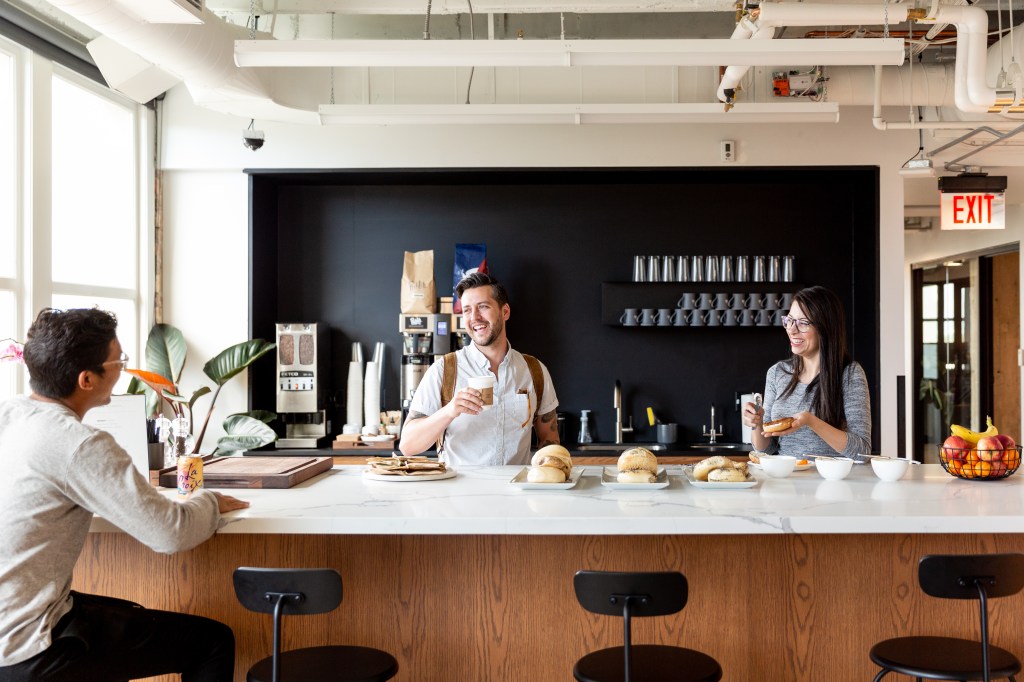
If there aren’t enough employees in a building to justify opening a full-time restaurant, landlords can get creative and design a cafe with space to work and eat in the daytime and that morphs into an event area in the evening, suggested Adrian Davidson, global design advisory lab lead at JLL Design.
“There’s also interest in creating flexible on-demand services, such as rotating food vendors and partnering with local restaurants,” Feesl shared. “Maybe a landlord doesn’t have the space or desire to open a coffee bar, but they can bring in a coffee cart.”
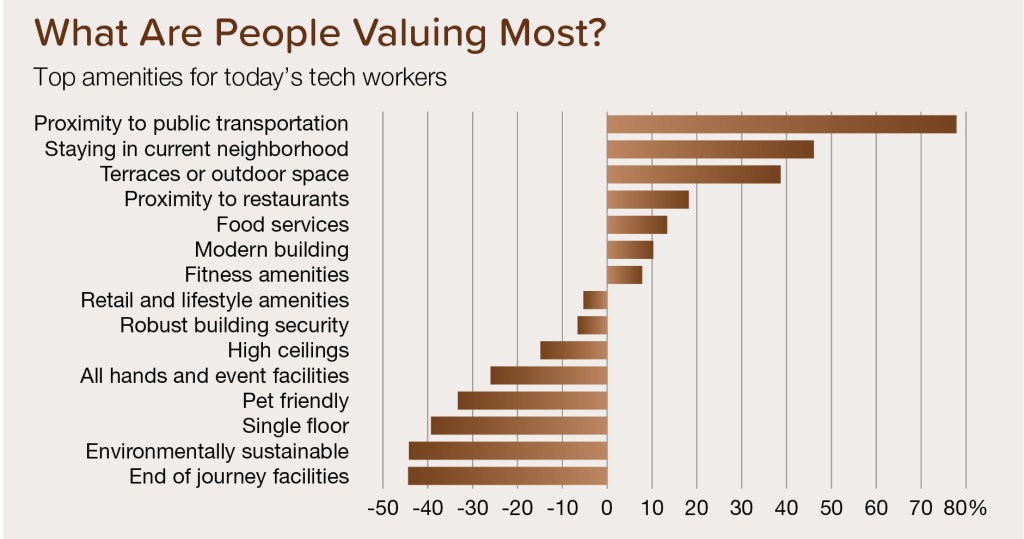
Botello looks forward to Thursday afternoons, when her landlord sends an ice cream cart to every office. “That won’t necessarily bring people in, but it’s a nice touch that won’t break the bank.”
That creativity applies to wellness and convenience options, too, such as mobile health screenings or a nail salon offering on-site services on a rotating basis, Botello said.
And while people prioritize wellness, they also want flexibility.
READ ALSO: Top City Programs for Office-to-Residential Conversions
“Most don’t want to work out with their colleagues,” Feuerborn pointed out. “Gyms don’t get used enough if they’re large open spaces limited to tenants. A better draw would be a Life Fitness franchise or Pilates studio, and smaller private wellness spaces where people can book individual services.”
Even if the wellness space isn’t used often enough, it can easily be converted.
Flexible outdoor space can also serve as a spot for a mental health break, a place to meet coworkers to collaborate or socialize, and even another fitness option.
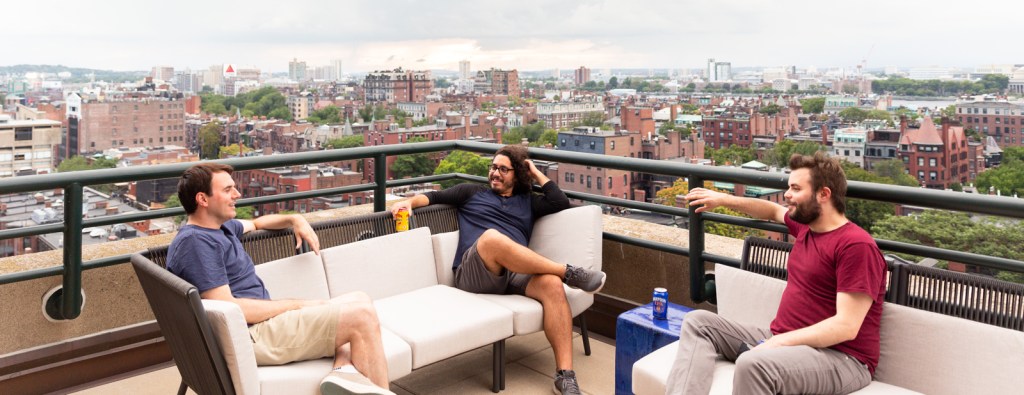
“In suburban areas or office parks, there’s often space to schedule a mid-afternoon softball game, create a fitness trail or bring in food trucks,” Botello said. “In urban core locations, landlords are turning balconies, terraces and decks into usable space with tables for laptops and larger tables as gathering spots.”
An evolving social experiment
Davidson sees an office building as a town square. “Landlords need to bring life to their buildings” for tenants and workers to stick around, he cautioned. “They need to do some social engineering to orchestrate moments and events that bring people together and mix in local businesses, too.”
Some building designs feature public spaces and amenities connected to the street to generate activity yet keep private offices separated. Plus, landlords can generate revenue by opening their event spaces for conferences or weddings.
“It’s almost like adding a hospitality component with catering and staff to manage the space, but it can work well as long as events with nontenants are held after working hours and security is in place,” he stated.
Social clubs with private access for tenants can also be a source of income for landlords. “Some larger landlords now offer access to amenity spaces across all their buildings,” Gomer reported. “They can charge more per square foot to tenants when they offer more amenities in different locations in the same city or other cities.”
Even so, tenants want space that’s theirs alone. “There’s something appealing about exclusivity,” Feuerborn said. “Look at the bar at JPMorgan Chase’s new headquarters in New York City—it’s booked weeks in advance even though it’s not open to the public.”


You must be logged in to post a comment.