Building Connected Communities Through Retail, Mixed-Use
Here's why child-friendly spaces matter more than ever.
This article first appeared in the CPE Sneak Peek Newsletter. Subscribe now for early access to exclusive content, in-depth analysis and key trends!
Retail has undergone significant changes in recent years, adapting to evolving market needs, economic shifts and consumer behavior. One way to keep these spaces in demand is to look beyond traditional formats where shopping alone was the primary activity and attraction. While dining and entertainment options play an important role, the emerging focus is on family- and children-oriented environments. A strategy that transforms retail, as well as mixed-use destinations, into communities.
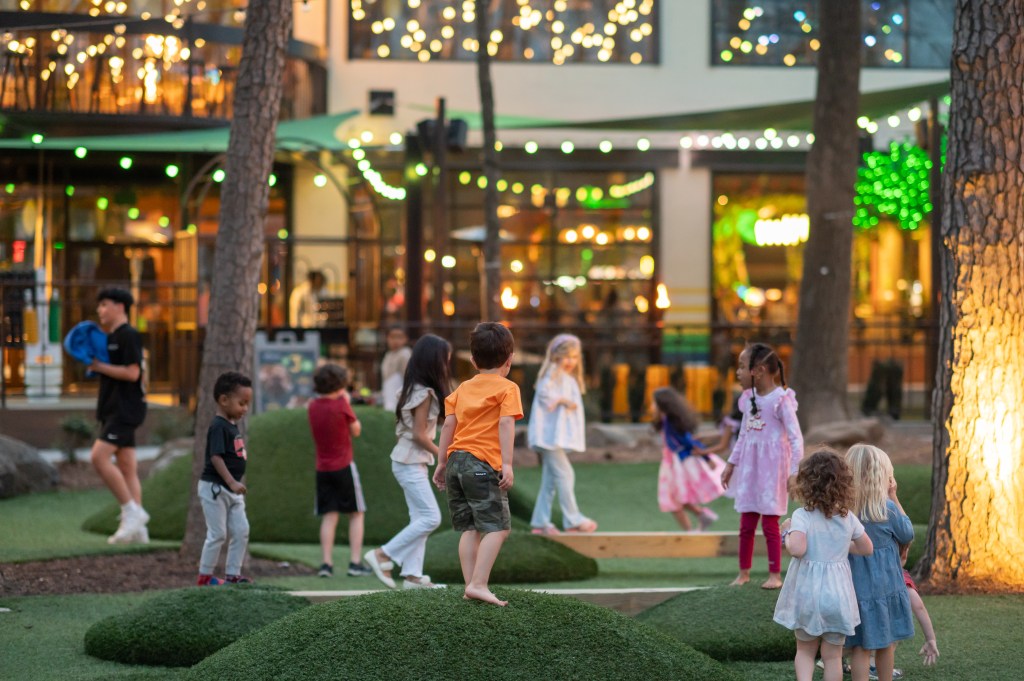
The Camp is a one-acre park with a mature tree canopy, seating, play structures and a performance area. All images courtesy of The Works 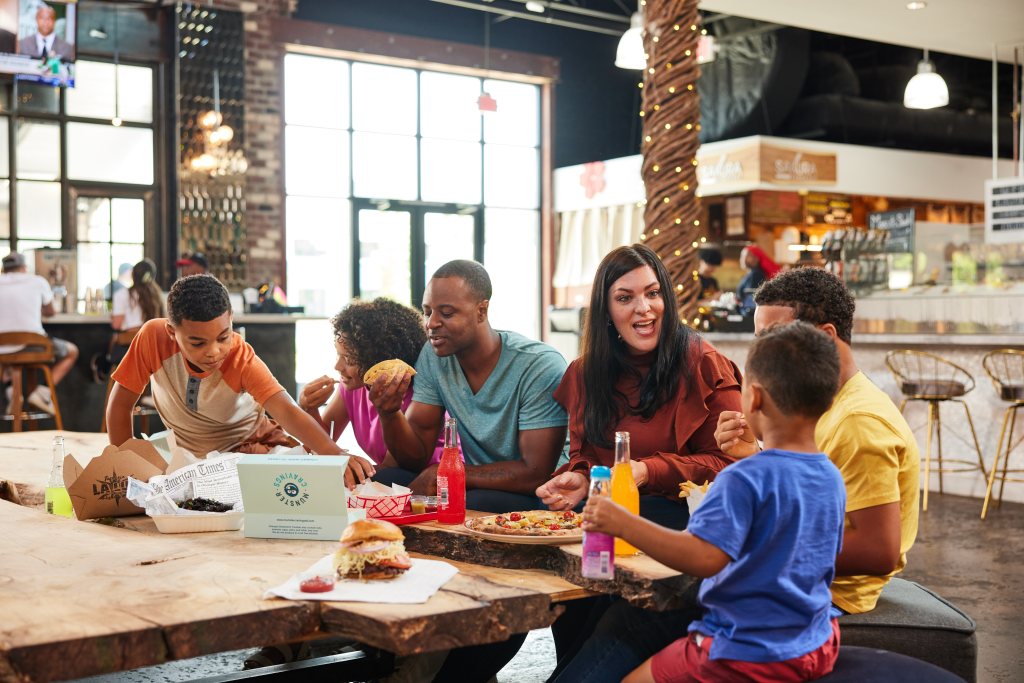
Signature events at The Works include family-friendly activities. 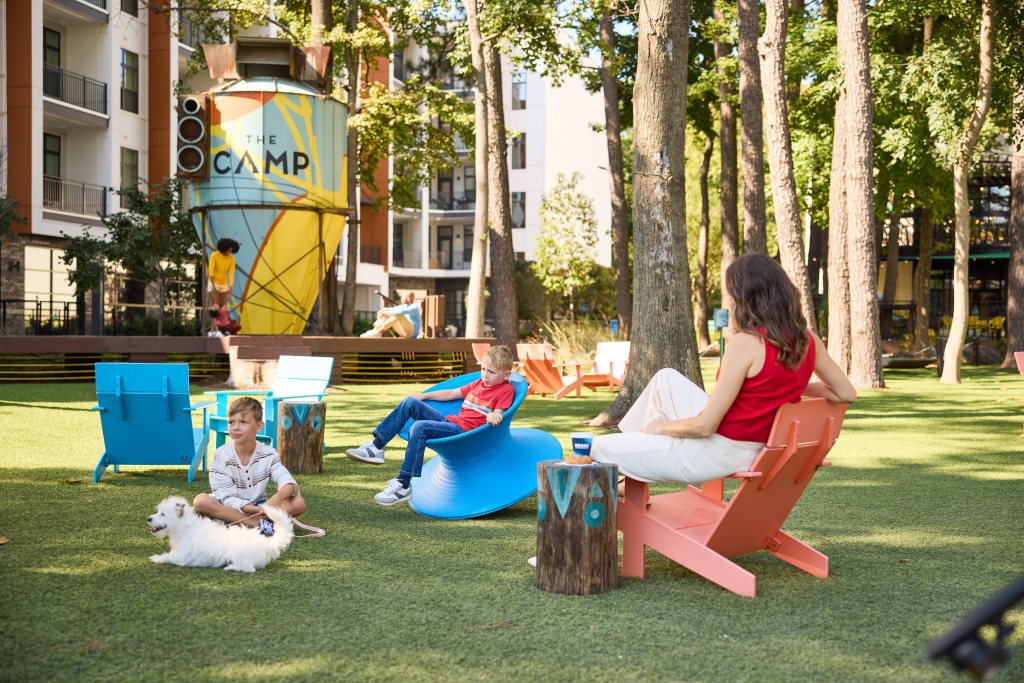
The Camp is regularly programmed with activities that draw people to The Works mixed-use destination.
Demand for experiential and high-end retail formats has been visible across the sector, as the “retailtainment” leads to the creation of spaces that provide immersive brand engagement with customers, a shift that is happening when there is constrained supply of high-quality space, a CBRE report found. This strategy maximizes the potential of these properties, while reinforcing the value of physical stores within the retail ecosystem.
And family remains the focus of retailtainment, with numbers to prove it. Outdoor malls outperformed in 2025, with families as the backbone of mall traffic, particularly the higher-income and suburban segments, according to Placer.ai data. That doesn’t mean the potential for indoor malls was lost, as these spaces are now seen as live-work-play opportunities. This was a “natural” next phase in the evolution of malls into mixed-use developments as a more sustainable investment. What has become clear in retail market trends is that stores must evolve beyond purely transactional purposes. Describing these emerging spaces as storytelling platforms captures that blend of experiential retail with community engagement and brand identity.
While these strategies are not entirely new, what has emerged more recently is a focus on child-friendly spaces within such properties. Not only retail, but mixed-use destinations that have identified the way in which this new approach can heavily contribute to the success of their assets.
Essential part of the strategy
Kid-oriented spaces are now part of a wider transformation taking place across the industry. The demand comes from families that want local destinations where they can spend meaningful time together. Providing such spaces is helping properties stand out while supporting the broader shift toward mixed-use environments, according to ICSC Vice President Stephanie Cegielski.
What Mall of America VP & Head of Leasing Carrie Charleston noticed is that the spaces designed for children’s play offer results such as increasing dwell time, encouraging repeat visits and strengthening customer loyalty.
“Families are seeking environments that enrich their shopping experience by offering opportunities to create meaningful memories and spend quality time together,” Charleston observed.
READ ALSO: Luxury Retail in 2026: Where Opportunity Lies
The same can be said for mixed-use destinations. Developed by GID in Atlanta’s Perimeter, High Street is a $2 billion, 36-acre project designed as a walkable district that features hospitality, office space, retail and entertainment venues, as well as a residential component.
The family-friendly mixed-use development is centered around a 25,000-square-foot green space which is permanently in use through various programming. Tammy Primus, retail property manager for High Street, identifies similar outcomes that have proven successful for retail spaces.
“Mixed-use owners are keeping children-focused play as a key factor in developments because they offer the community a space to linger, gather and return regularly, which naturally increases foot traffic for surrounding retailers and restaurants,” she told Commercial Property Executive.
Another mixed-use destination is The Works, in Atlanta’s Upper Westside. The 80-acre, 350,000-square-foot development was planned from the beginning with the thought of preserving Atlanta’s historic industrial area. The project blends office, retail, hospitality, residential and entertainment spaces, with a second phase now in the works.
Associate VP at Selig Enterprises Taana Kow has talked about this destination and what has been visible here as well is that children-focused play and education spaces help foster a sense of community.
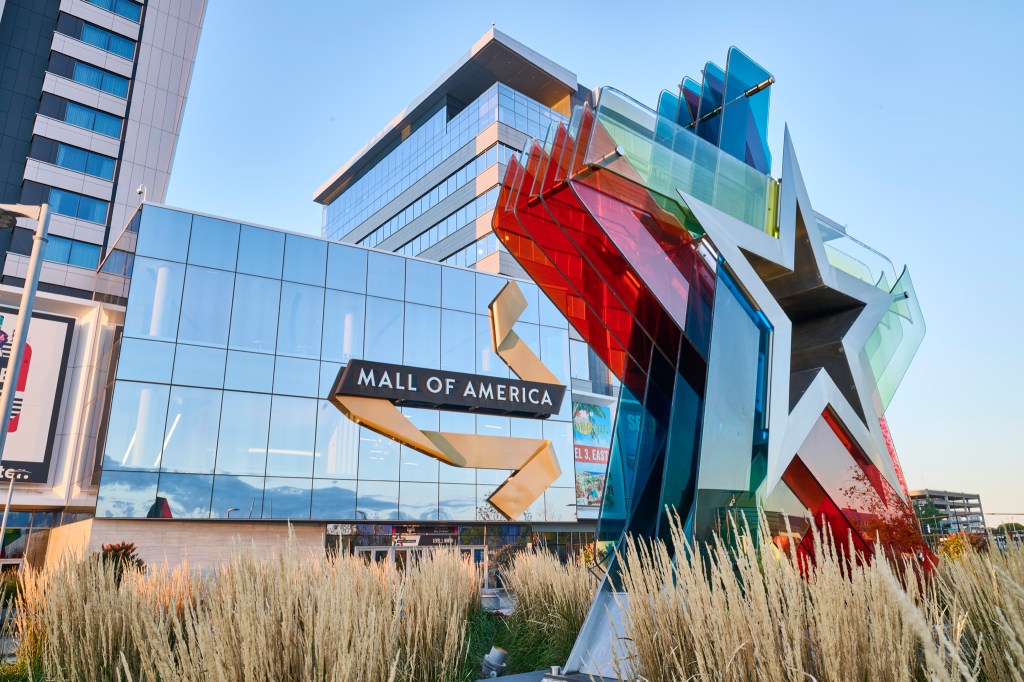
Opening in 1992, Mall of America is a landmark retail and entertainment destination that spans 4.2 million square feet. All images courtesy of Mall of America 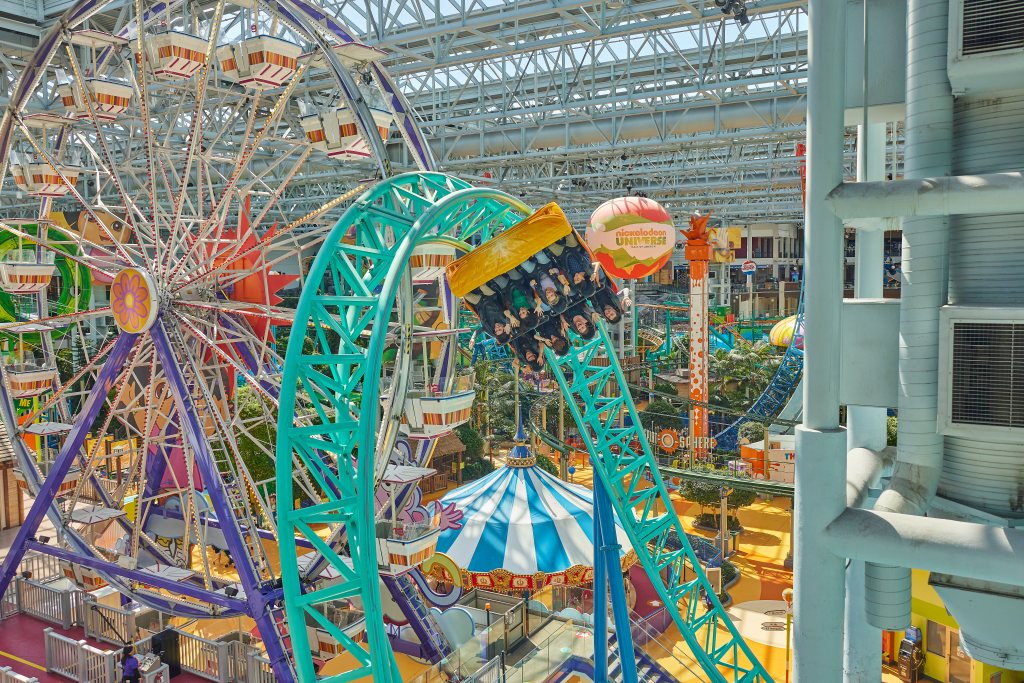
Mall of America includes an inside roller coaster, part of The Nickelodeon Universe. 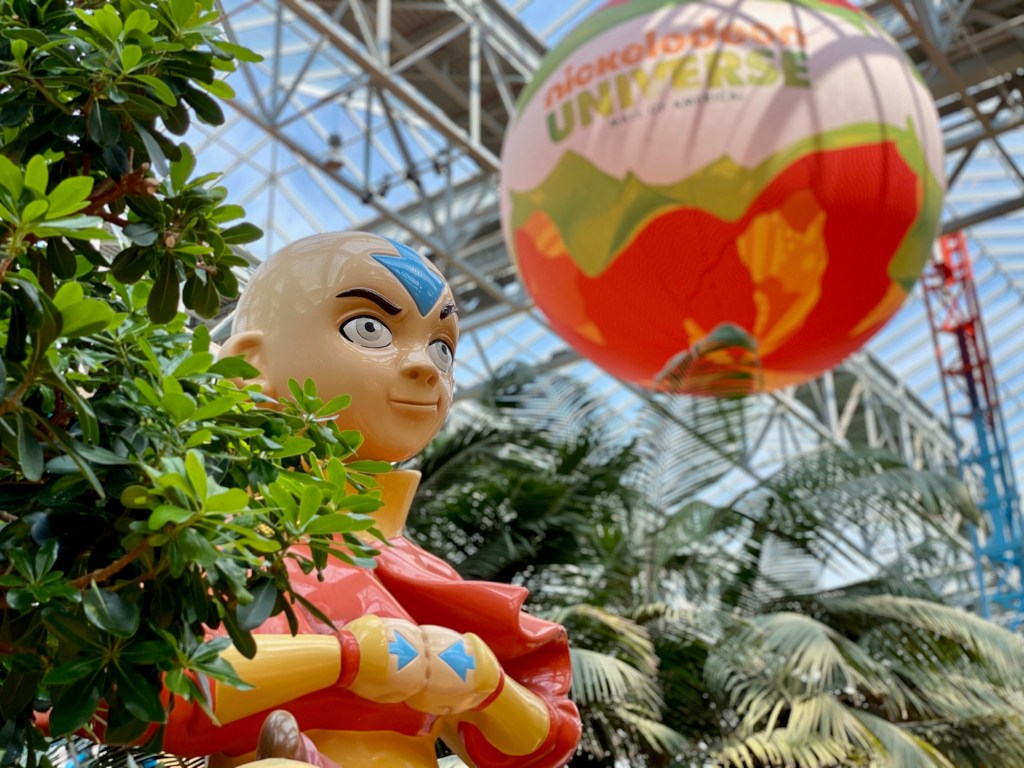
Attractions like Nickelodeon Universe are central to the mall’s identity, as it combines entertainment and multi-sensory engagement that resonates with the entire family 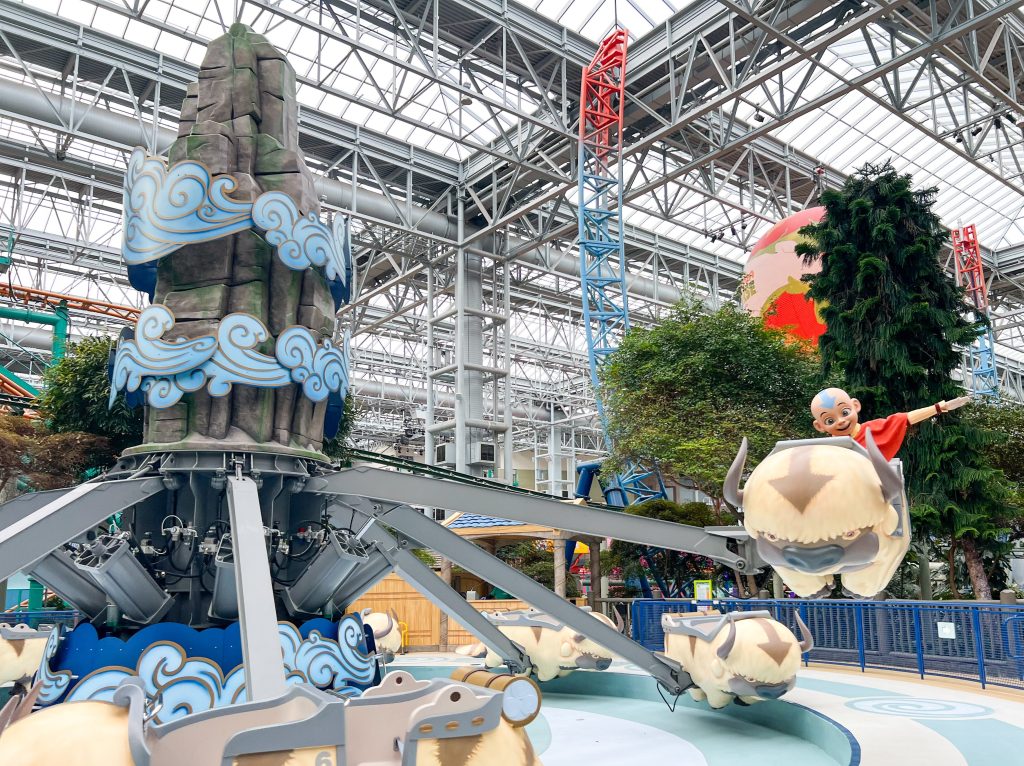
Fly with Appa is an aerial carousel ride located within the mall 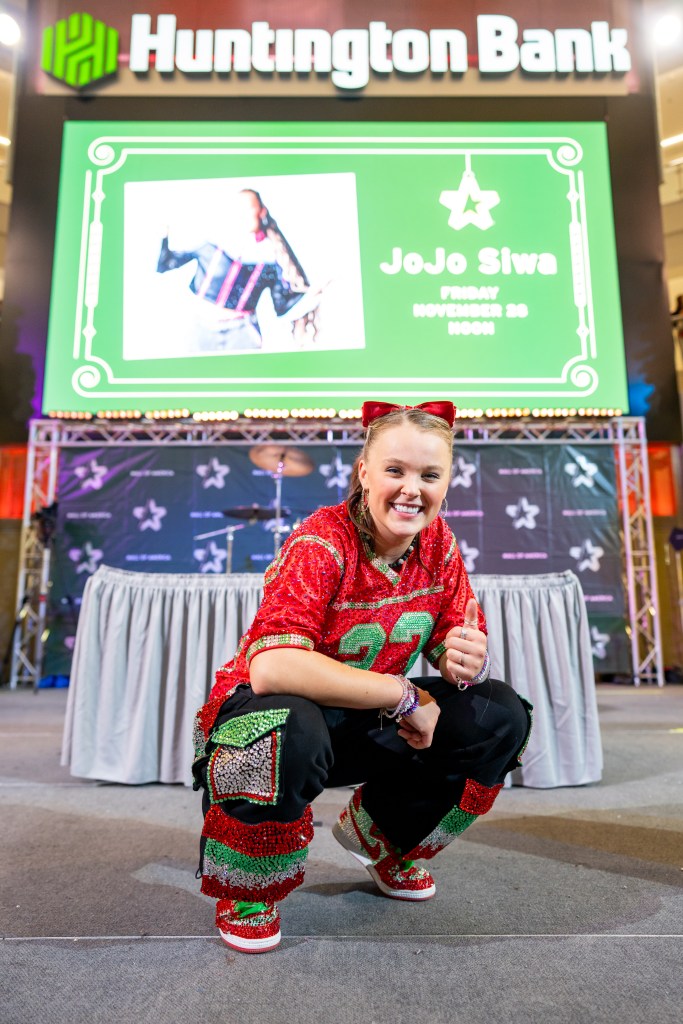
Jojo Siwa performing a holiday concert at an event located at Mall of America 
SEA LIFE Aquarium is one of Mall of America’s top destinations for family-focused experiences.
But perhaps the clearest example of the family destination model is Mall of America. The landmark destination in Bloomington, Minn., spans some 4.2 million square feet and features 500 stores, as well as hotels and restaurants. Its entertainment mix demonstrates how family-oriented attractions have become a primary draw rather than a secondary amenity, with offerings such as Nickelodeon Universe, SEA LIFE Aquarium, Crayola Experience and FlyOver America.
What makes it work
The way in which such spaces become actual destinations and not just an extra convenience is having them integrated into the very fabric of such properties. It’s all about making spaces immersive instead of just passive, Cegielski believes.
“Immersive children‑ and family‑focused spaces actively engage kids and caregivers, rather than simply offering a place to pass time. Successful concepts blend interactive play, learning‑driven activities and thoughtful design that spark curiosity and encourage repeat visits,” she said.
It’s what works best at Mall of America. Attractions such as Nickelodeon Universe and Crayola Experience are central to the property’s identity. Such experiences also drive tourism as well, not just local visitation. One way to keep the environment engaging was to layer in live programming such as Toddler Tuesdays, character appearances, cultural celebrations and seasonal events.
READ ALSO: High-Street Retail Regains Traction in the ‘New’ Downtown
Mixed-use owners are employing similar strategies. At High Street, they have wellness programming, artisan markets, live entertainment, family activities and outdoor movie nights occurring weekly from April through October. During the winter months, the green space is transformed into an outdoor ice rink.
At The Works, dedicated spaces create an environment for children to play while the parents can relax and socialize. Kow pointed out The Camp and The Spur, which were designed as central gathering areas with seating, public art, play features and performance areas. The Camp in particular is a sought-after destination. The 1-acre park is regularly used for activities, supported by more than 500 property and tenant-driven events per year.
Keeping spaces safe
When trying to create children-friendly spaces within such properties, safety and accessibility are among the most important aspects needed to be taken into consideration. Caregivers need to be able to supervise the children, while at the same time, clear wayfinding reduces stress and confusion in high-traffic environments. Another approach at Mall of America is to position the children’s areas strategically near food and beverages, which in turn encourages natural traffic flow, Charleston noted.
“Durable materials, thoughtful crowd flow planning, consistent staffing and strong maintenance standards all play a role in keeping spaces safe and enjoyable,” Charleston told CPE.
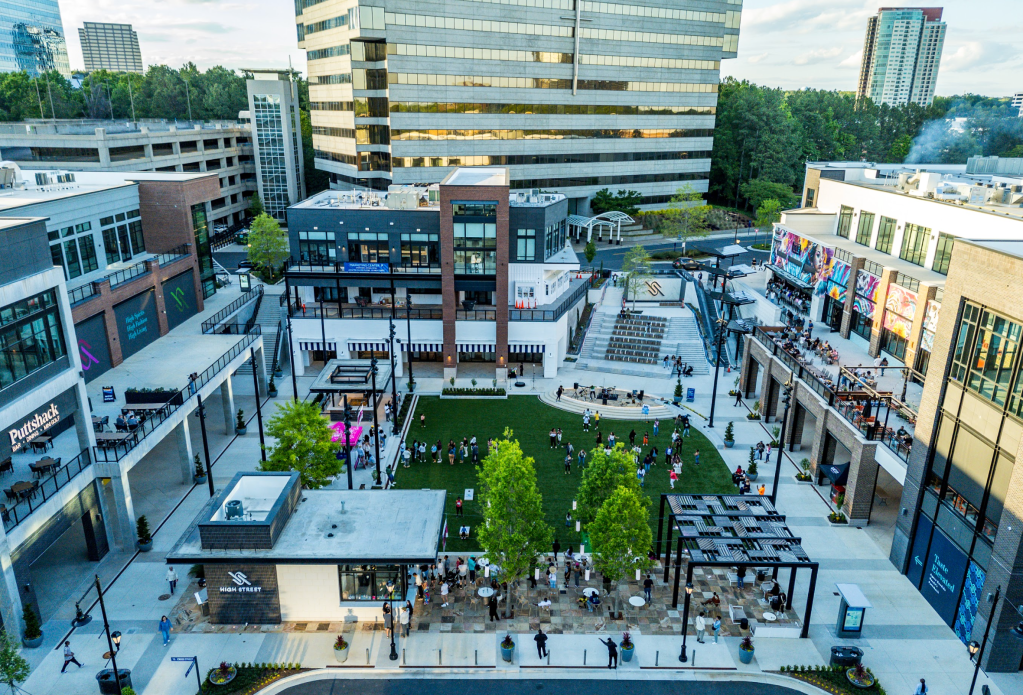
High Street is a 36-acre mixed-use destination in Atlanta’s Perimeter. All images courtesy of High Street 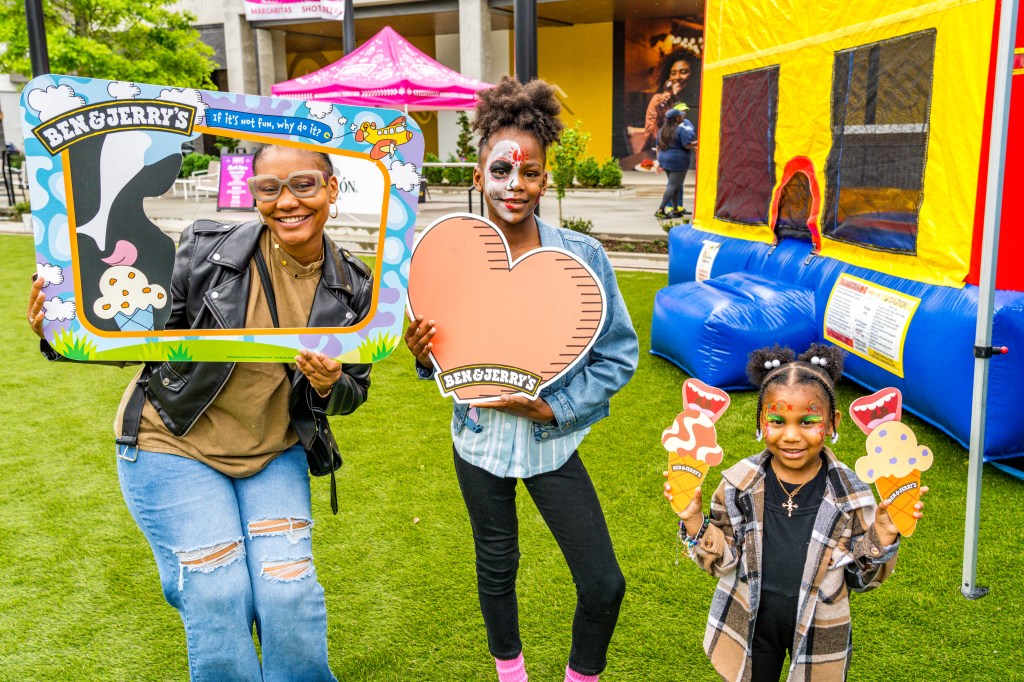
Cinco de Mayo celebrations at High Street as part of their regular events taking place from April through October 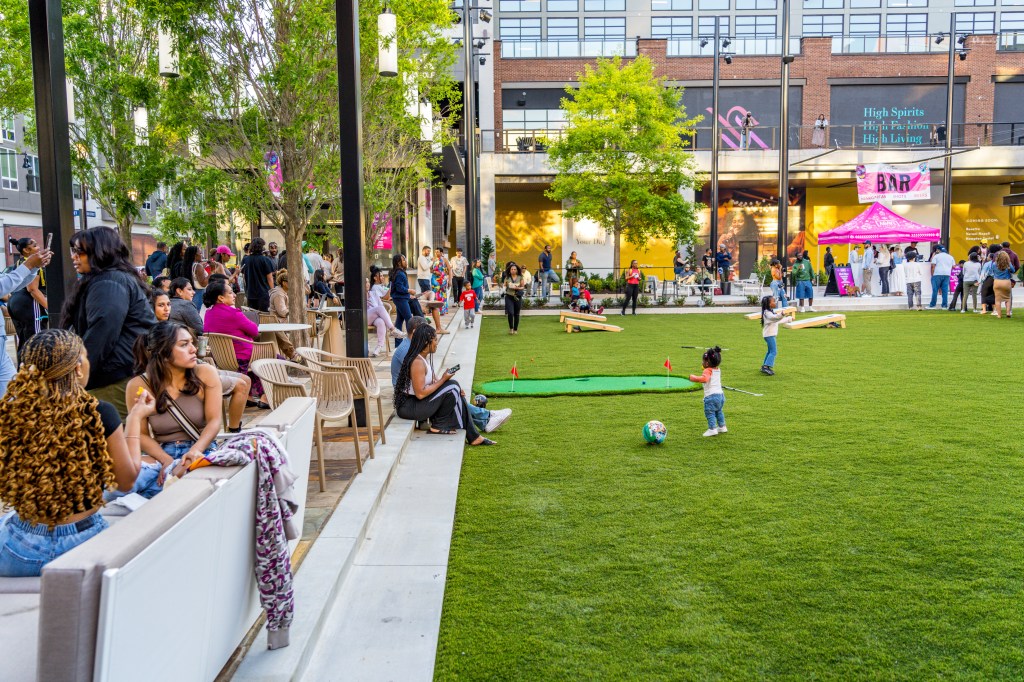
While attending community events, guest meet on the lawn or bring their families for outdoor activities.
At High Street, the focus is on clear sightlines, bright lighting and pathway so visitors feel comfortable moving throughout the space at all hours. The fact that the green space is at the center of High Street helps, as the property is surrounded by retail, multifamily and office buildings, away from the busy streets.
At The Works, accessibility makes a great difference. The property has the Woodall Rail Trail, which links to the surrounding neighborhoods, as well as a large parking lot that supports more than 1,400 spots. Selig Enterprises, which is the property’s owner, also supported infrastructure improvements to the area surrounding The Works, in order to help with traffic flow and create an accessible pedestrian experience.
What comes next?
What is in store for such properties in the future? Will this trend become an established amenity in the long term? Cegielski believes that the children-focused concept will continue to expand because what we’re seeing is a broader movement toward mixed-use and experiential placemaking. What this means is tenant diversification and flexible lease structures.
Entertainment has been integral to Mall of America since its opening in 1992, but adapting to current needs is the way to go. Hence, subscription and membership models will continue to grow, as well as bundled experiences. Engagement is strong thanks to their attraction packages, loyalty programs and hotel partnerships.
Immersive experiences will continue to be an integral part of mixed-use destinations, which will adapt to the demands of the future.
“As technology advances, events and property experiences will continue to evolve to fit the needs of consumers,” Primus said.
The current community-driven model is clearly working. Through experiential programming and the inclusion of spaces designed for families and children, retail and mixed-use destinations have found new ways to create demand for physical spaces that meet the needs of today’s consumers.