

Office-to-Campus Conversions Open a New Path for Obsolete Buildings
Colleges and universities could be an alternative source of demand for outdated assets, but only the right properties make the project math work.
This article first appeared in the CPE Sneak Peek Newsletter. Subscribe now for early access to exclusive content, in-depth analysis and key trends!
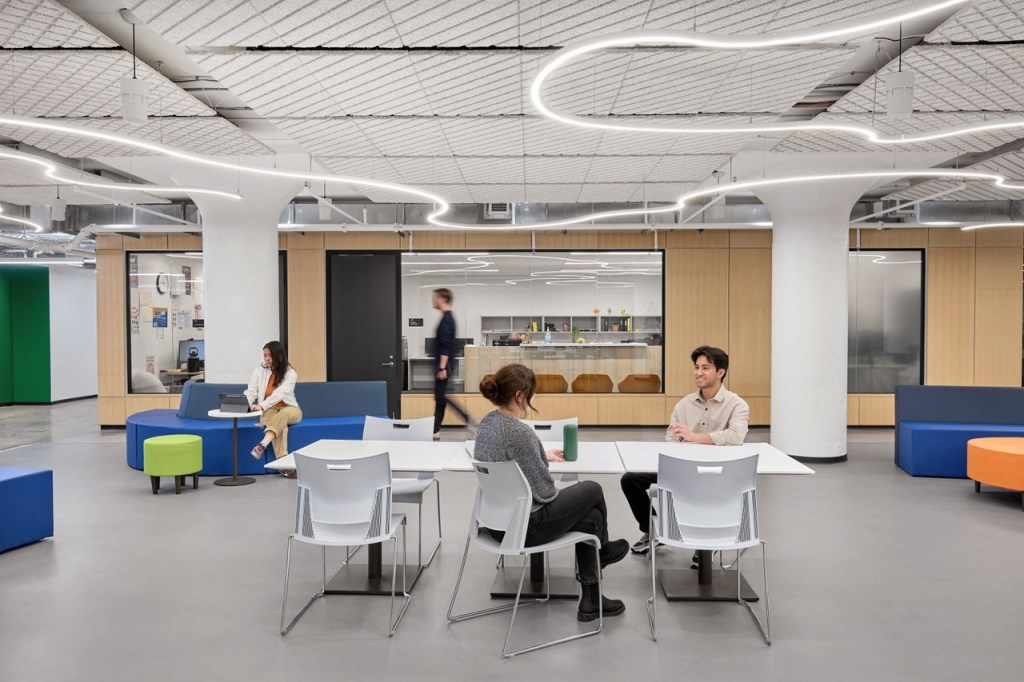
As universities seek faster, more cost-effective ways to expand, obsolete office buildings are finding a second life as academic campuses.
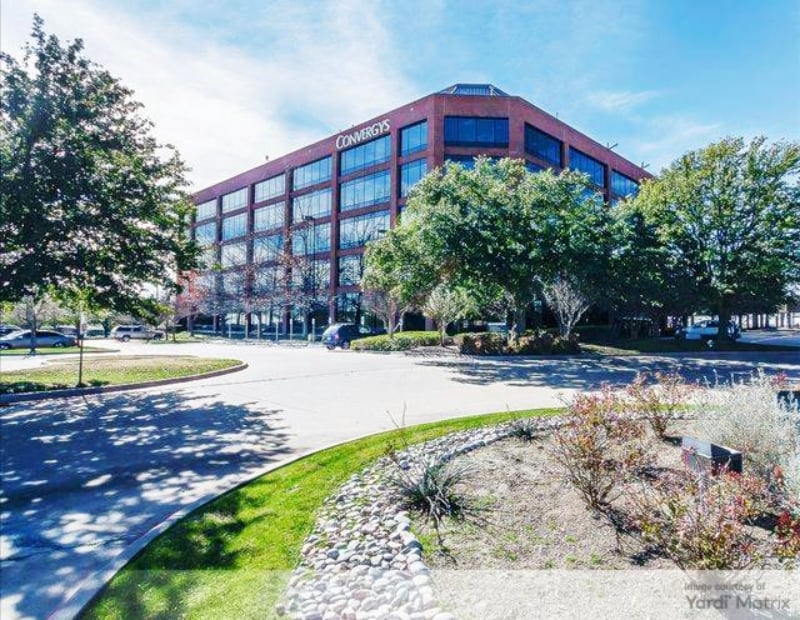
The trend has accelerated over the past two years. In 2025, for example, the Board of Regents of the University of Texas System acquired a 151,340-square-foot former Concentrix office building in Richardson, Texas, to support the expansion of the University of Texas at Dallas campus. This year, Western University of Health Sciences purchased a historic, downtown mixed-use office building in Pomona, Calif., with plans to use it as a campus extension.
LISTEN TO: Commercial Design Lab Podcast: Charles Bloszies on What Makes Building Conversions Work
The growing interest comes as the office sector searches for viable adaptive-reuse strategies. According to JLL, between 41 and 55 percent of older office inventory globally is considered functionally obsolete or at risk of becoming so, representing as much as $1.2 trillion in real estate requiring reinvestment. U.S. office vacancy reached a record 22.6 percent in the first quarter of 2025, leaving roughly 1.1 billion square feet vacant.
While residential conversions have dominated the conversation, higher education is becoming another potential reuse option, particularly for institutions expanding graduate, professional and workforce-focused programs. Health Sciences, for example, posted the strongest gains in first-time graduate enrollment between 2023 and 2024 across institutions of all sizes, according to the Council of Graduate Schools.
A different kind of office user
Universities pursuing office-to-campus conversions are not simply taking advantage of discounted office buildings. Rather, they are adopting a different real estate strategy that reflects changing institutional priorities.
“The main drivers are the speed to market and the overall project cost,” said John Anthony, executive vice president & managing director of Downtown Los Angeles at Kidder Mathews. “Entitling and building a new school campus in Greater Los Angeles is expensive, slow and politically complicated. With the high office vacancies, smart office owners with the right product can deliver converted office to school space more efficiently and more cost-effectively.”
READ ALSO: The Rise of Retail-to-Office Conversions
The appeal extends beyond pricing. Many universities are rethinking how they engage with their surrounding communities, expand professional and graduate programs and establish a presence in urban centers closer to employers, research partners, health-care systems and public transportation. Adaptive reuse of existing office buildings aligns well with those long-term strategic objectives while also supporting sustainability goals.
For owners of struggling office assets, educational institutions also represent a different kind of occupier.
“Owners are much more open-minded now,” Anthony noted. “A few years ago, many landlords still wanted a traditional office tenant. Today, more understand that a school tenant can bring long-term occupancy and steady revenue.”
Not every office building makes the grade
While the office market has produced abundant opportunities, universities remain highly selective. Building configuration, circulation, parking, structural systems and floorplates all influence whether a property can support academic uses without prohibitively expensive modifications.
For Anthony, the shortlist starts with relatively simple criteria. While multi-tenant environments where schools need to share buildings with traditional office users can be problematic, one- or two-story office buildings with abundant surface parking and easy ingress/egress tend to be the best fit.
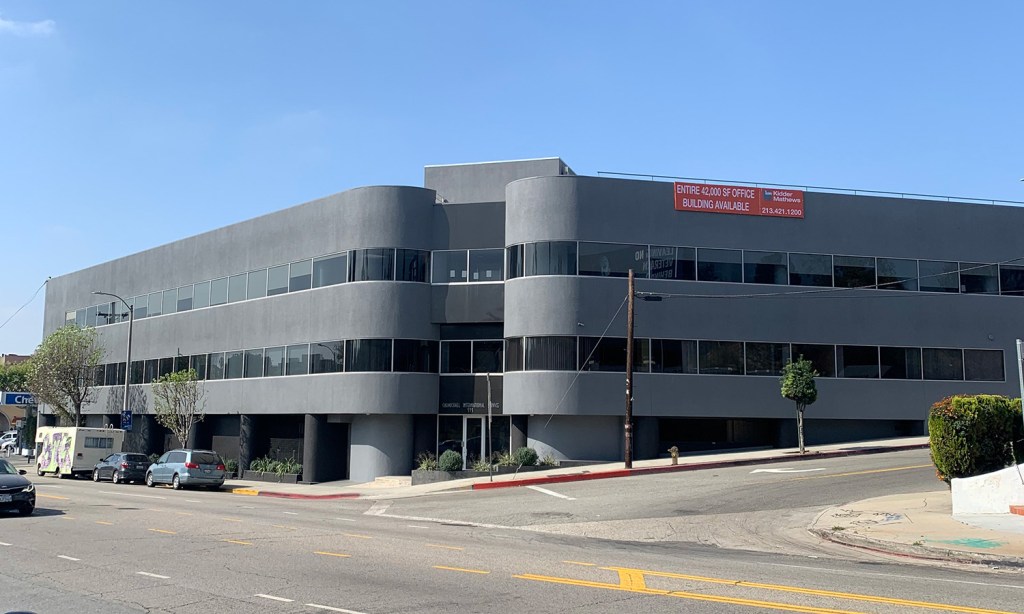
That was precisely the case with the former office building at 533 Glendale Blvd. in Los Angeles’ Echo Park neighborhood, where Kidder Mathews brokered the lease of a 42,110-square-foot property to charter school network Ednovate. The standalone, two-story building had ample surface parking and a layout that could be adapted more readily than a typical multi-tenant office property.
Architecture experts, however, caution that the real test lies beneath the surface.
“From an architectural perspective, the original use of a building is often less important than the qualities of its underlying structure,” said Tobias Keyl, associate partner & conversions expert at Architekten. “The strongest candidates for academic conversion are buildings with generous spans, good daylight access, sufficient floor-to-floor heights and, above all, flexible structural systems with a minimum of load-bearing elements interrupting the floorplate.”
Academic buildings accommodate a much wider range of uses than traditional offices, placing greater demands on structure, circulation and building systems.
William Wong, principal at Spacesmith, noted that scale can also determine whether a conversion is practical. Deeper office floorplates may work well for larger classrooms and ancillary spaces such as cafeterias and auditoriums. Taller buildings, however, can be less suitable because of emergency egress and student circulation requirements.
READ ALSO: Top City Programs for Office-to-Residential Conversions
Some architects argue that the best use of office buildings isn’t necessarily classrooms at all. Mark Sullivan, architect & partner at JZA+D, said universities often derive greater value by relocating administrative functions off campus, freeing core academic space for teaching, research and future development.
“It is rare that an office property has the appropriate floorplate dimensions, clear height, mechanical systems and core locations to accommodate conversion to classrooms,” Sullivan said. “Such a reuse can be done, but not efficiently.”
That selectivity is critical as a deeply discounted office building can still fail the conversion math.
Beyond the purchase price
In addition, the acquisition discount can disappear quickly once institutions account for zoning, parking requirements, occupancy classifications, utility capacity, accessibility and the overall cost of an academic buildout.
“The biggest misconception is that if a building is structurally sound, it can easily become a campus building,” said Megan Moyer, partner & higher education practice vice chair at Saul Ewing.
Institutions must first determine whether zoning allows educational uses and whether approvals or variances will be required. But even once those legal and entitlement hurdles are cleared, owners can still encounter an entirely different set of challenges.
“The biggest surprise is almost always the unknowns that come with older structures, such as unforeseen conditions behind walls, below grade or above ceilings that don’t show up until construction is underway,” said Zion Mass, founder & CEO of Mass Construction.
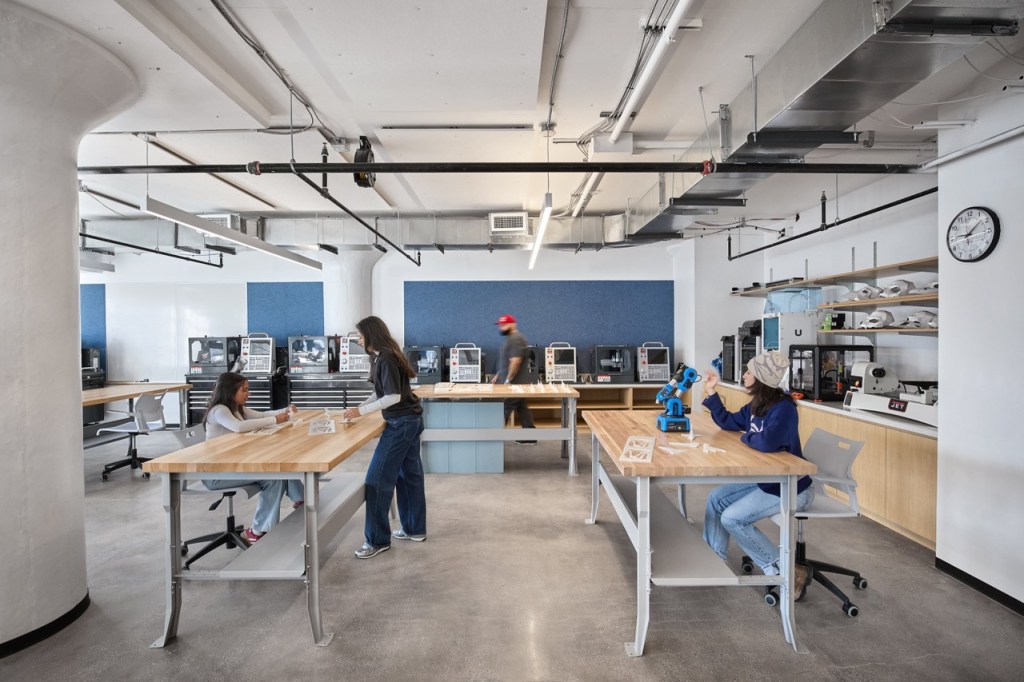
After structural and code requirements are addressed, architects need to rethink office environments to support learning rather than traditional workplace functions.
“Most urgently needed are daylight, fresh air and accommodating amenities,” Sullivan said.
Dividing open office layouts into classrooms or labs can limit access to windows, requiring designers to bring natural light deeper into the space while still controlling lighting for audiovisual needs. Additionally, meeting today’s ventilation standards can require replacing, rather than upgrading, aging mechanical systems.
Despite these challenges, adaptive reuse often remains more economical than ground-up construction. Architect and structural engineer Charles Bloszies believes the conversation should extend beyond construction costs alone.
“Value is a different story—embodied carbon and the architectural character of older buildings may not translate into dollars and cents but can yield increased value compared to new construction,” he said.
That broader definition of value can extend beyond the institution itself. Municipalities are increasingly receptive to office-to-campus conversions and other forms of educational reuse because campuses can reactivate vacant properties while generating activity for surrounding districts.
“Office-to-campus conversions can increase foot traffic, support surrounding businesses and contribute to broader downtown revitalization efforts,” Moyer noted.
A growing niche, not a cure-all
This type of conversion is unlikely to solve the office sector’s vacancy challenges. For owners of well-located, adaptable properties, however, it can broaden the universe of potential users beyond traditional corporate tenants.
“Many of these office buildings are in great condition and located in central, accessible areas, which makes them strong candidates for educational use,” Mass said. “The existing floorplates and infrastructure can often be adapted efficiently and the central locations are exactly where institutions want to be. Because of these conditions, we anticipate this trend in commercial real estate will continue to gain momentum in the second half of the year and beyond.”
Still, the opportunity will remain highly selective. Sullivan believes proximity to an existing campus will be a key determinant, with the strongest candidates ideally located within a 10-to-15-minute walk.
In general, though, the buildings best positioned to succeed are those capable of evolving alongside changing market demands.
“The most sustainable building is often not the one we build today but the one that can successfully become something else tomorrow,” Keyl concluded.



You must be logged in to post a comment.