
Turning Empty Floors Into New Homes
How office conversions can rebalance two pressured markets.
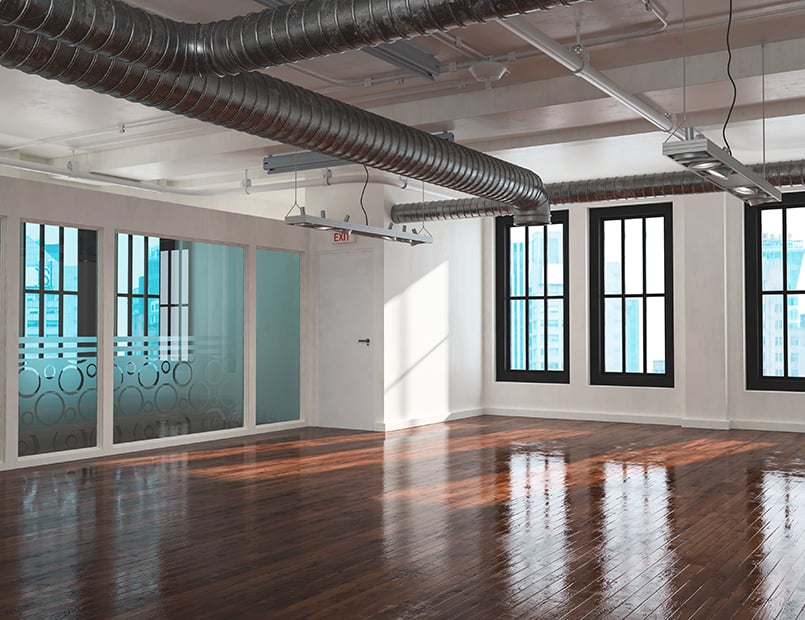
Commercial real estate owners continue to face a defining challenge: too much office space in many markets and too little attainable housing in the same communities. That disconnect has pushed developers, investors and lenders to explore new strategies for underperforming assets. One of the most compelling is the conversion of obsolete or underused office buildings into affordable and workforce housing.
The concept is easy to understand. The execution is far more complicated.
Transforming office buildings into high-quality multifamily communities requires much more than cosmetic renovations or revised floor plans. Success depends on selecting the right building, structuring a sophisticated capital stack and assembling a team with experience across finance, design, entitlement and construction. When done well, these projects can create housing, improve downtown vibrancy and reposition struggling assets for long-term relevance.
Why conversions are gaining momentum
The mismatch between excess office inventory and limited housing supply is creating a compelling repositioning opportunity across many markets. Elevated office vacancies, distressed assets and slower new development are prompting commercial property executives to reevaluate challenged properties through a new lens.

At the same time, demand for attainable housing remains strong, particularly among working households facing rising rent burdens. Office-to-residential conversions can help absorb underutilized space, improve asset performance and support broader market stabilization. For owners and investors, adaptive reuse may offer a strategic path to unlock value while aligning portfolios with evolving market demand.
This is especially relevant in urban cores where aging office space may struggle to compete with newer buildings, but where demand for housing near employment centers, transit and amenities remains durable.
Location matters, and so does the actual building

For commercial property owners and investors, well-located office assets can present compelling conversion opportunities, particularly in walkable urban areas with strong transit access and nearby retail, dining and daily-use amenities.
However, location alone does not guarantee feasibility.
Many office buildings were not designed for residential layouts, requiring costly reconfiguration of floorplates, plumbing, HVAC and other core systems. Deep floorplates that work well for office users can limit natural light for apartments. Centralized restroom cores may require extensive plumbing redesign. Mechanical systems often need significant upgrades or full replacement.
Zoning and entitlement timelines can add another layer of complexity, with approval processes varying widely by municipality. In some cities, leaders are supportive of adaptive reuse because it can help address housing needs and activate downtown districts. In others, approvals may take longer or require additional concessions tied to affordability, parking or design standards.
Successful projects typically depend on disciplined underwriting, realistic budgeting and experienced development teams that can navigate design, construction and regulatory hurdles.
The capital stack can determine success or failure
Interest in office-to-residential conversions remains strong, but moving a project from concept to completion is far more difficult than announcing plans. Many proposed conversions stall as developers encounter the realities of underwriting, construction costs, entitlement hurdles and capital market constraints.
For commercial property executives evaluating these opportunities, execution risk often becomes the defining factor between a headline-worthy concept and a completed asset.
The capital stack is typically one of the most challenging pieces of the equation. Conversions often require significant investment to rework plumbing, HVAC, electrical systems, life safety components and floor layouts to support residential use. Projects may also need to carry costs through rezoning, permitting and extended construction timelines.
That can create financing needs more complex than a traditional acquisition or repositioning.
Successful deals often depend on layering multiple capital sources, including senior debt, mezzanine financing, equity, public incentives, grants and tax credit programs where available. In many cases, the structure resembles affordable housing finance while also carrying the execution demands of a complex redevelopment project.
Developers who underestimate the time and sophistication required to assemble this stack can face delays, cost overruns or capital shortfalls before the project reaches stabilization.
Execution starts with the right financial team
Office-to-affordable-housing conversions can create value from underperforming assets, but they rarely succeed on vision alone.
These projects often involve layered financing, entitlement hurdles, design constraints and major renovation costs. That makes the choice of banking and capital partners especially important.
Owners benefit from teams that: understand both adaptive reuse and housing finance, can pressure-test timelines and identify risks early. Just as important, the right advisor should be knowledgeable about whether a building is truly viable for conversion. For commercial property executives and developers, strong execution usually comes down to disciplined underwriting, creative structuring and experienced partners who know how to move complex deals forward.
Office-to-residential conversions are not a universal solution, nor are they simple transactions. But in the right market, with the right asset and the right partners, they can address two pressing challenges at once: surplus office inventory and constrained housing supply.
For owners willing to approach the opportunity with discipline and patience, vacant square footage may become one of the most valuable redevelopment opportunities in today’s commercial real estate market.
Robert Likes is president of KeyBank’s Community Development Lending & Investment group where he leads a national team of community development professionals with annual loan and investment production in excess of $5 billion.
Disclosure: This article is for general information purposes only and does not consider the specific investment objectives, financial situation, and particular needs of any individual person or entity. Banking products and services are offered by KeyBank National Association. All credit products are subject to collateral and/or credit approval, terms, conditions, and availability and subject to change.

You must be logged in to post a comment.