


Austin Office Market Sees Strong Sales Amid High Vacancy
This market is seeing a slowdown in completions while vacancy stays elevated.
Austin’s office market continued to send mixed signals through July. Investment activity remained strong, placing the metro among the top 10 U.S. markets by sales volume, while average listing rates stayed ahead of nearly all peer metros, Yardi Matrix data shows.
At the same time, the metro’s vacancy rate improved sharply year-over-year but remained among the highest nationally. Development activity also stayed elevated, with Austin’s underway pipeline outpacing the national average.
In terms of office conversions, Austin’s policy environment is being shaped less by local incentives and more by broader state-level land-use reform. Texas SB 840 gives many commercial and office properties a clearer path to residential or mixed-use redevelopment while limiting certain local requirements, including impact fees. The city is still assessing how the law interacts with its downtown zoning and density bonus rules. Even so, conversions are likely to remain selective in the near term, as much of Austin’s office inventory is newer and less suited to residential reuse.
Construction activity stays elevated
Austin’s office development pipeline as of July reached 1.2 million square feet, accounting for 1.2 percent of its total office inventory. This figure was three times above the 0.4 percent U.S. index and above almost all peer metros, only Nashville, Tenn. (1.6 percent) surpassing it. Nationally, Miami (1.8 percent) had the largest share.
When also taking into consideration projects in different planning stages, the market’s figure rose to 2.9 percent, still above the country’s 1.6 percent average. Among peers, Dallas (3.9 percent) was the only metro to surpass Austin, while Nashville (2.7 percent) was close behind.
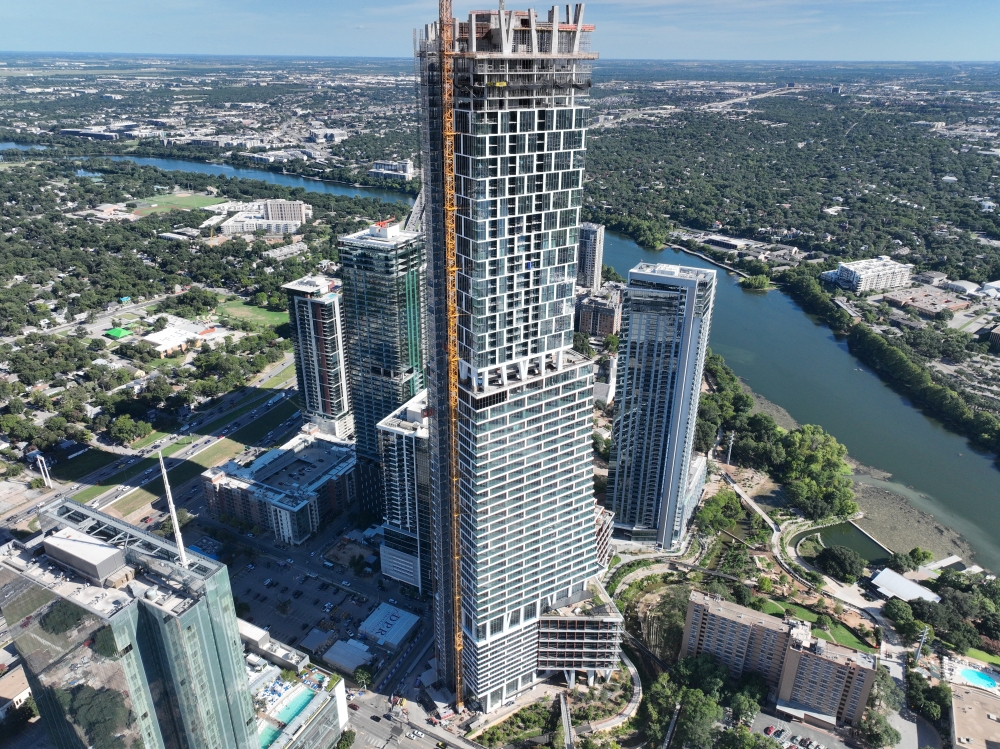
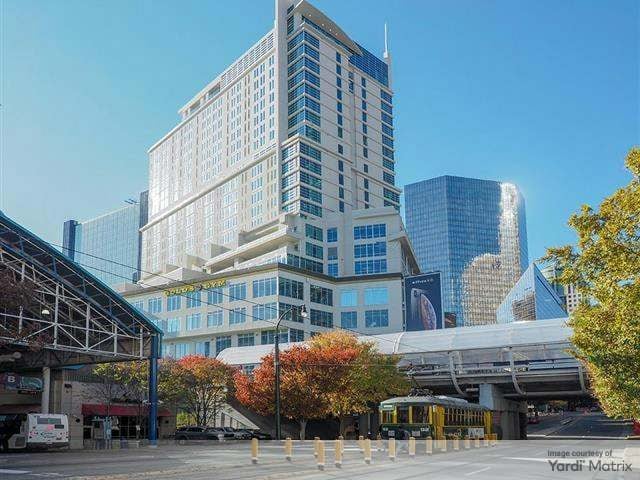
Currently the biggest project underway in the metro is Waterline, also the tallest building in Texas. The 74-story tower topped out a year ago and is set to come online by the end of 2026. The property will include 700,000 square feet of office space across 26 stories, as well as a hotel on 13 floors and residential space.
As of July, Austin saw nine properties come online, totaling 231,781 square feet. This figure accounted for 0.2 percent of its total office space, on par with the national figure. However, office completions more than halved year-over-year. Among peers, Charlotte, N.C. (93.2 percent decline) saw one of the sharpest drops.
Sales surge, pricing ranks among gateway metros
Year-to-date as of July, Austin’s office investment volume reached $1.4 billion, ranking seventh nationally. Dallas ($2.9 billion) and Houston ($1.5 billion) were the only non-gateway metros that surpassed the city. Atlanta ($791.8 million), Phoenix ($790.7 million) and Tampa ($454.2 million) lagged behind.
Austin office space traded for $352.4 per square foot on average, roughly 78 percent above the $198 per square foot national figure. Among peers, Nashville ($465.2 per square foot) is the only market to post higher prices, while Dallas ($213.7 per square foot) and Houston ($158.9 per square foot) properties traded for less on average.
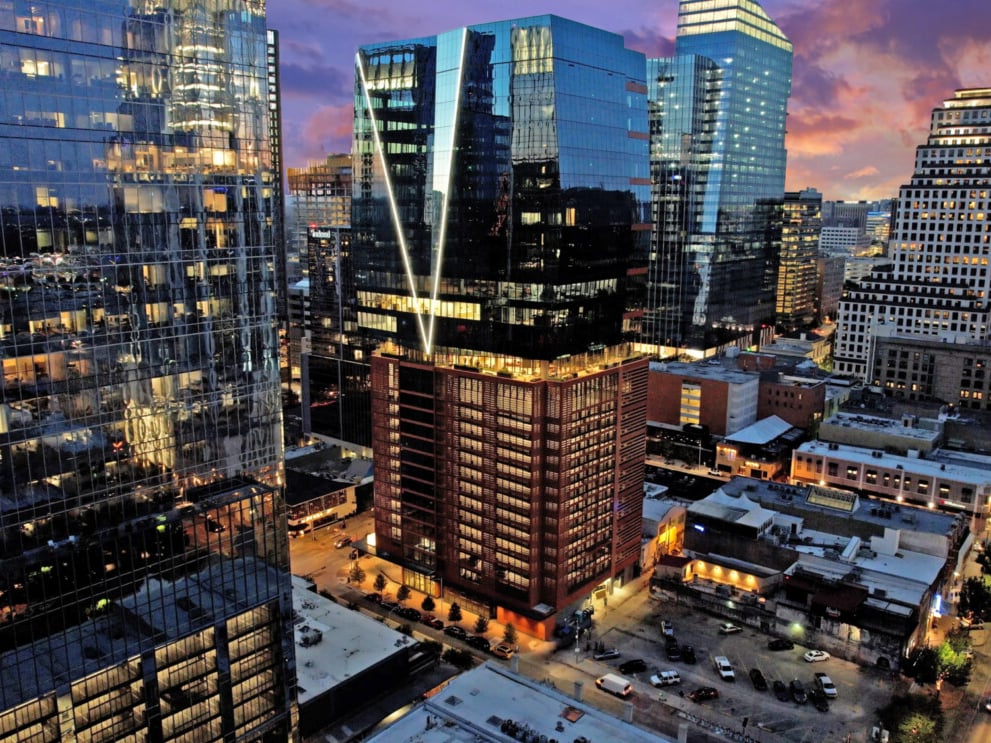
In the third quarter of this year, Cousins Properties received $208 million after the sale of One Eleven Congress, a 518,385-square-foot tower in downtown Austin. Canyon Creek Real Estate acquired the asset completed in 1987 for about $401.2 per square foot, well above the metro’s average trading price.
Other notable deals in the metro include Hines’ acquisition of 405 Colorado, a 205,803-square-foot building, also within the city’s downtown. The company paid $151 million for the asset, almost $734 per square foot, more than double the market’s average during the first seven months of this year.
High vacancy persists despite improvement
Despite a considerable year-over-year improvement, Austin continued to post one of the highest office vacancy rates in the country. The metro’s rate stood at 24.5 percent as of July, down 270 basis points from a year earlier. Still, it was the third-highest figure nationally, trailing only San Francisco (26 percent) and Seattle (24.9 percent).
The national vacancy rate fell 130 basis points year-over-year during the same month, reaching 17.7 percent. Among peer markets, Tampa (14.3 percent) posted one of the lowest rates, followed by Phoenix (16.9 percent) and Orlando (17.4 percent). Nationally, Manhattan recorded the tightest office market, with vacancy at just 10.2 percent.
In July, Renesas Electronics Corp. signed a more than 95,000-square-foot agreement at 3700 San Clemente in Austin’s Southwest submarket. Azrieli Group owns the 257,670-square-foot, five-story building, which came online in 2015.
As of the same month, Austin’s average listing rates increased 2.6 percent year-over-year, reaching $46.77 per square foot. This figure was once again the highest among peer markets, with only gateway cities surpassing it. Manhattan ($71.95) remained the priciest office market in the nation.
Coworking footprint trails peer markets
As of July, Austin’s coworking inventory totaled nearly 2.2 million square feet across 113 locations, representing 2.1 percent of the metro’s total office stock, according to CoworkingCafe. That share trailed the 2.4 percent national average. Among peer markets, Nashville posted the highest coworking share at 3.3 percent, followed by Raleigh-Durham, N.C. (3.2 percent) and Atlanta (2.8 percent).
By square footage, Dallas led the peer set with 7 million square feet of coworking space, followed by Atlanta (5.9 million square feet) and Houston (4.9 million square feet). Austin ranked toward the lower end of the group, ahead of Tampa and Charlotte, N.C., which had 2.1 million and 1.8 million square feet, respectively.
WeWork remained Austin’s largest flex office provider, operating 298,149 square feet across five locations. Regus followed with 197,168 square feet, while Industrious had 194,270 square feet. Expansive also maintained a sizable footprint in the metro, totaling 144,000 square feet.



You must be logged in to post a comment.