


Inflation-Fueled Price Hikes Don’t Deter Retail Foot Traffic
What does this mean for landlords and tenants?
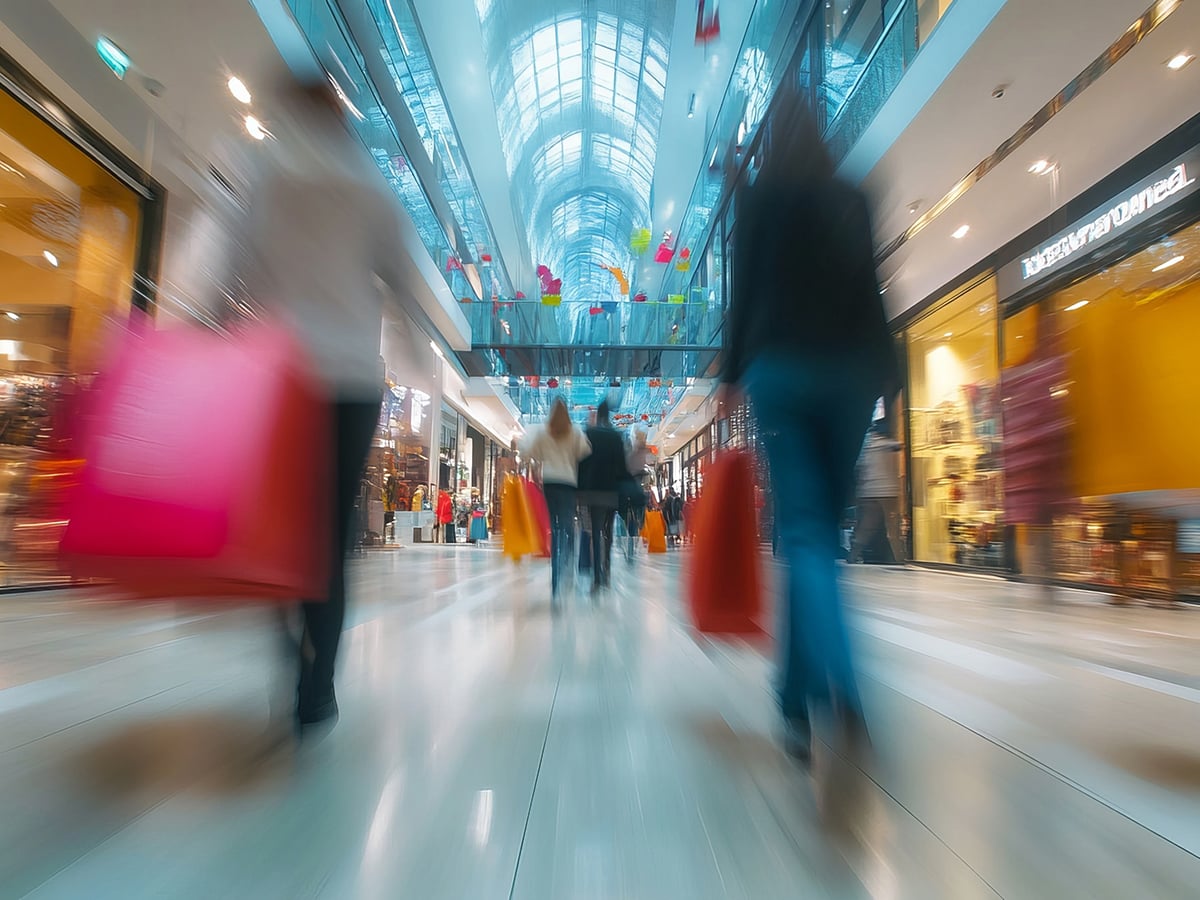
The pace of consumer price growth has reached a three-year high as of May, propelled by elevated inflation. This has, in turn, led to a bump for retail sales, according to Colliers’ most recent update on foot traffic and sales analysis. In the meantime, not only did foot traffic avoid a decline, the figure increased despite some shaky macroeconomic signals.
Retail sales ticked up 5.2 percent year-over-year through May, marking the fastest pace in more than a year, while visits grew 1.9 percent. That figure was 10 basis points higher than the foot traffic registered in 2025.
“Despite historically elevated gasoline prices, persistently high inflation and subdued consumer sentiment, consumers continue to visit stores and spend,” Nicole Larson, senior manager in Colliers’ national retail research division, told Commercial Property Executive.
READ ALSO: CRE Trends at Midyear
“Consumers are becoming increasingly intentional about where and how they spend. Shoppers have certainly become more selective and value-conscious, but they have not stopped engaging with brick-and-mortar retail,” she continued.
High-street retail experiences marked a rise in visitors, with attractions (8.1 percent year-over-year increase) and theaters and music venues (12.2 percent) witnessing the largest percentage rises in foot traffic. Value-driven deals were not far off, with discount and dollar store visits going up 7.8 percent.
Capitalizing on increased foot traffic
Retail property owners and operators could capitalize on buoyant visitor spirit by curating tenant offerings that appeal to guests’ priorities, such as value, convenience, wellness and experiences, Larson said.
“Landlords should prioritize experiential and service-oriented tenants that drive repeat visitation and longer dwell times. Owners can also capitalize on increased traffic by activating common areas through events, programming, pop-ups and partnerships that encourage cross-shopping and extend customer visits across the property,” she reasoned.
Commercial companies across the Northeast may be better positioned to convert visitor interest into enhanced property performance. The region led nationally with a 2.2 percent year-over-year increase in store visits, Larson told CPE. The West and Midwest followed closely, at 2.1 and 2.0 percent. Meanwhile, the South trailed, recording a significantly slower increase of just 0.9 percent.
At a market level, many emerging tertiary metros, as well as leisure-oriented cities, reflected the same retail market trends at a granular level. One of the highest rises in visits—nearly one-fifth—was recorded in Bishop, Calif., followed by Wildwood-The Villages, Fla. (17.2 percent) and Carson City, Nev. (14.3 percent).
Strategies for retail owners and tenants
The increase in foot traffic is a hopeful sign for any owner looking to see potential clients turn into loyal customers. This is true especially since, on its own, the inflation-driven increase in retail sales may not necessarily support stronger rent growth on the landlord side or expansion prospects for tenants.
Retailers may continue approaching expansion strategies with a highly selective outlook, placing elevated importance on proven locations and trade areas with strong demographics, as well as choosing smaller and more flexible store formats, Larson said.
“For landlords, rent growth opportunities remain strongest for highly productive, well-located centers with limited availability, particularly those anchored by grocery, value, experiential or necessity-based tenants,” she concluded.
You must be logged in to post a comment.