

CRE Trends at Midyear
How are the early forecasts stacking up?
This article first appeared in the CPE Sneak Peek Newsletter. Subscribe now for early access to exclusive content, in-depth analysis and key trends!
In late 2025, Commercial Property Executive examined the forces expected to define commercial real estate in 2026. Six months in, the picture is clearer, though the market has delivered its share of surprises. CRE experts and recent reports suggest the industry is largely moving as expected, even as a few curveballs reshape the narrative.
The office revival continues
As return-to-office goes, so goes the health of the office sector. Fortunately for owners and landlords, the return to office continues in 2026 as a slow and steady process.
“We see a continued trend: those who want to be there in person,” said Philippe Lanier, principal at EastBanc. In the Greater D.C. market, for example, there’s even been a modest growth in office footprint in specific sectors, most notably defense contracting, legal and lobbying firms.
“We have also noticed a trend toward younger hires who want to be there in person, and live in the city,” Lanier said. “Properties haven’t capitalized on this quickly, however, so there’s been a limited supply of new space to meet the demand, which has pushed the limited amount of modern spaces toward higher rents.”

Across the country, office visits in April were almost a third below April 2019 levels, a 2.2 percentage point gain from April 2025, when visits were 31.3 percent below 2019, according to Placer.ai data. RTO is still growing, but not quite as quickly as earlier in 2026.
“I would offer the caveat that while we’ve seen continued increase in downtown traffic, it hasn’t turned into steady five day a week patterns, and we still expect that remote work remains a component of the pattern,” Lanier said.
Another factor in the health of the office market in 2026 is the demand-supply dynamic, with the reduction in inventory affecting the market. Net absorption remained positive for the third consecutive quarter in the first quarter, JLL reports, with 3.5 million square feet of occupancy gains.
The strength of the office sector is considerable and, in fact, it will be the leading sector in average annual total returns over the next five years, believes Matt Mowell, senior managing economist at CBRE, speaking during the National Association of Real Estate Editors annual conference in June.
“There’s more office space being torn down or converted than being built,” Mowell said, which is helping the sector correct.
Industrial: after the bump in the road
By the beginning of 2026, the U.S. industrial sector had seen its status as top sector evaporate under the influence of slack demand and a supply hangover. But there were signs that the post-boom slowdown for industrial might merely mean that the sector is back to reasonably good health this year.
Demand for U.S. industrial space grew during the first quarter of 2026, with leasing in the sector totaling 226.7 million square feet, according to Savills. That’s the strongest first quarter since 2022 and an increase of 20.8 percent year-over-year.
“The strength of demand for industrial property so far in 2026 is especially notable given the backdrop of a continued challenging macro environment including higher oil prices,” Savills Vice President & Head of Industrial Research Mark Russo said.
However, there’s also a lot of nuance in the leasing market right now, with landlords and tenants in different negotiating positions depending on factors such as portfolio composition, region or space size.
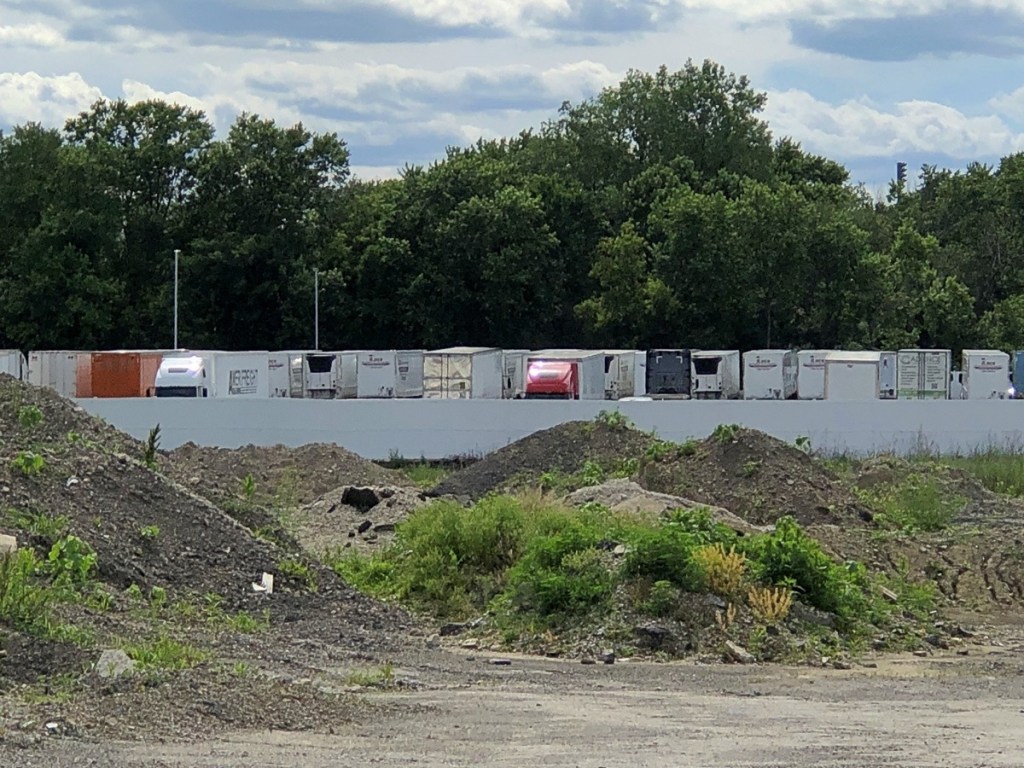
One growth spot in industrial in mid-2026, as it was at the end of 2025, is industrial outdoor storage. The property subtype has hit the big league in terms of investor interest. In June, Alterra IOS obtained a $244 million note from Blackstone Real Estate Debt Strategies, whose initial collateral is of a 37-property portfolio. Altogether, the portfolio includes 165 usable acres of IOS property and 806,000 square feet of warehouse product within major U.S. industrial and logistics corridors.
“The typical tenant profile has expanded from traditional uses such as heavy infrastructure contractors and trailer parking, to include increasingly novel applications like EV fleet charging and energy storage,” said Daniel Tropp, president of AEBOV Industrial Real Estate Brokerage. “This growing demand, coupled with rising rents and relatively stagnant expenses, has attracted even more institutional capital into the asset class.”
Retail: beyond the comeback
For years, the story of retail has been one of a long, hard comeback. By mid-2026, that doesn’t really apply anymore.
“The market has already rendered its verdict,” Adam Ifshin, founder & CEO of DLC Management Corp., noted. ”Demand remains strong, supply remains constrained and operators are seeing the benefits of fundamentals that have been strengthening for years. The conversation today isn’t whether retail is healthy. It’s what happens next when there isn’t enough space to satisfy demand.”
Institutions have realized how strong retail fundamentals are, Danny Finkle, senior managing director & co-leader of JLL’s U.S. capital markets retail group, explained during the NAREE conference in June. Demand is a factor, but so is supply, with many older and lower-performing malls being transformed into something else. Finkle noted that the number of U.S. malls has dropped from a high of 1,500 at its peak to 750 today.
Due to the low inventory, retail today is a widely acknowledged asset class. Travis Robertson, broker & retail brokerage division lead for Riverside, noted that in his home market of Austin specifically, retail is regarded as one of the strongest sectors.
“Grocery stores continue to dominate as anchor tenants, experiential retail keeps evolving and we’re seeing more ultra-high-end luxury brands enter the market,” Robertson said. “Transactions are taking longer, but demand is real and deals are getting done.”

Data centers: front page news
One story in mid-2026 is that public opinion about data centers—something that most people never really cared about before—is now a thing, with unpredictable consequences.
In early June, hundreds of residents came to a public meeting in Lowell Township, Mich., to oppose a $1 billion Microsoft data center campus. Also in June, a Minnesota judge halted construction on a Google data center campus in Pine Island, Minn., in response to a lawsuit. In Nashville, more than 350,000 people signed a petition opposing a proposed data center near the Nashville Zoo.
More than 300 data center-related bills were proposed in over 30 states so far in 2026, and at least 14 states have considered data center moratoriums. The Maine legislature actually passed such a bill, but it was vetoed by the governor.
Sean Farney, JLL’s vice president of data center strategy for the Americas, called the pushback “a pretty recent phenomenon,” telling CPE that there may be “some fear, uncertainty and doubt around AI, and perhaps this negative perception that AI will take jobs away, when the opposite is true.”
And yet data center growth, as essential to the evolution of AI and other data-intense processes, has not slowed down in 2026. NAREIT’s active manager tracker shows the persistent appetite for data center investing. The tracker monitors quarterly investment holdings of the largest actively managed real estate investment funds focused on REIT investment.
In this year’s first quarter, the tracker found data centers saw the largest quarterly and yearly increases of all the property sectors, with 139 percent of its FTSE NAREIT All Equity Index weight in the funds. At the same time, three of the four traditional property types—industrial, retail and residential—were all underweighted in active managers’ portfolios when compared with the index.
Valuations, capital markets, sustainability and more

The economic shock of higher interest rates eased by the end of 2025, only to have the prospect of still lower rates stall in 2026, as energy prices put inflationary pressure on the economy. Nevertheless, CRE seems to have stabilized. The balance of 2026 will see less yield compression than in previous cycles and devaluations are already a thing of the past, according to Mowell, during NAREE’s 2026 conference in June.
On the other hand, CLO and CMBS issuance has flattened, and bidder pools have become shallower. “I think we’re going to have to pull back some of the very strong expectations that we had at the beginning of the year,” Mowell said. Inflation is spurring caution among lenders.
U.S. commercial property prices moved higher in April, with MSCI’s RCA CPPI U.S. National All-Property Index rising 1.1 percent year-over-year and 0.2 percent month-over-month, which when annualized points to a stronger 2 percent annual price increase. The office sector led in price gains, with CBD office particularly hot, up 4.1 percent for the year and 0.8 percent for the month, the largest monthly gain for any property type. The industrial index rose 1.9 percent since last year, with annual price growth slowing for eight consecutive months. Still, prices sit close to the all-time high level set in September 2025.
Elevated borrowing costs remain a headwind for commercial real estate, according to MSCI. Considering accelerating energy inflation due to the war with Iran, the Federal Reserve has paused interest rate cuts, and will probably not resume them any time soon.
Meanwhile, sustainability remains important to CRE, but Jeff Klotz, CEO of The Klotz Group of Cos., told CPE that this year things aren’t quite the same.
“We’re seeing less focus on ESG as a standalone initiative and more focus on operational resilience and measurable financial outcomes” Klotz noted. “Owners are prioritizing investments that reduce insurance exposure, lower utility costs, improve asset durability and strengthen disaster preparedness. The conversation has become far more practical and ROI-driven than it was even a few years ago.”
As for human capital, Klotz remains convinced that talent is one of the most significant differentiators in commercial real estate. Although AI and automation are improving efficiency, they’ve also increased the value of strong operators who can make decisions, lead teams and execute consistently.
“The firms outperforming today are the ones investing in leadership development, accountability systems and organizational culture while simultaneously leveraging technology to eliminate administrative friction,” Klotz said.
CRE predictions at halftime
Six months into 2026, most of CPE’s year-ahead calls are holding up. A few are still too early to judge.
| Prediction | Verdict |
| Creative capital markets | 👍 Still relevant, though lending optimism has cooled |
| Value adjustments | 👍 Pricing has largely stabilized |
| AI adoption | 👍 Still reshaping CRE strategy and operations |
| Record retail leasing | 👍 Retail demand remains strong |
| Strip mall renaissance | 👍 Open-air and grocery-anchored centers keep gaining |
| Infill industrial | 👍 Demand is improving, but unevenly |
| Industrial outdoor storage | 👍 Institutional capital is still flowing |
| Office bifurcation | 👍 Quality assets continue to outperform |
| RTO momentum | 👍 Office visits are rising, but hybrid remains |
| Downtown downsizing | 👍/👎 Mixed signals as footprints evolve |
| Predictive maintenance | Too early to call |
| Green data | 👍 Sustainability is increasingly ROI-driven |
| Data center resistance | 👍 Public pushback has intensified |
| Beyond data centers | 👍 AI is still lifting data center investment |
| Biophilia for wellness | Too early to call |
| Reuse acceleration | 👍 Conversions and demolitions are reducing inventory |
| Reshoring opportunity | Too early to call |
| Human capital imperative | 👍 Talent remains a competitive edge |





You must be logged in to post a comment.