
Lower Manhattan 25 Years Later: Back and Better Than Ever
Inside the journey from 9/11 rubble to reconstruction and reinvention.
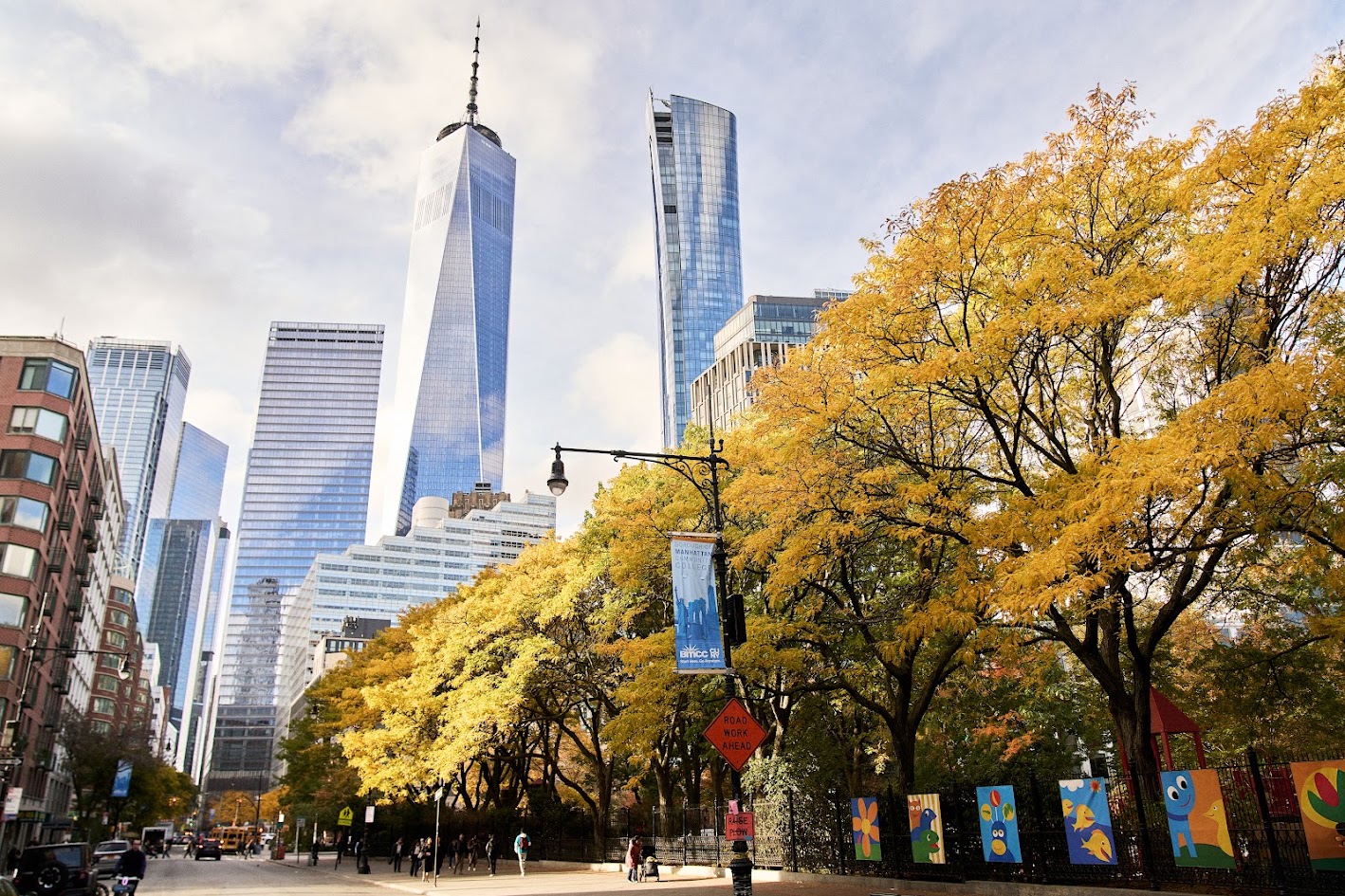
Over the two-and-a-half decades since the 9/11 terrorist attacks brought down the Twin Towers, Lower Manhattan has been transformed from a 9-to-5, finance-centric office district into a vibrant mixed-use neighborhood and destination that stands as a national model for urban renewal.
The number of people calling the area home has more than doubled over this period, from 39,000 in 2000 to more than 80,000 as of this year. Additionally, the office tenant roster, once consisting mainly of investment banks and financial services firms, has welcomed a who’s who of tech, media, publishing and marketing.
Commercial Property Executive spoke with some of the key players in the area’s rebuilding and reimagining to discover why the real estate and cultural renaissance has been such a success and to learn what may lie ahead.
A revival of spirit
Silverstein Properties has experienced these events in as up-close a manner as possible.
Having signed a lease-purchase agreement for the World Trade Center less than two months prior to the attacks, Larry Silverstein, the company’s chairman & founder, knew that it wasn’t only lives that had been taken and buildings destroyed. People’s opinions of Lower Manhattan had been damaged seemingly irreparably. In addition to the initial safety concerns following the attacks, the area lacked the liveliness, openness and accessibility necessary for a neighborhood to be truly desirable. (The pandemic-related disruptions to worklife would later emphasize the need for the area to diversify.)
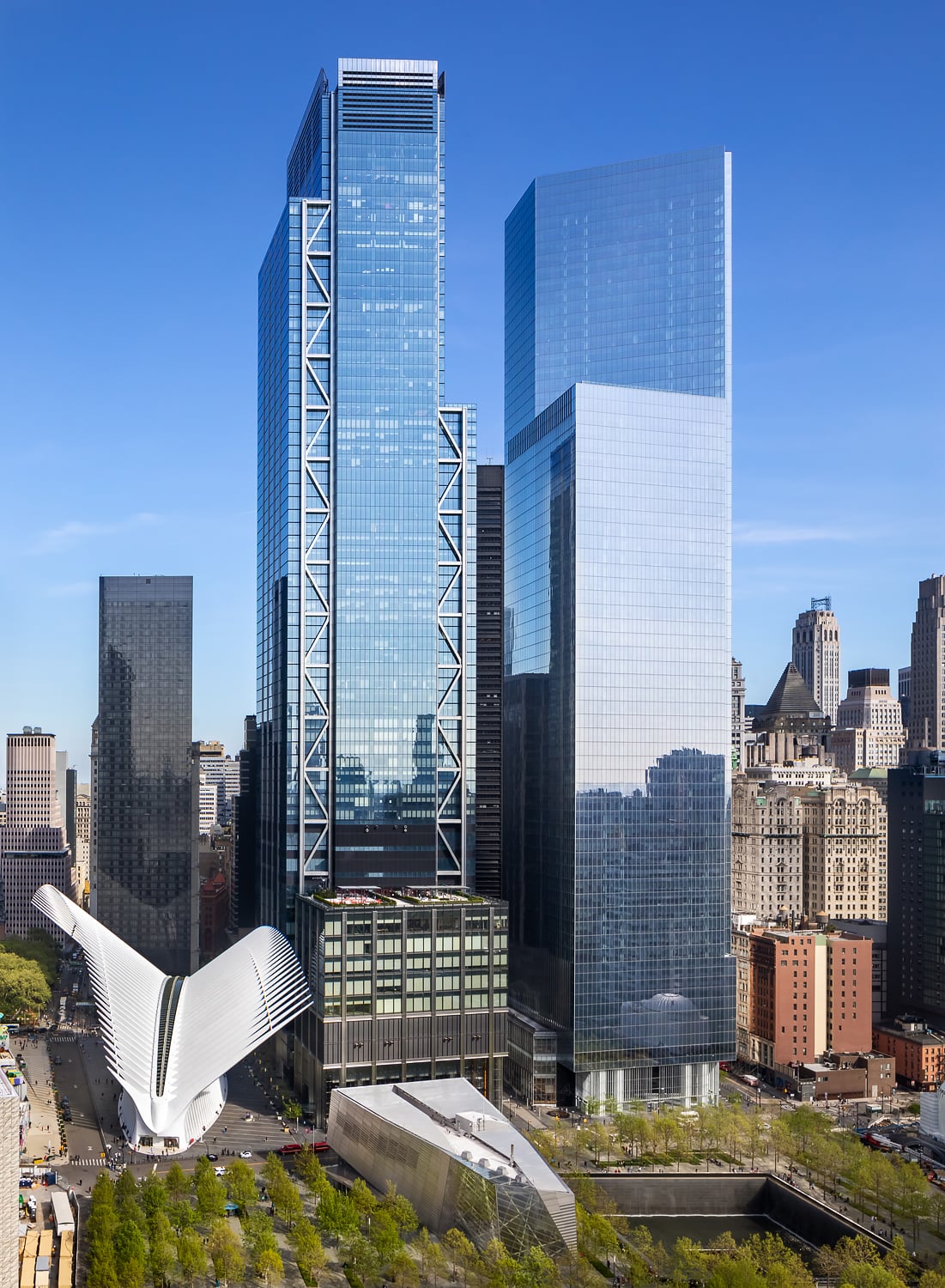
“The perception of this place was always our biggest challenge when building it,” said Dara McQuillan, Silverstein’s chief marketing & communications officer, during a tour of Three World Trade Center, the fourth skyscraper to be completed by Silverstein at the site centered around the September 11 Memorial & Museum. “There were people who didn’t think anyone would ever work in a World Trade Center tower again.”
Consequently, it wasn’t enough for any company building in the area to simply construct the shiniest towers or the most cutting-edge retail concourses. They needed to make them synergize with the neighborhood’s revival while providing a sense of community and safety.
“As we rebuilt the property, (Larry Silverstein) wanted to create a better version of New York,” McQuillan noted. “Yes, you have office buildings, but you also have a performing arts center, a train station, shops and restaurants. But the heart and soul of the project is the eight-acre memorial park and the museum.”
READ ALSO: What’s Driving Mixed-Use Design
This idea of different development types coalescing into a shared vision for the neighborhood’s resurrection is omnipresent. There is no shortage of green space, retail, dining, performing arts venues and museums, the majority of which were built over the past decade. “One of the most significant trends we’ve seen is the continued convergence of uses within urban neighborhoods,” said Aly Abouzeid, vice president of asset management & development for Westfield WTC.
Abouzeid’s company built and operates Westfield World Trade Center, a 365,000-square-foot shopping center that’s part of the Oculus Transportation Hub, a transit nexus that connects the area to 12 subway lines as well as the New Jersey PATH Train. The space is a marked improvement from the longstanding tangle of disconnected, element-exposed subway stations around Cortlandt and Fulton streets, not to mention the heavy commuter traffic that passed around the Financial District.
But for Westfield, the point is not simply to be a one-of-a-kind, over-glorified shopping mall—it’s to add to the experience of spending time in the area.
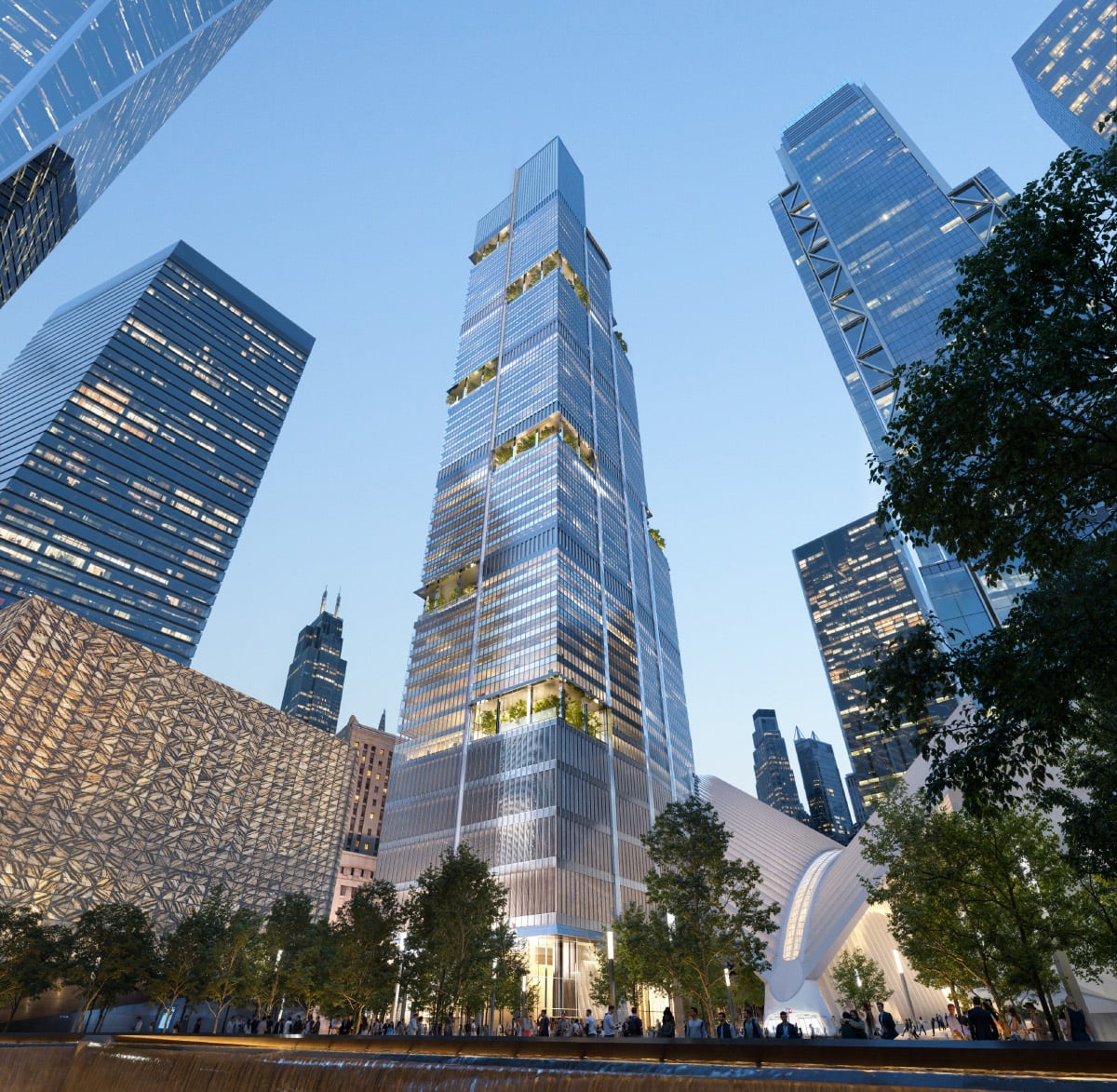
“When it first opened in 2016, we had little insight into how people will utilize and interact with the space, (despite) it being positioned as a retail hub akin to Meatpacking or SoHo,” Abouzeid explained. “People do not experience the campus in the same way. Commuters may move through quickly, while residents use it as part of their daily routines. Office workers come for lunch or services, while visitors may spend more time exploring.”
But the biggest reflection of confidence in the area may be an office development after all. In July, Silverstein broke ground on 2 World Trade Center, a 2.8 million-square-foot skyscraper that will occupy the site of the since-demolished 5 World Trade Center. The $4 billion project will serve as the global headquarters for American Express.
“It’s an enormous show of confidence, not just in the World Trade Center project but in Downtown Manhattan as a whole,” McQuillan reflected. “This is a company that could have gone anywhere, and not only decided to say here but to complete the rebuilding of the World Trade Center.”
It takes a village
Nearly every aspect of the rebuilding—from the street layouts to the office conversions—came from direct interactions with residents, commuters, planning boards and advocacy organizations alike.
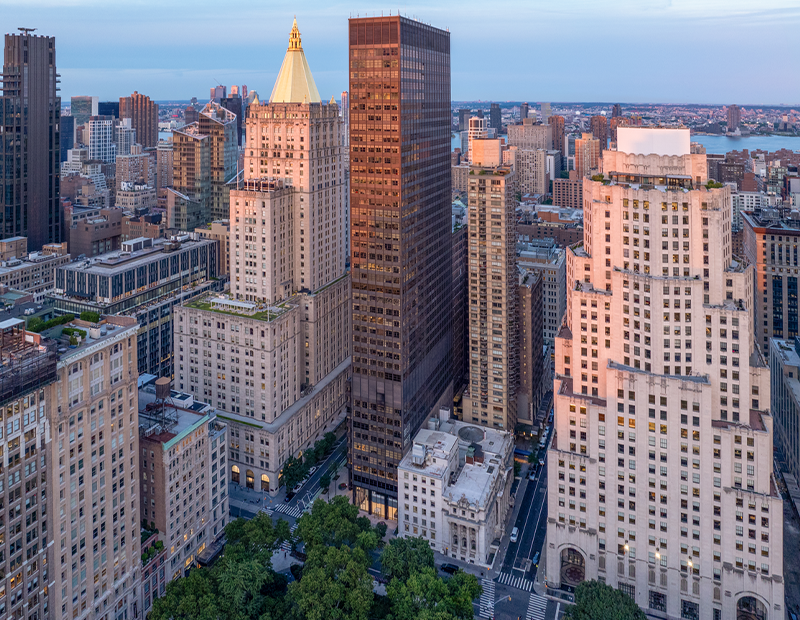
Aisling Gregory, founder of business advisory firm Reverdie Group, recounted her experience overseeing Cammeby’s upgrades of the Woolworth Building, a 1913-built skyscraper in Tribeca. “I wanted to introduce this building to the market in a fresh way without stripping it of its iconic character,” Gregory recalled. “I realized that I needed to do what the neighborhood has done: to create a rich ecosystem within the building by turning to the best experts and operators in these types of spaces.”
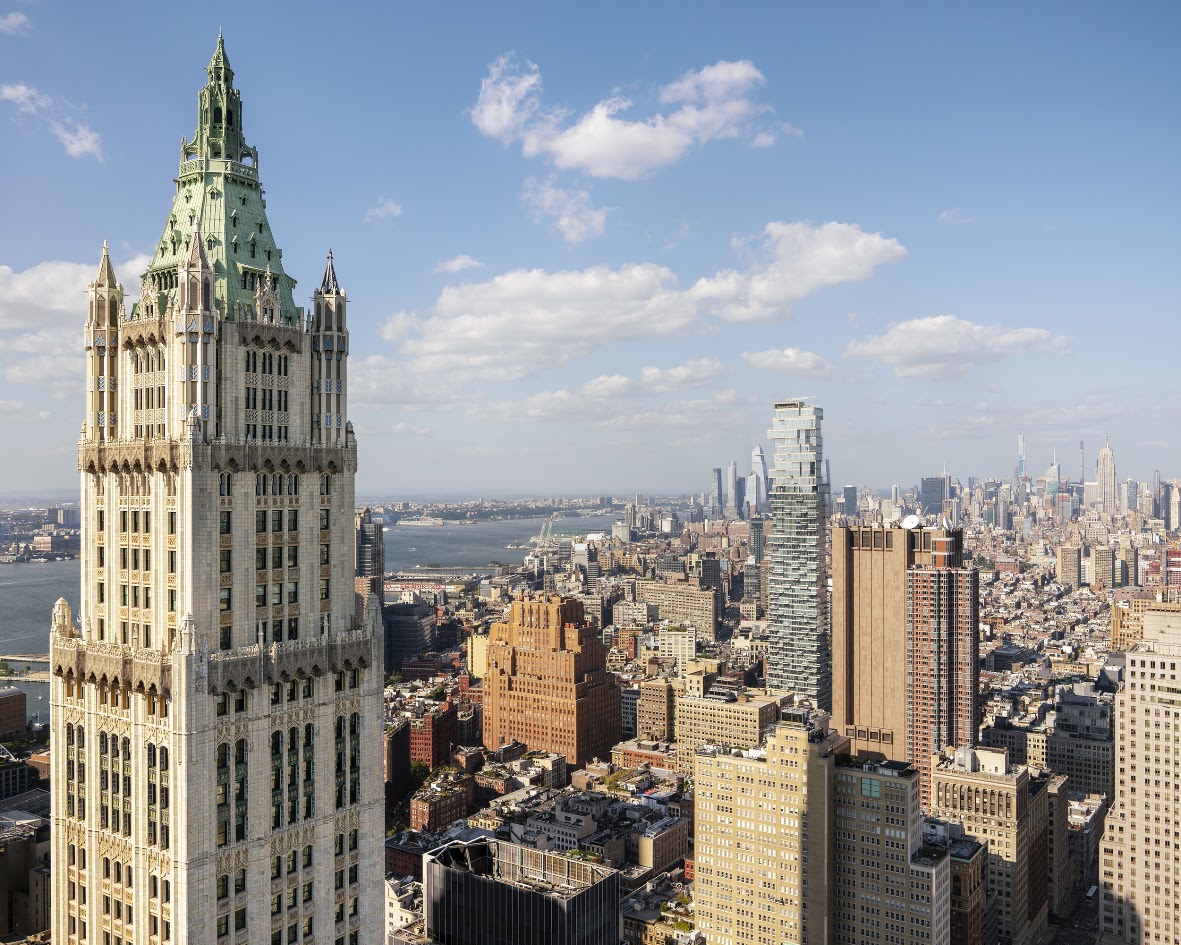
Within the Woolworth Building today, one can find luxury condominiums, office, dining, and public and cultural spaces, all of which fall under the banner of The Woolworth Collective. “We’ve housed artist-in-residency programs, we held events for New York Tech Week, and we’ve brought in a historian who runs a tour company on nights and weekends around the building,” Gregory detailed.
The point was not only to get people to return to the office after the pandemic but to use the building’s character to turn it into a cultural destination emblematic of the neighborhood’s revival. “I feel like it’s almost this embodiment of downtown’s evolution in one address, which is quite fun,” Gregory observed.
READ ALSO: How Hospitality Is Reshaping the Modern Office
Silverstein has also prioritized cultural spaces. As the company leased up space at the new World Trade Center, it would often fill the empty spec suites with art studios, fashion shows, television shoots, galas and dinners.
Even for ground-up residential developers, there’s a shared sense of commitment to the area’s livelihood. When Tavros Capital paid $143 million for a one-acre parcel at 250 Water St. back in February, the goal was to build more than a mixed-use project with 600 multifamily units and 110,000 square feet of retail space. The firm made a commitment to reviving the South Street Seaport District’s urban space, which struggled for decades with legal battles over zoning and reconstruction.
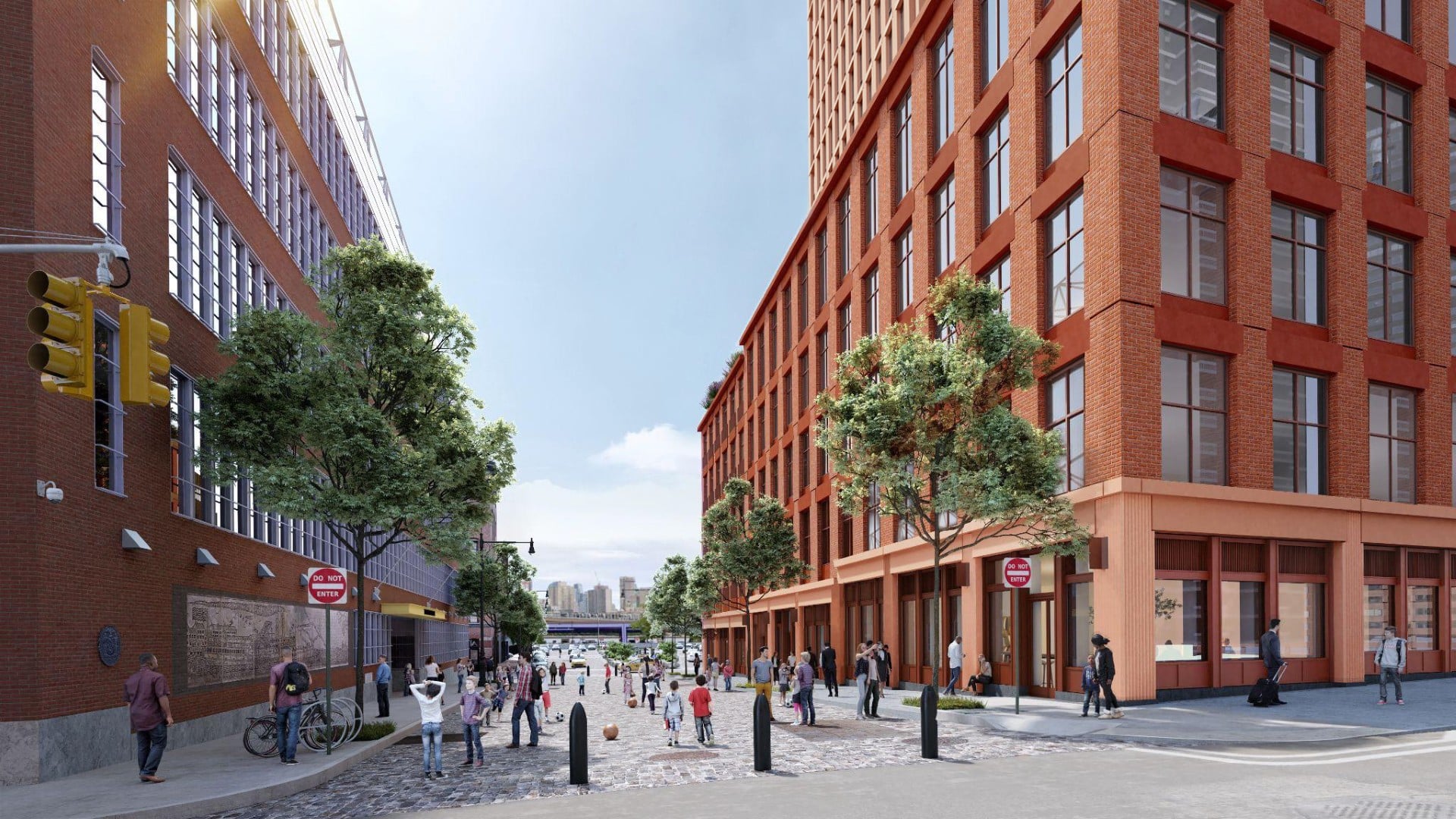
“We want this project—adjacent to the Brooklyn Bridge, with the light, air and views of the Seaport opening out to the cobblestone streets—to symbolize the best of New York,” said Nicholas Silvers, a founding partner at Tavros. “It’s an exclamation point on that evolution and demographic shift.”
It wasn’t just real estate developers, either. Artists and other cultural figures took this idea to heart, too. The Tribeca Film Festival, now an international phenomenon, was founded by Robert De Niro and Jane Rosenthal as a response to the attacks and the subsequent loss of enthusiasm in the neighborhood.
Something for everyone
It’s no secret that the new buildings, street grid and transportation nodes have all given Lower Manhattan a shiny new exterior. But who, exactly, is living in, working in and touring these spaces? In short, everyone.
On the office front, where banking and financial services once accounted for 70 percent of the occupancy of the area’s 125 million square feet of space, that number now sits at approximately 25 percent of 95 million square feet, according to data from CBRE. Both the reduction in the amount of space—with more than 11 million square feet going through the conversion pipeline since 2020—and the ground-up rebuilding of the area’s most notable real estate opened the possibility for new tenants and new configurations.
John Wheeler, an executive managing director at JLL who has overseen more than 25 million square feet of office leasing around the area, attributes this transformation to a mix of newfound accessibility and a vamping up of the area’s retail, dining and hospitality offerings. But the area’s reimagining as a proper neighborhood due to conversions is perhaps most responsible.
READ ALSO: Turning Empty Floors Into New Homes
While conversion candidates in the 1990s consisted mostly of boutique pre-war buildings, post-pandemic conversions are taking place at 1960s-constructed office buildings spanning north of 1 million square feet. “You could look at those properties and intuitively understand why they did not have a future as office buildings,” Wheeler said. “Their conversion represents a new dynamic in the market, which has in turn supported more diverse office, retail and hospitality sectors.”
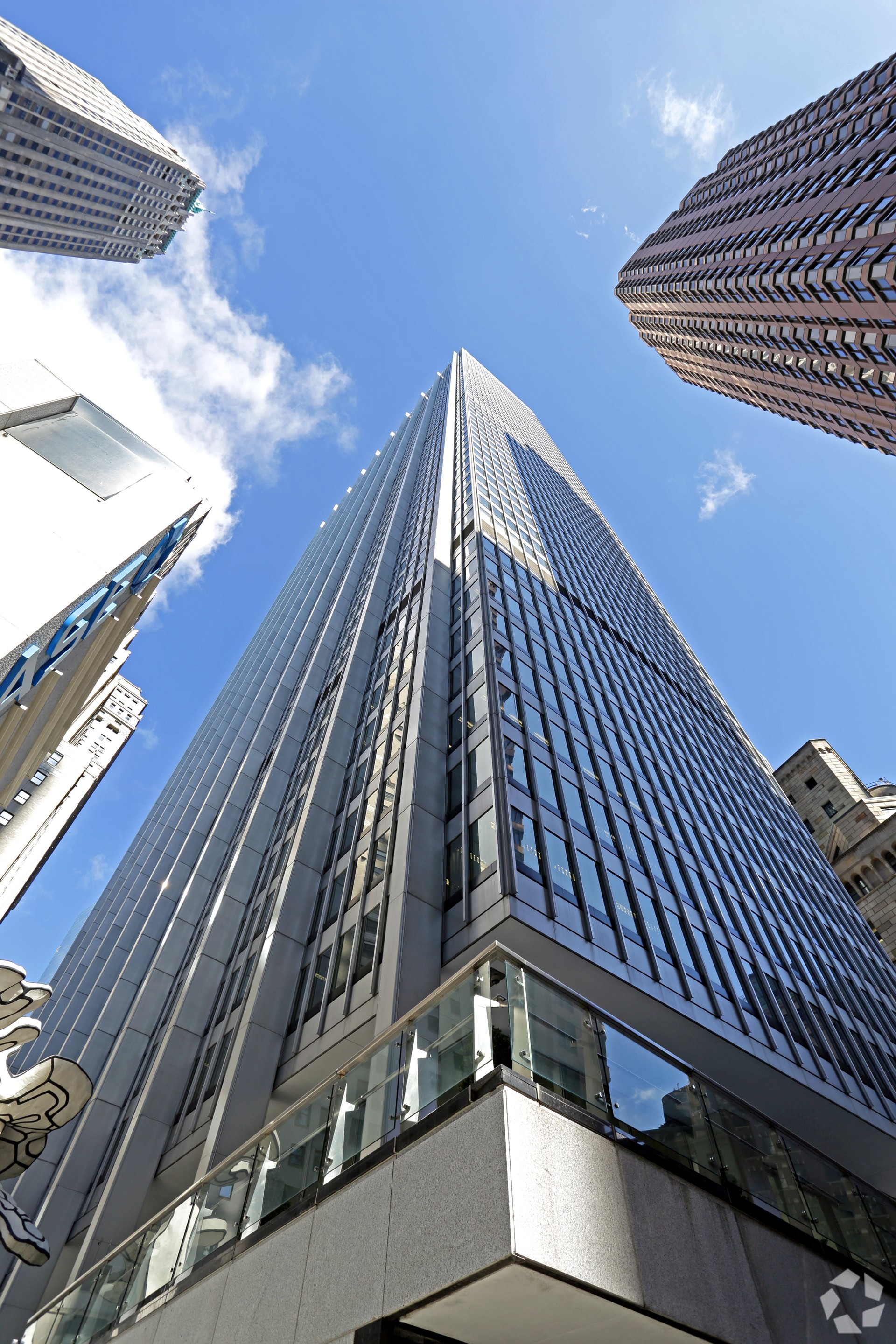
And Wheeler is seeing the impacts of the conversions and the area’s accessibility in real time. “Since (Lower Manhattan) now offers the best proximity to high-value talent, particularly in the 25-to-44-year-old demographic, we’ve naturally seen a significant growth in the creative, technology and artificial intelligence sectors,” Wheeler told Commercial Property Executive.
According to a March 2026 report from the Downtown Alliance, more than 970,000 college graduates live within a half-hour commute from Lower Manhattan, a number that’s grown by 22 percent in the last decade alone.
In November of last year, Wheeler worked with online payment services company Stripe to lease nearly 300,000 square feet at 28 Liberty St.
At Silverstein’s 3 World Trade Center, media giant WPP is the largest tenant, and the building is also home to the North American headquarters for drink maker Diageo. The biggest occupier at 4 World Trade Center is Spotify.
“If you’re a publishing company, it’s a good chance that one of your editors lives in the Village, somebody else might live in Red Hook,” McQuillan reflected. “Everyone has easy access to this place, and I think that’s what’s helped with that.”
McQuillan recalls consulting giant McKinsey & Co. studying the zip codes of every one of its employees in the area, and finding that most lived in or around Lower Manhattan, a trend that’s owed in part to the diversity of housing offerings in the area. “There’s something here for everyone. You can live in a former artist loft in Tribeca if you’re a millionaire or you can live on Wall Street in a converted office building if you’re a (recent) college graduate,” McQuillan said.
Moving into the future
Even though the neighborhood around the World Trade Center may be rebuilt physically, most of the people involved in its revival believe that the true recovery is just getting started.
Gregory sees a sustained recovery as being only as meaningful as the neighborhood’s desirability, and that’s contingent on its existence as a social hub rather than being a place to work.
“Construction rebuilt the skyline, but it’s culture that rebuilt the neighborhood,” Gregory said. “When people want to come here for a social reason, it’ll be a lot easier to encourage them to come work here.”
You must be logged in to post a comment.