


ICSC Special Report: Short-Term Holds, Long-Term Visions
Speakers were optimistic about the sector’s long-term prospects, even if they remain somewhat risk-averse.
Pronounced supply-demand imbalances, a widespread appreciation for in-person shopping experiences and a relative immunity to market declines make retail investment a continuously compelling prospect, even if stakeholders are becoming more selective about how and where they’ll allocate capital.
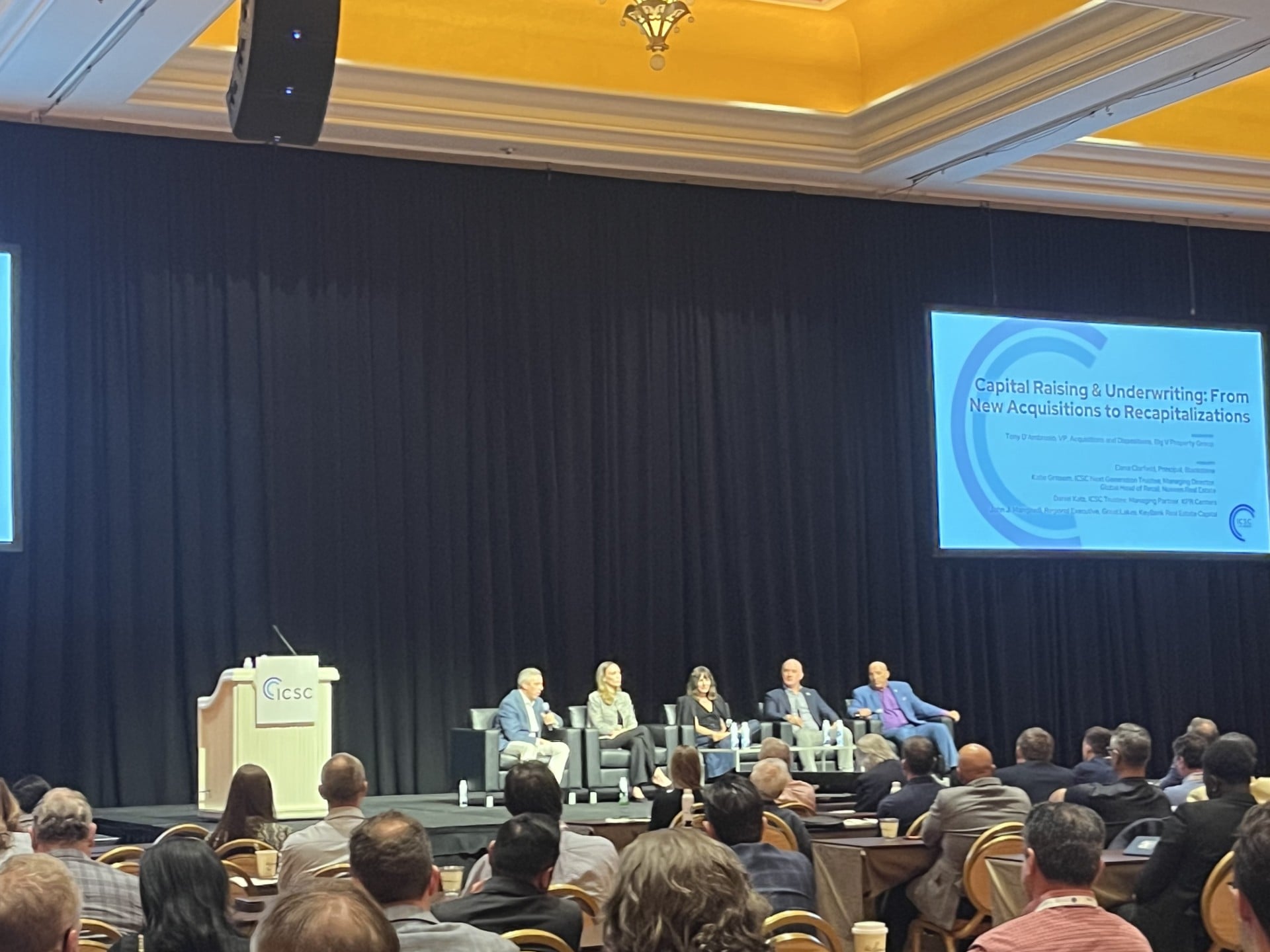
This was a prevailing sentiment held by panelists speaking at ICSC’s Las Vegas event, hosted amid a period of economic uncertainty and weakening consumer sentiment. Consequently, the key to getting ahead in the sector, according to experts, is to view retail as a long-term play, one that requires some necessary concessions in the short run.
Enthusiasm and adaptation
If fundamentals are anything to go by, the retail sector is one of the strongest in all commercial real estate. According to data from CBRE, approximately 4.7 million square feet of space came online in the first quarter of this year, the lowest figure in more than a decade. At the same time, asking rents have increased by 2.4 percent, while overall net absorption remained positive for three consecutive quarters.
“These are all tailwinds,” said KPR Centers managing director Danel Katz at a panel discussion themed around capital raising and deal underwriting.
“We wish we had more vacancy, but this period is the best I’ve seen as far as fundamentals go,” Katz added. “Retail is the only asset class where you can earn a spread over your debt and get positive cash flow.”
When asked if the current demand is the peak of a cycle instead of a sector poised for long-term stability, the panelists seemed skeptical on account of the fundamentals and institutional investor interest. But some of their demographic strength and net operating income-centric underwriting strategies suggested otherwise.
“We can look at any shopping center, and unless the sales are there, we’re gone,” Katz emphasized. “You want that occupancy rate in the high 90s.”
READ ALSO: Ground Control: Retailers Are Leaning Into Buying Their Spaces
Blackstone principal Elena Clarfield agreed with the latter position but also highlighted a more tailored investment strategy for Perform Properties, her firm’s $10 billion retail investment arm.
It’s steering more toward open-air shopping centers, high street retail and urban luxury stores than shopping malls and power centers, which are struggling due to a string of recent big-box bankruptcy filings. “(They’re) downside-protected because the fundamentals have improved, even if properties can’t quite grow from outsized NOI growth,” Clarfield said.
On the underwriting front, economic volatility has led to more cash flow dependent and seller-centric investment strategies, even for the most well-capitalized buyers.

Katie Grissom, managing director & global head of retail at Nuveen Real Estate, said that when she joined the firm, the standard hold period was 10 years.
“Now, we’re mainly underwriting five-year holds,” Grissom said. “There’s also lot of focus on what percentage of our NOI is coming from tenants that are non-discretionary in nature, in addition to an asset size, liquidity and demographic focus.”
“If there’s no ability to grow NOI in the near-to-medium term, be more judicious about exposure to box tenants and anchors,” Clarfield cautioned.
P. David Bramble, a co-founder and managing partner at MCB Real Estate struck a similar tone in a panel discussing dealmaking trends. “The expertise of the operator is more valuable than it has been in a really long time,” he said. “Seeing the changes that you make at a community is its own reward, but you’ll never get there if the math doesn’t work.”
The view from ground level
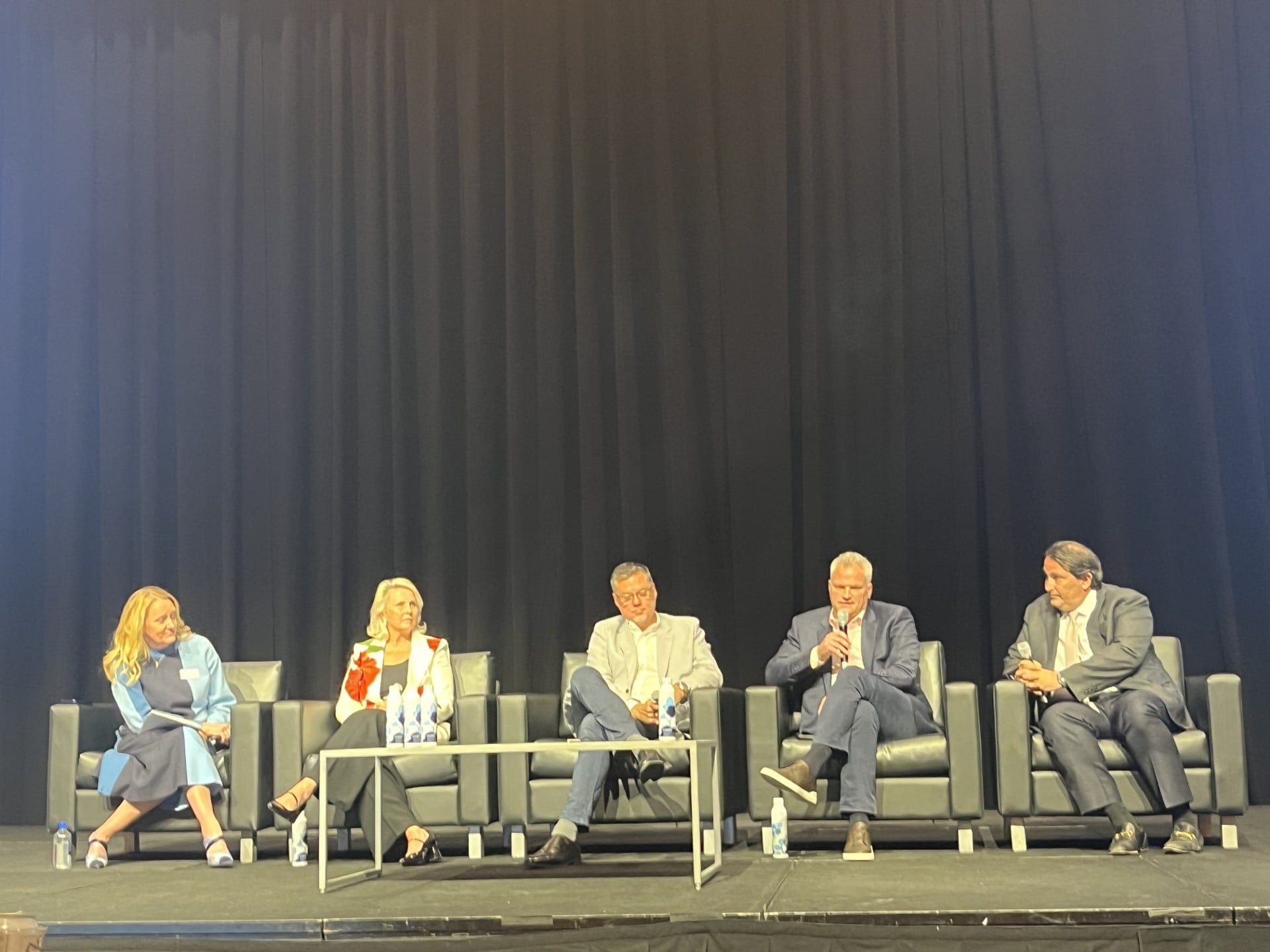
Despite the more sober viewpoints held by the investment committees, retail developers and operators view the sector’s evolution as a learning opportunity, one they hope can better connect them with customers.
“Part of what we evaluate now is not only what the customer wants, but those who are not coming to our shops and how to attract them,” said Paul Kurzawa, president of Centennial Real Estate. Equally important to a strong tenant roster is a space’s ability to foster human connections. “Gen Z wants to be at the mall, they want to experience things, and retail stores need to help them make that connection.”
Winning these sought-after no-shows can sometimes necessitate the redevelopment of an existing asset. “The best thing is land, whether it’s large parking lots, vacant boxes or underutilized strip centers,” said Donna Blair, chief operating officer at Pacific Retail Capital Partners. If one doesn’t plan to sell, they need a “long-term vision,” for an otherwise struggling retail center, Blair advised.
For the stores themselves, stakeholders are leaning into more flexible leasing models, opting for shorter-term stays as master-planned projects come together. “That often gives us more flexibility to control the real estate when we need to,” Kurzawa noted.
Equally important to what’s in a store is what surrounds it, with stakeholders leaning into media, dynamic space activation and experiential platforms to drive foot traffic and NOI alike. “Things like a Van Gogh exhibit, Bodies or an Imaginarium may be temporary, but they always give people a new reason to visit,” Blair said. “It’s amazing how much capital pickleball courts need, but if they’re important to the consumer, they’re worth it.”
At the same time, some even less intensive capital strategies such as greenery-centric landscaping and a smooth parking experience can make all the difference when it comes to a property’s long-term success, according to Dominic Lowe, chief operating officer at Unibail-Rodamco-Westfield.
“It doesn’t take massive amounts of capital,” Lowe said. “It takes ingenuity.”

You must be logged in to post a comment.