


Saks Global Bankruptcy Raises Questions for CRE
The luxury retail conglomerate will be evaluating its portfolio as part of the Chapter 11 proceedings.
After debt-ridden Saks Global Holdings LLC filed for Chapter 11 bankruptcy and secured about $1.8 billion in financing this week to maintain its stores and e-commerce operations, questions remain over the durability of its retail footprint and the long-term implications for its commercial real estate holdings and leases.
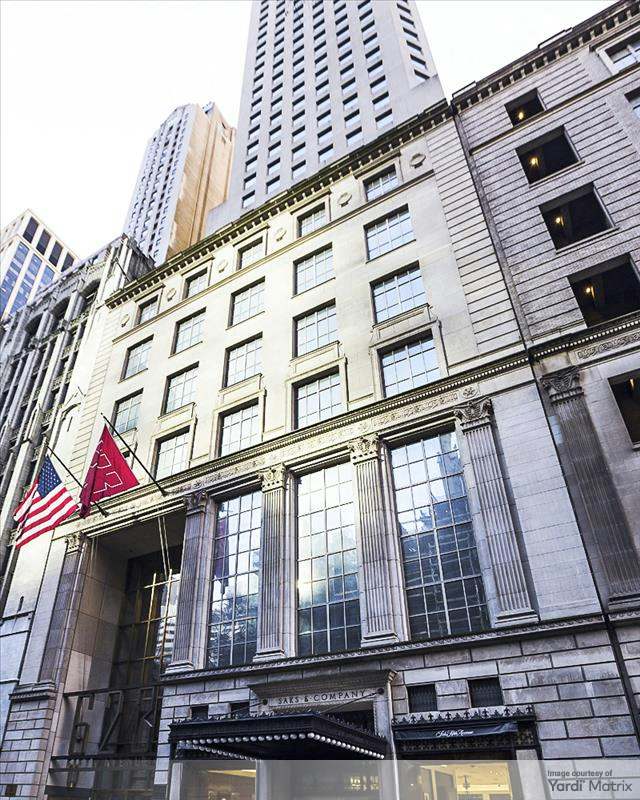
The luxury store conglomerate—formed just about a year ago in a $2.7 billion deal that was meant to bolster the futures of such high-end retailers as Saks Fifth Avenue, Neiman Marcus and Bergdorf Goodman—filed for bankruptcy protection late Tuesday. But the deal carried about $2 billion in debt financing and equity investments from investors like Amazon and Authentic Brands.
Saks Global fell increasingly behind in payments to vendors and then missed a $100 million debt payment in December just as holiday sales were declining. The stores have also been facing increasing competition from other high-end retailers, including luxury brands with their own stores and websites.
As news broke about the Chapter 11 filing, Saks Global also announced Geoffroy van Raemdonck, who previously served as CEO of Neiman Marcus Group prior to its acquisition by Saks Global in 2024, would take over as CEO of Saks Global. He replaced Richard Baker, who had been the architect of the 2024 deal for former Saks owner Hudson’s Bay Co. to take control of Neiman Marcus and create a luxury retail juggernaut. Baker had just taken over the CEO and executive chairman roles at the beginning of January.
READ ALSO: High-Street Retail Regains Traction in the ‘New’ Downtown
The company also secured what’s known as “debtor-in-possession” financing to strengthen the balance sheet while the Chapter 11 process unfolds. The $1.8 billion financing includes $1.5 billion from an ad hoc group of the company’s bondholders and approximately $240 million of incremental liquidity from its asset-based lenders.
Van Raemdonck said in a statement Saks Global was facing a defining moment, adding “the path ahead presents a meaningful opportunity to strengthen the foundation of our business and position it for the future.”
Closer look at retail implications
The company operates about 70 full-line luxury locations and owns or has ground leases on about 8.4 million square feet of U.S. real estate holdings and investments, according to its bankruptcy filing. That includes 33 Saks Fifth Avenue stores, 36 Neiman Marcus locations, 2 Bergdorf Goodman stores and 77 Saks OFF 5th locations. Saks Global said its stores and e-commerce operations are all open.
However, a news release noted that as part of the Chapter 11 process, the company “is evaluating its operational footprint to invest resources where it has the greatest long-term potential.” The statement added this approach reflects an effort to focus the business in areas where the company’s luxury brands are best positioned for sustainable growth.
That could mean malls with multiple Saks Global stores, could see one of the retailers shutter. For example, both Saks and Neiman Marcus are anchors at Simon Property Group’s Galleria Mall in Houston. Analysts told Reuters those kinds of co-locations will be part of the portfolio review and could be among the first where assets would be sold.
More immediately though, there are about four stores that are no longer operating, known as “dark stores,” that could be closed down. Reuters reported Saks Global asked the court in the Chapter 11 filing for permission to shut down such “dark stores.”
The company may look to sell off some of its retail assets or properties. In December, Saks Global sold the land under the Neiman Marcus stores in Beverly Hills and San Francisco for about $100 million, according to the Wall Street Journal. The WSJ also reported the company had been trying to sell 49 percent of Bergdorf Goodman for about $1 billion.
Some retail experts suggested the company may look to execute some sale-leaseback transactions to provide liquidity, consistent with broader retail trends among capital-constrained operators. Reuters reported Saks Global owns or controls ground leases at 39 of its store locations around the U.S. However, it’s not yet clear how much equity the company has in its holdings that could be made available to creditors. The Fifth Avenue flagship in Manhattan has been appraised at about $3.5 billion with debt of $1.25 billion, according to the New York Post.




You must be logged in to post a comment.