


Industrial Report: EV Manufacturing Slows, Demand Holds
The electric vehicle transition is taking longer than expected, reshaping manufacturing plans even as key fundamentals improve.
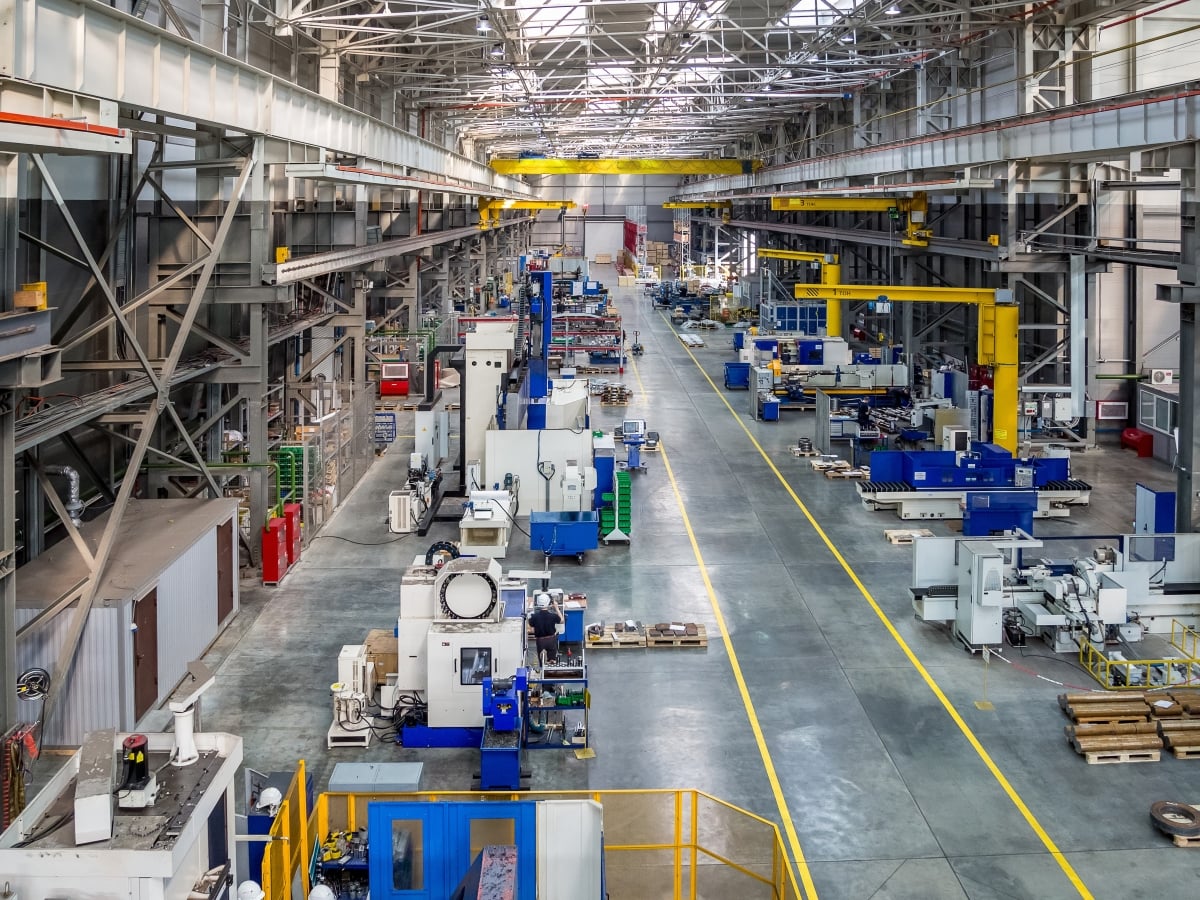
The electric vehicle industry is no longer delivering the immediate industrial demand boost many expected only a few years ago.
Automakers have delayed, canceled or repurposed major projects as EV adoption has fallen short of earlier forecasts, reflecting affordability concerns, charging limitations and shifting federal policy. Nearly $200 billion in EV manufacturing investment was announced between August 2022 and the end of 2024, but projects including Panasonic’s 4.7 million-square-foot facility in DeSoto, Kan., and Ford’s BlueOval City development in Tenn. have since changed course.
Still, the July 2026 Yardi Matrix Industrial National Report stops short of framing the transition as a long-term retreat. Battery costs continue to fall, vehicle ranges are improving and charging infrastructure is expanding. More than 18,000 fast chargers were installed nationwide in 2025, up 30 percent from the prior year. Walmart’s rollout of chargers at supercenters and neighborhood markets could further improve access, particularly in suburban and rural areas. The result is a slower and more volatile transition, rather than the disappearance of EV-related industrial demand.
Leasing conditions continue to normalize
National in-place industrial rents averaged $9.20 per square foot in June, up eight cents from May and 5.3 percent year over year. Rent growth has slowed across most major markets, however. Only the Inland Empire, Atlanta and Miami posted annual gains above 7 percent, compared with eight markets a year earlier. The Inland Empire led with 8.4 percent growth, followed by Atlanta at 8.1 percent and Miami at 7.3 percent.
READ ALSO: Data Centers Are Creating Spillover Industrial Demand. Will It Last?
Vacancy held at 9.1 percent, only 10 basis points higher than a year earlier, suggesting availability has plateaued as development moderates and demand normalizes. The premium on recently signed leases also continued to compress. Leases executed during the past 12 months averaged $10.02 per square foot, just 82 cents above the national in-place average, compared with a $1.58 spread one year earlier. Miami retained the widest premium at $3.26 per square foot, followed by Nashville at $2.92 and Bridgeport at $2.63.
Atlanta development rebounds as capital targets manufacturing
The national construction pipeline expanded to 399.5 million square feet, equal to 1.9 percent of existing stock. Phoenix had the largest industrial development share among major markets, with 30.2 million square feet underway, or 6.7 percent of inventory. Dallas led by total square footage with 31.2 million square feet under construction.
Atlanta is again emerging as a warehouse development center after a brief pullback. Developers started 8 million square feet of warehouse and distribution space in 2025 and another 5.3 million square feet during the first half of 2026. River Park E-Commerce Center is helping drive that rebound, with three buildings totaling 3.3 million square feet starting construction during the past year.
Investment activity remained active in the first half, with $40.7 billion in industrial properties trading at an average of $141 per square foot. The Bay Area stood out as pricing rebounded to $318 per square foot, supported by manufacturing transactions in Fremont. Six properties totaling approximately 900,000 square feet traded there for $402.5 million, or $447 per square foot on average.

You must be logged in to post a comment.