

SIOR Special Report: What’s Driving Industrial Development
Demand is plentiful, but developers must take care not to get over their skis, panelists advised.
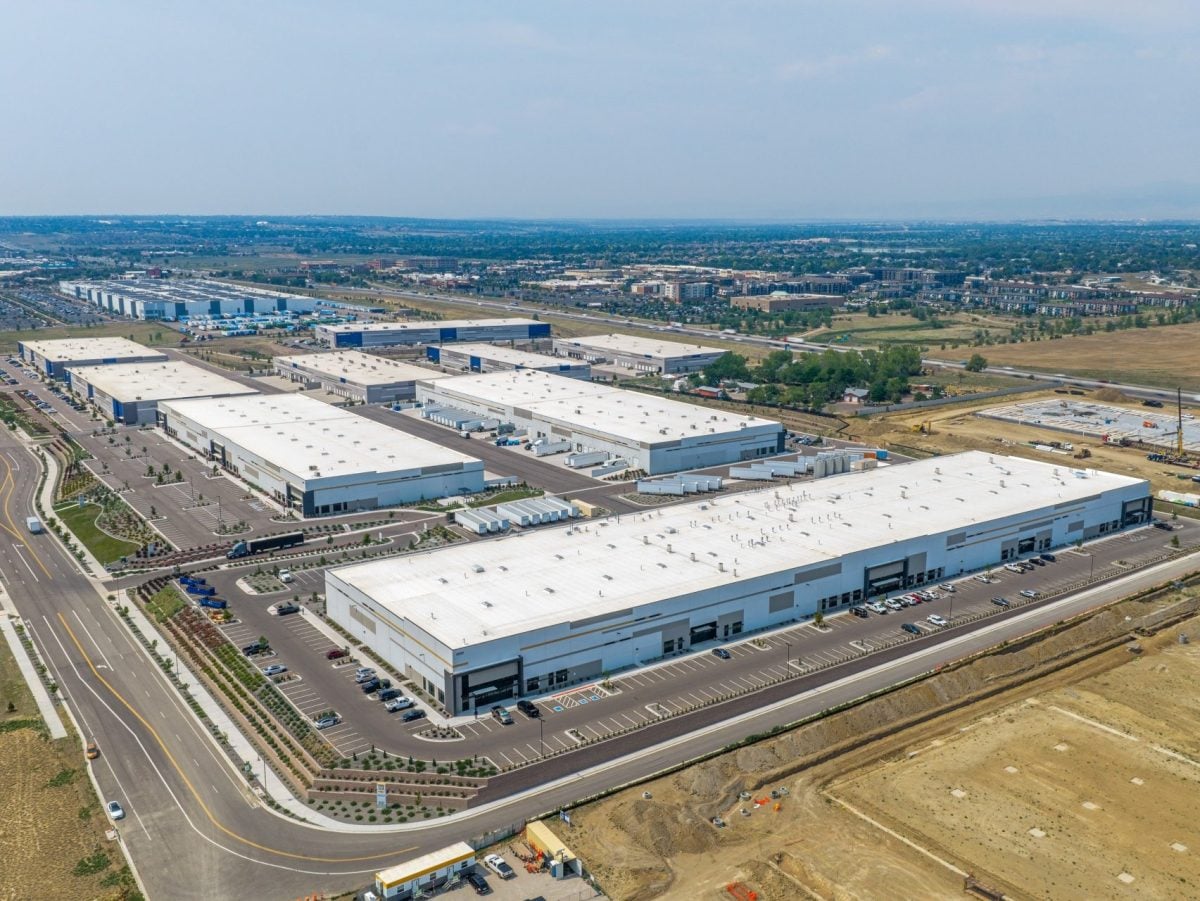
Industrial development still brings plenty of demand across the country, yet developers must be prudent in underwriting and take care not to get over their skis. That was a recurrent note last week by developers at SIOR’s Fall Event in New York City.

When it comes to financing projects, “There’s plenty of dry powder that people have been sitting on,” said Jeff Lanaghan, senior vice president & partner at Becknell Industrial.
Nevertheless, “You have to be very disciplined and transparent with your brokers, your capital partners and everyone on what you can achieve and what you can’t achieve.” That upfront transparency will help ensure that clients will understand when circumstances demand changes, he added.
Although construction costs are now rising far more slowly than during the most difficult period of pandemic-related supply squeezes, developers must deal with considerable uncertainty. Panattoni is having “a lot of hard conversations on things that were looking great six months ago that don’t look so good today,” said Ian McDonald, a partner at the company. Circumstances are creating what he called “white-knuckle underwriting,” with a margin of safety required to account for inflationary pressures.
Pricing challenges today stem largely from all the variables in what the market is doing. “Contractors can’t hold pricing the way they have,” observed Sheila Sutton, vice president & head of development management at Prologis. Initiating conversations with procurement partners early in the development process and securing such products as switchgears, mechanical equipment and roofs is helpful. So too is the ability to procure those products at scale, as Prologis does, Sutton added.
READ ALSO: Data Centers Are Giving Warehouse Demand a Jolt
According to Lanaghan, “The goal is to eliminate as much uncertainty as you can” by pricing out bigger systems up front. Also advisable: making it clear to clients which allowances are plugged into pricing to accommodate for unknowns.
Driven by data centers
Referring to data centers, the 800-pound gorilla of development, McDonald observed, “It’s been a little bit wild.” In addition to the hyperscale facilities themselves, the trend is also driving demand for data center-adjacent projects. In Northern Virginia, industrial leasing velocity has doubled from the typical 1 million to 2 million square feet on the strength of demand from data center-adjacent end users, he added.
Becknell has just closed on a site in Indiana for a small-bay industrial facility. Nearby data center development is generating spillover demand, and there is little local competition from comparable small-bay facilities.

A touch of caution is in order about data center development. Sutton recommends not getting too far ahead of news articles and announcements about proposed data centers and “making sure the plans behind them are in place.”
Regarding another key industrial sector, advanced manufacturing, clients prefer build-to-suit facilities to meet specialized needs. A single building typically has multiple components, each with unique requirements, Sutton noted. “We’re really evaluating clear heights to help future-proof facilities for possible addition of pallets.” Given the tens of millions of dollars of investment required for the specialized inner workings of these projects, many clients prefer to own the buildings.
READ ALSO: Industrial Pricing on the Rise, Dollar Volume Follows
Entitlement’s gray areas
The regulatory environment also presents potential pitfalls for industrial developers. Under the California Environmental Quality Act, project approval in the Golden State is notoriously time-consuming, taking two years or more, noted the panel’s moderator, Ethan Smith, a senior vice president at Newmark Pearson Commercial.
“There’s a lot of gray” in northern New Jersey and Pennsylvania as well, McDonald said. “A lot of what (public agencies) want is subject to interpretation.” When a developer is scoping out project sites for acquisition, educating property sellers is essential, as well. “I’m tired of hearing, ‘We’re by right’” from landowners, McDonald said. “You have to have permits, you have to be able to break ground.”
Education and transparency are essential in the entitlement process, panelists emphasized. “You have to have the (land) seller go with you to meet with the community and the municipality,” Sutton said. “Explaining what’s happening makes it less scary.”
Smith concluded the session by asking the developers for their advice to the brokers in the audience. “Bring me the land site, you get the listing,” Lanaghan said. Becknell is constantly evaluating a large number of sites, “so don’t be offended if I tell you no five times, 10 times, 100 times … Let’s establish a relationship so when you bring it to me, I’ll be excited.”




You must be logged in to post a comment.