


Older Industrial Campuses Gain New Relevance
As replacement costs rise, investors are targeting well-located, functional assets with durable demand and hard-to-replicate infrastructure.

As the U.S. industrial sector continues to rebalance, investors are taking a closer look at older industrial campuses that would be difficult and costly to reproduce. Their appeal rests on the combination of large sites, existing infrastructure, heavy power, functional spaces and locations close to customers, workers or established business corridors.
Industrial absorption hit 113.6 million square feet in the first six months of the year, its strongest performance since 2023, according to a recent Cushman & Wakefield report, while vacancy declined to 6.9 percent as new deliveries remained relatively modest.
At the same time, elevated construction costs, higher interest rates and limited infill land continued to make new development hard to justify in many markets. That has drawn more value-add and opportunistic capital to existing industrial product, according to Emily Brandt, director of industrial capital markets at Cushman & Wakefield.
“These funds are leading the charge because the basis is attractive right now,” Brandt said. “With construction costs and interest rates still elevated, new development is more difficult to pencil, particularly for shallow bay industrial campuses in infill submarkets, pushing more of these investors into existing product instead.”
What are investors looking for?
Interest is primarily concentrated in assets that can be acquired at a meaningful discount to replacement cost and repositioned for users that do not require the specifications of newly built facilities.
That discount must be large enough to accommodate capital improvements, lease-up risk and rents that may remain below those of Class A properties. The objective is not necessarily to transform an older industrial campus into new product, but to create a functional, cost-effective alternative in a location where tenants want to operate.
READ ALSO: Data Centers Are Creating Spillover Industrial Demand. Will It Last?
Routine Properties saw that opportunity at Bristol Business Park, a 37-acre industrial campus in Bristol, Conn., dating to the early 1960s. Strategically located between Boston and New York City, the property has more than 400,000 square feet and had a creditworthy anchor tenant in place when Routine acquired it earlier this year. According to Bristol Press, the company paid $7.5 million for the park.
Evan Goldfine, partner at Routine Properties, told Commercial Property Executive that the campus’ infrastructure would be “extraordinarily expensive” to replicate today.
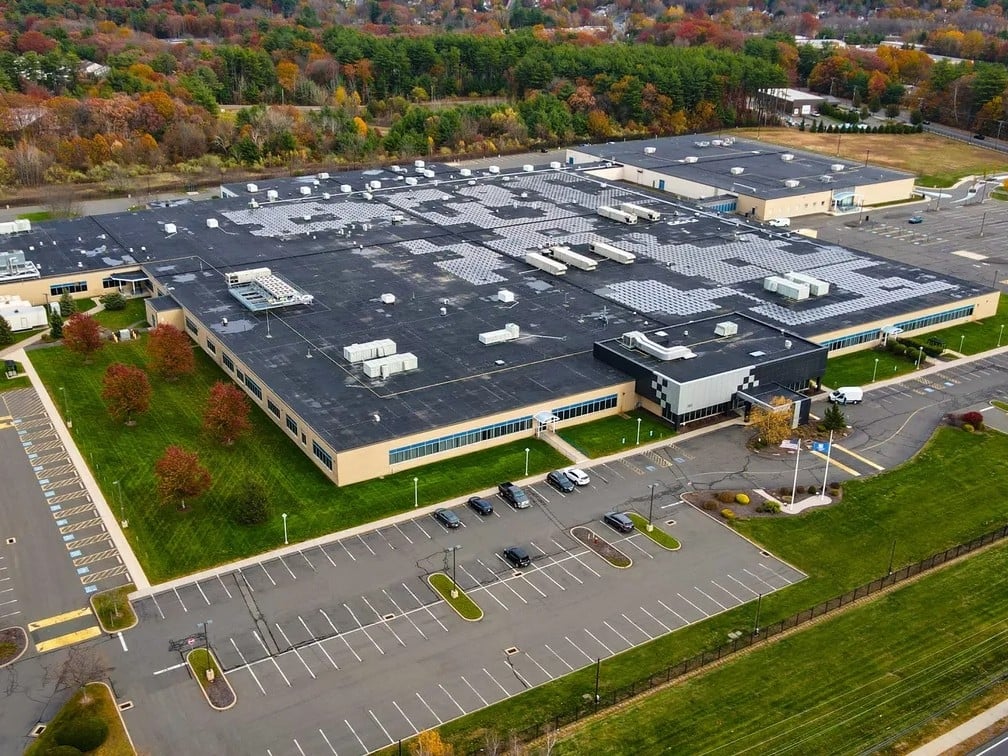
“You simply cannot build this at anything close to what we paid per square foot,” Goldfine said. “Even after our planned upgrades, we can offer high-quality industrial and flex space at roughly half the cost of new construction in the same market.”
That lower basis allows Routine to serve tenants seeking functional industrial or flex space at more attainable rents.
Whether that strategy succeeds, however, depends on the condition and adaptability of the physical asset.
Not every older industrial campus has a viable second life. Highly specialized buildings can be prohibitively expensive to reconfigure, particularly when post-renovation rents would still reflect Class B or Class C product. Stronger candidates tend to be less specialized, reasonably functional properties, located in submarkets where tenants value access and affordability more than the latest logistics specifications.
At Bristol Business Park, Routine found a campus that had evolved from electrical-component manufacturing to primarily office use. The structure allowed the Routine to divide the footprint for multiple tenants and add loading docks for industrial users. Previous ownership had also maintained the roofs and building systems, giving Routine a path to targeted upgrades rather than a full gut rehabilitation.
READ ALSO: NAREE Special Report: Does Industrial Demand Foreshadow New Development?
That distinction is especially important when capital is expensive. Properties with usable structures and well-maintained systems can support incremental improvements, while those requiring major structural corrections may struggle to generate sufficient returns.
Existing power infrastructure is another increasingly important differentiator. As manufacturers and other power-intensive users compete for electrical capacity, campuses that already have heavy power can offer an advantage that may be difficult to recreate in other locations.
“With power in such high demand from users, both investors and developers are buying into and/or redeveloping older industrial campuses with existing power infrastructure,” Brandt said.
The small-bay advantage
Physical adaptability is only part of the investment case. Tenant demand also determines which older campuses are most likely to perform.
The users supporting these properties are generally not the national tenants anchoring big-box logistics developments. Brandt pointed to manufacturers, contractors, building-materials firms, showroom/warehouse users and small- to mid-size distributors. For these businesses, proximity to their workforce, customers and service territories can matter more than clear heights or other modern warehouse specifications.
That demand profile is particularly valuable in supply-constrained small-bay markets such as Orange County, Calif. There, Harbor Associates and Farallon Capital Management acquired Yorba Linda Commerce Center, a 280,000-square-foot industrial campus on 16.5 acres in Yorba Linda. The combination of location, property quality and operating history was central to the acquisition, according to Justin Loiacono, principal at Harbor. Occupancy had remained around 96 percent for the previous decade and many tenants lived near the park, strengthening their connection to the location.
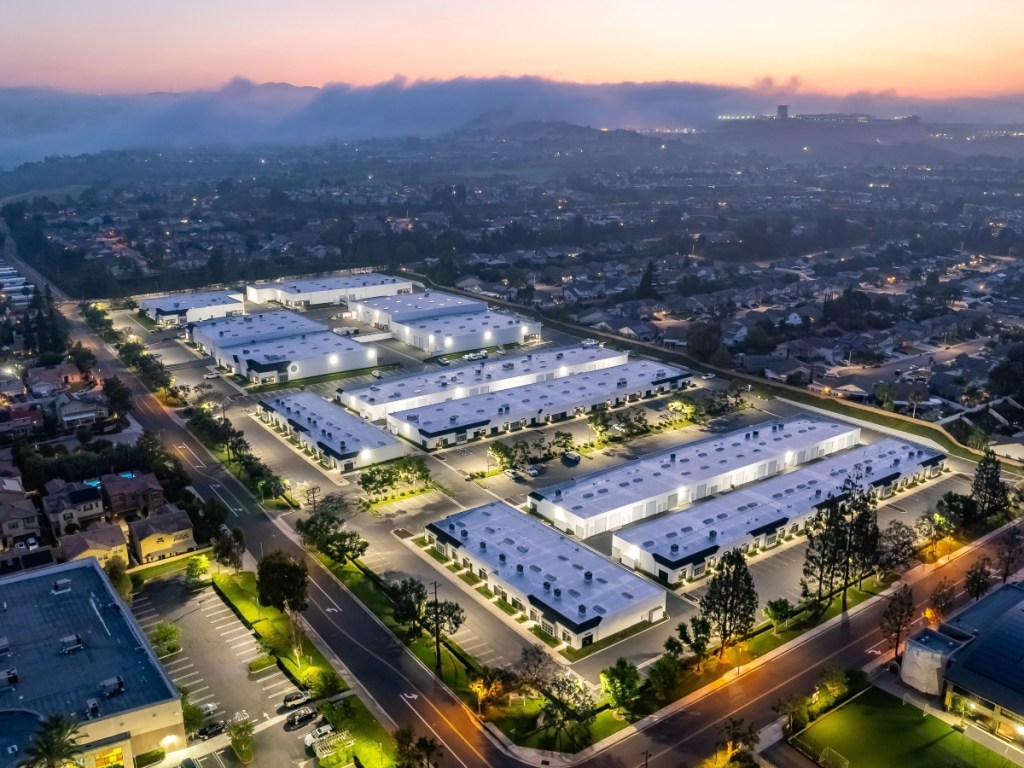
Orange County is one of the country’s most supply-constrained markets for this type of industrial space, Loiacono told CPE. Existing small-bay properties are being redeveloped for residential uses or replaced by larger industrial facilities, while very little comparable product is being built.
“We think there will continue to be strong demand for this type of space moving forward,” Loiacono noted.
For investors looking at multi-tenant industrial campuses, historical occupancy, tenant diversity and in-place income all matter, although their importance varies by investment strategy. Loiacono said current income may carry less weight when a buyer has conviction in market rents. Many of these parks have been owned by long-term private owners that prioritized full occupancy over regularly pushing rates.
That can give investors an opportunity to combine durable occupancy with short-term leases that allow rents to move closer to market over time. Loiacono noted that institutional capital is beginning to view small-bay industrial more like multifamily or traditional larger-box industrial, even though some investors remain concerned about the credit profiles of smaller tenants.
Those tenants may lack the balance sheets of national logistics companies, but their operational ties to a location can make them more durable occupants. Relocating can disrupt those relationships, making a well-located older campus difficult to replace even when newer space is available elsewhere.
Where the strategy works best
Those tenants dynamics help explain why investor interest is strongest in infill and supply-constrained locations. Brandt identified high-growth Sun Belt markets and infill coastal markets as particularly well positioned.
In Texas, for example, land constraints in the inner-loop and close-in submarkets of Dallas-Fort Worth and Houston, have pushed much of the new industrial development in peripheral locations, farther from established population centers. Yet contractors, service businesses, manufacturers and other local users still need to remain close to customers and employees.
Still, even in favorable markets, a low acquisition basis alone is not sufficient on its own. The older industrial campuses attracting capital typically combine several advantages: a location that supports tenant demand, functional layouts, usable infrastructure, sufficient power, manageable capital needs and a tenant base that values the space for practical operating reasons.
Local government support can further strengthen the redevelopment case. In Bristol, Goldfine said the city’s economic development team has supported Routine’s efforts. The city participates in Connecticut’s Urban Jobs Program, which provides an 80 percent tax abatement for five years to qualifying manufacturing and warehouse-distribution tenants.
LISTEN TO THIS PODCAST: The ‘All of the Above’ Approach for Data Centers
“Local government alignment is also key,” Goldfine said. “Economic development teams in secondary and tertiary markets are often highly motivated to support re-tenanting of large, historically significant industrial properties.”
For now, the capital pursuing many of these opportunities remains largely operator-driven. The properties require hands-on execution, local market knowledge and a clear understanding of the specifications and rents prospective tenants will accept. But that could change.
“Over the next few years, as more deals get done and data improves, I’d expect more institutional capital to enter the space more directly, with strategies and capital structures built specifically around these opportunities,” Brandt said.
The emerging strategy is therefore a selective investment in scarce functionality: properties in locations where replacement is difficult, existing infrastructure retains value and tenants need space at a cost that new development may not be able to provide.

You must be logged in to post a comment.