

Industrial Report: Power Constraints Slow Warehouse Automation
The shift is uneven, with power access and building design driving a premium for newer industrial space.
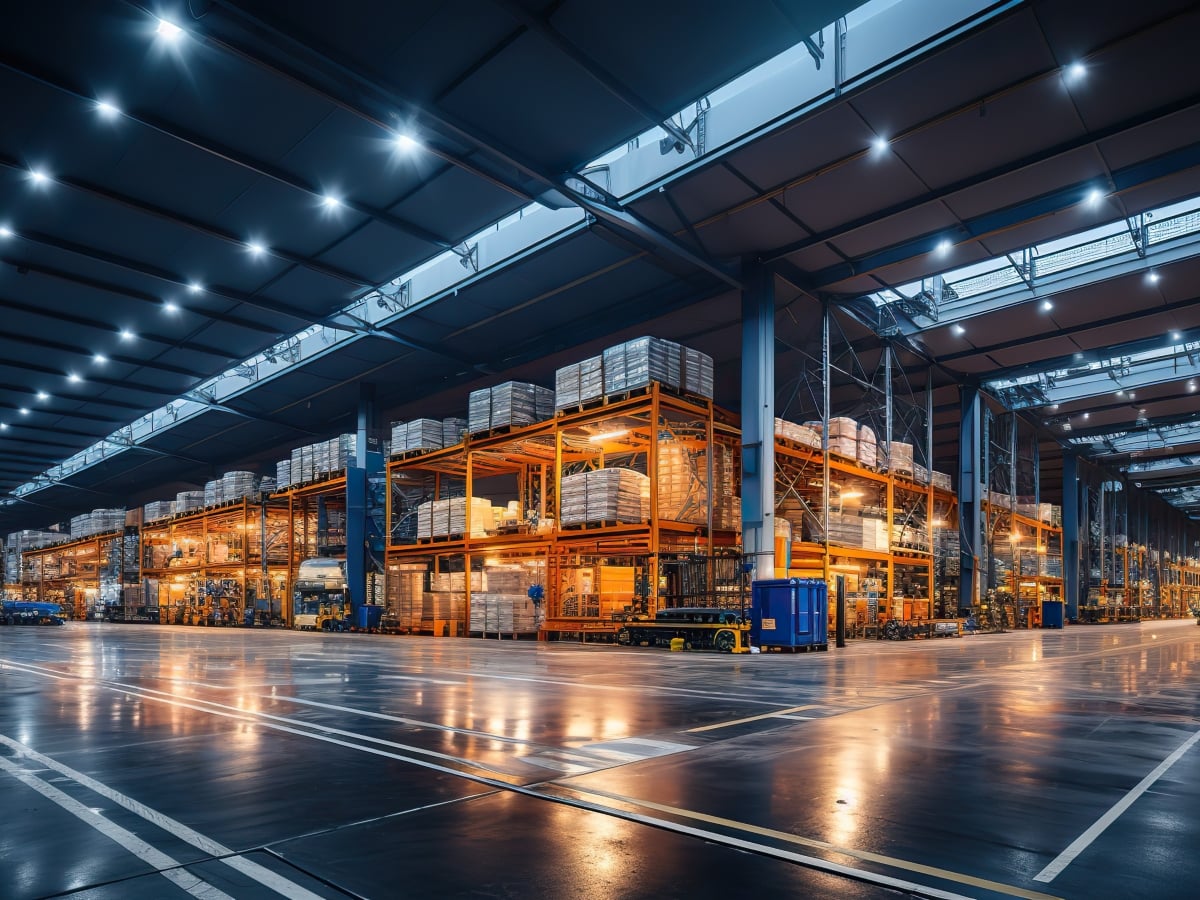
Automation and AI are becoming a more common feature of warehouse operations, but the shift is gradual and uneven. The April 2026 Yardi Matrix Industrial National Report notes that adoption is constrained by building characteristics, retrofit costs and, increasingly, power availability—an issue that is now central to industrial site selection.
However, the bigger takeaway for real estate is counterintuitive: automation is not shrinking logistics footprints. Higher clear heights, flatter floors, wider column spacing and layouts that accommodate robotics often require newer buildings, and these physical requirements can increase, not reduce, space demand. As tenants look for facilities that can handle internal product movement and flexible automation systems, demand for modern industrial space continues to support rent growth even after the supply boom pushed vacancy higher.

The report also frames automation as a long-cycle transition. Prologis estimates that by 2035, roughly half of modern logistics space could incorporate some level of automation, primarily through modular systems rather than fully automated facilities. That outlook suggests the market’s winners will be assets that combine strong locations with enough power capacity and physical functionality to evolve alongside tenant needs.
LISTEN TO: Inside Industrial: Automation, Power & Proximity
Leasing premiums hold near $1 as vacancy trends higher
National in-place rents averaged $9.03 per square foot in March, up four cents from February and 5.4 percent year over year. Atlanta again led annual growth at 8.1 percent, followed by Tampa at 7.3 percent, Bridgeport at 7.1 percent and Miami at 7.0 percent. National vacancy reached 9.3 percent, up 80 basis points over the past year and 10 basis points from February.
A key signal this month is where pricing for new deals is settling. Leases signed in the past 12 months averaged $10.01 per square foot, or $0.98 above the in-place average. After narrowing for two years, that spread has stabilized around $1 per square foot in recent months, indicating the market may be moving past the sharpest impacts of the supply surge. Some metros continue to show meaningful premiums for new space: Bridgeport posted the widest gap at $5.06, while Boston ($3.73) and Miami ($3.23) were the only other top markets above $3.
Phoenix remains a supply leader as infill stays tight
Across the top markets, 367.7 million square feet of industrial space was under construction in March, equal to 1.8 percent of stock. Phoenix remains among the most active development markets even after slowing from its early-decade surge. The metro has 18.7 million square feet under construction, representing 4.1 percent of inventory, the highest share among major markets.
The report also notes that recent industrial deliveries have been concentrated in big-box properties larger than 100,000 square feet or smaller buildings within logistics parks—formats that differ from infill product, which continues to be comparatively tight. Since the start of 2021, nearly three-quarters of Phoenix deliveries have been concentrated in three submarkets: Phoenix–West, Peoria and Mesa.
Capital markets remained active despite a more uncertain rate outlook. Yardi Matrix logged $15.5 billion in industrial transactions in the first quarter at an average of $138 per square foot. Atlanta posted $811 million in sales, ranking second nationally, with activity supported by its transportation network and positioning as a major logistics hub.
Read the full Yardi Matrix report.

You must be logged in to post a comment.