

Los Angeles’ Office Sector Still Shines
The market continues to perform well across several key metrics, according to Yardi Matrix information.
Los Angeles’ office sector continued to post strong fundamentals in the first five months of the year, according to Yardi Matrix data. Development activity remained elevated when compared to most gateway markets, while construction starts reflected the broader national slowdown and shifting demand for space.
The vacancy rate continued to improve, clocking in well below the national average, while office investment and pricing kept the metro among the highest ranking markets in the country. The City of Angels also boasted one of the largest coworking footprints nationally in May.
Construction pipeline holds steady, new starts decline
Los Angeles had 2.2 million square feet of space underway across 12 projects at the end of May. The figure accounted for 0.7 percent of the metro’s existing stock—on par with the national average.
Among gateway metros, the City of Angels ranked third for construction volume after Boston and Manhattan, each having 5.1 million square feet under construction.
As for competitive office space, the market’s pipeline totaled 1.4 million square feet or 0.5 percent of stock, slightly above the 0.4 percent national average. The amount placed Los Angeles on the fourth position in the U.S. Boston ranked first at 3.9 million square feet, followed by Manhattan (3.1 million square feet) and Dallas (2.6 million square feet).
At the opposite pole, Washington, D.C. (270,000 square feet), Chicago (160,130 square feet) and Seattle (15,910 square feet) were the gateway markets with the lowest construction volumes.
The largest development projects in Los Angeles total 1.8 million square feet, led by JMB Realty’s Century City Center. The 37-story tower broke ground in August 2023, backed by a $575 million construction loan from Crestbridge. The high-rise encompasses 725,833 rentable square feet.
Year-to-date as of May, developers broke ground on only 77,331 square feet in Los Angeles, in line with national office space trends showing shrinking pipelines across major markets.
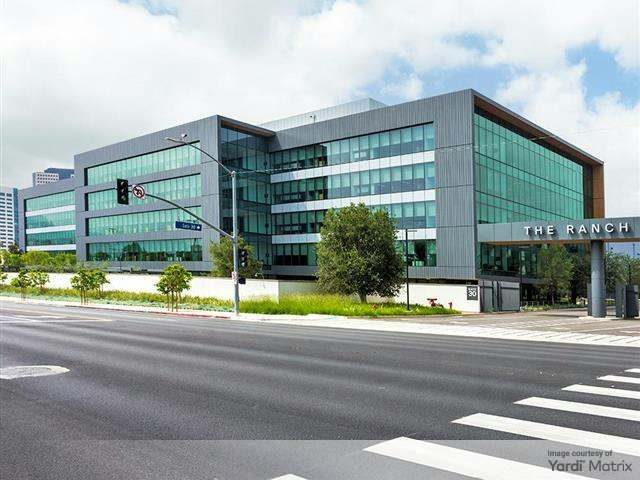
As for office deliveries, two properties totaling 579,491 square feet came online, marking a 294 percent growth year-over-year. One of them is 3701 W. Oak St., a 326,000-square-foot building in Burbank, Calif., developed by Worthe Real Estate Group and Stockbridge Real Estate Fund. Completed in March 2026, the low-rise is part of the $500 million redevelopment of Warner Bros.’ 30-acre Ranch Lot.
Moderate dollar volume despite strong pricing
The City of Angels’ investment activity generated $752 million year-to-date as of May, placing the metro on the ninth spot among the top 25 U.S. office markets.
Manhattan posted the nation’s highest sales volume at $3.7 billion, while San Francisco occupied the second position at $2.3 billion. Gateway markets with less office investment activity included Boston ($483 million) and Seattle ($297 million).
Los Angeles properties sold at $341 per square foot in May, a price more than 60 percent higher than the $213 national average. The metro retained its position among the top office markets for pricing, ranking fifth nationwide.
Among peers, Manhattan led the U.S. with an average price of $650 per square foot, followed by San Francisco ($614 per square foot) and Miami ($444 per square foot). Boston ($201 per square foot) and Washington, D.C. ($182 per square foot) were more affordable.
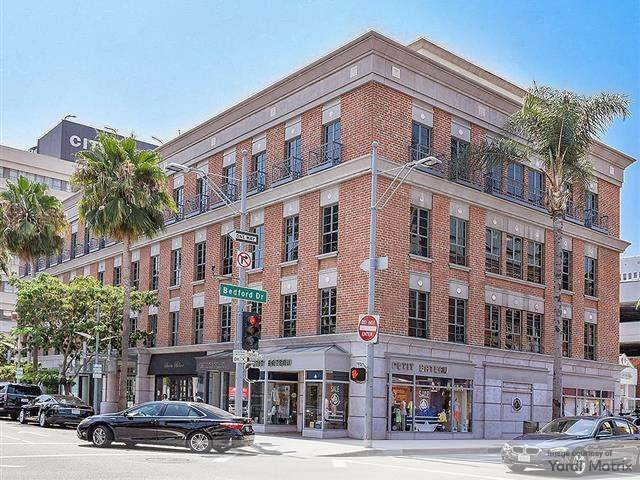
The largest transaction recorded in the first five months of 2026 was the $260 million acquisition of a 246,000-square-foot medical office portfolio in Beverly Hills, Calif. A joint venture led by Douglas Emmett purchased the five properties, known as the Bedford Collection, from Welltower. A $150 million note financed the deal that brought Douglas Emmett’s Beverly Hills footprint to one-third of the submarket’s Class A medical office inventory.
Vacancy recovery reinforces L.A. office sector stability
Los Angeles’ office vacancy rate fell to 14.1 percent in May, 350 basis points below the 17.6 percent national average and down 170 basis points year-over-year.
The metro’s rate was among the lowest in the country. Manhattan ranked first at 13.1 percent, followed by Miami (13.2 percent). San Francisco and Seattle, each at 23.3 percent, had some of the highest vacancies nationwide.
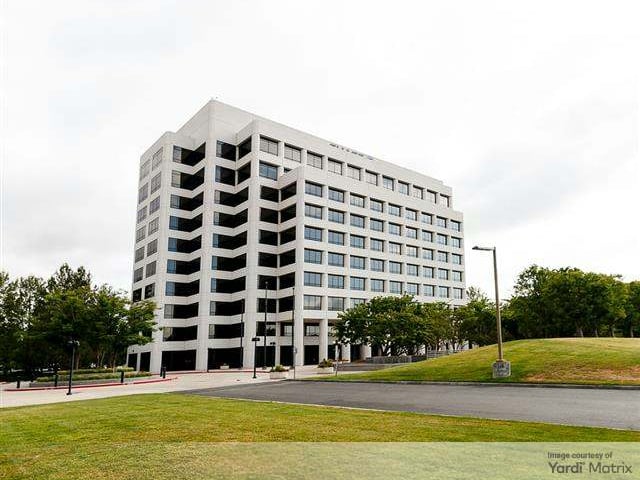
Los Angeles office space rents reached $41.73 per square foot in May, well above the national average of $33.61 per square foot. The value placed the market on the eighth spot nationally.
Manhattan had once again the most expensive rents in the U.S. at $69.29 per square foot, followed by San Francisco’s $62.11 per square foot. At the opposite pole, Chicago remained the most affordable gateway market at $28.34 per square foot.
One of the largest leases of the five-month interval was North Los Angeles County Regional Center’s 166,867-square-foot expansion at West Valley Corporate Center in Chatsworth, Calif. A tenant at the property since 2016, the nonprofit increased its footprint to occupy 65 percent of the 258,005-square-foot mid-rise owned by Omninet Capital.
Los Angeles coworking sector outpaces most gateways
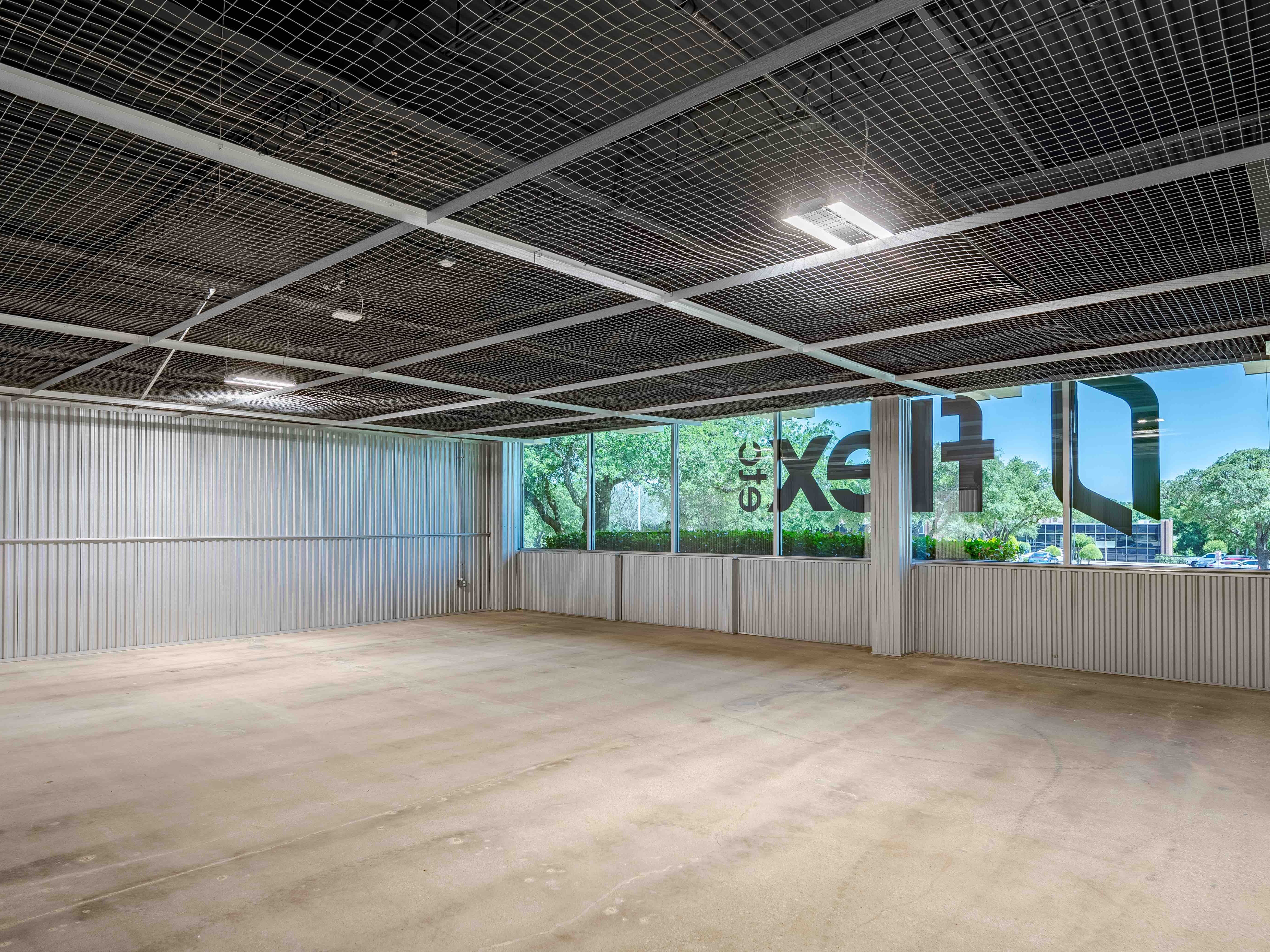
The City of Angels’ coworking inventory comprised 7.4 million square feet across 349 locations, according to CoworkingCafe. The amount accounted for 2.5 percent of the metro’s total leasable office space, a value unchanged since February 2026 and above the 2.3 percent national figure.
The metro had the third-largest flex office footprint in the peer set. Manhattan (12.6 million square feet) topped the ranking, followed by Chicago (9.2 million square feet). In contrast, Miami (3.4 million square feet) had the smallest coworking inventory.
Regus kept its position as the top coworking provider in Los Angeles, its locations totaling 777,789 square feet. Companies with large flex office footprints also included Spaces (710,564 square feet), WeWork (709,408 square feet), Industrious (533,625 square feet) and Premier Workspaces (519,264 square feet).



You must be logged in to post a comment.