
Silverstein Exec Talks World Trade Center Leasing
More than two decades after 9/11, the rebuilt center continues to attract high-profile tenants. Here’s what’s next for the Lower Manhattan campus.

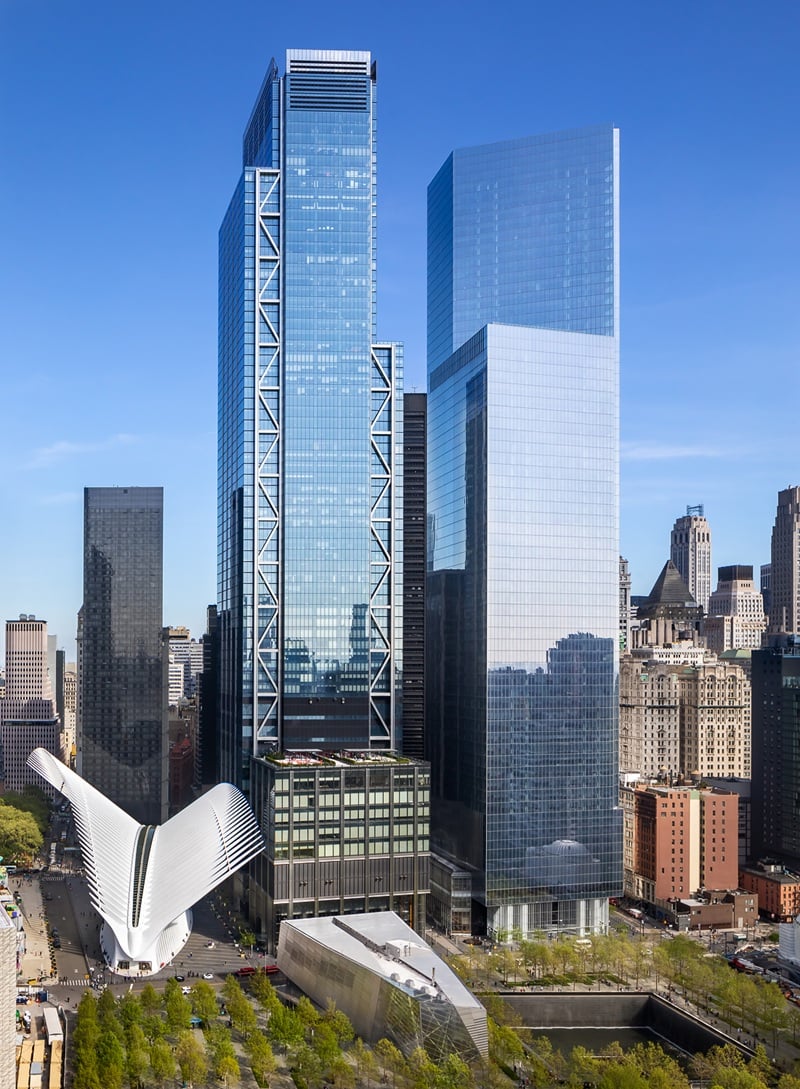
Almost 25 years after the terrorist attacks of Sept. 11, 2001, the reconstructed World Trade Center has reemerged as one of the most recognizable office campuses in the world. Today, the Lower Manhattan complex has six towers, with Silverstein Properties owning and managing 2-5 and 7 World Trade Center.
Leasing momentum across the campus has accelerated this year, with several major transactions underscoring the location’s continued appeal. Most recently, Uber Technologies expanded its footprint at 3 World Trade Center to 437,571 square feet, bringing the company’s presence to nearly one-fifth of the 80-story building. The tower, which opened in 2018, is the most recently completed building on the campus.
Meanwhile, the next major addition to the site is also drawing high-profile tenants. In February, American Express agreed to relocate its global headquarters to 2 World Trade Center, a Class A office project currently under construction and slated for delivery in 2031. The credit card giant will own and occupy the entire 55-story, 2 million-square-foot high-rise.
So what’s next for the campus? Here’s what Silverstein Properties Senior Vice President & Director of Leasing Keith Cody told Commercial Property Executive in an interview.
READ ALSO: Top City Programs for Office-to-Residential Conversions
How does WTC’s symbolic value influence leasing decisions?
Cody: The WTC is much more than an office complex. It is one of the most recognized and meaningful addresses in the world. For many organizations, being located here is an opportunity to be part of a place that represents resilience, renewal and the enduring spirit of New York City.
That symbolic value absolutely plays a role in leasing decisions. Companies are increasingly focused on attracting and retaining talent, strengthening their culture, and creating a workplace that reflects their values and aspirations. A WTC address helps them tell a powerful story about who they are and what they stand for.
At the same time, symbolism alone isn’t enough. Tenants choose the WTC because it delivers on the fundamentals: world-class architecture, state-of-the-art infrastructure, transportation access, exceptional amenities and a dynamic business environment. The emotional significance opens the door, but the quality of the workplace and the experience it provides are what ultimately drive leasing decisions.
The tenant base at WTC has become much more diversified over time. Are you intentionally curating a certain type of ecosystem within the complex?
Cody: The WTC is no longer defined by any single industry. Today, you’ll find leading firms in finance, technology, media, artificial intelligence, law, energy infrastructure, professional services, and many other sectors operating side by side.
We think of the WTC as more than a collection of office buildings—it’s a campus. The best campuses bring together a mix of organizations, ideas and people that create energy beyond what any single company could generate on its own. That’s why we’re focused on attracting companies that are leaders in their fields and that contribute to the dynamic environment we’re building.
A number of tenants—like Uber—have expanded multiple times lately instead of relocating elsewhere. How important is tenant retention and internal expansion to your leasing strategy today?
Cody: Tenant retention is an important measure of success for any office owner. When a company chooses not only to renew but to expand its footprint, it validates both the quality of the workplace and the value of the broader campus experience.
From a leasing perspective, internal growth is often the best kind. Existing tenants understand the value of the complex, so when their businesses expand, we’re able to help them scale without disruption. It creates a win-win situation: Tenants can continue growing in a location they know works for them, and we strengthen long-term relationships with organizations that are invested in the campus.
Today, WTC is approximately 95 percent leased, with asking rents in excess of $100 per square foot. As the complex approaches full occupancy, what’s your strategy for the next 12 to 24 months?
Cody: As we near full occupancy, our strategy is less about simply filling space and more about maximizing the long-term value of the campus. That means continuing to be disciplined on pricing while remaining focused on attracting tenants that enhance the overall ecosystem we’ve built. We view the WTC as a dynamic business community, so tenant mix matters. We want a diverse blend of industries, from financial services and technology to media, consulting and creative firms.
At the same time, we’re focused on tenant retention and expansion opportunities. Many of our existing tenants are growing, and ensuring they can continue to thrive within the WTC is just as important as attracting new companies.
Looking ahead over the next 12 to 24 months, the emphasis is on maintaining momentum, enhancing the tenant experience, and continuing to position the WTC as one of the premier business destinations in the world. Strong leasing fundamentals give us the flexibility to be selective and focused on creating long-term value rather than chasing occupancy.
How do you think about amenities shaping the WTC, compared to a traditional office tower? What kinds of experiences or services are tenants expecting today from a landmark property of this scale?
Cody: The expectations of office tenants have changed dramatically over the last decade. Companies are no longer simply leasing square footage. They’re investing in an experience that helps attract talent, foster collaboration and strengthen culture. At a destination like the WTC, that means thinking far beyond the four walls of an office. Tenants expect a complete ecosystem that supports the way people work and socialize throughout the day.
Silverstein’s Inspire hospitality program delivers hotel-quality services, curated events and programming and neighborhood partnerships. We know that top-tier amenities enable tenants to thrive during the workday. Our wellness and community offerings help employees recharge so they can feel balanced and productive.
Today’s leading companies are looking for convenience, flexibility and opportunities for connection. They want spaces where employees can easily meet clients, collaborate with colleagues, grab a meal, attend an event, or simply enjoy being part of a vibrant neighborhood. Increasingly, they’re evaluating not just the office itself, but the entire employee journey from the moment someone arrives until they leave at the end of the day.
The advantage of the WTC is its scale and its ability to offer experiences that a traditional office tower simply can’t replicate. Employees have access to transportation, dining and retail options, hospitality offerings, public spaces and cultural attractions—all within a single campus environment.
New buildings deliver huge benefits to occupants. People are excited about their workplace because they have an experience they wouldn’t have working at home. Newer buildings are designed to support more collaborative and flexible spaces, which in turn supports building corporate culture.
The workplace needs to offer something compelling, an experience that people can’t get working from home. Amenities, programming, wellness offerings, food and beverage options and high-quality public spaces all play a critical role in creating that environment.
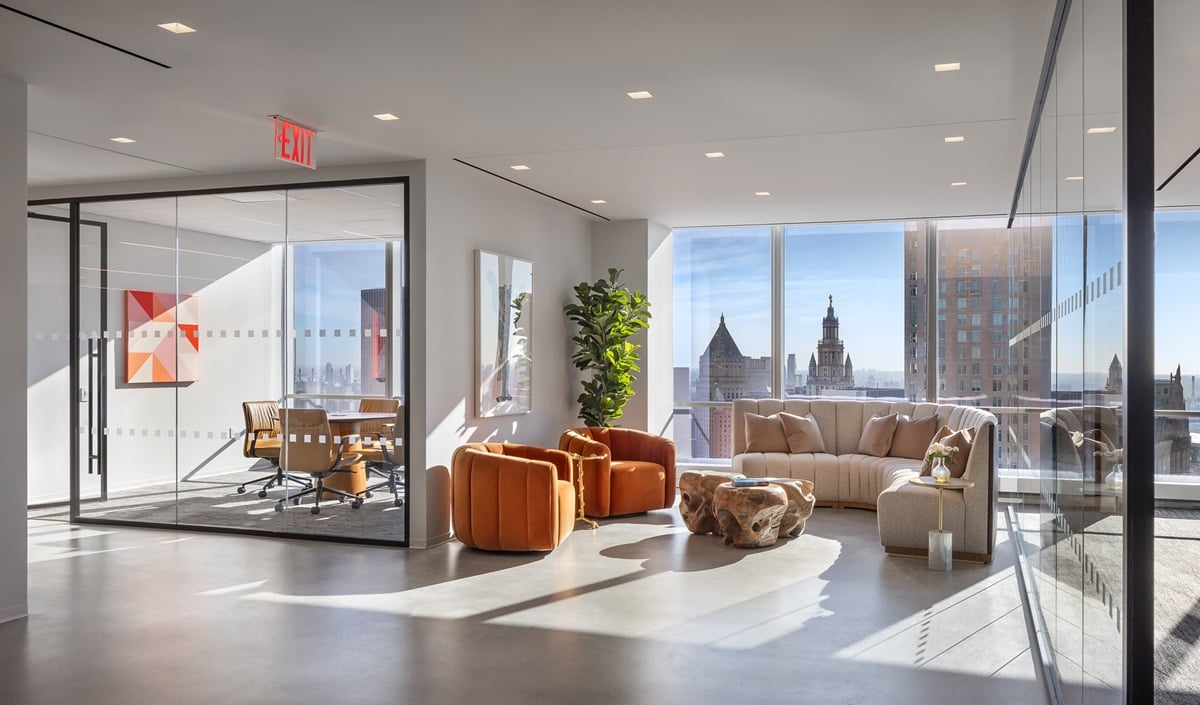
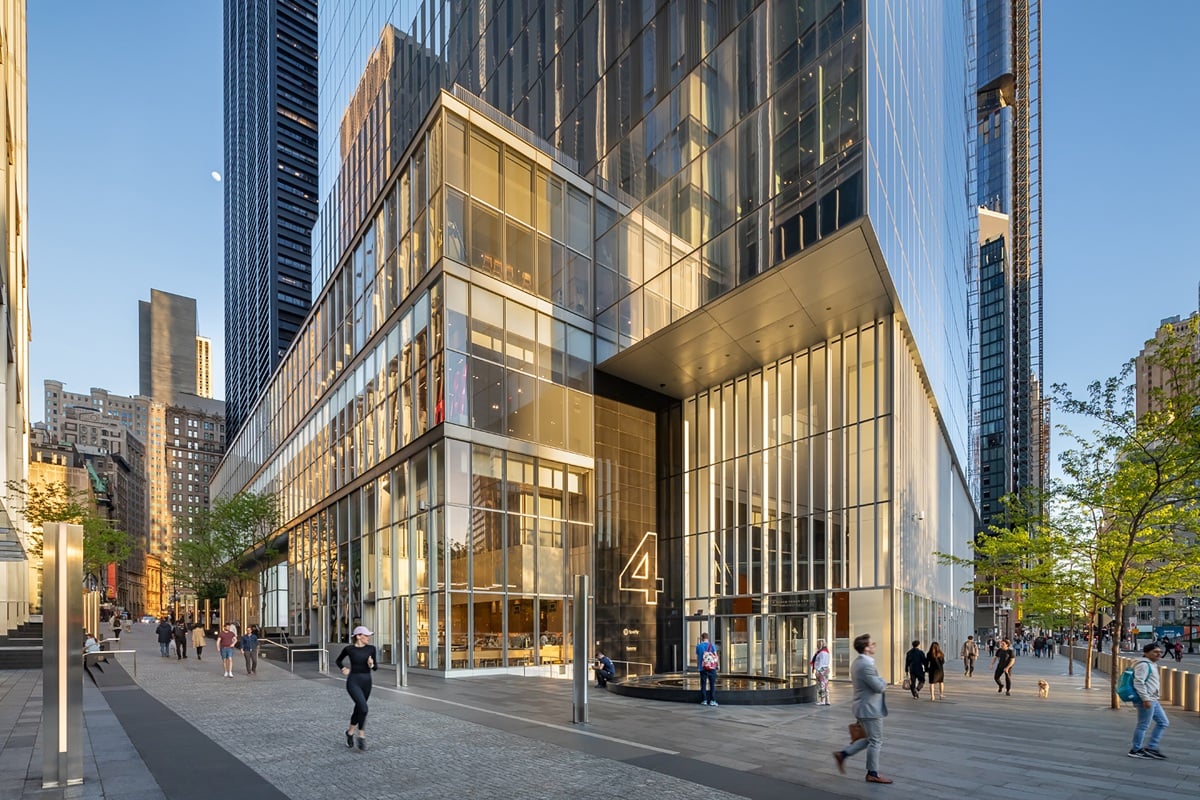
Image by Francis Dzikowski, courtesy of Silverstein Properties
From your perspective, what does the leasing activity at WTC say about the broader state of demand for high-end office space in Manhattan right now? Are large tenants becoming more decisive again?
Cody: The leasing activity at the WTC reflects a trend we’re seeing across the top tier of the Manhattan office market: Companies continue to place a premium on high-quality, well-located, amenity-rich buildings.
While the office market as a whole has faced challenges in recent years, demand for best-in-class space has remained strong. Companies want workplaces that help attract and retain talent, support collaboration and reinforce their brand.
That’s why we’re seeing a flight to quality. Many organizations are reducing their overall footprint while upgrading the quality of the space they occupy. We are also seeing greater confidence among larger tenants. Over the past few years, many companies took a wait-and-see approach as they evaluated workplace strategies and return-to-office policies. Today, there’s a growing recognition that businesses need long-term solutions, and many organizations are once again making significant real estate decisions with greater conviction.
The activity at the WTC reflects that shift. Companies are signing long-term leases, expanding existing footprints and making substantial investments in their workplaces. That doesn’t mean every tenant has the same strategy, but there is certainly more clarity and decisiveness than we saw several years ago.
READ ALSO: NYC Coworking Grows Some More, Boosting Office Comeback
Looking at the next couple of years, what do you see as the biggest competitive advantage WTC has over other trophy office campuses in Manhattan when attracting large corporate tenants?
Cody: The WTC’s greatest competitive advantage is that it combines something very few places can offer: a globally recognized identity with a world-class workplace environment.
On a practical level, the campus delivers everything large corporate tenants need: state-of-the-art office space, transportation connectivity, exceptional amenities, modern infrastructure and the ability to accommodate growth. Few locations in Manhattan can match the scale, accessibility and operational advantages of the WTC.
But what truly sets it apart is that those attributes are paired with a unique sense of place. The WTC is one of the most recognizable business addresses in the world. For many companies, being located here sends a powerful message to employees, clients, investors and partners.
Looking ahead, as companies focus increasingly on attracting talent and creating workplaces that employees want to be part of, that combination of quality, connectivity, community and global brand identity becomes even more valuable.
The decision is no longer just about leasing office space. It’s about choosing an environment that supports business objectives and enhances the employee experience. That’s why we believe the WTC remains uniquely positioned. It offers not only one of the finest workplace experiences in Manhattan, but also an address and a story that no other office campus can replicate.

You must be logged in to post a comment.