
Protecting CRE Asset Value: What to Prioritize in Today’s Market
Industry experts weigh in on tenant retention, capital allocation and long-term value.
Prioritizing where to invest—and where to cut back—has become more challenging for commercial real estate owners as elevated interest rates make debt more expensive.
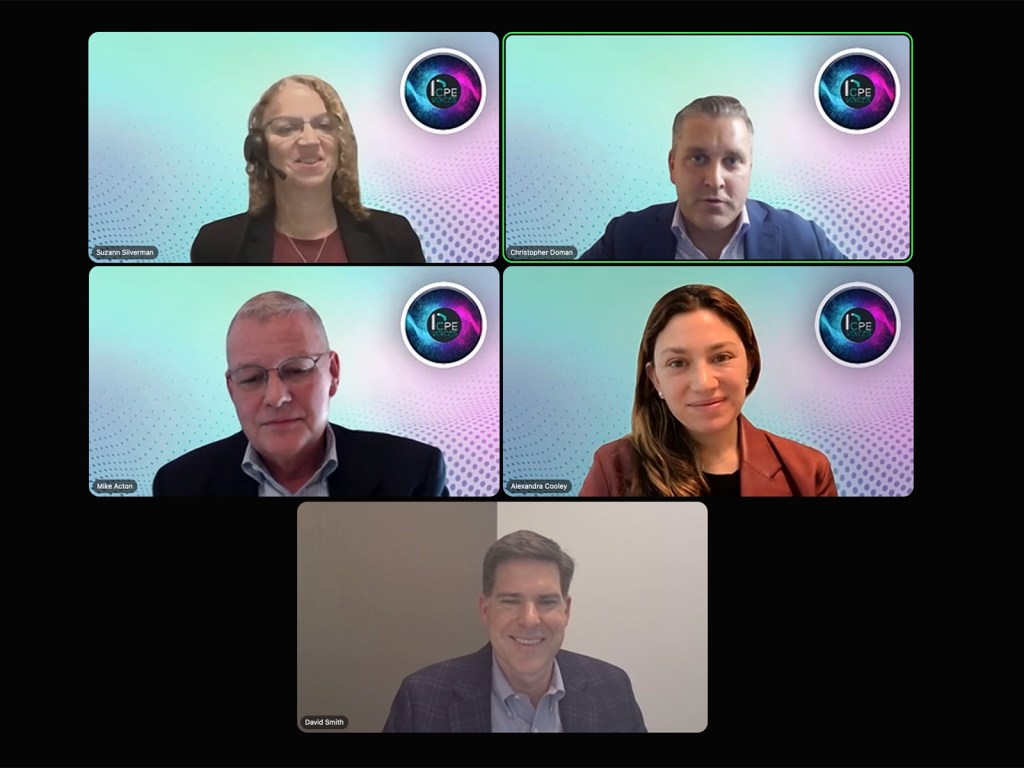
Panelists at Commercial Property Executive’s Oct. 1 webinar, “How to Protect Your CRE Asset Value,” moderated by CPE Editorial Director Suzann Silverman, discussed how owners can maintain property performance in an environment where cap-rate compression is no longer doing the heavy lifting.
Instead, industry professionals said patience, discipline and stronger property-level performance will drive value in the next market cycle.
“All the return, all the outperformance, all the differentiation between managers and everything is all going to come from whatever you do at the property level,” said Michael Acton, head of research & strategy, North America at AEW Capital Management, during the session.
The importance of the tenant
Occupancy and tenant retention are among the most direct ways owners and operators can protect asset value, particularly in the office sector. While many markets remain near the national vacancy level of 17.8 percent, return-to-office momentum continues to build. In August, office visits rose 6.2 percent year-over-year, according to Placer.ai’s office index.
As more employees return to the office, creating a competitive tenant experience is becoming increasingly important. Christopher Doman, head of U.S. asset management at CBRE, sees maintaining relationships with tenants beyond individual transactions as another way to protect asset value.
READ ALSO: What a Credit-Led Recovery Means for CRE Investors
“You need to meet the tenants where they are,” Doman said, referring to tenants’ changing space needs. Cultivating those relationships is particularly important when an office tenant is looking to downsize, such as from 30,000 square feet to 15,000 square feet, which Doman said should not necessarily be viewed as a loss.
He described office leasing as “a massive game of Jenga,” with owners balancing expansion, contraction, termination and renewal rights.
Acton also sees flexibility becoming increasingly important as tenant companies navigate rapidly changing business environments, including changes driven by AI. For owners, he said, the challenge is keeping properties relevant as tenants’ needs evolve.
Patience as a strategy
Alexandra Cooley, CEO & CIO at Nuveen Green Capital, sees the current market as being in the early stages of a recovery, but one that will have greater dispersion across assets and markets.
With an uneven recovery, Cooley said this is pushing investors to take a longer-term view and focus more closely on the right asset, location, sponsor and capital stack. Another reason the panel noted for this longer-term view is the slowdown in new construction.
David Smith, head of Americas insights, global research at Cushman & Wakefield, explained that according to the firm’s research, office space construction alone is about 85 percent below 2020 levels.
“If owners do have a longer-term perspective, they realize that there’s no or very little new product coming online,” Smith said.
Cooley said long-term owners are looking several years ahead at how constrained supply could support future rent growth in certain markets. At the same time, new construction activity is falling as elevated debt costs make equity harder to secure for new projects.
That longer-term perspective is also influencing how owners structure their capital. Cooley said borrowers are seeking long-term, fixed-rate financing as uncertainty around the future path of interest rates remains elevated. Investors still do not know whether rates have peaked or could move materially higher.
“The opportunity really is approaching it from a long-term perspective, in my mind,” Cooley said.
Making capital count
In today’s higher-cost capital environment, CRE owners are under pressure to reduce expenses while deciding where to deploy limited capital. Panelists cautioned, however, that cutting too aggressively can create longer-term problems.
“You don’t want to cut too much, and that penny pinching, if you will, could come back and haunt you,” Smith said. Cutting costs too aggressively, he added, could reduce a property’s competitiveness or hinder the tenant experience.
Doman said the projects that still make sense generally fall into two buckets: those that protect occupancy and those that reduce operating costs. Examples include energy-efficiency upgrades, technology infrastructure and economically justifiable tenant improvements.
READ ALSO: Top 10 Markets for Office Deliveries in H1 2026
On the other hand, speculative suites in weak leasing markets, lobby and common-area renovations without a clear leasing thesis and repositioning projects dependent on unsupported cap-rate assumptions are more likely to be deferred.
One thing the panel advised owners not to ignore was necessary maintenance. Doman said owners may ultimately face a financial penalty when future buyers identify maintenance that has been neglected. Acton joked that anything involving water should not be ignored because “water is the enemy.”
“To think that you’re going to get away with that and that the next buyer is not going to see it” is unrealistic, Acton said, noting that the real estate market has become increasingly information efficient.



You must be logged in to post a comment.