

Life Science Firm Inks Sublease at Manhattan Campus
The property comprises more than 1 million square feet of laboratory space.
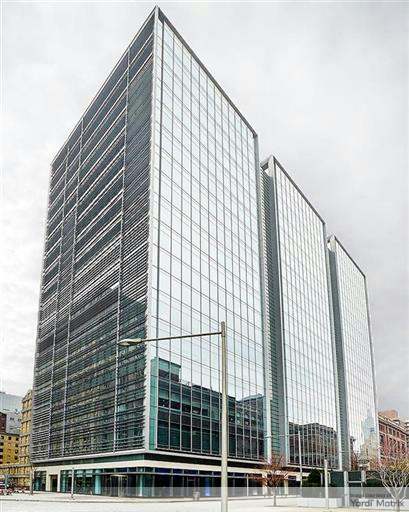
Volastra Therapeutics has signed an 18,120-square-foot sublease at the Alexandria Center for Life Science in Manhattan. The company will occupy a portion of the 11th floor at 430 East 29th St., which is owned by Alexandria Real Estate Equities.
Black Diamond Therapeutics is serving as the sublandlord in the transaction.
The Alexandria Center is a research and development campus that serves New York City’s expanding life sciences sector. The facility includes over 1 million square feet of commercial laboratory space.
Alexandria Real Estate Equities has completed construction of the first two towers of the campus, which also includes a restaurant, café, conference center and winter garden. The property was specifically designed as a life science asset.
READ ALSO: The Best Office Amenity? Versatility.
Over 50 tenants currently occupy space at the buildings, including Bristol-Myers Squibb, Eli Lilly, Accelerator Life Science Partners, Intracellular Therapies, Kallyope, MeiraGTx and Cellectis in the West Tower. Tenants in the East Tower include Pfizer’s Center for Therapeutic Innovation, NYU Langone, Petra Pharma, BlueRock Therapeutics and Kadmon.
Volastra Therapeutics, a clinical-stage biotech company focused on developing novel therapies for cancer, is relocating from the Mink Building in West Harlem as part of its ongoing expansion.
The Alexandria Center property is located at 29th St and 1st Ave., between Bellevue Hospital and NYU Medical Center,
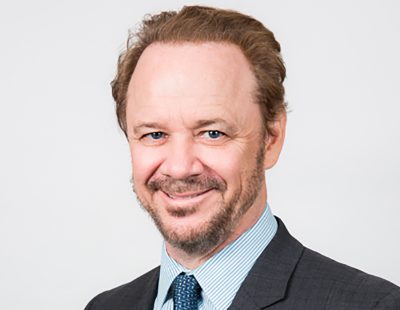
CBRE Senior Vice President Joe DeRosa represented Volastra Therapeutics in the deal. CBRE Executive Vice President John Isaacs represented Black Diamond Therapeutics.
New York’s growing life science market
Development continues to ebb in the life science sector after years of rapid expansion, according to the March Yardi Matrix national office report. New life sciences supply has yet to be absorbed.
Since 2020, developers have completed around 47.3 million square feet of life science space, according to Yardi Matrix, with annual deliveries peaking in 2024 at 13.9 million square feet before slowing to 11.2 million square feet in 2025. Life science completions are expected to fall again in 2026.
Though the overall life science market has slowed down, some local markets—such as New York City—have seen growth in recent years, along with relatively healthy vacancies. Miami’s 12.8 percent vacancy rate in life science was the lowest in the country as of the first quarter of 2026, with Manhattan ranking the second lowest with a figure of 13.1 percent.
Other NYC life science hubs include CZ Biohub New York, a collaboration between Columbia, Rockefeller, and Yale universities; Mount Sinai Medical Center and Regeneron Genetics Center; Columbia University’s Institute for Artificial and Natural Intelligence, dedicated to advance AI research of the brain; and the Center for Engineering and Precision Medicine by Mount Sinai and Rensselaer Polytechnic Institute.


You must be logged in to post a comment.