
Let’s Get Real: Chasing the Last Dollar Never Ends Well
Williams Equities Principal Andrew Roos reflects on five decades in New York commercial real estate, in the first installment of our new interview series.
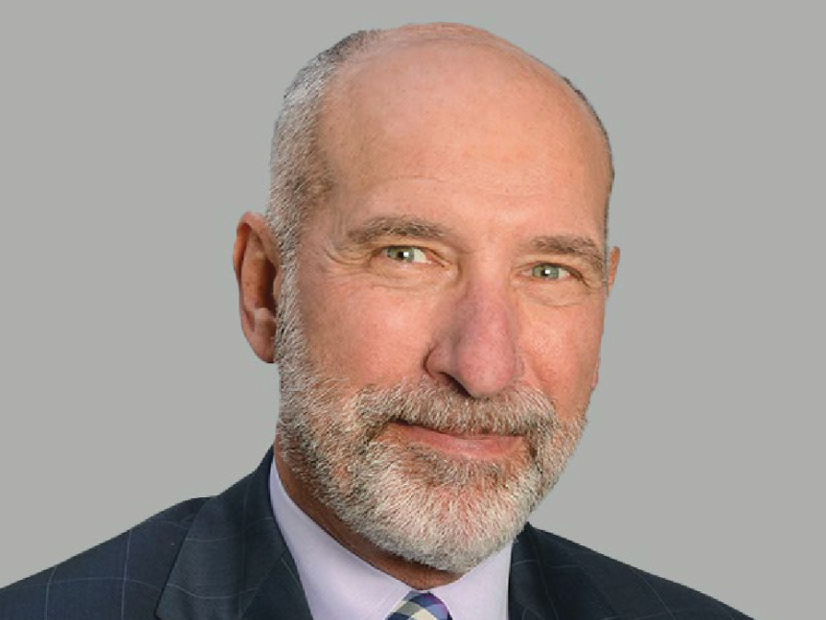
Williams Equities is celebrating its centennial this year and Principal Andrew Roos has been part of the firm for half of its history.
Over the years, he has worked across ownership, leasing and tenant representation, building relationships that often extend both sides of the negotiating table.
In the inaugural installment of Let’s Get Real, our new series exploring successes, setbacks and lessons that shape commercial real estate careers, Roos offers an unvarnished look at what lasting success in the industry demands.
READ ALSO: The Skills You Need for a CRE Career That No One Warned You About
Give us the 60-second version of your career. How did you get to where you are today and how did you find your way into commercial real estate?
Roos: I didn’t set out to have a career in real estate. I graduated from American University with a degree in communication and photography and what I really wanted was to be a journalist. I interned with The Associated Press in London and I spent my early 20s photographing concerts and sporting events, promoters and teams in Washington D.C., so I was around that 1970s music world. But by 1975 or 1976, I’d figured out that I wasn’t going to be a rock star and that I couldn’t make the kind of living I wanted fast enough with a camera and a typewriter.
I’m a third-generation partner at Williams. My grandfather became a partner in 1929 and my father in the 1950s. The firm has been in business for 100 years now and I’ve been here for half of that. In my early days, a partner named Bob Carmel was my mentor. The job in those days was simple: Go knock on doors and develop business meetings and opportunities.
This was before today’s level of building security, so you’d walk a building floor by floor until somebody threw you out. My first deal was a 715-square-foot lease and I still remember Aaron and Jeff Gural handing me a check for $1,000. Fifty years later, I still do a mixture of tenant representation work as a general partner of our portfolio of a dozen or so office buildings. Working on both sides is a big part of why I’ve been able to do both well.
Looking back, what deal, investment, decision or relatiomship shaped your career?
Roos: One relationship probably shaped everything that came after: the United Nations. It started with a building we have at 304 E. 45th St. Bob Carmel bought it for the partnership in 1974 as a printing building. Over time, we repositioned it first into a secondary office building and then into a dedicated UN facility. We’ve been their landlord for more than 40 years. What matters, though, is what the relationship turned into.
Because they trusted us as a landlord, I was able to also earn their trust as a real estate advisor and tenant representative and we ended up doing somewhere between a half million and a million square feet of transactions for various UN divisions over the years, including the United Nations Development Programme, UNFPA and UN Women.
It taught me early on that trust in this business tends to compound. If you do right by people on one side of the table, the work on the other side usually follows. Bob also taught me how to cut through the noise and focus on the essential elements necessary to advance and finalize a transaction.
Considering your experience in ownership, investment, leasing and brokerage, which accomplishment are you most proud of?
Roos: If you’d asked me 20 or 30 years ago, I probably would have said the Xerox headquarters my partner Michael Cohen and I were responsible for 245 Park Ave., or the work we did for the Bank of New York after 9/11. But the one I’m proudest of is our work with Signature Bank.
We represented them for approximately 12 years, starting a couple of years after they were founded and helped them take their footprint from a small regional bank into a much larger one. I’m proud of that work because the relationship turned out to be strong enough to outlast the bank itself. Their successor, Flagstar Bank, is still a client of ours and we have arranged their office and retail headquarters at 320 Park Ave.
READ ALSO: Brokers Embrace Authenticity in an Automated World
What did you get right in your work with Signature Bank?
Roos: When we first got involved, Signature was slowly growing, leasing space wherever and whenever they happened to need it. Its headquarters was at 565 Fifth Ave., and the bank had eight small floors scattered throughout a building on 38th St. What I think we got right was recognizing that a bank growing that fast needed a coherent occupancy strategy instead of a patchwork system.
We consolidated them into a significant block of space at 1400 Broadway, first with a space around 150,000 square feet and then another 150,000 square feet. It became a real operations center complementing its headquarters, along with a block we arranged for them at 1177 Ave. of Americas, it basically created a campus for them.
By the time they moved, they were a $200 billion bank and had expanded to other major cities. The lesson I took from it is that real estate should be built around where the business is heading, not just where it happens to be now.
The habits you build in your 20s are the habits that will still be running the show decades later.
Now let’s go the other way. What’s a deal, investment or career decision you’d handle differently?
Roos: In my early days as a leasing agent, I helped bring Mellon Bank to 551 Madison Ave. They took six floors there when it could have just taken two floors at a larger Park Avenue building and the rationale was branding. We convinced them that putting their name on a building across from AT&T and IBM’s new headquarters buildings was the equivalent of taking out a color ad in Fortune for 10 years and on that level, it confirmed a benefit that enhanced their business plan for New York City.
The problem was the lease. The negotiation resulted in the owner not being willing to commit to a 15-year lease. He gave Mellon 10 years with a five-year renewal option instead. By the time that option came around, the market had turned, Mellon didn’t renew. I’ve never forgotten it. There’s a saying: Bulls and bears make money and pigs get slaughtered. In hindsight, I’d fight a lot harder for the long-term lease and worry a lot less about the last dollar.
What did that experience teach you and how has it shaped the way you evaluate opportunities and make decisions today?
Roos: It made me a real believer in a square deal. I like to tell both tenants and landlords the same thing right up front, which is that chasing the last dollar never ends well. These relationships tend to run for 10 or 15 years and if somebody walks away feeling like they didn’t get a fair shake, they won’t forget it, whether it’s how they expand or if they choose to move.
A transaction where both sides feel like they were treated fairly is worth a lot more than winning. The other thing I’ve come to rely on is balancing instinct with actual numbers. I can generally figure things out in my head pretty quickly, but you really need both instinct and underlying facts. Having a strong plan and partners who prioritize the hard numbers in a deal has validated my own judgment.
READ ALSO: CPE Executive Council: The Best Piece of Advice You’ve Received
After your long career in commercial real estate and witnessing several market cycles, which patterns or red flags stand out to you more now than earlier in your career?
Roos: The one that never really changes is that too much leverage always leads to a bad outcome. We’ve always had a disciplined approach to leveraging our own buildings and that’s what has allowed us to ride out every downturn—2008 included—and still have the capacity to transact when many others couldn’t. The ones who got hurt were almost always overleveraged. You saw it with the firms that bought aggressively between 2014 and the onset of COVID-19 and didn’t get out in time when the music stopped. They ran into trouble when the financing markets dried up.
What has changed in the lending world is that it used to be dominated by portfolio lenders. We were the largest commercial client in New York for more than 40 years with a major portfolio lender and if things got tough, you could generally sit down with them and work something out. When the COVID-19 pandemic hit, many of these lenders essentially decided they wanted out of the commercial real estate markets and prioritized seeking to recover their money.
Nowadays, so many commercial loans are financed as CMBS structures, so there’s really no relationship-driven person to call and work through an issue with. You’re basically dealing with a special servicer whose interests aren’t necessarily aligned.
These days, with every lease we sign, we’re already thinking about whether we can finance it and what it will look like in the next cycle. Many are taking out shorter-term loans on the bet that rates come down, and so far, those bets haven’t necessarily worked out the way people anticipated. Harry Helmsley and I were just getting started and he told me the secret to successful real estate ownership was to just live through the cycles. If you can do that and not overleverage along the way, you’ll generally come out the other side just fine.
For someone starting out in commercial real estate today, what advice would you give?
Roos: Play the long game. This is a relationship-driven business dressed up as a numbers business and the people who find the most success are the ones who understand that early. When I started, the advice was to knock on doors until somebody let you in. In many ways, that’s still true. It’s just that there are different ways to open them now.
You have to be willing to do the unglamorous work before anyone hands you a meaningful opportunity. I’d also tell them not to mistake ‘activity’ for ‘progress.’ It’s easy to confuse being busy with being disciplined, especially early on when you’re hungry for any transaction you can get. The habits you build in your 20s are the habits that will still be running the show decades later.
Finally, live through a cycle or two before you decide you’ve figured this business out. Everyone looks smart in a bull market. You find out who you really are and who you want to be in business with when things get harder.


You must be logged in to post a comment.