
CPE Executive Council: The Skills You Need for a CRE Career That No One Warned You About
The unexpected, sometimes intangible skills executives learned along the way—and why those lessons matter the most.
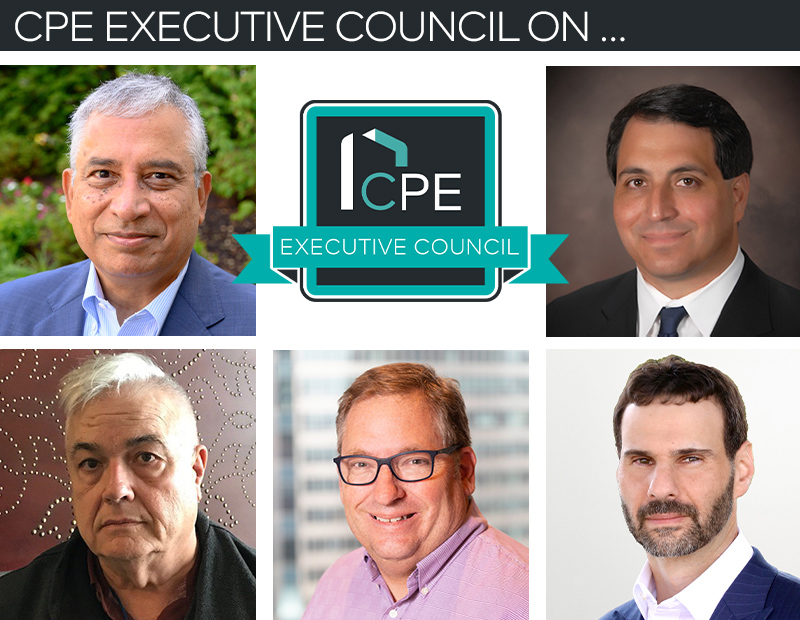
It’s great to have the technical aspects down for a job. However, when it comes to commercial real estate, often the most important skills are intangible. This month, the CPE Executive Council shares the skills they picked up along the way that they didn’t realize they would need.

Balancing Act
Surprisingly, the ability to read and dissect a balance sheet. Everyone assumes a cap rate is the most important, so you simply need to know income and expenses. Turns out you can learn a lot from a comparative balance sheet to see how a property was operated and any hidden liabilities and THEN deduce an appropriate cap rate. Actually, the same is true for companies where everyone thinks it’s just a multiples game where intangible assets and taxes may be the most relevant! —Shekar Narasimhan, Managing Partner, Beekman Advisors

Listening Up
A competency that has proven consequential throughout my professional trajectory—and one that received no emphasis during my formative years—is the capacity for profound, engaged listening coupled with elevated emotional acuity: the ability to discern subtle interpersonal dynamics, decode implicit motivations and skillfully navigate the emotional landscape of any interaction. —Randy Blankstein, President, The Boulder Group

Emotional Intelligence
One skill that often goes unmentioned but proves absolutely critical is emotional intelligence (EQ), especially in the context of relationship management and negotiation.
Reading Between the Lines: Deals rarely fall apart because of numbers alone—they fail because of misaligned expectations, egos, or communication breakdowns. Being able to sense what’s not being said is invaluable.
Building Trust: Real estate is a relationship business. Whether you’re working with investors, tenants, or city officials, trust accelerates deals and smooths over inevitable bumps.
Managing Stress & Conflict: Transactions involve high stakes and tight timelines. Staying calm and empathetic under pressure often determines whether you close or lose a deal.
Influence Without Authority: You often need to guide decisions without formal control—EQ helps you persuade and align stakeholders.
Data Storytelling: Not just knowing the numbers, but framing them in a way that resonates with clients and investors.
Adaptability to Tech: CRE tech adoption (AI, analytics, virtual tours) is accelerating—being tech‑savvy is now a differentiator.
Regulatory Awareness: Zoning, ESG compliance and local ordinances can make or break a project, yet few talk about mastering this early. —Doug Ressler, Manager, Business Intelligence, Yardi

Money Matters
While I specialize in public relations for the commercial real estate industry, the one skill that is extremely important in my business is the understanding of finance and economics as it relates to development, lending, investment and leasing. I need to be able to explain the “so what” factor when it comes to my client’s news and typically the “so what” factor involved money. —Dave Ebeling, Owner, Ebeling Communications

Mind for Math
Mathematics. I have a pretty niche role in this industry, but I laugh whenever I think about the kids my high school complaining that they would never use mathematics in their jobs. Almost every week I am coding models using some combination of: linear algebra, multivariable calculus, differential equations, regression modeling, probability and statistics. I have always loved mathematics and I’m very happy I found a way to utilize it in my career. —Ryan Severino, Chief Economist & Head of U.S. Research, BGO
Interested in joining the CPE Executive Council and being featured in future articles? Email Jessica Fiur.




You must be logged in to post a comment.