

How Top CRE Brokers Hone Their Reputations
Being persistent is a must. Having the mindset is vital.

In the ultra-competitive world of commercial real estate brokerage, how do you stand out in the crowd? Commercial Property Executive asked industry pros how to make your mark and grow it. Developing a niche is a powerful way you can gather business that others don’t have the knowledge or experience to compete for.
Lightning in a bottle
While working as a paralegal in Orlando, Fla., Amy Calandrino noticed an acute shortage of landlord representation for small-to-midsize businesses and new-to-market retailers.
“A lot of times, they just didn’t have it, and I would see firsthand how badly not making the right decisions could impact them,” she recounted. In 2010, Calandrino founded Beyond Commercial, a boutique brokerage firm with a focus on tenant and landlord representation in the market she called home. Calandrino joined Cushman & Wakefield last year as a director, overseeing tenant representation and leasing at retail and mixed-use properties in the area.
This narrow focus, coupled with an extensive network and lead list, gives Calandrino the ability to connect tenants and landlords. That’s come in handy given the high demand for space in the area.

“Some submarkets (in Orlando) are a bit like musical chairs because the vacancy rate is so low, but that’s a huge value-add when you’re in a specific geography,” she noted. “You immediately know when space is becoming available because you’ve already cultivated those relationships with other brokers.”
Across the U.S. in Silicon Valley, Howard Berry is a mainstay of the region’s data center development, sales and leasing markets. He got his start in brokerage following a previous role in electrical and general contracting. Today he’s a principal & director of data center solutions at Avison Young.
READ ALSO: How 2026 Will Remap US Data Center Real Estate
“Data centers were a part of that because the electrical piece is so prevalent in the industry,” Berry recalled.

When he decided to focus entirely on data centers in 2016, Berry used his experience to zero in on development sites and investment sales opportunities based on the availability of electricity and land—both high priorities for the data center crowd.
Because the specifications for data center companies overlap with those of semiconductor manufacturers, Berry is able to dial in his expertise when it comes to both selecting sites for developers and leasing their spaces to hyperscalers.
“(Since) I saw that semiconductor manufacturing was moving out of Silicon Valley, I realized that these sites could be turned into data centers because of the amount of power they held,” Berry detailed.
Understanding a client’s particular needs, especially at a technical level, can go a long way when it comes to leasing physical space.
“I try to hang my hat on finding valuable information rather than trying to hard-sell people,” said Nick Feczko, a vice president with NAI Hiffman’s Industrial Services Group.
LISTEN TO: From College to Career in Industrial Brokerage

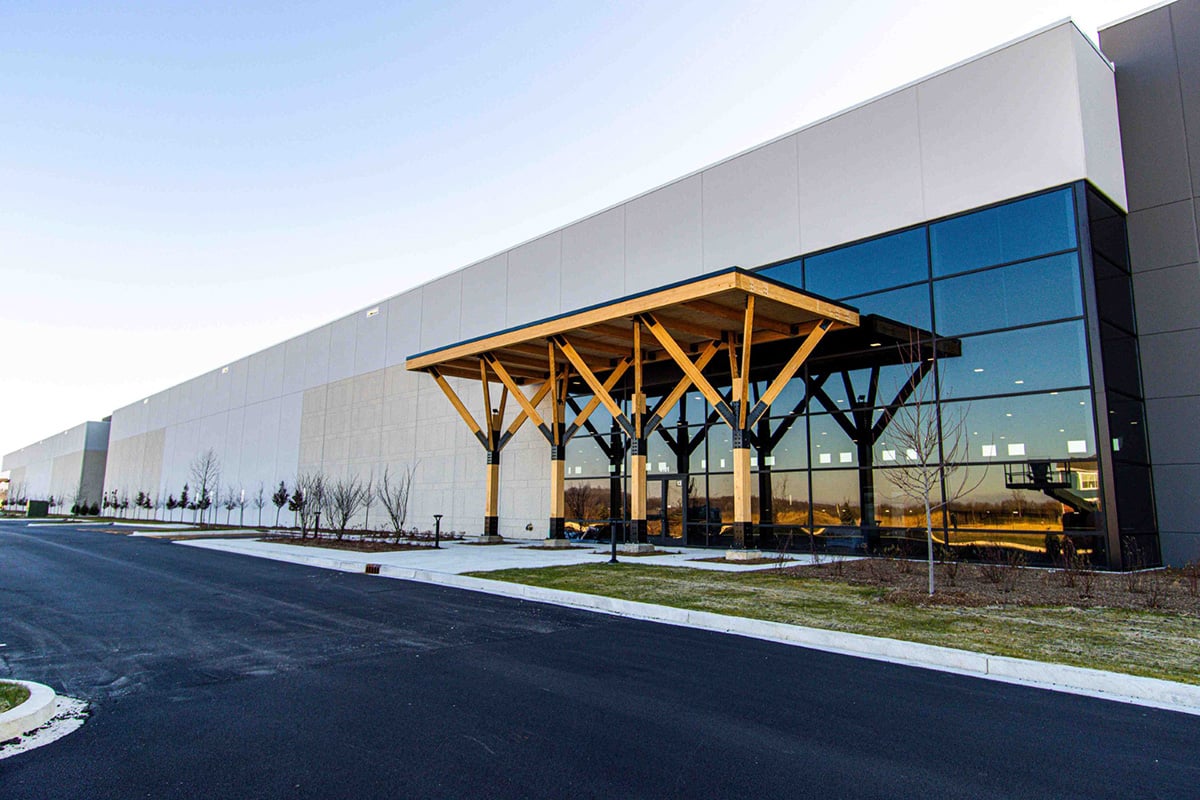
A former Chicago-based distribution equipment salesman, Feczko parlayed his knowledge into working as a broker for manufacturing and shipping-focused industrial tenants, as well as owners including IDI and Link Logistics.
“If there’s a packing company that I know is coming into the marketplace or is looking to lease, I have specific relationships where I can reach out to the competitors and pass that info along,” Feczko shared. “These are insights that some of my competitors may not think about because they don’t know how some of these folks talk or what they’re interested in at a technical level.”
The art of representation

Of course, you’ll need more than industry-specific knowledge to distinguish yourself. To be truly competitive, you’ll need to combine your niche with a knack for relationship building.
For Stephen Winter, an executive vice president at Related Cos. & head of office leasing at Hudson Yards, the key to establishing partnerships with high-dollar tenants is about more than having a trophy asset or name recognition. It’s also about being attuned to clients’ business goals.
“When I was developing my understanding of the market, I would know the CEO of each company and where they went for dinner the night before,” Winter recalled about his time as a corporate real estate adviser at CBRE.
“I vividly remember every day walking up and down every single avenue from 42nd to 59th streets, block by block, building by building,” he said. Winter’s deep understanding of tenant behavior helped him get invited by senior brokers to participate in their deals.
Calandrino shares that client-first outlook. Her primary goal for her retail tenants is to make sure they succeed. “It’s not as secretive a business as office, so promoting your clients is always a value-add,” she recommended.
An early adopter of social media, Calandrino perfects her niche and her relationships with The Performance Mindset Show, a podcast that features chats with local industry leaders, some of whom are her customers. “It’s always going to be about connecting my clients together,” she said.
Mindset masters
Having flawless technical skillsets or lead lists means little if you aren’t a marketer and dealmaker at heart.
Despite the vast amount of prime office space he oversees, Winter recognizes that even Hudson Yards should be pitched in different ways to different potential tenants.
“A head of real estate or CFO may get excited by the efficiency of this space, but that same story might not move the needle with a CEO,” Winter cautioned. “Instead, we sell the space as a way to attract and retain the best and brightest talent.”
This idea includes the delivery drivers coming to Hudson Yards. Winter queried them about what would make their experiences better. “The answer was port-a-potties and cold water,” he said. “Implementing those two very simple things got us a call from one of our biggest tenants saying even their truck drivers wanted to be at Hudson Yards.”
READ ALSO: Manhattan Keeps Spot at the Top of US Office
But brokerage is often about playing the long game, particularly on the agency front.

“It’s always going to be a cycle that incudes sharing information and connecting people with each other, even if it means you get nothing in return,” reported Diana Biasotti, senior vice president of brokerage at JLL. “My philosophy is: Treat everybody as if they’re going to be a future client. Whether or not that will be true doesn’t matter.”
As an agency leasing specialist, Biasotti last oversaw Bloomberg’s 495,000-square-foot lease extension at 120 Park Ave. But she views the signatures on a lease as only a small fragment of her relationships with tenants and landlords.
“When I look at a successful transaction, it’s not just about a tenant signing a lease at a building,” Biasotti noted. “It’s about if a tenant (expanded) or renewed within the building or even if they moved to another property while being represented by the same (brokerage) shop.”
Staying dry on rainy days

Even the most specialized and well-connected brokers need to be creative during tough markets. Biasotti believes a broker’s true test comes when a building is under distress—an experience she went through time and again amid a generational recalibration of Manhattan’s office properties.
“You can’t change a building’s infrastructure and reputation in a day—other than negatively,” she said.
For older office properties with higher vacancies, she strives to add as much value as possible.
“If a landlord has a lot of vacancies, is there anything I can do to help them? Are there pop-up stores we can create, or is there coworking we can divest into where that helps that situation?”
Equally important is a willingness to have tough conversations with landlords, especially when it comes to repositioning.
“You have to be ready to tell them that what they’re doing isn’t working for the long term,” Biasotti pointed out. “So you sometimes have to step on a few toes.”
Despite his relatively recent entry into the brokerage space, Feczko has learned patience and the ability to adapt quickly. Those habits were critical after Liberation Day tariffs put a damper on leasing velocity in several submarkets that he oversees.“ Given that a lot of goods come into warehouses from overseas, when there’s any political kerfuffle, the industrial side puts the brakes on it until the dust settles,” he noted. “There’s no easy way to do a quick deal.”






You must be logged in to post a comment.