


Fed Holds Rates Steady Under Weight of War
Here’s how the Middle East conflict is complicating the path to lower rates.
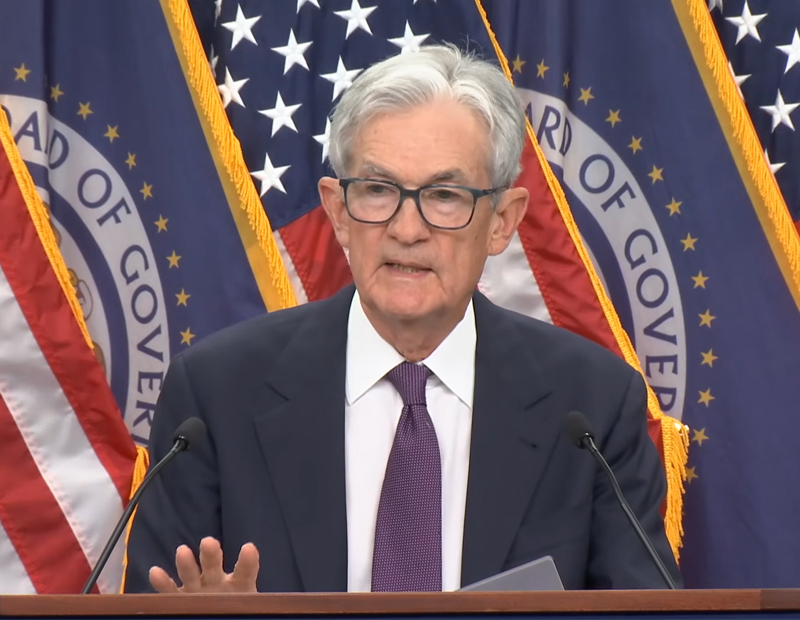
The Federal Open Market Committee has voted to hold interest rates at a range of 3.50 to 3.75 percent, marking the third meeting in a row where the organization has held rates at that range.
The announcement comes as the war in Iran continues to sow uncertainty in the industry and wider economy, with the rise in oil costs pushing up inflation. The labor market, meanwhile, remains mixed, with health-care positions driving the bulk of new job gains.
In a press conference following the committee’s announcement, Federal Reserve Chair Jerome Powell pointed out the increase in inflation due to rising energy costs.
“Developments in the Middle East are contributing to a high level of uncertainty about the economic outlook,” Powell said. “The Committee is attentive to the risks to both sides of its dual mandate.”
READ ALSO: Should CRE Worry About Private Credit?
On its own, “the Fed holding is expected and probably will have very little impact on commercial real estate markets in the near term,” Allan Swaringen, managing director at LaSalle Investment Management and president & CEO of JLL Income Property Trust, told Commercial Property Executive.
While the industry may appreciate some stability, the higher figure continues to be a drag on development starts and transaction activity. The 10-year Treasury yield, meanwhile, has increased by about 40 basis points since the war began, Swaringen noted.
“The industry still faces a cost of capital that is meaningfully higher than the low-rate period many assets were acquired under,” said Cary Goldman, managing partner at Timber Hill Group. “That continues to affect refinancing proceeds, lender sizing, debt yields, DSCR tests and cap rate assumptions.”
The war’s impact
The Middle East conflict has complicated the path to lower rates. While many had expected at least one rate cut by the end of the year, that seems less certain now.
“The 2026 Iran conflict is no longer a short-term shock but a structural driver of inflation,” Paul Rahimian, CEO of Parkview Financial, told CPE. “As the war enters its third month, the impact on global energy markets is filtering down to both corporate and consumer levels.”
Rahimian said he does not expect any rate cuts for the rest of the year, unless the labor market were to experience a rapid deterioration. However, Ryan Severino, chief economist & head of research at BGO, said his firm is still forecasting one or two cuts this year—though the timeline has become fuzzier because of the war.
A new era approaches
The latest rate announcement comes as the path for Kevin Warsh to become the new Fed chair has smoothed out. Hours before the Fed’s announcement on Wednesday, the Senate Banking Committee advanced Warsh’s nomination to the full Senate, which is expected to approve the appointment.
However, it is not clear when Warsh will be confirmed. Powell’s term as chair expires on May 15, though he said in his press conference that he would continue to serve as a Federal Reserve Board governor for an unspecified amount of time.
The chair added he would step down from the Board of Governors once he believed that the Justice Department’s investigation into the Federal Reserve was completely resolved. On April 24, the DOJ said it had dropped the probe, though U.S. Attorney for D.C. Jeanine Pirro said the department “would not hesitate to restart a criminal investigation should the facts warrant doing so.”
One difference between Warsh and Powell is that Warsh is likely to seek more collaboration with the Treasury to manage the federal debt, according to Rahimian.
“We may see a strategic pivot toward financial repression, utilizing tools such as yield curve control, renewed quantitative easing and the relaxation of bank liquidity requirements to artificially lower borrowing costs despite inflationary pressures,” Rahimian said.
While some have expressed concerns over whether the Fed will maintain its independence under Warsh, experts who spoke to CPE observed that the influence of the Fed chair is relatively limited. Swaringen pointed out that while the chair is a prominent position, it is still just one of the FOMC’s voting members.
“Historically, you haven’t seen a significant near-term alteration of Fed policy just because of the Fed chair,” Swaringen said.






You must be logged in to post a comment.