

Fed Holds Rates Again as Warsh Steps In
The decision came in a unanimous vote.
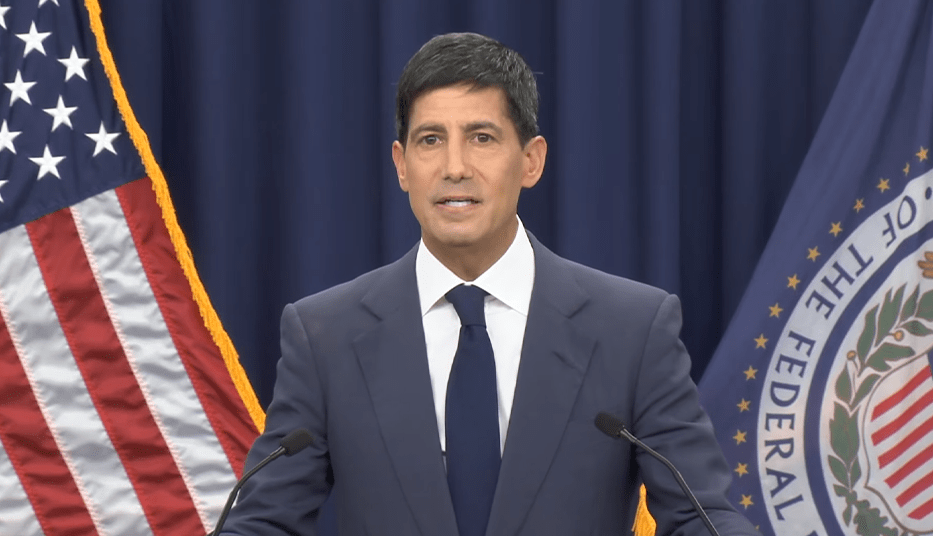
At Kevin Warsh’s first Federal Open Market Committee meeting as chair, the Fed opted to keep interest rates at its current range of 3.50 to 3.75 percent, where the figure has sat since December 2025. The decision was made in a 12-0 vote.
The decision comes as inflation remains above the Fed’s target and geopolitical tensions in the Middle East continue to influence energy markets, despite a tentative agreement to reopen the Strait of Hormuz.
The announcement came with little surprise, as industry professionals and CME Group’s Fed Watch tool were predicting a 99.4 percent chance that rates were held ahead of the meeting on Wednesday.
Eyes on Warsh’s first press conference
Despite the widely anticipated decision, many industry professionals were paying closer attention to Warsh’s first press conference and what it could signal about the future path of monetary policy.
“A new chair’s first press conference can reset market expectations even if policy is unchanged,” Andrew Koller, research analyst & advisor at WCRE/CORFAC International, told Commercial Property Executive. “For CRE, the key items to watch are whether he sounds more hawkish or dovish than expected, how he frames inflation persistence, and whether he signals any change in the Fed’s balance sheet posture or long-term rate path.”
READ ALSO: What the Debt Maturity Wall Means for Investors
Joe Biasi, head of commercial capital markets research at Newmark, echoed that sentiment, noting that investors will also be watching the Fed’s updated Summary of Economic Projections. Biasi said it may take time for the market to adjust to Warsh’s communication style and approach to forward guidance. He also noted that the market is pricing in the possibility of a rate increase over the next six months, and a more hawkish SEP could reinforce those expectations.
During his first press conference as chair, Warsh signaled changes to the Fed’s communications strategy, noting the shorter length of its policy statement.
“Absent also is so-called forward guidance, which we agreed was not well suited to the current policy conjuncture,” Warsh said.
Warsh also declined to submit his own economic projections, reiterating his long-held concerns about the Summary of Economic Projections in its current form. In addition, he announced that the Fed will launch five task forces focused on communications, balance sheet policy, data collection, productivity and jobs, and inflation frameworks. The groups will examine current practices and evaluate whether changes to the central bank’s approach to monetary policy are warranted.
Inflation remains the focus
While the job market is showing signs of improvement—with 172,000 jobs being added in May, according to the U.S. Labor Department—the Fed is focusing on the rising inflation challenges. If inflation remains elevated, some professionals have said future rate increases could be possible. If that is the case, it would be the first increase since July 2023, when the range was raised to 5.25 percent to 5.5 percent.
Several industry professionals noted that inflation remains the key factor influencing the Fed’s next move, as policymakers continue to assess whether recent price increases are temporary and largely driven by energy costs, or if they signal broader inflationary pressures throughout the economy.
“I am pleased to report that members of the FOMC are unambiguous and unanimous,” Warsh said at the news conference. “This committee will deliver price stability.”
Market seeks clarity
“The most important outcome from this FOMC meeting may not be a rate move itself, but increased certainty around the path of monetary policy,” said Chris Mitchell, senior banking officer at Northern Trust. “Commercial real estate investors and lenders have spent several years navigating significant rate volatility, and greater clarity should help support transaction activity and financing decisions.”
Keeping rates steady could provide additional stability for commercial real estate as the sector continues its recovery following several years of corrections. Industry professionals noted that a stable rate environment has helped investors and lenders underwrite deals, evaluate refinancing opportunities and deploy capital with greater confidence.
According to Allan Swaringen, president & CEO of JLL Income Property Trust, the broader trend of rate stability has been positive for both commercial real estate and the wider economy.
“We expect each rate decision to be data-driven and have seen an overall trend of stability for rates, which is positive for real estate as well as the economy broadly,” Swaringen said.
After several years of elevated borrowing costs, a stable rate environment has allowed investors to make longer-term capital allocation decisions and support continued liquidity across commercial real estate. Many investors continue to focus on Treasury yields and longer-term borrowing costs rather than any single Fed move.
“If the market buys into the ceasefire agreement and the reopening of the Strait, that could alleviate some of those pressures and help to bring the yield down over the balance of the year,” said Ryan Severino, chief economist and head of U.S. research at BGO.





You must be logged in to post a comment.