

Data Center Development Still Humming—For Now
AI is driving billions to support the hyperscalers, but obstacles pose risk for investors.

The meteoric growth of AI continues to defy talk of a bubble that could potentially burst. Therefore, the production of data centers rages on with no end in sight.
“We have not seen demand level off,” said Todd Smith, chief technology officer of Transwestern’s Technology Properties Group. “There are only a handful of hyperscalers, including Microsoft, AWS, Google, Meta and Oracle, along with a growing ecosystem of neoclouds that are often backed by and serve those firms.”
Hyperscalers are continuing to invest in GPU clusters for AI training and inference, primarily NVIDIA, and are in a fever-pitched search for short- and midterm capacity to house them over the next few years, he said.
In fact, data center vacancy rates have either remained the same or tightened in many markets across the U.S., with the overall U.S. vacancy rate holding steady at 3.5 percent throughout 2025 despite a large amount of new colocation capacity being delivered to the market, noted John McWilliams, head of data center insights at Cushman & Wakefield. Prelease rates for colocation capacity under construction also rose from 77.0 percent in H1 2025 to 78.8 percent in H2 2025.
LIKE THIS CONTENT? Subscribe to the CPE Capital Markets Newsletter

Investment in hyperscalers is skyrocketing, with capex in 2026 expected to increase by about 40 percent to $620 billion, with a significant portion allocated to digital infrastructure expansion, according to Erick Vega, director & senior credit analyst at CreditSights, a Fitch Solutions financial research company.
Furthermore, a McKinsey estimated that $5.2 trillion will be invested worldwide in data centers dedicated to AI alone by 2030.
Still, the data center sector is not risk free. For example, Smith noted that investment in GPUs is massive, but their useful lifespans are far shorter than facility investments.
“If there is a significant slowdown in demand for the data and services that spawn from their use, the refresh cycles may come into question, which could create a downward spiral,” he explained.
Is there risk of a data center bubble?
The data center industry and demand for data have not seen a real bust since the dot-com meltdown of 1999 and 2000, Smith noted: “This gives some confidence that a true bust will not occur, but no one can be certain, as this boom is truly unprecedented.”
Whenever you’re dealing with a transformative technology that requires massive capital and debt, there’s always a risk of overshooting, and bubbles can form before the market stabilizes, said Jason Jennaro, CEO of FrontierGen, a company that delivers shovel-ready building sites with power solutions. “The key is understanding where the leverage sits and whether projects are backed by contracted demand or just speculation.”
McWilliams recommends “measured optimism” for the AI industry, noting that the landscape presents two simultaneous realities: “On the one hand, GenAI is a transformative force that’s driving deep investment in infrastructure. On the other hand, there is considerable market enthusiasm without clear paths to profitability yet.”
Key industry indicators include capacity utilization, customer concentration, contract structures and return on invested capital trends.

“Current indicators suggest solid underlying enterprise and hyperscaler demand, though we remain vigilant regarding valuations in the broader tech sector and its potential impact on data center investment appetite,” Vega noted.
The amount of money going into AI dwarfs previous tech investment, which may signal some caution among lenders. An analysis by the Bank of England that looked at how AI is creating deep financial dependencies in the tech sector suggested that meeting this demand will increasingly involve companies taking on extra debt, and banks making those loans could face losses on a scale that risks wider economic troubles.
If a bubble occurs, there would likely be a huge pullback in major tech companies’ market caps, which would impact the broader markets. “We have already seen minor pullbacks when hyperscalers do not provide assurance and guidance in their earnings,” Jennaro said.
However, while leasing activity can be lumpy and volatile quarter to quarter, underlying fundamentals remain robust, Vega noted. “We continue monitoring utilization rates, potential project delays, and customer sentiment as key demand indicators,” he said.
The power conundrum
Meanwhile, there seems no end in sight for demand for data center capacity, but the industry does face strong headwinds to keeping development on a pace capable of meeting growing demand.
Twenty-five proposed data centers were canceled last year due to intense local opposition, grid constraints and rising costs, according to Heatmap.news. High energy usage, water consumption, noise pollution and zoning disputes were among the roadblocks.
The most common constraint is access to high-voltage electricity (500 kV lines) capacity. “The electric grids throughout the world, including in the most industrialized nations, cannot keep up,” said Smith. “Natural gas and battery solutions are being lined up for bridge power, while grid connections are pursued. The issue is acceptance of these alternatives with hyperscalers and their facility operators and neocloud partners working to position workable solutions.”
Where high voltage is available, there often are lengthy interconnection queues and longer-than-desired site energization timelines, noted McWilliams.
Obstacles to development
Access to and the cost of capital is also a concern. “Elevated interest rates and potential shifts in investor sentiment could challenge financing for the substantial development pipeline, particularly for newer or highly leveraged developers,” said Vega.
Additionally, he noted that many states are requiring increasingly significant investment from the data center community to keep commercial and residential customers from seeing major increases in costs to support the unprecedented power demands.
Alternative energy solutions such as natural gas face emissions restrictions as well, pushing major projects into more remote areas that are not as well equipped with other utilities, such as water, sewer and fiber optics.
Google and NV Energy, Nevada’s public utilities company, pioneered a mechanism that shifts the burden of increasing electricity costs, driven by the need for new energy infrastructure, to data center operators and reduces carbon emissions. This Clean Transition Tariff, which is now being adopted by other power companies, is a regulatory rate structure allowing large, typically >5 MW customers, to pay a premium for 24/7 carbon-free energy for new projects, explained Bukola Folashakin, assistant vice president for Energy at Morningstar & Natural Resources Ratings.

In addition, there are equipment supply issues, Smith continued, noting that electrical, mechanical and plumbing components are in short supply, particularly for acceptable equipment to meet the demands of modern data center use.
And lastly, there is a labor supply issue, which also is raising costs. “The biggest challenge in the data center construction industry right now is finding available skilled labor in markets where data centers are being built,“ said McWilliams.
In markets like Northern Virginia, for example, Vega noted, the development pipeline concentration has intensified competition for specialized labor and could extend construction timelines.
Construction innovation also is critical, such as employing modular construction and standardized designs to accelerate timelines and mitigate labor constraints, he added, noting that competitive wages are attracting additional skilled workers to the sector.
READ ALSO: Largest Data Center Developers
Potential for power shortages
There are no accurate forecasts to say how much data center capacity is required to support the AI revolution, but if demand continues to go at this pace, we’re heading into an electricity shortfall in some regions of the United States, according to Folashakin.
“Everything that we’re reading points to forecasts for shortages of the required power in some areas that will support AI data centers, particularly the hyperscalers,” she continued. ”We’re already seeing hyperscalers using more power than say, for example, the city of San Diego. The volume of electricity that is being consumed, we’ve never seen anything like it.”
A report from the Rhodium Group projects an annual average growth rate in demand for electricity of 1.5 to 2.3 percent in the 2020s and 2.0 to 2.2 percent in the early 2030s. AI data centers, electrification (e.g., electric vehicles), and clean energy manufacturing are all contributing to the anticipated increase.
Access to a high-voltage grid is the biggest challenge data center developers face, Folashakin said, noting that it can take up to five years from commissioning a new grid to getting it online, especially if it is an interstate grid due to the amount of regulatory bottlenecks encountered.
While demand for data center capacity isn’t leveling off, Jennaro said. “what we’re seeing are infrastructure limits. AI is effectively converting man-hours into megawatt-hours at industrial scale, and that’s a structural shift in power demand.
Creative power solutions
Essentially, power is driving the pace of growth. “In this market, speed to power equals speed to market, and grid realities are now what determine how quickly projects can move,” Jennaro said.
However, the larger, more aggressive developers are tackling the electrical problem by bringing their own power models onsite, hoping to eventually bypass the grid entirely, Folashakin noted.
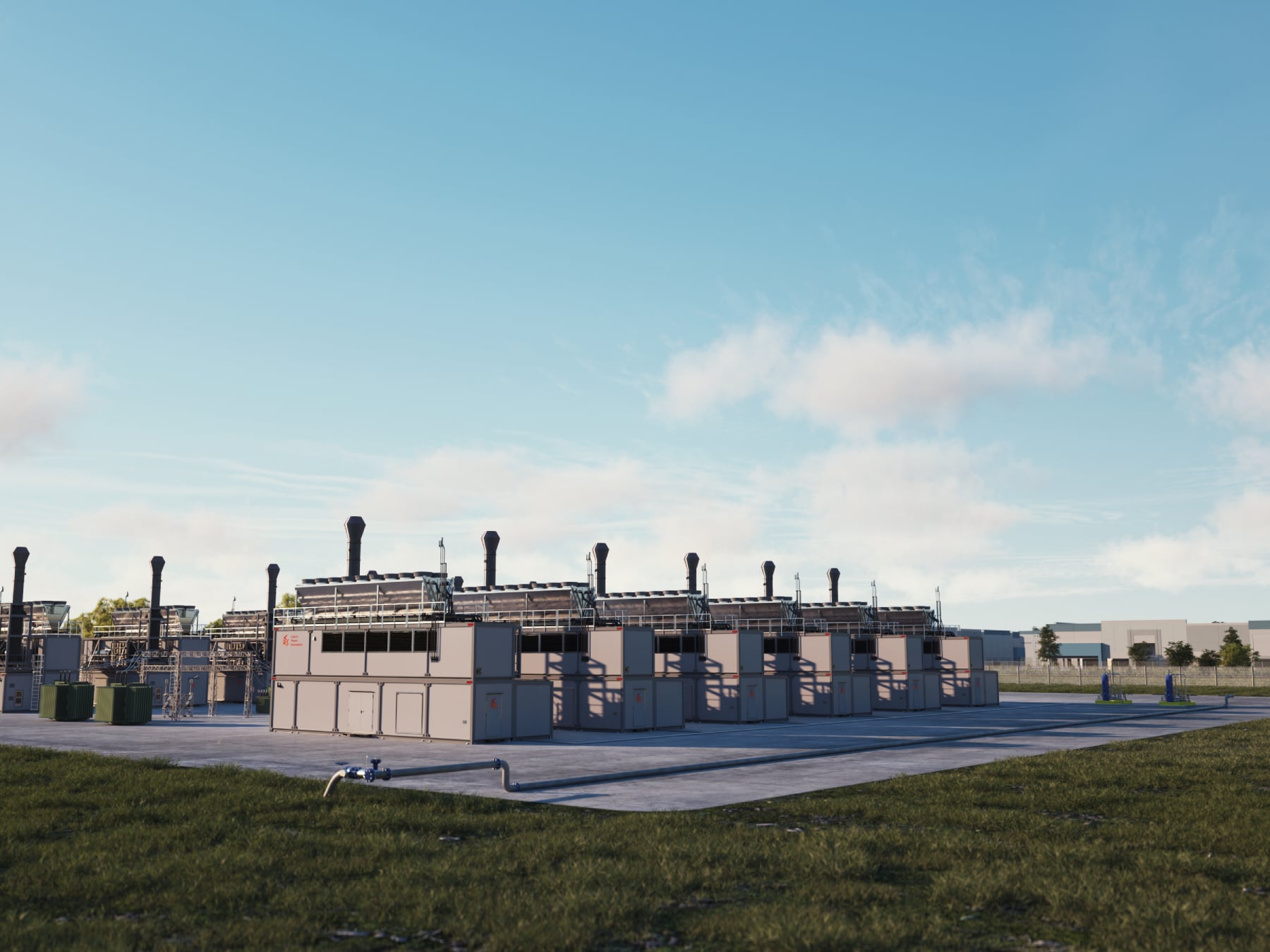
Some developers are investing heavily in battery storage, gas turbines or natural gas. Other creative solutions include colocation of power production facilities that may include renewable energy resources, microgrid systems, and nuclear. “There’s no one size fits all,” she said.
Microsoft, for instance, signed a 20-year power purchase agreement with Constellation Energy to provide electricity to Microsoft data centers in the mid-Atlantic region from the Unit 1 reactor at the Three Mile Island nuclear power plant in Pennsylvania, which was unaffected by the 1979 partial meltdown of the Unit 2 reactor.

Other hyperscalers—Oracle, Google, Amazon Web Services and Meta —are looking to innovative nuclear technologies like Molten Salt reactors and small modular reactions to solve power shortages independent of the grid.
Smith noted, therefore, that power shortages aren’t slowing down development but are increasing costs. “The industry has been resilient and is pursuing creative solutions for larger sites and alternative energy sources to power them within acceptable time frames,” he said. “Faster deployment of modular designs and even temporary builds are in play.”
Bringing down costs
In terms of capital structure, Vega said that developers are stratifying their funding sources across private debt, structured credit, the bond market and strategic equity partnerships to reduce reliance on any single capital vector and optimize the cost of capital.
Other efficiency strategies are aimed at data center site selection and campus designs. For example, developers are choosing locations with adequate electrical capacity, good water and sewer infrastructure and plentiful labor supply and measuring and managing community sentiment before site acquisition in some cases, said Jennaro.
“Sites with more supportive communities are likely to be given preference in the site selection process,” he explained. “Developers also are likely to give preference to sites with the fewer regulatory hurdles, all else being equal.”
The industry also is moving from one-off buildings to repeatable “campus products” that are infrastructure-entitled, pad-ready and scalable, so customers can deploy in phases without reinventing the wheel each time.
You must be logged in to post a comment.