


OpenAI Unveils $20B Data Center Plan
Project Camellia will be the first ground-up campus developed by the company in house.
In one of the coastal Georgia’s largest-ever private investments, OpenAI will build a $20 billion, 3.2 gigawatt data center campus at the Savannah Gateway Industrial Hub in Rincon, Ga.
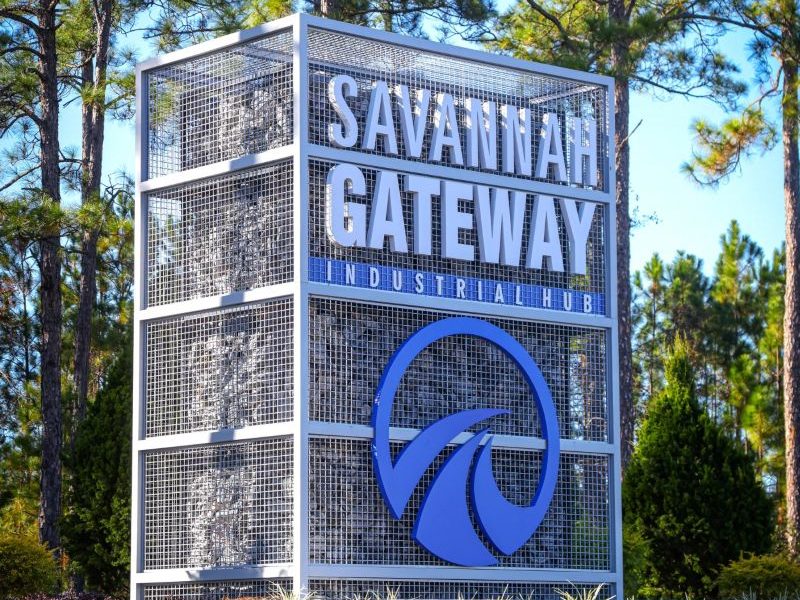
The project at the 2,600-acre global logistics campus in Effingham County will be delivered in phases between 2028 and 2032. At full buildout, the 1,400-acre campus will feature four 720,000-square-foot buildings with a maximum height of 35 feet.
Dubbed “Project Camellia,” the development will be the first ground-up, in-house data center campus designed and developed by OpenAI. The San Francisco-based artificial intelligence company currently purchases or rents chips and computing capacity from cloud providers such as Oracle and Amazon Web Services at other U.S. locations, including in Georgia.
OpenAI has increased its projected spending on computing power through 2030 to about $750 billion, up from a previous estimate of $600 billion, according to The Wall Street Journal.
OpenAI addresses electricity, water issues
OpenAI has contracted with Georgia Power to provide the 3.2 gigawatts of power, which will be delivered over the five-year buildout period. Both OpenAI and Georgia Power stated that the data center campus would not result in higher electricity rates for residents because OpenAI will pay the full cost of the required infrastructure and electric-service costs. Under Georgia Public Service Commission rules, those costs cannot be passed on to existing ratepayers.
Under the 25-year agreement, Georgia Power will have the option to reduce energy delivered to the OpenAI facility when needed to support the stability of the electric grid. OpenAI has also agreed to provide up to 1,000 megawatts of flexible demand response to reduce its power use in high-demand periods. That is meant to help support the system’s reliability and allow Georgia Power to invest in fewer new generation resources, providing long-term savings for customers, the utility stated.
Ensuring that electricity rates don’t rise because of data centers was the focus of an event at the White House on Thursday. Georgia Gov. Brian Kemp was among 23 governors signing President Trump’s non-binding pledge aimed at protecting residential ratepayers from absorbing electricity costs for data centers.
Concerns about rising electricity rates, water consumption and noise pollution are driving increasing pushback at the proliferation of proposed AI-driven data centers. Last week, New York became the first state to enact a moratorium on data center projects of 50 megawatts or higher as the state develops a framework for future development. Nearly 70 similar proposals were adopted through May at the local level, including in Denver and Oakley, Calif. A statewide moratorium in Maine that passed the state legislature was vetoed by Gov. Janet Mills.
In its announcement about Project Camellia, OpenAI stated that water use will be minimal because the complex will use a closed-loop water system, which recirculates water rather than continuously withdrawing and discharging it. The company said water use will not divert supplies from local communities. OpenAI noted that the campus’ ongoing water needs would be similar to an office building’s.
The company added the project is also expected to generate less traffic than a warehouse on the same site would.
Packing economic punch
Local officials, including the Effingham County Industrial Development Authority, Effingham County Board of Commissioners and Effingham County School District, predicted a broad economic impact from the project.
Project Camellia is expected to create thousands of construction jobs over several years and at least 400 permanent jobs. Local officials say that it will significantly increase the local tax base, support infrastructure improvements and support educational partnerships to prepare students for careers in technology, engineering, skilled trades, cybersecurity and advanced manufacturing. The county estimates that the average homeowner could see a 40 percent reduction in property taxes. OpenAI said it will provide $80 million in community benefits over the life of the project, separate from projected tax revenue.
It will also be getting some tax breaks. Earlier this week, the ECIDA approved an incentive package, giving OpenAI a 50 percent property tax abatement for 15 years, according to the Effingham Herald.
The company, which held a meeting with local residents Thursday night, said it plans to continue engaging with the public about the project. An audit by an independent firm to track the company’s progress on its commitments will be conducted annually.





You must be logged in to post a comment.