


CREW Special Report: Retail’s Next Wave
Industry experts weigh in on how retail owners and brands are adapting to more intentional consumers and evolving space needs.
Retail real estate has seen many waves, much like other commercial real estate sectors. But following the e-commerce boom and shifts in consumer behavior, expectations around how retailers and real estate professionals can succeed have changed.
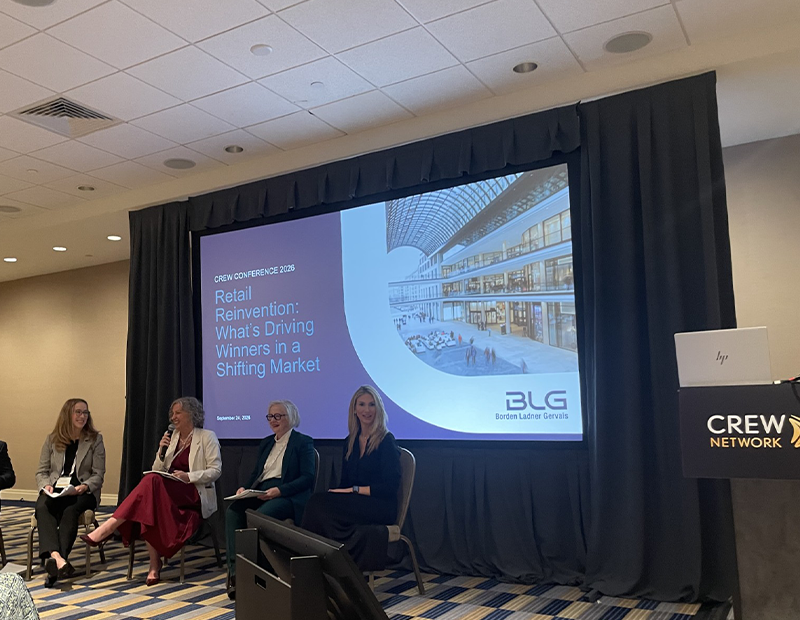
“Consumers haven’t stopped spending, but they’ve become so much more intentional about every dollar that they spend,” said Alanna Loeffler, Cushman & Wakefield senior managing director, Americas retail platform lead, during “Retail Reinvention: What is Driving Winners in a Shifting Market” session at the 2026 CREW Network Convention in Miami Beach.
Even though spending habits are different today, Loeffler said she still sees strong fundamentals across the sector. According to Cushman & Wakefield’s second-quarter U.S. Retail MarketBeat report, the national retail vacancy rate was 6 percent, up 3 basis points quarter over quarter.
A more intentional shopper
While the experts on the panel agreed that consumers are still spending, the intention behind their shopping habits has shifted. Loeffler described a barbell effect in retail demand, with strength at both the luxury and value ends of the market.
She attributed that split to higher-income consumers continuing to spend on luxury, while other households are trading down in some categories so they can spend elsewhere. Panelists said that intentionality goes beyond price and spreads to which brands and experiences consumers consider worth their money.
“Brands can’t really just expect loyalty anymore,” Loeffler said. “They really have to earn it.”
READ ALSO: Building Connected Communities Through Retail, Mixed-Use
There is also more research that a consumer does before spending, making it even harder for brands to compete.
Anne Netanewicz, director of real estate at See’s Candies, a California-based candy and chocolate retailer, said one way the brand builds this loyalty is through nostalgia. At See’s stores, consumers are offered a free sample, part of what she described as creating an emotional connection with customers.
Joseph Sheridan, senior corporate counsel at the LEGO Group, said on the panel that experience is an important part of the company’s retail strategy. He said the company sees retail as more than just the transaction.
“We want our physical stores to be engaging and creative and fun to bring people in,” he said. “Hopefully, someone comes in, has a good experience, and then maybe even if they don’t make a purchase in the store, maybe they’ll go and make one online.”
Beyond occupancy
One of the retail trends that the panel has been seeing is the growth of experiential retail, from pop-ups to hospitality-based retail. Landlords are starting to change their approach to tenant mix, whether it be at a mixed-use development or a traditional mall.
Julie Robbins, vice president of national legal services at Oxford Properties Group, said large department-store anchors like Sears and J.C. Penney historically held significant influence over shopping centers through long-term leases and approval rights.
Robbins pointed to Canada’s Hudson’s Bay as an example of how the role of traditional anchors is changing. Department stores historically signed decades-long leases, occupied large blocks of space and held significant approval rights within shopping centers. After Hudson’s Bay liquidated its stores in 2025, landlords were left to reconsider how those former anchor spaces should be used.
“It would be better to have vacant space and receive no rent than have the wrong use and the wrong operator in your mall,” she said.
The next generation of anchor tenants at shopping centers may not even be a single tenant. Instead, Robbines believes it could be a combination of retail, food, entertainment and community uses anchoring these spaces.
Sheridan echoed the sentiment that not every square foot needs to be monetized. He said allowing space to be used for activations can drive traffic not only to the participating retailer but also to neighboring stores.
This flexibility is especially important as experiential retail evolves. An overly restrictive lease can make it harder for shopping centers to adapt to changing consumer behavior.
“The best owners today aren’t leasing space,” Loeffler said. “They’re really creating destinations that consumers want to return to again and again.”



You must be logged in to post a comment.