


Fed Stays the Course as Industry Awaits More Rate Hikes
In a divided vote, the Federal Open Market Committee cited strong economic activity despite persistent inflation.
The Federal Open Market Committee has decided to maintain the federal funds rate at 3.75 to 4 percent, where it has been since the Fed raised the rate a quarter point in September. The decision wasn’t unanimous, with 10 members voting to stand pat and two voting for an increase.
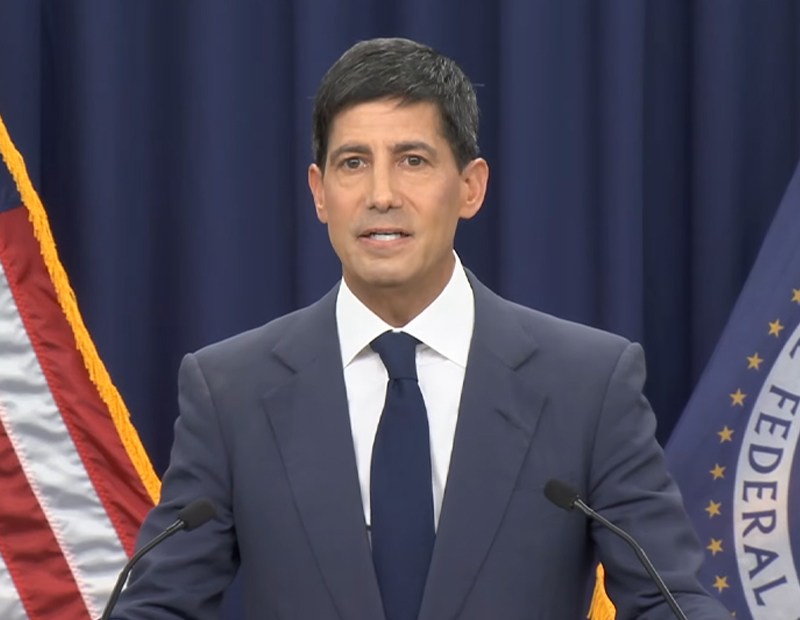
Despite elevated inflation, FOMC characterized the economy as strong. “Economic activity is expanding at a strong pace,” the FOMC said in a statement. “While uncertainty remains elevated owing, in part, to geopolitical developments, domestic spending has been resilient. Productivity growth is strong, and capital investment is robust. Job gains have kept pace with the workforce, and the unemployment rate has changed little.”
Inflation battles
Inflation remains stubbornly higher than the Fed’s longstanding target of 2 percent, with the most recent data from the Bureau of Labor Statistics putting inflation at 3.7 percent year-over-year. Prices were up 0.6 percent month-over-month in September, up from 0.4 percent the month before.
Energy prices, especially gasoline, drove over half of the monthly all-items increase, as oil markets remained contorted by the war with Iran. The price of gasoline rose 9.1 percent in September, while overall energy prices were up 5.2 percent month-over-month following a 2.1-percent increase in August.
Though never quite at the 2 percent target, the rate of inflation was close as recently as both February and January, ahead of the war, when it was 2.4 percent year-over-year. At that time, interest rates were on their way down. Now the expectation is that rates will probably rise again before the end of the year, barring an unexpected downward shift in inflation.
The economy might not have been the only consideration in the Fed’s deliberation this time around, according to Noel Liston, managing broker, Core Industrial Realty.
“The gift to the CRE markets was that the conclusion of the October Fed meeting is just six days before the midterms,” Liston told Commercial Property Executive. “Raising rates just prior to midterms would have been a political nightmare for the Federal Reserve, despite its mandate for neutrality. The decision to hold rates steady presents an opportunity for significant transactional volume between now and the end of the year.”
Indeed, notes Ed Del Beccaro, executive vice president at TRI Commercial/CORFAC International, CRE stakeholders expect the Federal Reserve to raise interest rates slightly later in the year, so that expectation is baked into any year-end decisions about investment or finance.
Anchoring a volatile market
“A hold is a pause, not a full pivot,” RREAF Holdings Chief Operating Officer Jeff Holzmann told CPE. “Commercial real estate prices off the 10-year Treasury and lender spreads more than the overnight rate, so the real value of a hold is predictability. A steady Fed gives buyers and sellers a number they can underwrite to.”
As interest rates remain elevated and potentially rise again before the end of the year, Axos Bank Chief Lending Officer-Commercial Lending Michael Lorch said he anticipates greater dislocation across major asset classes, with historically low cap rates that have embedded repricing risk or feasibility exits for pending maturities.
“Although it may seem counterintuitive, traditionally strong or ‘safe haven’ asset classes like multifamily may see more challenges than others, given the historically low cap rates they traded on,” Lorch noted. “However, I’m cautiously optimistic for creative lenders with capital. The folks that stayed disciplined in their approach over the past ten years will see opportunities emerge from secondary-market portfolio trades.”
Regardless of the Fed’s next move, rate volatility continues to influence how owners approach transactions, according to Avison Young Principal Scott Singer, who is co-lead of Tri-State Debt & Equity Finance.
“Increasingly, we’re seeing owners pursue a third option between accepting today’s pricing and walking away from a deal entirely: bridge financing,” he said. “It can provide liquidity today while giving owners the flexibility to revisit a sale when market conditions and pricing become more favorable.”
The 10-year at 5 percent seems to be a stable benchmark that can help anchor the market for the near future, noted Trent Scott, president of First Capital Property Group/CORFAC International.
“Deals already under contract shouldn’t have any rate-based problems to close,” he said. “Stability in the rate is the positive takeaway for the time being. In the longer term, anyone underwriting cuts in 2027 is taking a risk.”


You must be logged in to post a comment.