

Top Projects That Will Reshape Dallas
From new transit links to multibillion-dollar communities, these developments are set to transform the Metroplex.
This article first appeared in the CPE Sneak Peek Newsletter. Subscribe now for early access to exclusive content, in-depth analysis and key trends!
Dallas–Fort Worth’s remarkable run shows no signs of slowing, as the market continues to push the boundaries of what it can achieve. Since the pandemic, the Metroplex has consistently ranked among the nation’s leading markets for development across several sectors, particularly multifamily, office and industrial.
As of May, Dallas’ office pipeline reached 2.6 million square feet, accounting for 0.9 percent of the total stock, according to Yardi Matrix data. That’s more than double the U.S. average of 0.4 percent. The figure positioned the Metroplex third nationally—behind only Boston and Manhattan—and first among its peer markets, ahead of Austin (1.2 million square feet under construction), Houston (922,000 square feet) and Denver (672,000 square feet).
Meanwhile, the metro’s industrial pipeline ranks first nationwide, with 29.6 million square feet under construction across 103 facilities as of February. This represents 2.8 percent of total stock, the same data provider shows. Development activity rose significantly from the same period in 2025, when the market had 5.8 million square feet underway across 14 industrial properties.
The simplest explanation for the sheer volume of projects moving forward is demand, according to CBRE Executive Managing Director Jeremy McGown. The depth of that demand is what helps projects pencil out even in a higher interest rate environment. “While many cities are hitting the brakes, North Texas still has the underlying fundamentals needed to support major development,” McGown told Commercial Property Executive.
What sets the Metroplex apart, however, is the diversity of that demand. “Growth isn’t coming from just one industry or one property type. We’re seeing activity across retail, industrial, multifamily, health-care and corporate real estate,” McGown noted.
From infrastructure megaprojects to multi-phase communities and mixed-use districts, here are some of the largest developments set to reshape Dallas–Fort Worth’s built environment. These projects are expected to influence the evolving dynamics between the region’s downtown and suburban areas.
1. The DFW International Airport Expansion
Among the most ambitious projects on our list is the massive expansion of Dallas Fort Worth International Airport. Part of a $12 billion capital improvement program, which also encompasses upgrades to existing terminals and the airfield, the project will add a sixth terminal. This will be the airport’s first new terminal since Terminal D opened in 2005.
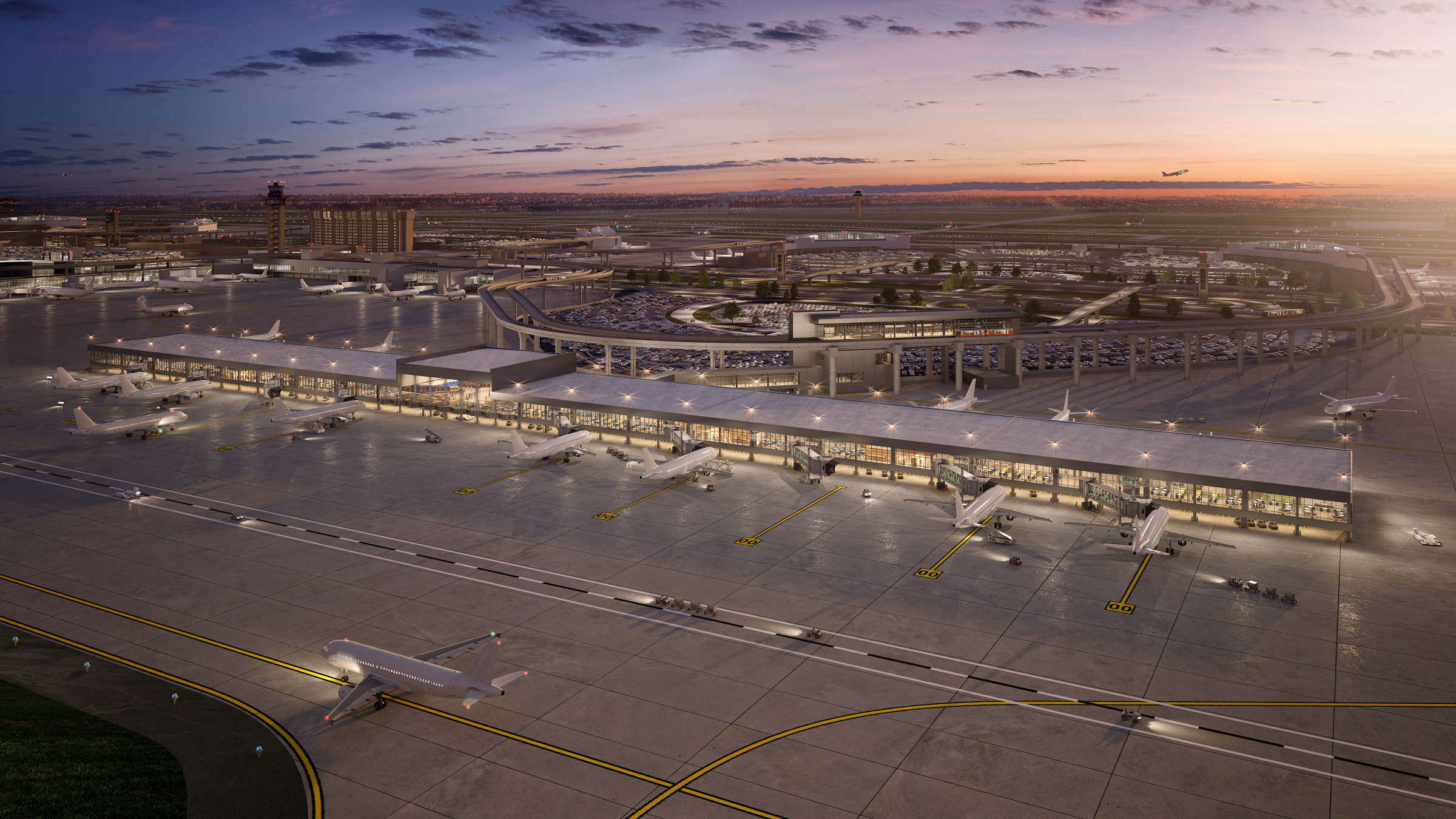
Of the program’s total investment, $4 billion will go toward the development of Terminal F. Upon completion, it will feature 31 gates dedicated exclusively to American Airlines, as well as a station for the airport’s Skylink high-speed train system. The first phase, comprising 15 gates across 400,000 square feet, is scheduled to open to the public in 2027.
2. DART Silver Line Route (North Dallas suburban access)
Dallas–Fort Worth’s transportation buildout extends beyond the airport itself. The 26-mile DART Silver Line, which opened for passenger service in October 2025, connects DFW International Airport with Plano through 10 stops across seven Texas cities: Plano, Richardson, Addison, Carrollton, Dallas, Coppell and Grapevine.
Developed by Dallas Area Rapid Transit, the commuter rail is expected to enhance connectivity for employers and employees alike, benefiting both the office and multifamily sectors.
“Infrastructure has always been a major catalyst for growth in North Texas and that continues to hold true. When the right infrastructure is in place, developers have confidence they can support future residential and commercial demand,” said CBRE Managing Director Blake Waltrip.
He added that municipalities need to keep infrastructure improvements in step with redevelopment, since developers consider not only near-term plans but also whether local systems can support their investments over the long term.
3. Terra Nova
Although parts of the Sun Belt continue to work through a wave of multifamily supply delivered during the post-pandemic years, developers are still pursuing large-scale, long-term residential projects in the Metroplex.
One such project is Main Square Development’s Terra Nova, a $3 billion, 15-phase master-planned residential project in Terrell. Located 37 miles east of downtown Dallas, Terra Nova will span 1,545 acres across 11 parcels of land.
Upon completion, Terra Nova is set to comprise 3,600 single-family homes and 1,200 multifamily units, as well as 200,000 square feet of commercial space, including office and retail properties, along with schools. Plans also call for a 48-acre mixed-use component designed to serve as the community’s main square, known as Terra Nova Village.
The developer received construction plan approval for the project’s first phase in April, clearing the way for infrastructure and site work to begin. Construction on the first model homes is expected to start early next year, while Terra Nova’s full buildout is slated to unfold over roughly two decades.
4. Minto Communities’ Waxahachie master plan
After purchasing a 3,170-acre site in Waxahachie in February, Minto Communities unveiled plans for a 13,270-home master-planned community featuring single-family homes, cottages, villas, townhomes, apartments and a 55+ active-adult neighborhood.
The yet-to-be-named project is also set to feature a 1.2 million-square-foot commercial component, alongside schools and 400 acres of parks and green space. The site lies west of Interstate 35E, south of FM 875, north of FM 1446 and east of Lone Elm Road, some 30 miles south of downtown Dallas.
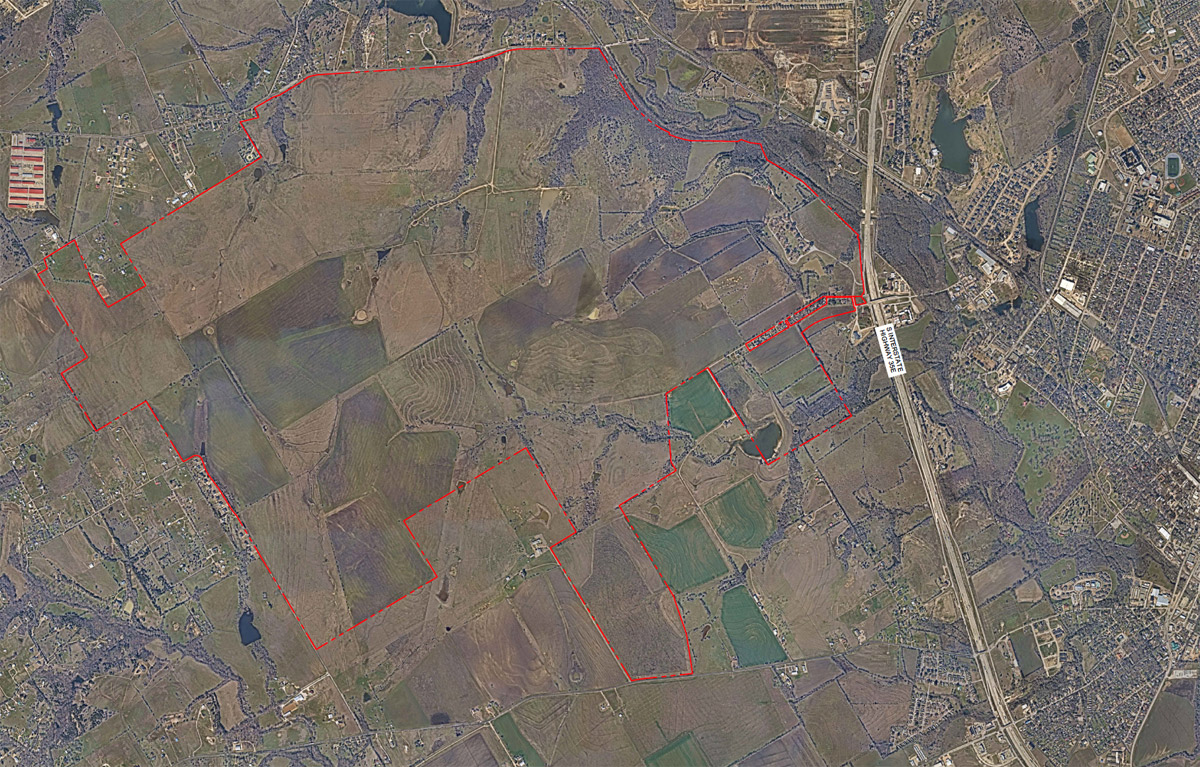
The development marks Minto’s first Texas location and is set to become the largest mixed-use project in the area. Work is scheduled to begin later this year and delivery to occur in phases over the next 15 to 20 years. The construction phase is estimated to support 2,080 jobs, while the completed development is expected to generate more than 7,500 permanent jobs over time as businesses and residents move into the area.
5. Texas Research Quarter
Specialized developments are also gaining ground in the Metroplex, helping establish the region as an emerging life sciences hub. NexPoint’s Texas Research Quarter is a $4 billion office and R&D campus planned on a 200-acre site in Plano. The project received approval from the Plano City Council in 2024.
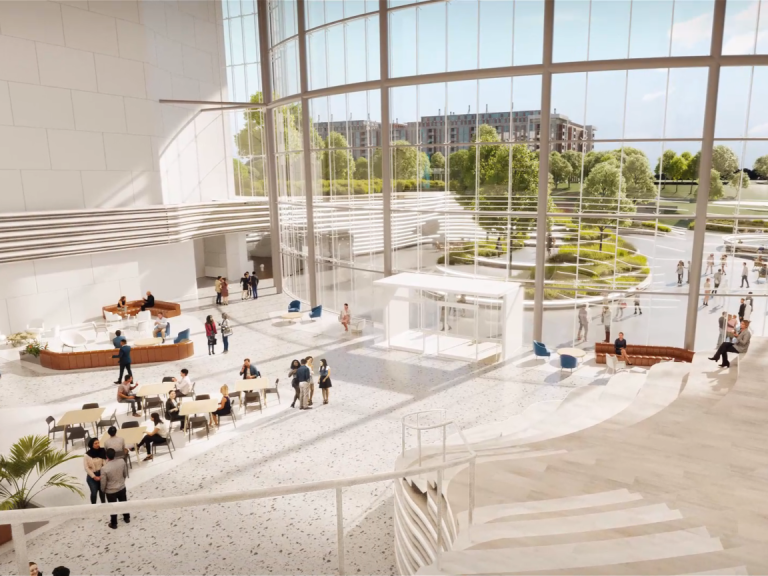
Planned in four phases, the life sciences campus will feature 4 million square feet of medical research facilities, traditional office space and biotech labs. Texas Research Quarter will comprise a 91-acre main campus, which was acquired in 2018. Formerly the headquarters of Electronic Data Systems, the property will be combined with an additional 109 acres in Plano’s Legacy neighborhood.
6. Hyperscale Data Center Campus
Energy Capital Partners, KKR and CyrusOne are developing a $4 billion, 190-megawatt hyperscale data center campus in Bosque County, as part of a $50 billion initiative to support AI infrastructure growth. Despite its location outside the Metroplex, the project is closely linked to the DFW market, emerging as one of the broader region’s most notable AI infrastructure developments.
Upon completion, the property will span 700,000 square feet. The initial phase is already under construction and is expected to become operational by year-end, providing 144 megawatts of IT capacity.
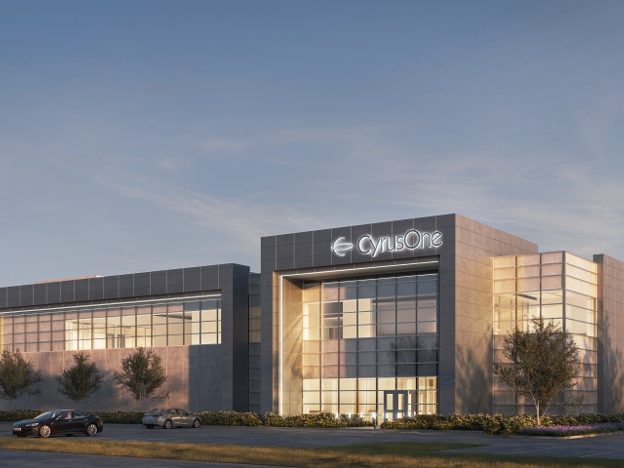
Strong data center demand—combined with access to power, fiber connectivity, available land and a business-friendly environment—is making North Texas increasingly attractive for digital infrastructure investment, according to CBRE Senior Managing Director Kelly Whaley. “Data centers are emerging alongside traditional industrial users as another major driver of land demand throughout the Metroplex,” he said.
7. Hi Line Square
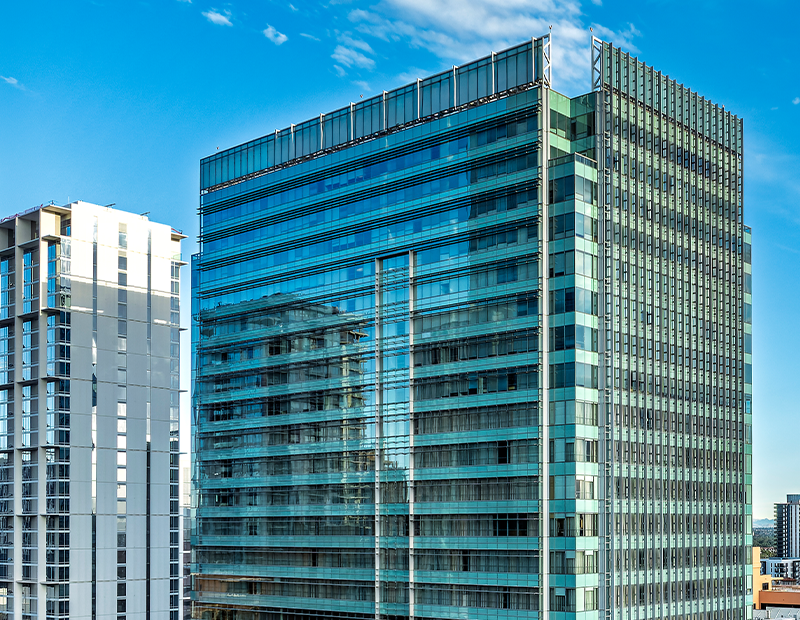
Developed by a joint venture between HN Capital Partners and McCourt Partners, Hi Line Square is an adaptive-reuse project in Dallas’ Design District that will feature office, retail, hospitality and residential components across two towers.
The first one is set to be 19 stories and comprise 255,000 square feet of office space, with amenities including a lounge, a conference center and a 6,000-square-foot outdoor terrace. The second tower, a 20-story residential building, will feature 200 units, along with a fitness center and a rooftop pool.
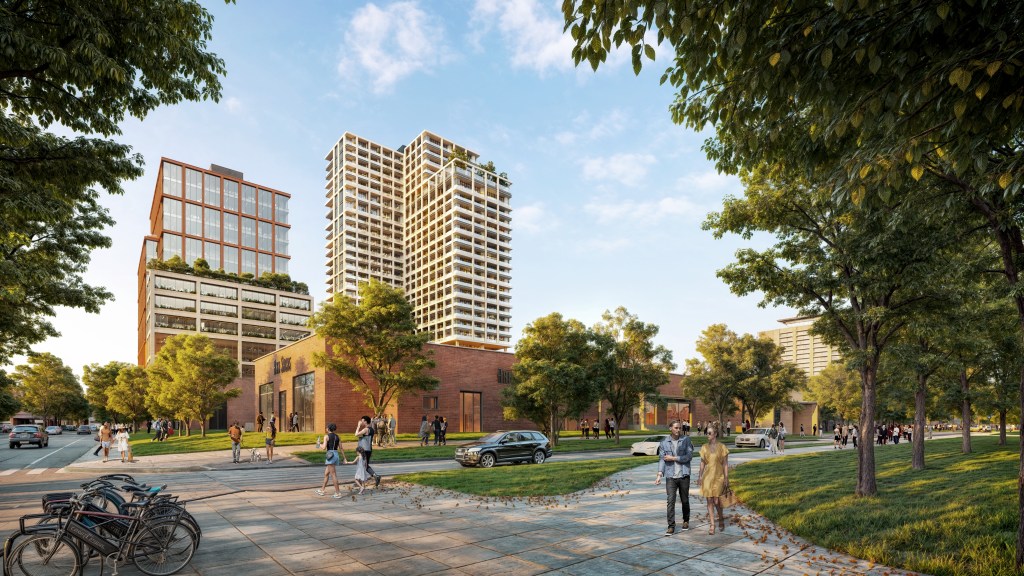
A central plaza will anchor the development and host a farmers market. Groundbreaking is scheduled for next year, with completion slated for 2030.
Check out our other articles in the series to discover the top projects reshaping Los Angeles, Nashville, Raleigh, Miami, Chicago, Boston and Seattle.

You must be logged in to post a comment.