


Top Projects That Will Reshape Raleigh
From entertainment districts to mixed-use projects, here are the developments that will change the city's urban core.
Check out our other recent articles in the series to discover the top projects reshaping Miami, Chicago, Seattle and Boston.
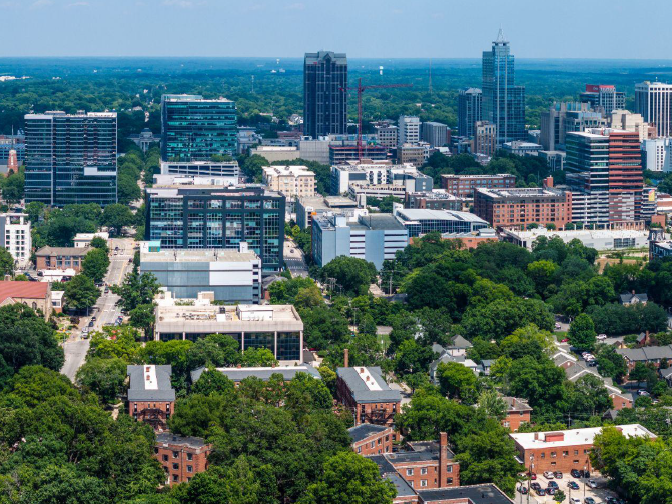
Raleigh’s next development cycle is unfolding across multiple fronts. From downtown and Midtown to the Warehouse District and other emerging nodes, a diverse mix of projects is reshaping the city’s urban fabric, reflecting both sustained population growth and the broader momentum of Wake County, now home to more than 1.1 million residents.
Investments in sports-anchored mixed-use districts, large-scale hospitality venues and adaptive-reuse developments point to a market that’s not only growing, but also diversifying in how and where capital is being deployed.
Downtown, however, remains a central anchor. Since 2025, it has recorded an $8.3 billion pipeline of completed, under construction and planned investment, including more than 5,700 new residential units. “With a downtown apartment leasing market that is currently one of the best in the country, we are building the type of live-work-play ecosystem that major developments need to succeed,” said Bill King, president & CEO of Downtown Raleigh Alliance.
READ ALSO: Mixed-Use Design Trends
At the same time, new projects are expanding beyond the urban core. Developments such as the Omni Hotel and Convention Center are positioning Raleigh to capture more conferences and events, while large-scale districts like the Raleigh Sports & Entertainment District are centered on live events and lifestyle-driven demand. Meanwhile, adaptive-reuse efforts—from the repositioning of legacy properties downtown to projects like Iron Works, a $150 million redevelopment of a former industrial site that has already attracted Swiss luxury watchmaker Audemars Piguet—underscore a parallel focus on growth without erasing the city’s identity.
“What’s interesting about this moment for Raleigh is the size and variety of development happening all at once across our city,” said Kyle Touchstone, director of Raleigh Economic Development. “Major renovations are happening to historic legacy properties like the iconic Holiday Inn downtown and The Depot in the Warehouse District. Even the iconic Crabtree Valley Mall is being reimagined.”
These projects offer a closer look at how and where the city’s landscape is evolving.
1. Raleigh Sports & Entertainment District
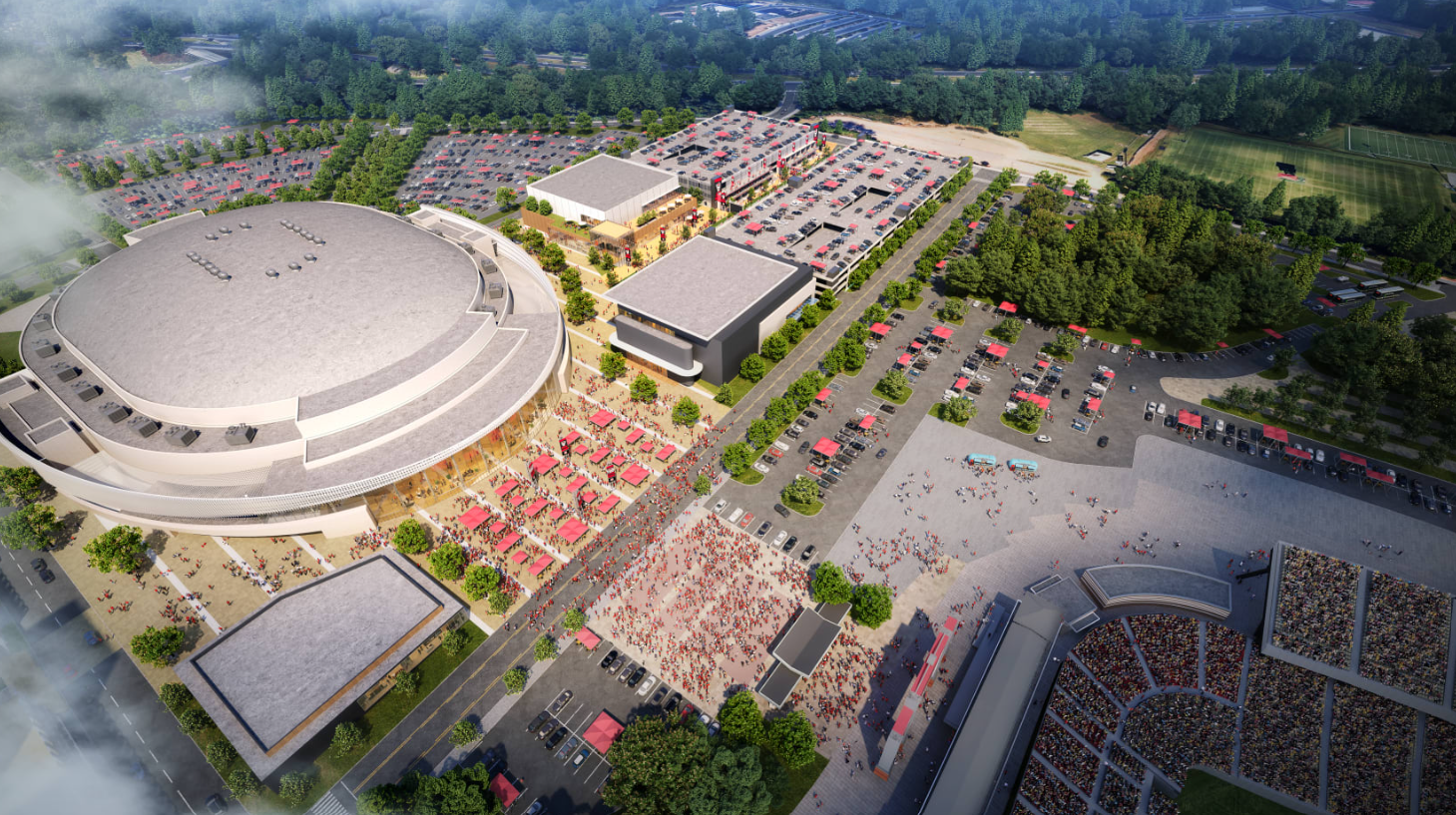
Raleigh’s largest arena-area redevelopment is the planned Sports & Entertainment District, a $1 billion mixed-use buildout surrounding the Lenovo Center campus, next to Interstate 40 and adjacent to Carter-Finley Stadium. Plans call for a full-time district blending residential, retail, hospitality, public plazas and green areas. Led by Gale Force Sports & Entertainment and Pacific Elm Properties, the 80-acre project will be built over the next 15 years, with arena work currently in progress.
Home to the Carolina Hurricanes and Wolfpack, the 1999-built Lenovo Center campus has a 20,000-seat capacity. The $300 million redevelopment project, designed by Gensler, will increase the seating capacity by 600 to 800 seats. Plans call for the replacement of all lower-bowl seats and concourse remodeling, as well as the construction of a 4,500-square-foot multi-purpose room and five bunker suites, new food and beverage options and hospitality-driven common areas. The renovation is being financed through Wake County tourism taxes on hotel stays and prepared food and beverage.
The project team kicked off the mixed-use redevelopment last year by adding an extended plaza, a 600-foot promenade area and new open space. Gale Force Sports & Entertainment plans to invest $200 million over the next five years in the first phase of the project, $400 million within 10 years and $800 million within 20 years. Phase I is slated for completion in 2030.
Another entertainment component is the planned 4,300-seat ballroom venue, which will be operated by Live Nation and will host concerts, comedy shows, community events and corporate meetings.
Program-wise, the district is positioned as more than an arena-adjacent retail strip. Besides 200,000 square feet of entertainment and lifestyle retail space, it is also set to include 150,000 square feet of office space, a 150-key hotel and 500 apartments, 10 percent of which will be affordable.
2. North Hills Innovation District
Kane Realty Corp.’s North Hills Innovation District is another $1 billion large-scale mixed-use expansion of Midtown Raleigh, expected to roll out across multiple phases. Spanning 33 acres, the project will add public space, everyday services, residential and commercial spaces to the area.
The district is already partially delivered, with the next phase set to deliver new residential components, a multi-use tower and open-space connectivity. Upon completion, it will include 322,000 square feet of Class A office space, 60,000 square feet of retail and 1,500 apartment units.
In February, Kane Realty broke ground on Tributary, a 332-unit residential component of NHID, which will also include 6,000 square feet of retail space. Plans also call for a wellness center, a digital content creation studio and two courtyards. Additionally, the six-story building will feature a rooftop pool and a coworking lounge, along with direct access to nearby greenway connections.
At the same time, the developer recently acquired a 28-acre site along Interstate 440 for $72.3 million to expand the development with a new high-rise residential tower and mixed-use building. Plans for the latter are still uncertain, but they may include office, retail or hotel space.
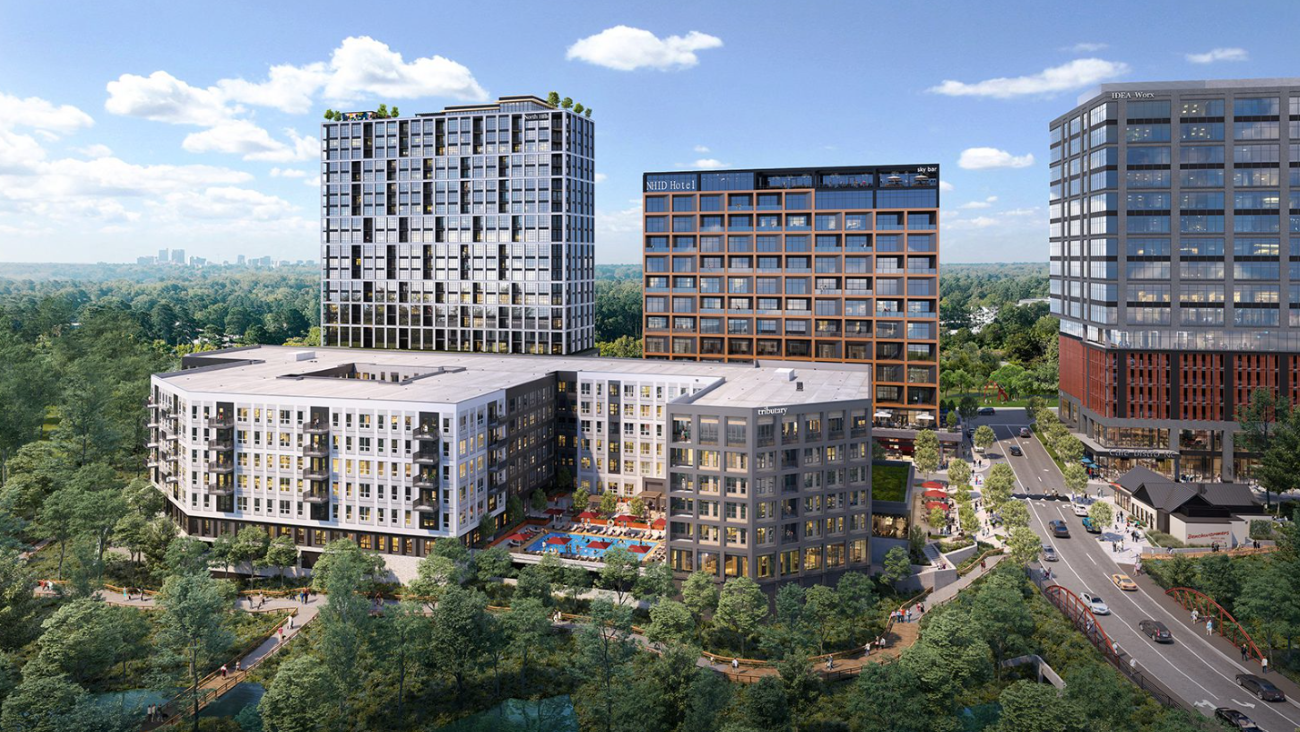
Since the project broke ground, Kane Realty Corp. has completed Vine North Hills, a 326-unit, mid-rise community in spring 2021 and Channel House, a 200-unit community with a 14,000-square-foot ground-floor retail component in spring 2023. Construction is also completed at St. Albans Lofts, a 396-unit two-building community with 6,000 square feet of retail.
On the commercial side, the developer finalized Tower 5, the 342,000-square-foot, 17-story office building, in 2024. As for the retail and dining space at NHID, Kane Realty brought local restaurant Standard Beer + Food to occupy 5,600 square feet, with another 10,000 square feet set up as outdoor gathering zones. Benchwarmers Bagels leases 2,800 square feet at the property, whereas Makers Alley, the space below Channel House, is occupied by local artisans and retailers.
3. Downtown Omni Hotel, Convention Center Expansion & Outdoor Amphitheater
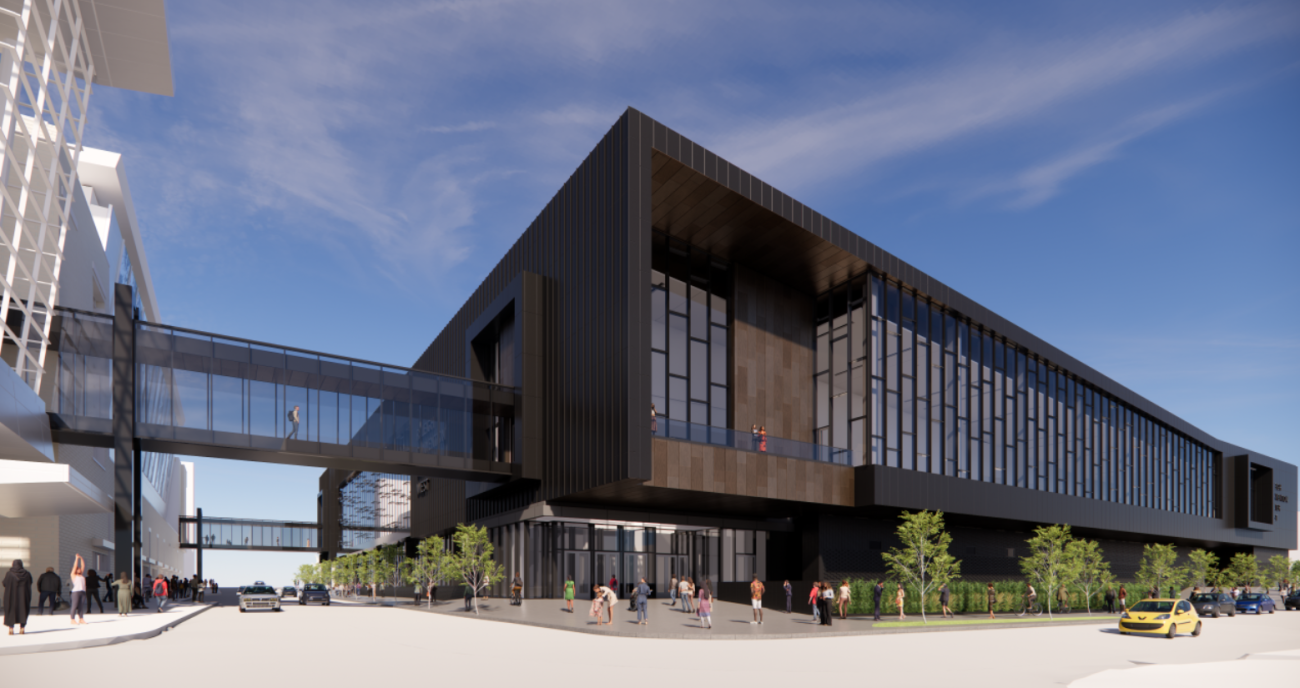
Raleigh’s biggest civic and hospitality project is taking shape in the downtown area. The City of Raleigh, the Raleigh Convention & Performing Arts Complex and Omni Hotels & Resorts are partnering on the expansion of the Raleigh Convention Center, a new Omni hotel and the relocation of Red Hat Amphitheater. TVS and RATIO Design are leading the architecture for the convention center expansion, with a joint venture between Clancy & Theys, Skanska and D.A. Everett handling construction.
“These projects are investments in the future of downtown as a vibrant, thriving district where people live, work, gather and socialize,” King said. “The current momentum, in residential and commercial expansion positions downtown Raleigh as one of the fastest-growing urban centers in the Southeast.”
When completed in 2028, the convention center expansion will add 298,100 square feet, bringing the facility to a total of 798,100 square feet. Plans also call for a 50,000-square-foot flex hall, an 18,000-square-foot ballroom and 13 meeting rooms, giving Raleigh a larger and more flexible convention platform.
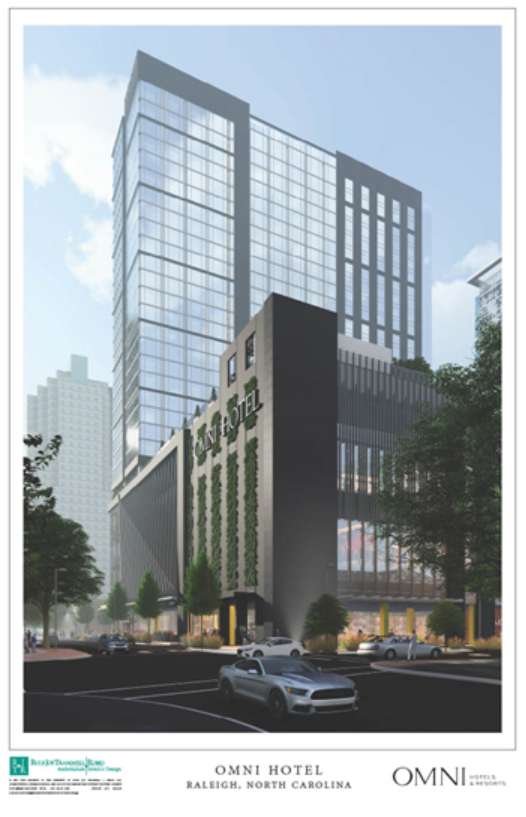
Because Red Hat Amphitheater occupied land reserved for the convention center expansion, the city relocated the venue one block south and is now building it with a 6,000-seat capacity. The $40 million project will accommodate artists’ needs, including dressing rooms, catering areas and food and beverage outlets.
The financing is split between $32.5 million from Interlocal funds and $7.5 million from Raleigh Convention and Performing Arts Complex capital reserves. Construction on the new amphitheater is underway and is expected to be completed this year.
The hotel component will be financed through a mix of public and private debt, including up to $75 million in city limited-obligation bonds and up to $350 million in developer-issued tax-exempt bonds. The project will rise 29 stories on a 1-acre site at the end of Fayetteville Street, across from the convention center and the Martin Marietta Center for the Performing Arts. The developers have already broken ground on the project, which is set to comprise 600 keys, 61,000 square feet of meeting space, a 20,000-square-foot ballroom and a rooftop pool. Plans also call for a wellness facility and dining spaces, including a sports bar with a golf simulator.
4. Union West
Rising as a transit-oriented mixed-use development in the Warehouse District next to Raleigh Union Station, Union West combines a new regional bus hub with housing, retail and community space on downtown’s west side. Hoffman & Associates is developing the project in partnership with GoTriangle.
The public component—the Raleigh Union Station Bus Facility—opened for service in August last year at 525 W. Hargett St., including six passenger bays, rider amenities, public restrooms, bicycle access and connections to regional and local bus service, rail and future bus rapid transit. The hub was financed in part through a $20 million federal BUILD grant from the U.S. Department of Transportation.
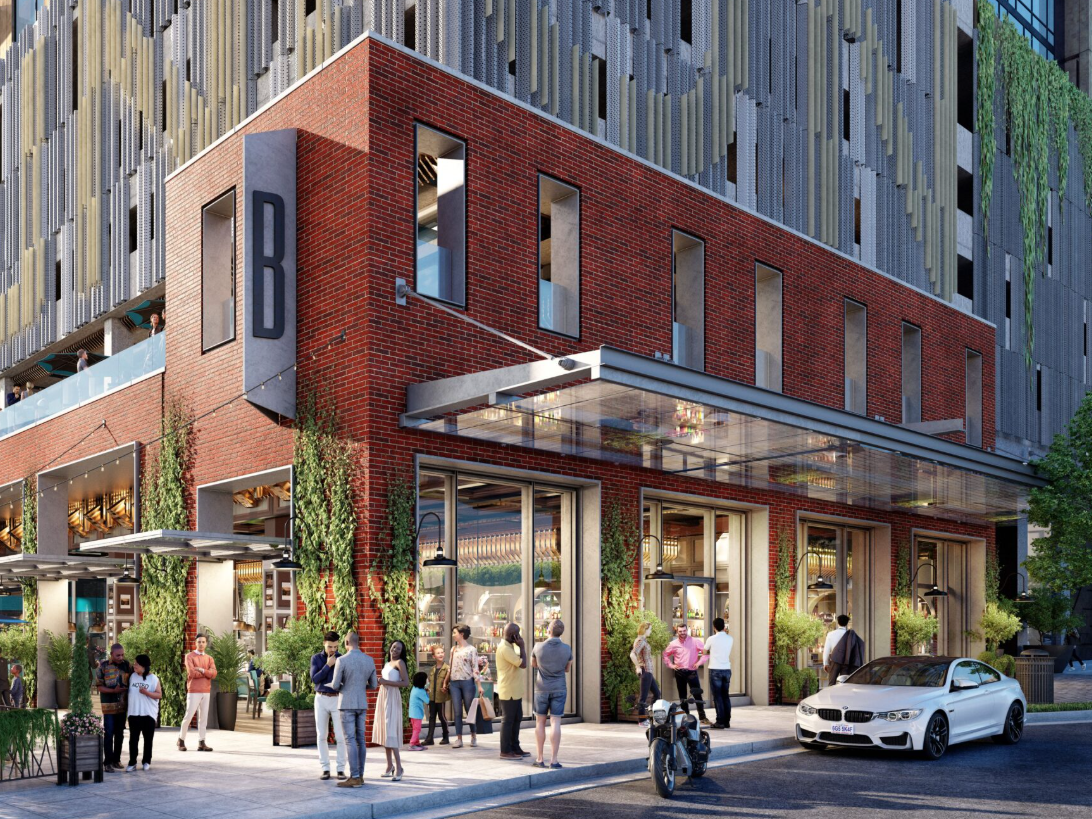
The high-rise next to the station is slated to have 400,000 square feet of mixed-use space, including 385 apartments, 26,000 square feet of retail and dining space, community areas and indoor and outdoor amenities built around a three-level parking deck. Hoffman will contribute $1.6 million to the city’s affordable housing fund, with all 385 apartments at the community set to be leased at market rates.
Designed by Perkins Eastman as an urban anchor, the project aims to turn a transit facility into an active mixed-use block rather than a standalone piece of infrastructure. The developer intends to break ground on the project next year, after securing financing for the development.
“As we assess the best timing for next steps based on market conditions, we remain deeply committed to supporting the city’s broader housing goals,” said Maria Thompson, president of Hoffman & Associates. “We continue to work closely with city officials and stakeholders to advance sustainable, inclusive growth for Raleigh.”
5. The Exchange
Another major project taking shape in Raleigh’s North Hills is The Exchange, a $1 billion, 40-acre mixed-use district by Dewitt Carolinas. “The Exchange is redefining what it means to work, live and play in Midtown Raleigh,” said Steven Beattie, the firm’s president. “Every building expands onto a four-acre central park, with thoughtfully curated retail offerings creating a vibrant ecosystem for office tenants, residents and community visitors.”
At full buildout, the development is slated to include 990,000 square feet of office space, 1,275 residential units, a hotel-condo component, 125,000 square feet of retail and dining space, and seven acres of green space.
The first phase has already helped establish the district’s identity, with 1000 Social, one of the two planned 12-story office towers, opening in 2024. The project includes 330,000 square feet of office space, along with 20,000 square feet of retail and 5,000 square feet of conference and meeting space. Whitley Law Firm and Summit Design and Engineering Services are some of the tenants at the building. It is also the only WELL- and LEED-certified office tower in the city.
Rule Joy Trammell Rubio was the architect for the office building, with Studio Outside serving as the landscape architect and Brasfield & Gorrie as the general contractor. The plan is to also add a skybridge between 1000 Social and 2000 Social. That design, along with the central park, is meant to give the project more of a district feel than a traditional suburban office campus.
The second phase of the project will shift the emphasis toward lifestyle and residential uses while continuing the development of 2000 Social. The building is expected to total 350,000 square feet of mixed-use space, with a 2,500-space double-helix parking deck and 20,000 square feet of ground-floor retail. Plans also call for indoor-outdoor workspaces, custom art installations and the same sustainability standards established in the first office phase.
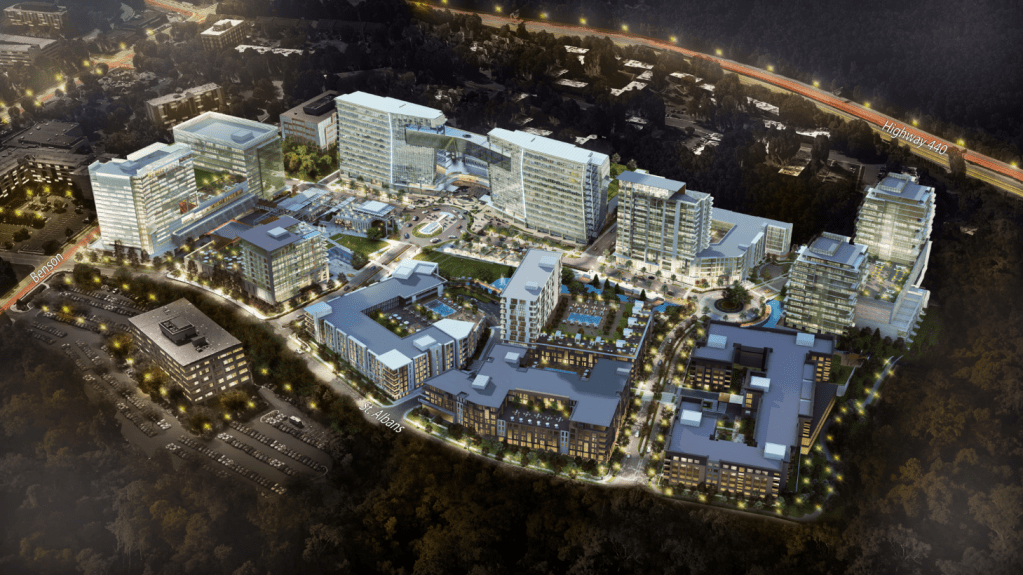
The development is planned around office, residential and hospitality uses, with more than seven acres of greenspace and water features designed to organize the site as a park-centered district rather than a conventional office campus. All images courtesy of Dewitt Carolinas 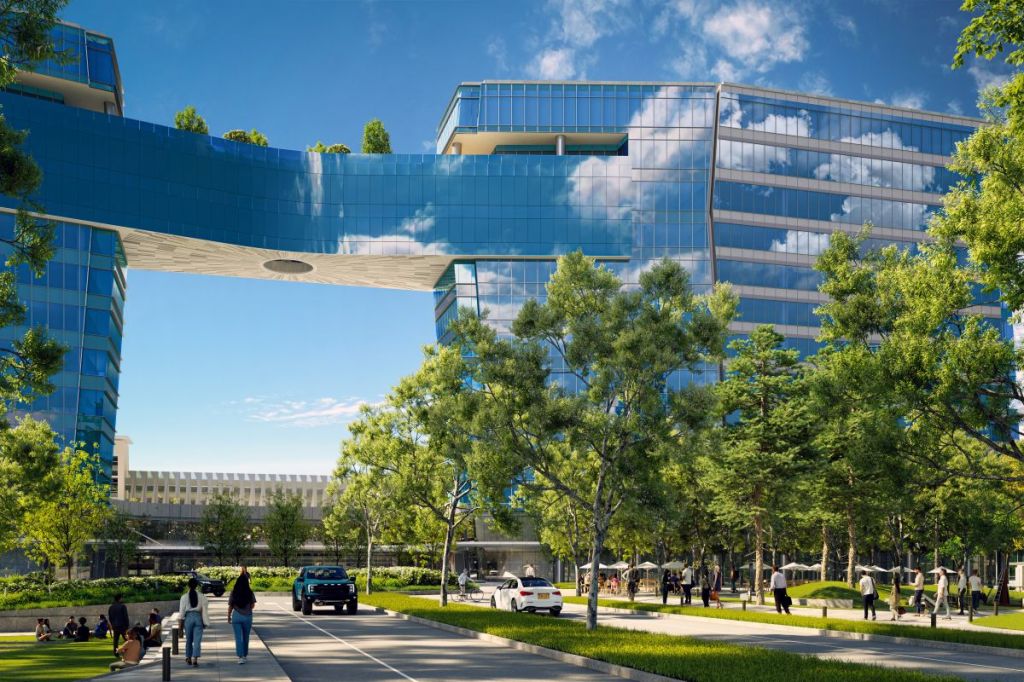
The future skybridge between 1000 Social and 2000 Social is designed to reinforce The Exchange’s office cluster and park-centered district plan. 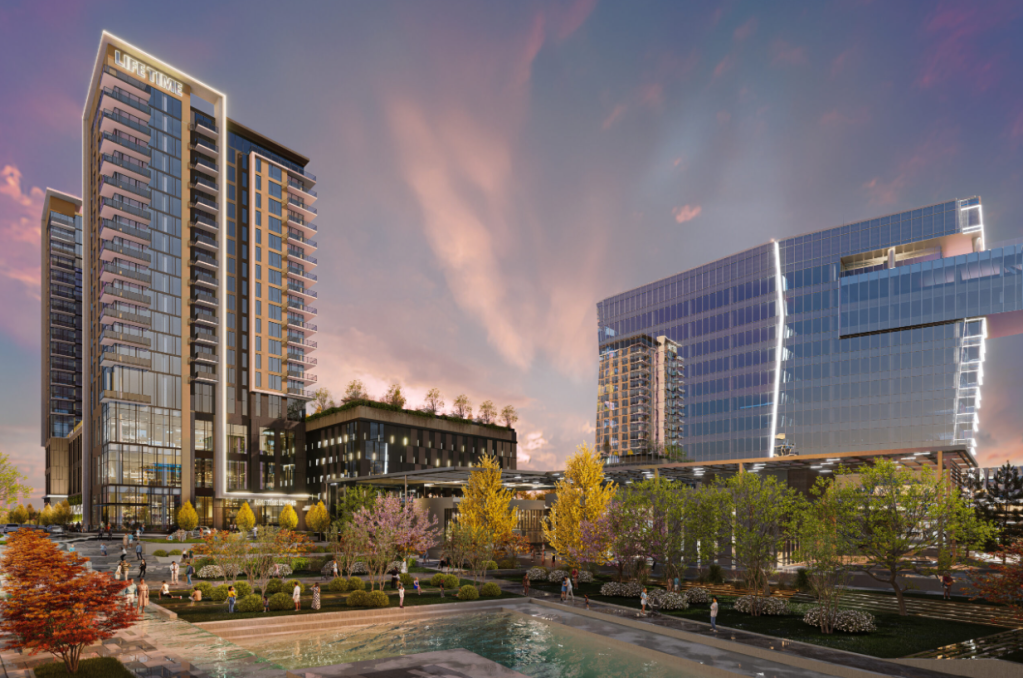
The Life Time Living component plans to combine residential units, wellness amenities and public gathering areas within the larger mixed-use district. 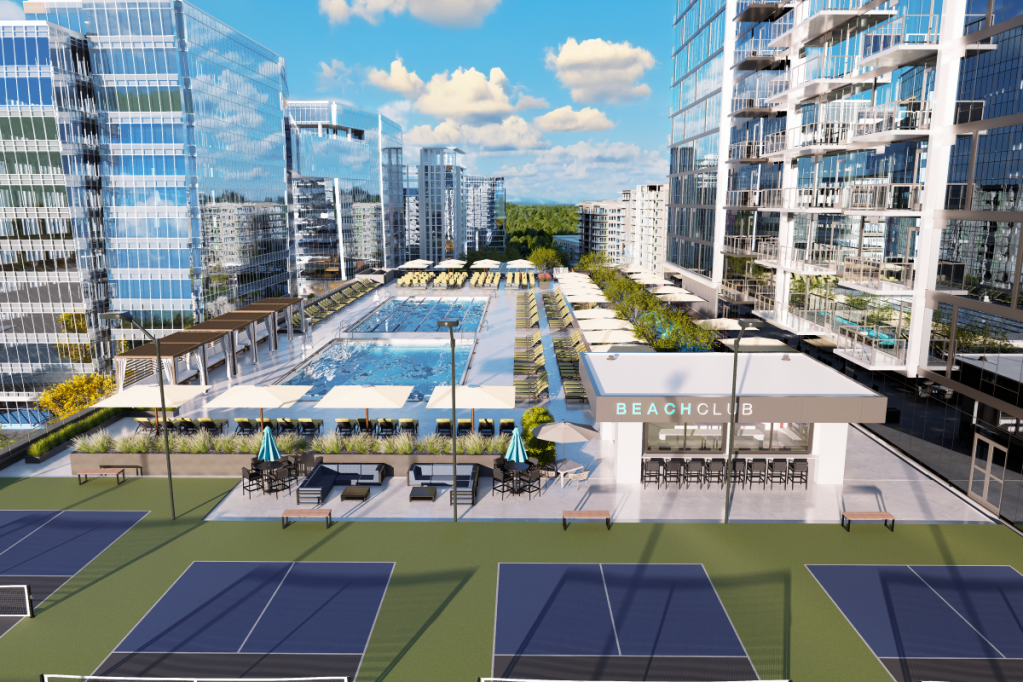
The rooftop amenity deck at Life Time Living includes a wellness-focused component anchored by a beach-club-style pool deck and outdoor recreation space.
At the same time, Dewitt Carolinas has partnered with Life Time Living to bring an athletic country club and residences to The Exchange. Plans call for a 19-story apartment project, which will include 261 apartments, 10 penthouse units, a resort-style amenity floor and a three-story Life Time fitness club and a full-service LifeCafe. On the fourth floor, residents will have access to a coworking lounge, club room, sports simulator, fire pits and a 39,000-square-foot Life Time Rooftop Beach Resort and Bistro.
“We’re always trying to identify gaps in the market, the missing elements that Raleigh is ready for and bring them to The Exchange,” said Beattie. “Life Time Living is a perfect example of a project that is truly going to introduce a new concept of living well, while the luxury hotel-condo tower will be the first of its kind in Raleigh.”
Beyond 2000 Social and the Life Time Living tower, Dewitt Carolinas is planning several other components. Birchwood Apartments is set to include 300 units and 17,000 square feet of food-and-beverage retail, while another tower is set to feature 200 hotel rooms, 70 condo units, conference and meeting rooms, plus a restaurant and speakeasy. Longer term, the master plan also calls for additional office towers and multifamily buildings.
6. The Depot
One of the major redevelopments in Raleigh is unfolding in the city’s Warehouse District. LODEN Development is working on The Depot, a $75 million mixed-use project at 327 W. Davie St., next to the historic train depot building. The company signed a ground lease with North Carolina Railroad Co. to take over the 2.4-acre site, which includes the depot and an adjacent surface parking lot.
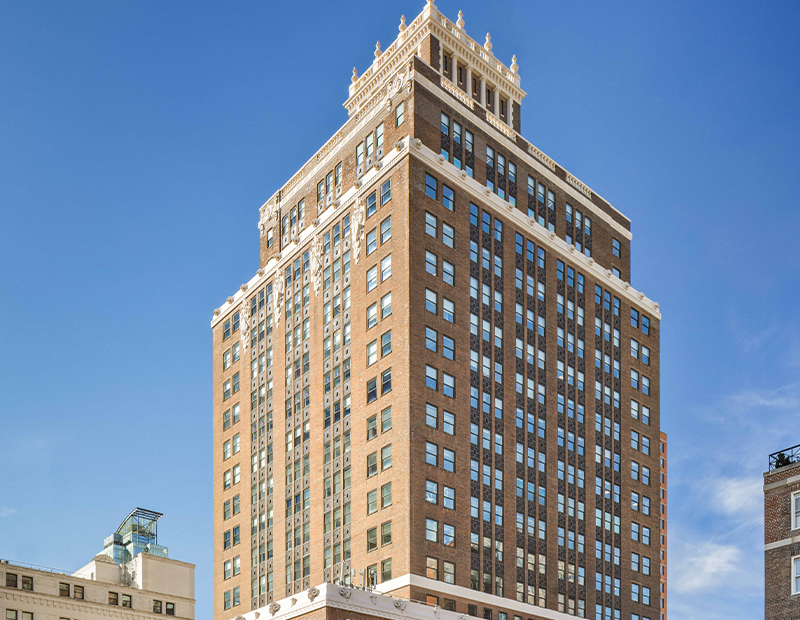
David Baker Architects and Gensler are leading architectural design, with McAdams and Site Collaborative handling site and landscape work. Rather than replacing the historic structure, the plan preserves the 1912-built depot and concentrates new development on the parking lot, where an eight-story building is planned. The concept also includes pedestrian pathways, a public plaza and outdoor gathering areas meant to create a more active urban hub in the district.
Expected to be completed in 2028, The Depot is set to include a 170-room boutique hotel with a rooftop bar, at least 20,000 square feet of office space and more than 30,000 square feet of street-level retail space at the historic building. Commerce Place will be extended as a pedestrian corridor through the site.

You must be logged in to post a comment.