


AI-Driven Workforce Shifts Reshape Office Demand
Growing AI adoption is altering workplace dynamics, supporting flexible office formats while limiting new construction.
AI adoption could significantly reshape the U.S. workforce across multiple sectors, altering office demand in the process, according to the latest Yardi Matrix national office report.
There are three main scenarios that could emerge for workers. In the first, AI replaces large portions of office workers, reducing employment demand. In the second, firms improve productivity while retaining most employees despite some job cuts. In the third, AI investment fails to deliver expected return, creating a bubble marked by layoffs, prolonged unemployment and economic decline.
Research from the Dallas Fed and Stanford University shows rising wages alongside falling employment for younger workers in AI-exposed fields. This trend suggests AI boosts productivity for experienced employees while reducing opportunities for less experienced, younger workers. Under this scenario, office demand would remain stronger than in other alternatives, though office usage would continue evolving.
READ ALSO: AI Likely to Challenge Office Sector for the Rest of the Decade
Meanwhile, coworking continues to expand within the office sector, proving its resilience by offering the flexibility businesses need during uncertain times. As AI adoption accelerates and office demand remains difficult to predict, smaller, flexible workplaces will play a big role in the evolving needs of office-using workers.
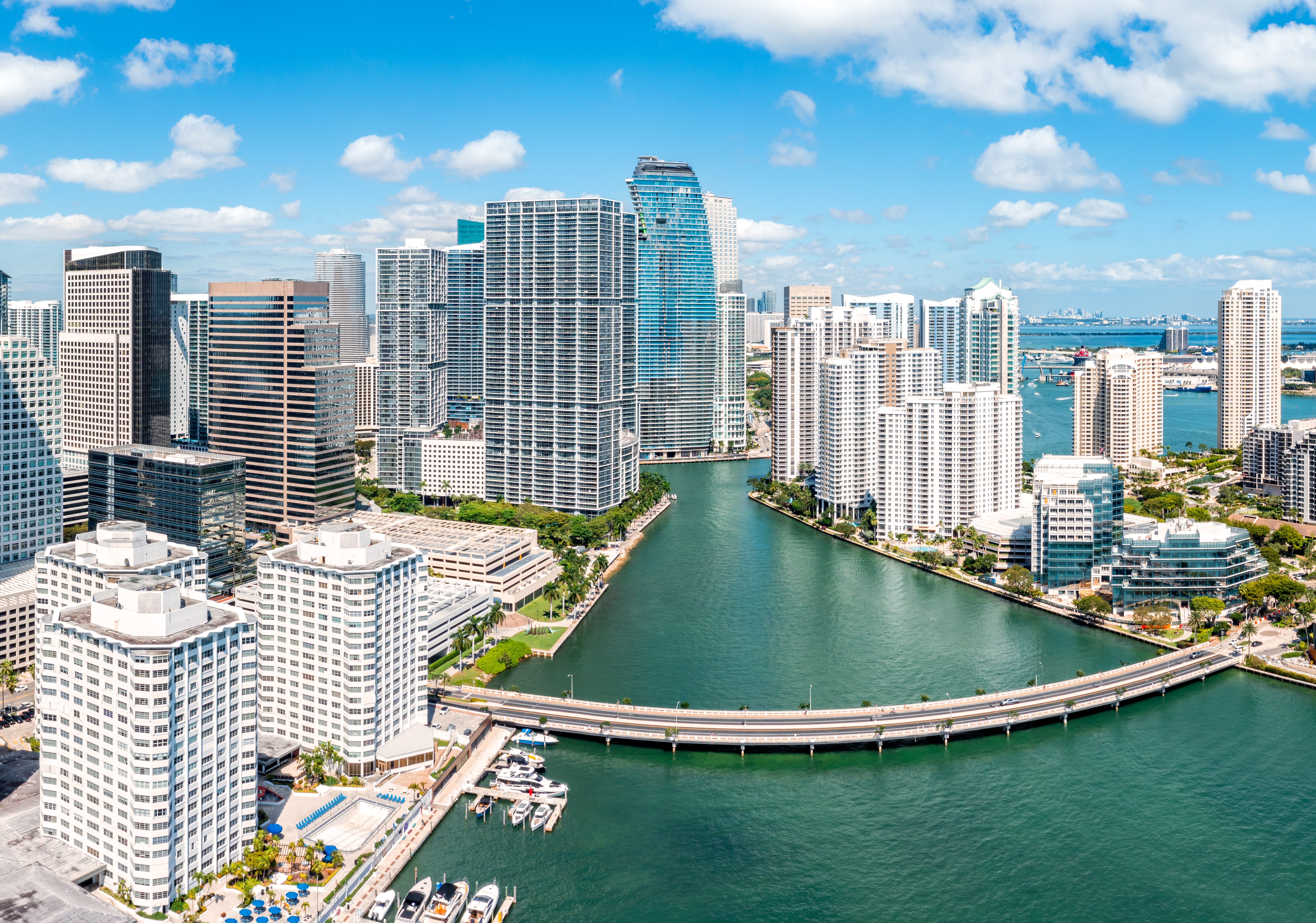
The national office vacancy rate fell to 17.6 percent as of April—down 210 basis points from a year ago. Miami office space once again recorded the lowest rate nationwide at 12.5 percent, representing a 300-basis-point decline over the past 12 months. The metro’s rate kept declining from the 15.7 percent peak from early 2025. In recent years, a growing number of corporate relocations or expansions took place in Miami, due to Florida’s business-friendly environment. Palantir plans to move its headquarters here from Denver, while JPMorgan, Amazon and Citadel all expanded their operations in the metro.
San Francisco led nationally for vacancy improvements with a 570-basis-point year-over-year decline, followed by Denver (-470 basis points). Seattle’s 25.2 percent stood out as the highest office vacancy rate among the top 25 U.S. office markets.
Asking rents averaged $32.91 per square foot in April—up 11 cents from a month ago and down 1.3 percent year-over-year. Manhattan rents remained the highest nationwide, at $69.29 per square foot, followed by San Francisco’s $62.03 per square foot.
Flight-to-quality trends concentrate new supply in Class A space
The U.S. office pipeline totaled 29.4 million square feet as of April, accounting for 0.4 percent of existing stock. Boston kept its leading spot as the top metro for development, with a pipeline totaling 3.9 million square feet, followed by Manhattan with 2.9 million square feet.
Developers in urban areas concentrated most office completions in Class A spaces. Top-end projects accounted for 25.2 million square feet of the under-construction pipeline as of April—representing 86 percent of the national pipeline. Development remains more balanced by location: urban space under construction included 15.2 million square feet (52 percent of U.S. pipeline), followed by suburban projects at 9.8 million square feet (33 percent) and CBD projects at 4.4 million square feet (15 percent).
Developers completed 6.6 million square feet of office space nationwide at the end of April. Deliveries are expected to drop further next year to under 30 million square feet.
The U.S. office sector saw 798 transactions as of April, with assets selling for $214 per square foot on average for a total of $18.1 billion. Manhattan led with $2.9 billion, with properties selling at $712 per square foot. San Francisco followed with $1.6 billion and an average price of $686 per square foot.
In 2025, Washington, D.C., recorded one of the steepest office discounts of the year, with 65 percent of deals recorded there coming in below their prior sales. D.C.’s office pricing fell to $158 per square foot in 2025—nearly half of its 2020 peak. One example is Douglas Development’s $12.4 million purchase of 1233 20th St. NW in April. MRP Realty sold it at a sharp discount from the property’s $65 million sale in 2018.
Read the full Yardi Matrix office report.
You must be logged in to post a comment.