


New Lifelines for Empty Anchors
Shuttered department stores are creating challenges for mall owners—and opportunities.
We are witnessing the “great mall sorting,” the realignment of high-performing Class A malls that are thriving and investing in new strategies and the decline in B- and C-class malls. The reason for the reshuffling going is twofold. First, consumer preferences are changing, and, even at the best centers, large department store anchors are vacating their enormous spaces due to the shifts in shopping trends.
Traditional anchor department stores are being transformed into enhanced dining and entertainment venues—like Dick’s House of Sports and Netflix House, mixed-use properties and alternative uses such as data centers, office campuses, industrial distribution hubs, college campuses, churches, light manufacturing facilities and indoor farms.
READ ALSO: Retail Traffic, Sales Rise Despite Turbulent Year
The redevelopment of anchor department stores in Class A malls, which continue to perform well, according to a recent Newmark report, might mean breaking them into smaller shops but some uses, such as outpatient facilities or a residential component, will devour large chunks of vacant retail.
The value in meeting community needs
New uses for department stores are increasingly focused on neighborhood uses that create foot traffic for the entire center, including health-care facilities, grocers, fitness facilities or a post office or library.
Health-care providers are increasingly attracted to these boxes because they provide large open spaces in prime locations near residential neighborhoods and ample parking, noted Sarah Cafaro, senior director for the capital markets group and net lease at Avison Young.
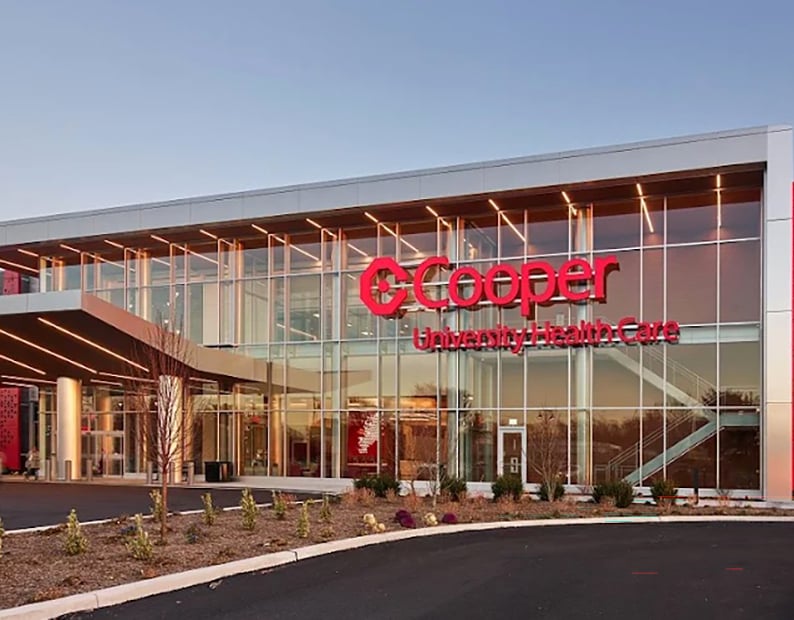
In recent years, Cooper University opened a three-story, outpatient facility at Moorestown Mall in Southern New Jersey and the University of Rochester’s opened a 330,000-square-foot ambulatory orthopedic campus at The MarketPlace Mall in Rochester, N.Y. Both facilities repositioned former Sears store spaces in ailing malls.
LIKE THIS CONTENT? Subscribe to the CPE Capital Markets Newsletter
And in the Chicago area, the UChicago Medicine AdventHealth Medical Group Primary Care at Woodridge and Advocate Health converted retail boxes—a former Dominick’s grocery store in Woodridge, Ill., and Barnes & Noble in Webster Place shopping center in Lincoln Park—respectively, into outpatient centers.
Health-care conversions like these often generate strong long-term value because medical tenants typically sign long leases and invest substantial capital into their spaces, said Peter Cangialosi, principal, health care for Lee & Associates of Illinois. As a result, these tenants can help stabilize older retail centers and create durable cash flow for property owners and, in many cases, improve both the stability and long-term valuation of the property, he noted.
Grocery conversions are particularly valuable because grocers serve as powerful daily traffic drivers and will compress the cap rate on the broader center, according to Brian Finnegan, CEO of Brixmor Property Group: “Entertainment, experiential and fitness uses also perform well because they generate supplemental traffic during evenings and weekends and increase customer dwell time across the center.”
The power of mixed-use
Currently, Simon Property Group is redeveloping a former Sears box at Brea Mall into a mixed-use annex that will include about 120,000 square feet of retail space and Life Time Fitness in an open-air streetscape setting that will host new retail and restaurants around outdoor public gathering and event spaces. The project also is adding 377 new residential units, creating a mixed-use, lifestyle environment with a built-in customer base, said Brandon Isner, head of U.S. retail research at Newmark.
The company is doing a similar project, redeveloping a former Sears building into a multifamily tower, at Town Center at Boca Raton in Florida.
Retail, residential and office projects such as these benefit from a mall’s existing merchandising plan, providing established co-tenancy and amenities for occupants, Cafaro noted.
Re-tenanting single- vs. multi-level boxes
Redevelopment strategies for single- and multiple-story department stores are very different, noted Scott Schnuckel, CBRE managing director of Americas. Anchors in single-story malls or strip centers are most likely to remain retail because the retail fundamentals are better than for indoor, multi-level mall anchors. “There’s less vacancy in the open air, strip center sector, and they often have wide enough frontage that splitting up the box is achievable to bring in multiple tenants,” he said.
Smaller retail boxes, like Dick’s House of Sport, Hobby Lobby and fitness and grocery concepts, are backfilling department-store anchors. Isner noted that some mall owners are separating upper and lower department-store spaces for different retailers, like at Newport Centre in Jersey City, N.J., where Primark took the upper floor of a former department store, and Dick’s House of Sport took the lower floor.
READ ALSO: Mixed-Use Malls and the 15-Minute Neighborhood
Large department store boxes typically have rents that are significantly below market, allowing landlords to make attractive incremental returns despite the capital needed to split the space into 25,000- to 30,000-square-foot spaces for grocery, off-price, fitness and entertainment uses, Finnegan noted.
Brixmor re-merchandised former Sears and Kmart boxes with thriving retail tenants that created significant value. “These projects work because department store buildings typically offer large, flexible floor plans, abundant parking and visibility, multiple points of ingress and egress and the ability to introduce daily-needs anchors that lift small-shop sales throughout the center,” he pointed out.
When completed, Finnegan said, these and other conversions with smaller box spaces generate average incremental NOI yields of around 10 percent and uplift the entire center by improving merchandising and tenant credit, increasing foot traffic and elevating rents.
Defunct anchors offer flexible reuse opportunities
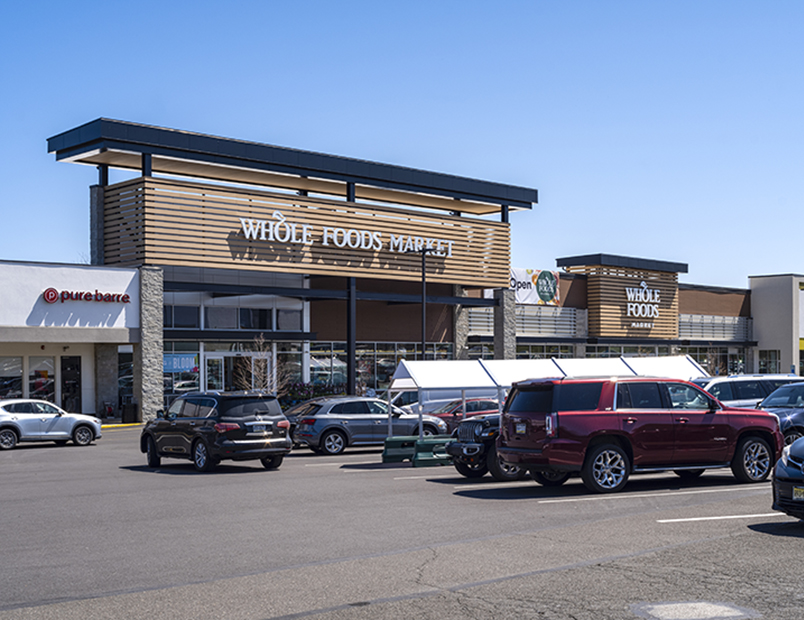
Former mall anchors, which have existing loading docks, open parking that can be used for staging and proximity to suburban customers, are particularly attractive for conversion to robotic fulfillment centers, such as the Amazon Fulfillment Center at the Randall Park Mall and the Whole Foods/Amazon Micro-Fulfillment center at Southland Mall in Hayward, Calif.
“I’ve seen almost everything,” said Schnuckel, noting that while some malls are being transformed into mini cities, industrial reuses are becoming common in B- and C-quality malls, especially in the middle of the country.
For example, one mall owner back-filled an empty box in a mall with a light-manufacturing operation. “The most prohibitive thing is getting all the retailers that have approvals over something like that was a pretty big lift by that developer,” Schnuckel said.
The developer ended up doing a lot of refurbishment and remodeling of the rest of the property. The light industrial use was faced one direction, and everything else feels like an open air shopping center, facing the other direction.
Challenges to redevelopment choices
Non-retail reuses for empty anchors, such as logistics, last-mile distribution facilities and data centers, are less prevalent since they require more approvals, zoning changes, intensive reinvestment and often do not complement the broader center.
Schnuckel noted that multifamily or mixed-use conversions can be challenged by zoning constraints and high conversion costs, and office conversions are happening selectively due to rising fit-out costs.
“These processes will likely take extra time and money,” Isner noted.
These projects also may encounter community opposition, especially when the shift is from retail to industrial, high-density residential or social service uses like homeless shelters, which raise concerns about increased traffic and noise and loss of the neighborhood’s character.
Deciding which replacement strategy will be successful can be daunting, but the bottom line is buyers, investors and developers are looking for uses with low-acquisition or capital-improvement cost, high stabilized cash flow or NOI, a low cap rate at exit, low market supply and high demand for that asset type, Cafaro noted.
The success of replacements depends, Schnuckel said, on the local fundamentals: the asset’s location, demographic, and community needs or support. He suggested that the fundamentals around financials are changing with the demand cycle, causing owners and retailers to respond to community needs such as housing and a desire for a mix of uses that creates town center-like environments.
What creates the most value for investors?
The answer to this question, noted Cafaro, is any conversion that maximizes stabilized net-operating income relative to the total cost and the conversion that trades at the lowest exit cap rate in that market. “In other words, the most lucrative redevelopment is simply that which maximizes value, in terms of NOI divided by the cap rate, relative to the developer’s basis,” she said.
“In the last 5 years, we’ve seen that often the most lucrative sales of mall anchors were sold for land value/redevelopment plays. Based on the data among the most lucrative mall anchor sales, somewhere in the realm of 80-90 percent were part of a larger mixed-use/redevelopment project.”
She attributed the higher price points to value, signaling bias in which investors are paying premium pricing for assets specifically because the sites are located in areas already deemed favorable for conversion by other developers.
Lifestyle is a value-add
Adding multifamily rentals to a retail site opens up an entirely new stream of cash flow, while at the same time bringing what will likely be a new dedicated set of customers to the mall, noted Isner.
And, for the most part, developing new multifamily housing is easier to finance than new retail development, given housing shortages and the ability to build vertically. “It also has the added value of what a mixed-use development can add, in terms of elevating quality of life for the residents,” he noted.
Multifamily projects deliver higher residential rents per square foot than retail, and health-care uses generate the most long-term, stable cashflow, said Cafaro, but she noted that retail re-tenanting in certain markets might deliver the highest short-term returns.
LIKE THIS CONTENT? What Will Power Retail’s Next Act in 2026
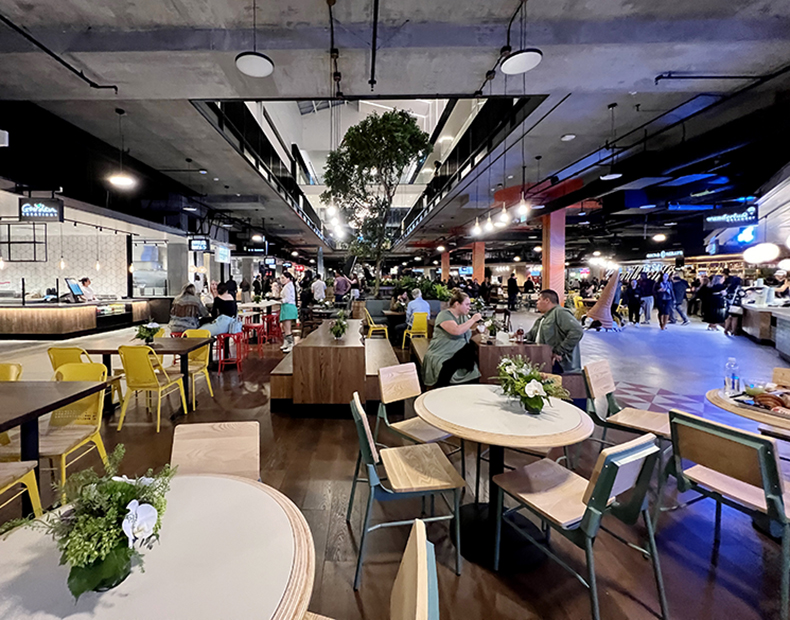
Lifestyle is an important part of the equation when choosing anchor replacements that create value in today’s retail markets. Lifestyle is whatever the market needs that’s gonna drive the most value for that market, said Charles Cristella, managing director, national retail leasing at JLL. “Malls need to become everything to everybody right now,” he suggested. “It needs to be where you can eat, work, live and play.”
“Changing those mid-market malls to a daily-use shopping center—having a grocer as part of your mall—really increases the value of the overall shopping center for the investment,“ Cristella advised. “When you bring in a supermarket, a fitness player and maybe some office, you increase the value dramatically because it’s now part of that lifestyle market.”
Conversion challenges
While redeveloping big boxes into new uses usually is more cost-effective than new construction, these developers face a plethora of challenges, depending on the type of conversion. The biggest upfront challenge, noted Schnuckel, is the Reciprocal Easement Agreement, which is a legally binding contract, generally between property owners and anchor tenants, that governs land use, access, maintenance and operation to ensure legally separate parcels function as a single, cohesive project.
“In large, well-occupied malls, the retailers want to make sure that the redevelopment is going to make sense for the property,” Schnuckel said. “I think, that most of them (landlords) face just getting to the point where they have the freedom to redevelop the space to the highest and best use.”
To convert anchor boxes to more lifestyle-oriented uses, Cristella stressed that mall owners must gain complete control over an asset, which means acquiring it. “Purchase the department store, and you have control over the majority of the shopping center,” he said
Adaptive reuse challenges for designers
Adaptive mixed-use of retail boxes creates value for landlords, but these projects also require significant capital investment because of the common design challenges they pose. Jooyeol Oh, a principal in the global architectural firm MG2, noted that besides redesigning floor plate depths, elevators, staircases and window placements, all have to be reworked, as well as mechanical, electrical and plumbing systems, to transform the building for residential purposes.
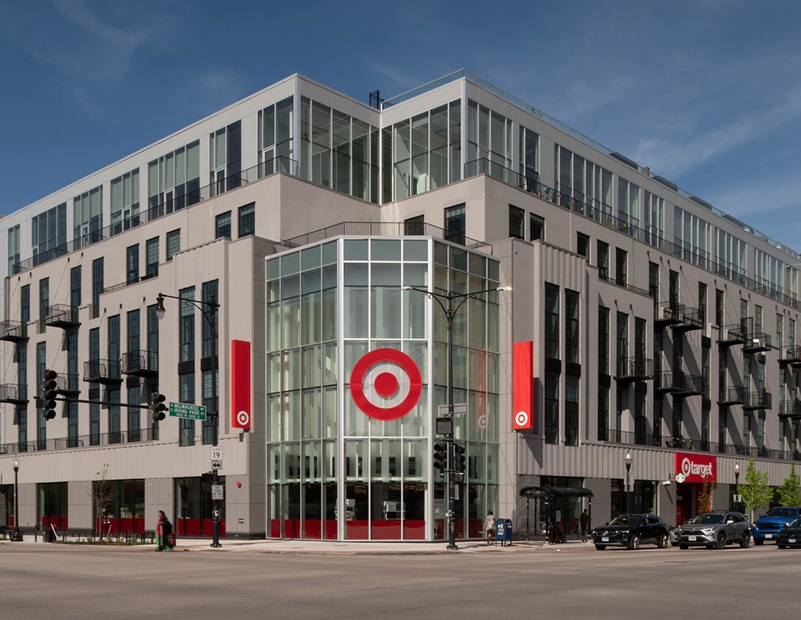
Oh was the lead architect on a recent project that converted a beloved 1938 Art Deco Sears store and warehouse in Chicago to 6 Corners Lofts, a residential mixed-use project with 206 apartment units and a 394,000-square-foot Target store on the ground level. This project blends modern residential living and retail, while preserving, enhancing and amplifying the iconic Art Deco elements of the existing Sears store and warehouse.
The project, however, presented a unique challenge. Oh pointed out that the solid, large, deep, rectangular retail floor plate had very few windows, which is not ideal for residential use. “To reflect the building’s Art Deco inspiration, the construction team needed to create 163 new window openings across the second through fifth floors,” he said, noting that cutting new windows proved to be a major challenge due to the structure’s solid bones.
Demolishing the concrete was far tougher than anticipated. “A demolition ball weighing 8,000 pounds—expected to break through with a single strike—often required 10 powerful hits just to make a dent,” Oh added, noting that the concrete continued to be resilient during saw cutting, wearing out blades four times faster than usual.
“However, this same durability turned out to be a structural advantage, allowing for the addition of a rooftop pool and lounge,” he said.



You must be logged in to post a comment.