


Rethinking Office Risk: The Government-Leased Model
Easterly Government Properties' CFO Allison Marino on federal credit strength, lease durability and growth prospects for the company's niche.

In an office market still recalibrating to higher capital costs and structural shifts in workplace demand, government-leased properties are often viewed through a different lens. Long-term leases backed by federal agencies, predictable cash flows and specialized buildouts create a risk profile that diverges from traditional office assets.
For publicly traded landlords like Easterly Government Properties Inc., their lease structures—many executed through the General Services Administration—are central to underwriting discipline, capital allocation and downside protection. In an environment where tenant credit and lease duration carry renewed weight, these factors shape both acquisition strategy and portfolio resilience.
In this interview with Commercial Property Executive, CFO Allison Marino discusses what qualifies as “mission-critical,” how the firm approaches acquisitions in today’s rate environment and how evolving tenant requirements influence risk management and long-term demand for government-leased properties.
READ ALSO: Office Real Estate Trends
How would you define your investment focus, and what types of properties and tenants anchor your portfolio?
Marino: Easterly Government Properties is a specialized REIT focused on Class A commercial properties that are essential to the operations of the U.S. government. Our portfolio consists of secure, purpose-built facilities for mission-critical functions. We primarily serve federal agencies like the FBI, DEA and Department of Veterans Affairs.
Our portfolio also includes a growing mix of state and local governments and high-credit government-adjacent tenants like Northrop Grumman. While we are headquartered in Washington, D.C., our properties are located nationwide (and) positioned wherever these agencies and tenants need to execute their specific missions.
How do you approach geographic and agency diversification from a portfolio risk perspective, and where do you see the next phase of growth?
Marino: Our geographic and agency diversification is highly intentional, designed to align with the enduring needs of the federal government and its adjacent partners. We actively manage a portfolio of over 103 operating properties in the U.S., encompassing approximately 10.4 million leased square feet, including 93 operating properties that were leased primarily to U.S. government tenant agencies, six operating properties leased primarily to tenant agencies of a U.S. state or local government, and four operating properties that were entirely leased to private tenants.
We see significant white space in supporting the government’s shift from owning real estate to the asset-lite model of leasing. This is a key example of our powerful public-private partnership model, which is a cost-effective solution for taxpayers by preserving real estate value, providing consistent facility quality and reducing mission risk.
READ ALSO: REITWeek Special Report: The Resilience of REITs
What’s the biggest misconception about government-leased office in today’s market, and how do you address it with investors?
Marino: The most common misunderstanding is that our properties are “traditional” office spaces vulnerable to remote work trends. We own critical infrastructure for mission-centric agencies. Unlike traditional office REITs, our facilities house specialized operations such as DEA labs used to analyze confiscated narcotics and VA mail order pharmacies used to process prescriptions for veterans. These are tasks that cannot be done remotely.
While the broader REIT sector may face choppy waters, our portfolio serves as a steady anchor, supported by the stability and credit strength of our federal tenants. We have consistently high occupancy, which provides a steady and predictable cash flow stream. At the same time, we continue to execute value-creating development opportunities that enhance weighted average lease terms and portfolio strength.
With higher interest rates, tighter capital markets and evolving federal workplace policies all putting pressure on real estate in the past year, what were the main challenges you encountered?
Marino: There were certainly market headwinds in the past year. We maintain a disciplined balance sheet by focusing on our core strategy of acquiring and developing high-credit, mission-critical assets. Our investment-grade credit rating—BBB with a Stable Outlook—has been a key advantage, providing us with an attractive cost of debt even in a difficult environment.
Government shutdowns and federal budget debates often raise concerns about payment risk. How does your lease structure protect cash flows across political cycles?
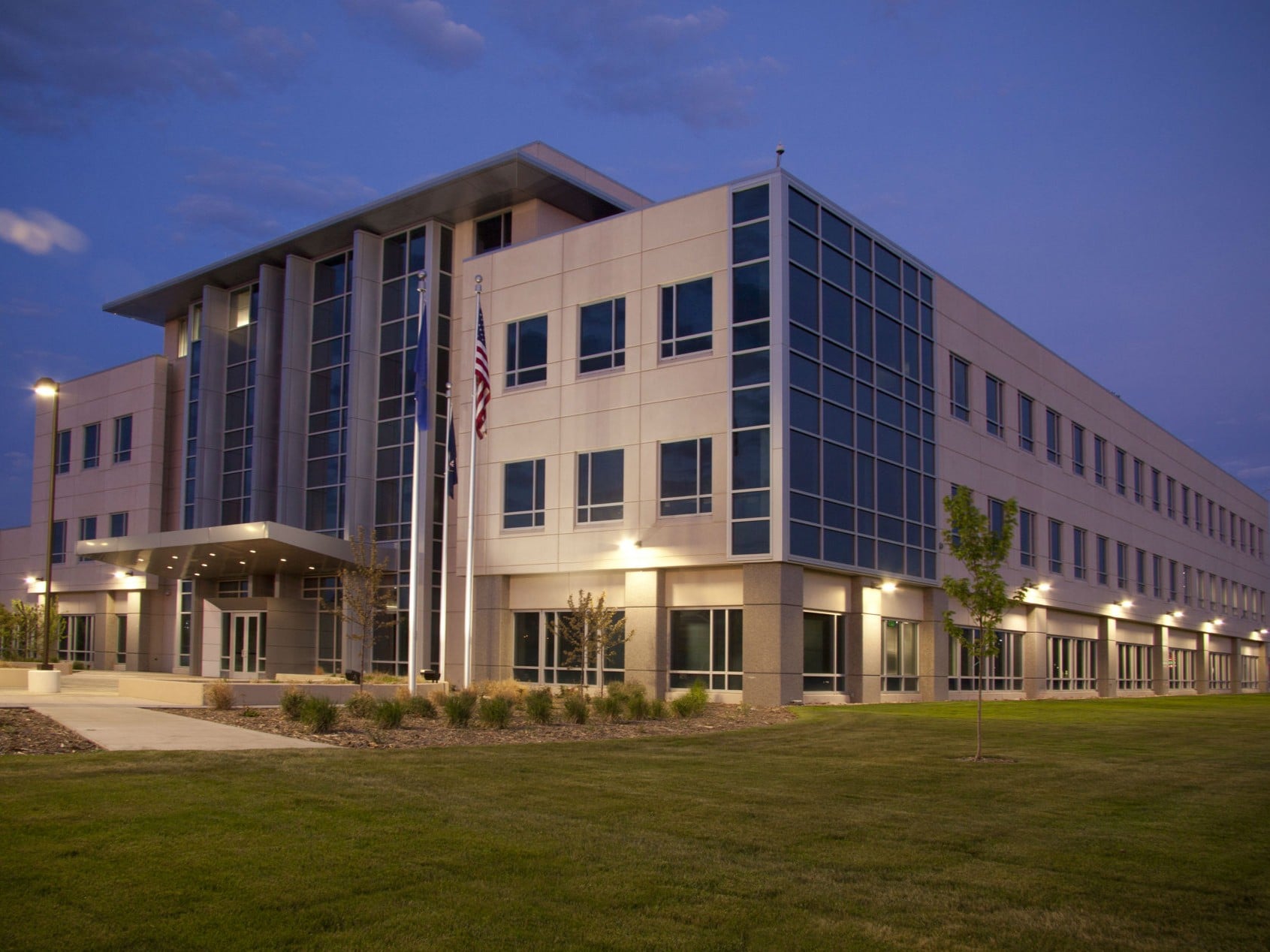
SCIF space, perimeter barricades and anti-ballistic glass. Image courtesy of Easterly Government Properties Inc.
Marino: We focus on agencies and missions that have broad bipartisan support and that provide essential services to the American people. Since its IPO in 2015, Easterly has provided real estate to the federal government across four presidential terms. Our portfolio has expanded significantly, and our strategy is designed to balance growth and durability while ensuring consistent performance across all economic and policy environments.
Additionally, some might think we’d experience payment issues during a government shutdown. This is not the case: Our rent payments are typically prefunded through the General Services Administration, which manages the Federal Buildings Fund. This structural arrangement ensures that rental obligations remain in place and are prioritized even when broad government appropriations lapse.
What makes a facility truly mission-critical and how does that influence what you invest in? How do you define “mission-critical” in underwriting terms, and how does that framework guide your acquisition strategy?
Marino: A facility is mission-critical if it is vital to the essential functions of the U.S. government and cannot be easily replicated or replaced. This includes buildings with high-security requirements like courthouses and law enforcement agencies, laboratory and medical uses like food and drug laboratories and veteran health care, or locations that are operationally necessary for an agency’s mission. This focus defines our investment approach: We target assets with inelastic demand, long-term leases and exceptionally strong credit quality.
READ ALSO: Potential Federal Building Sale Adds Uncertainty to Office Sector
What underwriting criteria ultimately determine whether a deal moves forward?
Marino: Our acquisition and development playbook begins with a deep understanding of federal agency missions and long-standing relationships across government and government-adjacent real estate channels. Our process often involves direct collaboration with government partners or developers to ensure the facility is designed or modernized to meet specific operational requirements, supporting both the government’s mission and long-term value creation for our shareholders. In our underwriting, we prioritize Class A properties, and we evaluate the creditworthiness of the tenant, the length of the lease, and the “mission-critical” nature of the operations onsite.
Recently, you acquired properties in Greenwood Village, Colo., and Burlington, Vt., and you also secured a lease for the development of a crime laboratory in Fort Myers, Fla. In evaluating these deals, what specific fundamentals signaled that they fit your portfolio strategy?
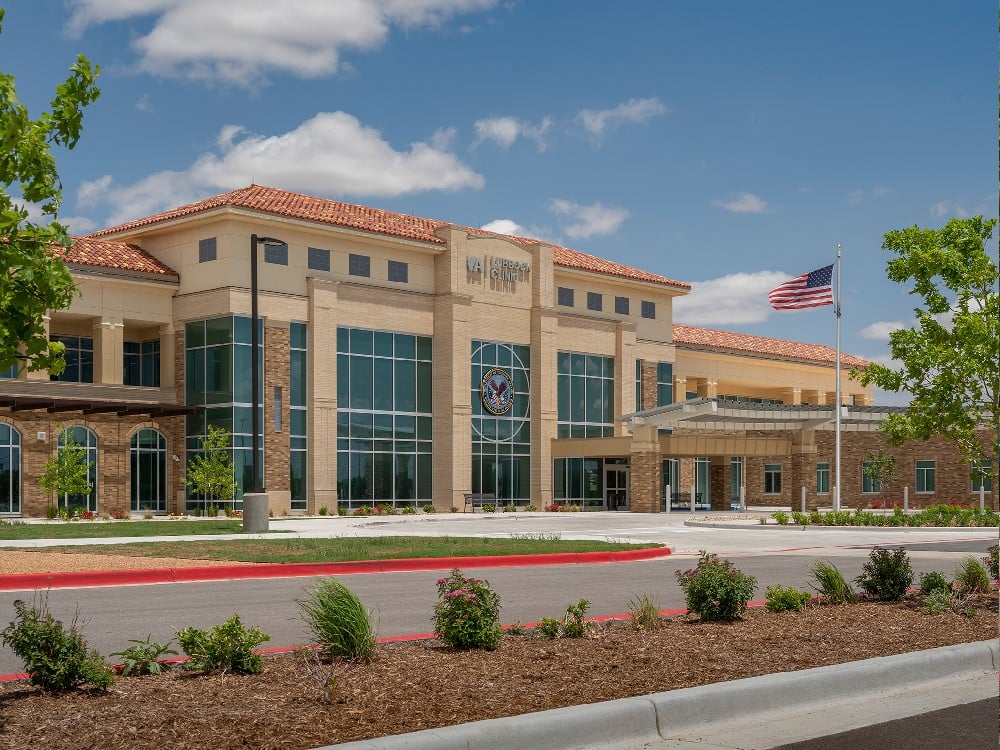
Marino: These locations were chosen because they support vital, non-discretionary functions. In Greenwood, we acquired the headquarters of York Space Systems, a company that supports U.S. defense and space priorities at a time when satellite production and national security capabilities are expanding.
In Fort Myers, we are developing a crime laboratory for the Florida Department of Law Enforcement, an asset that will directly support regional public safety. The fundamentals in each case were clear: a specialized facility, a high-credit tenant and a lease that increases portfolio value.
How have federal tenant requirements evolved in recent years, and how are those shifts influencing your development and redevelopment pipeline?
Marino: Agencies are increasingly prioritizing modern, technology-enabled spaces that support new operational and security mandates. This may look like adding a sensitive compartmented information facility as part of a renewal tenant improvement project, reconfiguring lab space to meet the demands of new equipment or upgrading equipment to improve operating costs or building efficiency. These trends guide how we design, redevelop and invest in the next wave of mission-critical assets.
As you look to 2026 and beyond, where are you allocating growth capital, and what markets or asset types offer the strongest runway?
Marino: We expect our growth will continue to come from a balanced mix of new markets, new agency relationships and new types of building. We see compelling opportunities in new markets as federal agencies expand their presence beyond D.C. to cities like Salt Lake City, Kansas City and Atlanta.
We are also building new agency and private-sector relationships and expanding into new building types, such as specialized defense technology and space-related facilities. Our ability to provide the essential infrastructure for the government’s most critical agencies ensures we are well-positioned for continued growth in 2026 and beyond.




You must be logged in to post a comment.