


Brookfield Sells Chicago Office Tower at Steep Discount
Opportunistic investors are finding deals as lenders increasingly accept that distressed assets are now worth less than their loan balances.
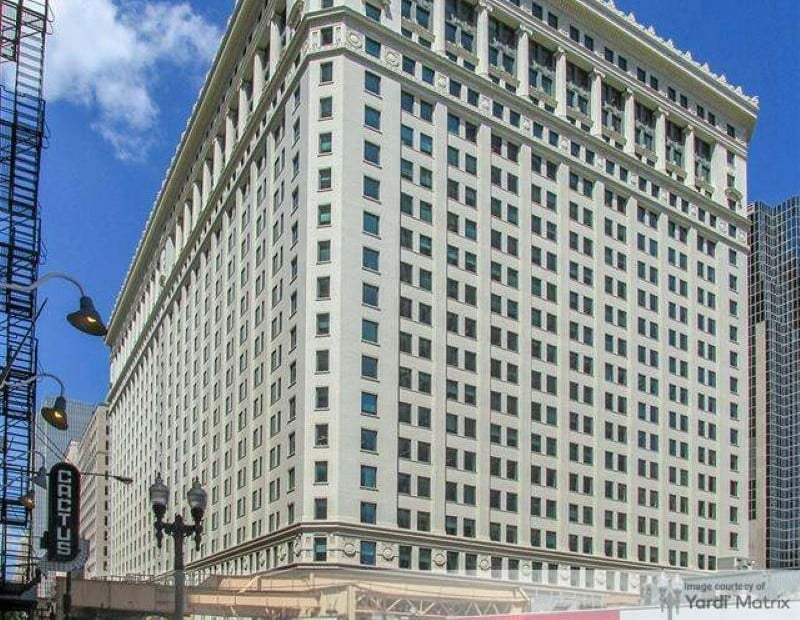
601W Cos. has teamed up again with David Werner Real Estate Investments in the Windy City and acquired a 22-story office building in Chicago’s Central Loop at an 85 percent discount for $41 million, or about $29 per square foot. The more than 1.4 million-square-foot building was last purchased by an affiliate of Brookfield Asset Management for $306 million in April 2018, or about $211 per square foot.
601W Cos. and DWREI secured a $58.5 million loan financing the purchase and lease-up of 175 W. Jackson Blvd. from Northwind Group, Manhattan-based real estate private equity firm and debt fund manager. The loan was structured with $33.5 million at closing, with an additional $25 million reserved as a “good news” facility to fund accretive future leasing costs.
JLL brokers Jaime Fink, Bruce Miller and Sam DiFrancesco marketed the property and arranged the sale.
The deeply discounted sale comes several years after Brookfield’s lender filed suit on its 2018 CMBS debt and the property went into foreclosure in 2022. The special servicer, LNR Partners, confirmed the sale to Crain’s Chicago Business but declined to comment. Brookfield also did not address the sale. According to Yardi Matrix, U.S. Bank was the lender on the 2018 CMBS financing with Wells Fargo Bank originating three loans totaling $280 million. The loans matured Nov. 6, 2023, and remained on the special servicer’s watch list from that date until the purchase by 601W and DWREI, Yardi Matrix reported.
READ ALSO: As Office Vacancy Eases, Coworking Bridges the Gaps
During its ownership, Brookfield spent more than $24 million renovating and modernizing the block-long building, adding a new amenity center and rooftop space. The new owners stated the recent capital investment combined with large floorplates averaging about 70,000 square feet and a reset attractive ownership basis positions the property to capture demand from tenants seeking large blocks of space in Chicago’s CBD. The building, constructed in two phases between 1911 and 1928, is about 50 percent occupied.
David Werner, a longtime New York City-based commercial real estate investor and developer, said in a prepared statement the acquisition continues the firm’s thesis of investing in high-quality assets in strong locations at a reset basis.
Earlier Chicago deals
It is the second time in a year that the two firms have taken advantage of resetting values for high-quality buildings in Chicago’s struggling post-COVID office market. In January 2025, the partners acquired 303 E. Wacker Drive in the East Loop with $62.5 million in financing from Northwind Group. The loan was structured with $32.5 million advanced for the acquisition and the remaining $30 million held back for future leasing costs.
601W and DWREI acquired the 30-story office property at a significantly lower valuation, reflecting a 65 percent discount to the previous purchase price in 2018. Ran Eliasaf, founder & managing partner of Northwind Group, said in prepared remarks the team has leased more than 125,000 square feet of space since the acquisition a year ago.
Eliasaf said the team’s success with leasing at 303 W. Wacker Drive combined with the positive fundamentals at 175 W. Jackson Blvd. were among the reasons the firm expanded its relationship with 601W and DWREI. He noted there has been an increase in institutional capital re-entering the Chicago market and gradual improvements in leasing activity. Providing capital for leasing and tenant improvements will provide the experienced owners the ability to be proactive and competitive in attracting new tenants at the Jackson property as well, Eliasaf stated.
601W acquired another distressed office asset in November when it purchased 525 W. Van Buren St., a 16-story building, for $35 million, 75 percent less than AEW Capital Management paid in 2015, according to Crain’s.
601W, a New York City-based private real estate investment, development and management firm with a portfolio totaling more than 45 million square feet, also owns the 83-story Aon Center at 200 E. Randolph St., as well as the Old Post Office, a historic 2.5 million-square-foot mixed-use structure that it purchased in May 2016 and redeveloped for $1.2 billion.
In August 2022, 601W secured $215 million in financing to redevelop 801 S. Canal St., to transform the property into a 700,000-square-foot office building. 601W acquired the asset, located one block from the Old Post Office, in early 2020 for $68 million.
‘Challenging office market’
Leasing activity remains below pre-pandemic levels, according to Transwestern, underscoring current office space trends in Chicago’s central business district. The firm’s fourth-quarter market report notes net absorption totaled negative 64,055 square feet, the smallest amount of negative absorption in 10 quarters. The vacancy rate was steady at 22.6 percent.
But opportunistic investors are finding deals as lenders holding debt on distressed Chicago office assets are increasingly acknowledging that property values have fallen below outstanding loan balances, the report stated. The result—as seen with the 175 W. Jackson Blvd. deal—is that they are accepting lower offers and realizing losses. With some investors acquiring multiple properties at bargain levels, the market may be nearing, or has already reached, its cyclical bottom, according to Transwestern.
“Broadly speaking, it’s a very challenging market, but property owners must be able to adapt. There is no single silver bullet cure-all response,” said Dan Shannon, managing principal at Aspire Properties and the asset manager for 25 E. Washington, a 400,000-square-foot vintage Class A building in the Loop.
Shannon told Commercial Property Executive it’s important to meet the market in terms of tenant amenity features that help encourage tenants and the workforce to come back to the office.
“Owners having success, like our group at 25 E. Washington, are investing capital to make a building more appealing and funding the costs of customized tenant improvements,” Shannon said.
Shannon added that many owners today are more targeted in pursuing users that are a good fit for their building. By recognizing “they can’t be all things to all tenants, they are able to enjoy some success, despite the broader challenges,” he said.


You must be logged in to post a comment.