

Emerging Trends Report Finds Silver Linings
Plus the top 10 markets investors should watch in the new year, according to PwC and ULI.
Office space development is the lowest it has been since the Great Financial Crisis—at about 27 million square feet nationwide—as the lingering impact of the pandemic and an overall wobbly economy are still affecting leasing decisions negatively, according to PwC and the Urban Land Institute’s most recent Emerging Trends in Real Estate report, newly released and now in its 47th year.

Yet the U.S. office market isn’t quite as beleaguered as in recent years, Andrew Alperstein, a partner with PwC’s U.S. real estate practice, told Commercial Property Executive. The report also says that there are signs of improvement in demand for office space. These findings mirror broader office real estate trends that indicate gradual stabilization in certain markets.
“We’ve seen more positive news than in previous years,” Alperstein said. “That’s not to say that we’re in the clear. But there’s certainly more positive data points than we’ve seen for a number of years.”
READ ALSO: Office Visits Surge in September
For instance, return-to-office metrics have continued to improve, particularly on the East Coast. That speaks to the fact that the New York City market is back more broadly, and that office is a big piece of that, Alperstein points out. Even San Francisco, the poster child for empty offices, has started to see some leasing momentum, with leasing driven by AI.
Based on input from more than 1,700 real estate investors, developers, lenders and advisors in the U.S. and Canada, the report aims to identify key opportunities, risks and market shifts impacting the real estate industry in the coming year.
Office bifurcation solidifies
The U.S. office market is recognizing that demand is evolving, not disappearing, the report found. Some 69 percent of tenants plan to maintain or even expand their footprint, though average lease size is down about 12.5 percent from pre-Covid levels, PwC reported, citing Newmark data.
The market continues to be divided between trophy properties (and Class A) and less prized office buildings. Demand for top-quality office buildings remained strong enough to sustain occupancy levels in that sector, while Class B and Class C properties are still struggling with anemic demand.
“Professional services and financial services have really embraced return to office,” Alperstein said, and these tenants tend toward the top of the market when they can. “We see that with a lot of the large financial services firms, a lot of the younger employees who were impacted by Covid want to be in the office almost every day. That’s an important change.”
The fact that there has been so little construction adds to that bifurcation, Alperstein said, because there is so little new supply in the top part of the market, and so much more in the remainder. “That’s what’s so unique about the current environment,” he said.
Markets to watch
For real estate growth, DFW is once again the nation’s top market to watch in the new year, according to PwC’s report. Dallas has been the beneficiary of significant population and job growth in recent years, and a significant number of Fortune 500 companies have moved there, particularly in financial services, Alperstein said.
“That’s the biggest change that we’ve seen in Dallas,” he told CPE. “It isn’t just the tech companies. Now all the major financial services companies have meaningful footprints in Dallas, due to its business-friendly environment, good access to talent and reasonable cost of living, although it’s going up.”
Parts of metro New York City are also on PwC’s list of top 10 markets to watch in 2026, including Jersey City, Brooklyn, Northern New Jersey and Manhattan.
“That speaks to the fact that the New York City market is back more broadly, and that office is a big piece of that,” Alperstein said.
Other top 10 markets for ‘26 include Miami, Houston, Nashville, Tampa and Phoenix, according to the report.
Data center demand surging, supply problematic
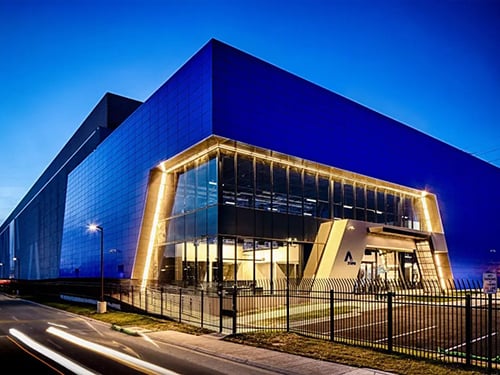
Demand for data centers continues to surge, driven by rapid growth in AI and cloud computing, but power shortages are limiting expansion, the report noted. Moreover, with national vacancy below 2 percent and most facilities preleased before completion, tight capacity is keeping rents up. Rates in the sector have mushroomed by more than 15 percent each year from 2021 to 2024, the report found.
READ ALSO: A Different Way to Tackle Data Center Demand
Hyperscalers are forecast to surpass $350 billion in capital expenditures in 2025, with most of the total going toward investments for data centers and other infrastructure.
Data center development is still strong in established markets, such as Northern Virginia and Chicago, but considering the sector’s constraints and delays, some recently announced AI training data center campuses are in such places as Indiana, Ohio and Louisiana, PwC explained. Developers are targeting markets where power is still readily available, and historically secondary markets like Columbus, Ohio; Austin, Texas; and Reno, Nev., have seen soaring growth.
“Data centers are clearly the number one investment prospect for 2026, as they were in 2025, once again driven by demand,” Alperstein said. “And we’re going to see a lot more innovative solutions to power limits. Developers are going to find ways around that.”


You must be logged in to post a comment.