


Why CRE Fundamentals Outlast Geopolitics
Dr. Peter Linneman on the real economics behind the Iran conflict.
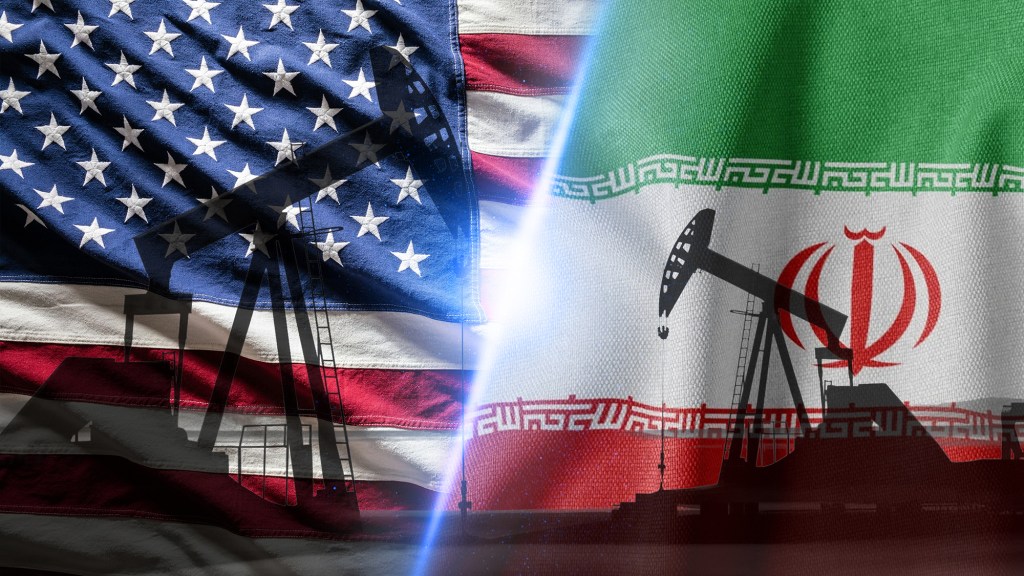
As the war in Iran unfolds, there have been both expected and unexpected consequences. Of course, the most predictable consequence of the conflict is the sharp rise in oil prices. However, the decline in per-capita fuel consumption over the past half-century has greatly reduced the economic burden of the Iran conflict. Motor fuel as a share of personal income has fallen in the U.S., from 2.8 percent in the 1970s to 1.5 percent today. This is largely attributable to greater automobile fuel efficiency, which on average in the U.S. has risen from 12 to 13 miles per gallon in the 1970s to about 18.5 in 1990 and 23 miles per gallon today—a once unimaginable 90 percent improvement over the past half-century.
The U.S. economy is a net beneficiary of the war, though the majority of U.S. citizens are worse off as a result.
With May 2026 year-over-year CPI growth of 4.2 percent, should the Federal Reserve worry about high oil price inflation caused by the closure of the Strait of Hormuz? The answer is: “absolutely not.” After all, monetary policy cannot open the strait. Acting like the Fed can influence something it can’t only generates economic mischief. In fact, if the Fed raises interest rates in a futile attempt to rein in oil price-induced inflation, it will only worsen the problem.
I hope that the Fed understands a basic economic principle: Higher capital costs will discourage oil output expansion. Increased oil prices will create profits that trigger substantial additional supply, especially from North and South America. But this incentive to expand oil output could be greatly hampered if windfall profit taxes are introduced, causing a higher probability of oil prices to stay above $100 a barrel.
In the first 60 days of the Iran conflict, the U.S. increased oil exports by roughly 2 million barrels per day. This generated $80 million per day, or $4.8 billion over the period. Annualized, this is about $29 billion, or nine basis points of GDP. Meanwhile, estimates suggest that U.S. consumers spent $35 billion more on gasoline and diesel fuel over those first 60 days. This has been achieved by an annualized reduction of about 67 basis points in consumer savings. But remember that the increases in U.S. consumer oil-related prices are largely received by U.S. producers. So this additional consumer outlay is simply a painful transfer of resources within the U.S. from consumers to producers. In contrast, the additional receipts from U.S. exports are a net gain. Thus, as I wrote when the conflict began, the U.S. economy is a net beneficiary of the war, though the majority of citizens are worse off as a result. But oh, to live in the Permian Basin or to own an oil company!
This is another reminder to avoid focusing on ‘shiny objects’ and instead prioritize the fundamentals.
Meanwhile, China has reduced oil imports by 4 million barrels per day—its lowest level since 2017. This 29 percent decline has softened the impact of closing the Strait of Hormuz.
As for unexpected consequences, we honestly have no understanding of why 10-year Treasury yields rose at the onset of the Iran conflict. Historically, such geopolitical conflicts and oil price shocks lead to a flight to quality and falling Treasury yields. History also suggests that when oil prices and general inflation spike, they generally recede shortly thereafter. In addition, even if oil prices were to remain elevated, it would only temporarily affect inflation, as oil prices would have to rise repeatedly to generate sustained inflation (as opposed to high prices).

Additionally, the immediate impact on the stock market at the onset of the conflict was overblown. It’s impossible to believe that the events related to the Iran war could knock 10 percent off the perpetuity cash stream of the economy and its companies. Yet the stock market fell by about 10 percent as the events in Iran initially unfolded. Subsequently, markets reversed and 60 days later stood 5 percent higher than where they were before the conflict.
This is another reminder to avoid focusing on “shiny objects” and instead prioritize the fundamentals. Yet in mid-June, as peace negotiations fell apart, the S&P 500 dropped by almost 4 percent in 10 days due to the rise in geopolitical uncertainty. The worst action that investors can take is to sell in a declining market. Hold on tight and focus on the long-term fundamentals.
Dr. Peter Linneman is a principal & founder of Linneman Associates (www.linnemanassociates.com), Professor Emeritus at the Wharton School of Business, University of Pennsylvania, author of “Real Estate Finance and Investments: Risks and Opportunities,” and co-author of “The Great Age Reboot: Cracking the Longevity Code for a Longer Tomorrow.” Follow Dr. Linneman on X: @P_Linneman






You must be logged in to post a comment.