

The New Coworking Map Expands Outside the CBD
As hybrid work matures, demand is rising in suburban nodes and secondary markets closer to home.
As hybrid work becomes increasingly embedded in office occupants’ strategies, coworking’s next expansion cycle is shifting outside urban cores. After years of association with downtown locations, startups and short-term users, the sector is moving toward smaller markets. In those locations, convenience, amenities and right-sized space matter more than being in a CBD.
For many companies, the answer is no longer a single downtown headquarters. Coworking is part of their strategy to support hybrid workers and a more distributed network of workplaces that combine traditional offices with flexible spaces, satellite locations and on-demand meeting spaces.
“The greatest opportunity isn’t in reinventing the office, but in repositioning it where people live,” said Drew Sanden, co-founder of TailoredSpace, who believes that secondary markets have been underserved for years. “While major metros are saturated with flexible space, these high-income suburban nodes present a massive growth opportunity.”
Coworking’s expansion mirrors the office market’s broader shifts and the need for flexible, cost-effective alternatives to long-term leases. In 2025, the flex-space sector gained 1,000 locations nationally, which increased its share of total office inventory to 2.2 percent.
Part of that demand comes from enterprise clients using coworking as an alternative to a centralized headquarters. Another factor is the push by operators to incorporate flex space into their portfolios to reposition underperforming office assets. And nowhere is that shift more visible than in secondary markets, where coworking is emerging as a primary workplace solution rather than a temporary alternative.
Demand moves outward
Hybrid work may have reduced daily commuting, but it still calls for professional workspaces outside people’s homes. Demand has shifted toward convenient locations that offer private, collaborative environments, without the friction of a long trip to a central business district.
For occupiers, flexibility entails more than shorter leases. It means allowing customers to use only the space and services they need. A 50-person requirement that once might have translated into a conventional 10,000-square-foot lease may now be met with a smaller private-office footprint, 20 to 30 shared desks and access to meeting or event space, noted John Arenas, CEO of Serendipity Labs. That has expanded coworking’s potential market by allowing it to serve occupiers that previously would have turned to traditional office leasing.
With most tenants and occupied space in suburban and secondary markets comprising requirements under 10,000 square feet, coworking should be on every property tour.
—John Arenas, CEO, Serendipity Labs
Secondary markets are no longer just a backup for remote workers or business owners. “They are now the primary destination for regional talent,” Sanden observed. “People aren’t just working from home, they’re working near home.” In many cases, companies are no longer choosing between working from home and headquarters, but between a long commute and a workspace embedded in the communities where their employees live.

Distributed work patterns, lower-cost space and operators seeking flexibility are driving demand for secondary-market coworking space, according to Jodie Poirier, Colliers’ president of occupier services for the Americas. That demand is also reshaping the product: Executive suites, small private offices and short-term lease structures are gaining traction, while the large-format coworking model of the late 2010s is less relevant.
Beyond downtown
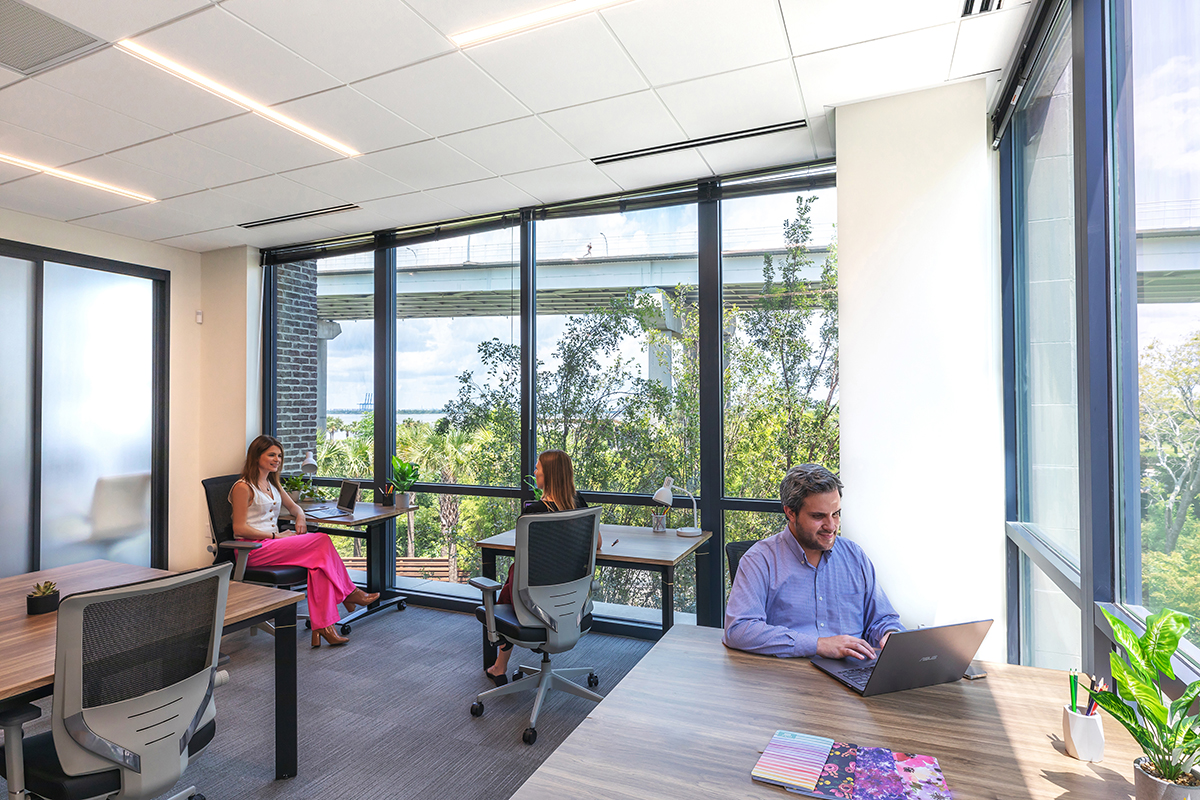
Serendipity Labs’ footprint is primarily concentrated in secondary locations, with spaces in select CBDs. The company’s portfolio includes locations in Buffalo, N.Y.; Costa Mesa, Calif.; Charleston, S.C.; Brentwood, Tenn.; and Orlando, Fla.
Coworking and office assets operate “in symbiosis,” Arenas said, which means that flexible office performs best in buildings and ownership environments that can support it. In many urban areas, that remains a challenge. Institutional owners and office landlords are still facing weaker office demand, loan-maturity constraints and downsizing pressures.
“Suburban and secondary assets are generally held by regional owners, who are more entrepreneurial and have more flexibility in how to reposition and unlock asset value with coworking and other activated amenities,” he pointed out.
Lower startup costs, more stable local demand and a member base closely tied to the surrounding community can make suburban and secondary locations more attractive than urban markets. Newer locations in markets such as Charleston, S.C., and Charlotte, N.C., are typically smaller, more efficient and more community-oriented, reflecting both tenant cost discipline and uncertainty around long-term space needs, Poirier said.
Charleston ranks among the top five markets for coworking penetration, with shared space accounting for 4.1 percent of its total office inventory, or about 574,000 square feet, according to CoworkingCafe. That suggests flex space plays a relatively outsize role in the market.
Meanwhile, Nashville has a much larger coworking footprint than Charleston, at 2.1 million square feet, but shared space makes up only 3.3 percent of total office inventory. That points to a trend of larger-scale individual flex spaces. In third place is Orange County, Calif., with a 2.6 percent share of its office footprint, amounting to 2.9 million square feet of coworking space. The market’s 123 locations are also the most among secondary markets. Charlotte and Orlando each post a coworking share of 2.2 percent of total office inventory.
“It’s a flight to where the talent is,” said Sanden. TailoredSpace remains bullish on Southern California submarkets such as Chino Hills, Corona, San Clemente and Solana Beach, where the target user base includes business owners and midcareer professionals who have already established homes outside the downtown core. “Major downtowns are struggling with high vacancy and friction points such as expensive parking, long commutes and safety concerns,” he noted.
What makes a market work
Not every secondary market is a strong coworking market. Population growth and job growth are only part of the equation. Operators say a winning location starts with real business demand. Sustained success depends on a critical mass of companies seeking flexible, right-sized space for hybrid work, expansion and cost optimization, according to Poirier.
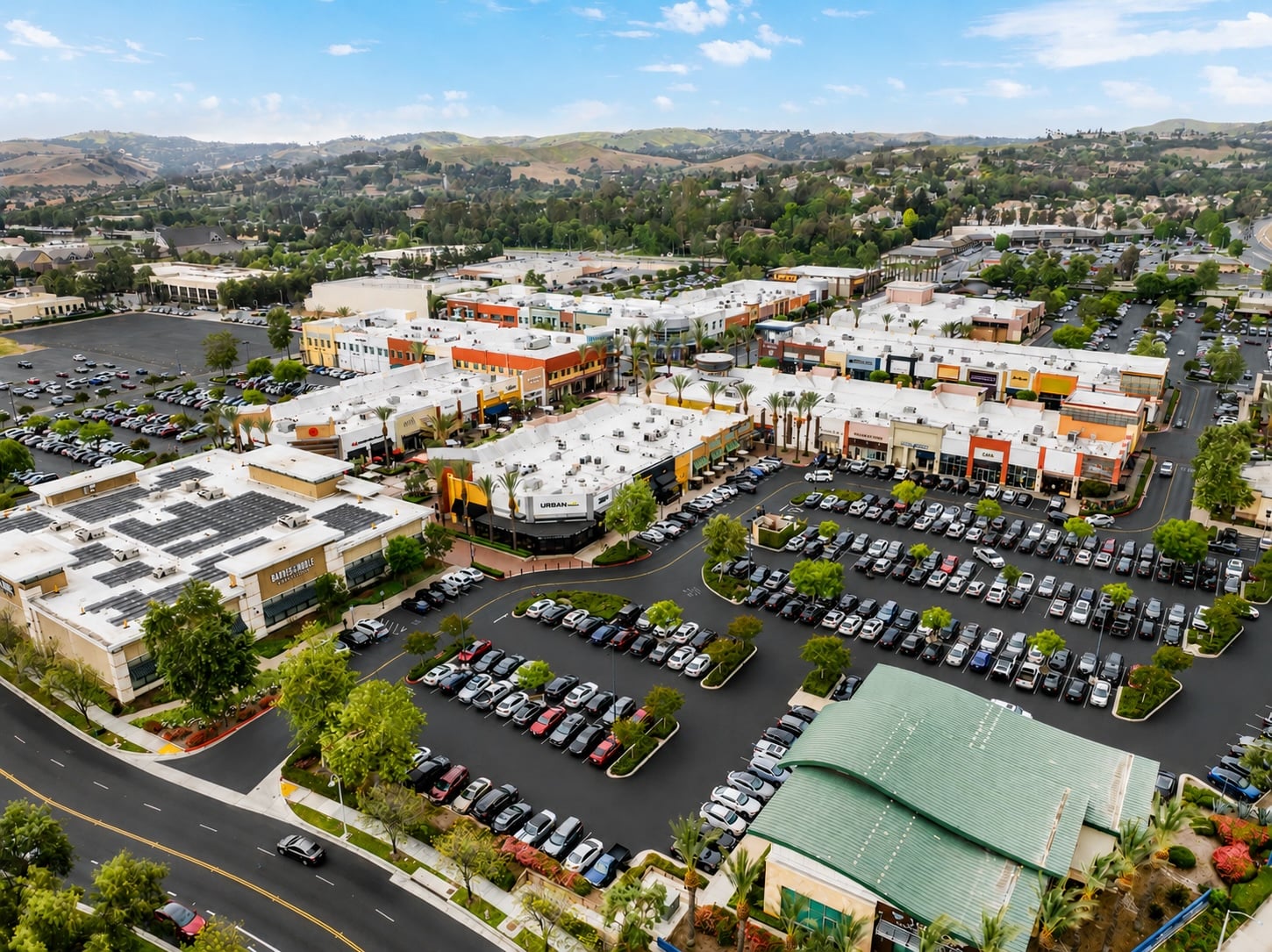
“Amenity-rich, lifestyle-oriented mixed-use centers that are located near where members live are increasingly preferred, reflecting a broader focus on walkability, access to restaurants and cafes and reduced friction in daily routines,” she said.
People are craving a second place—a high-end environment that offers community, professional connection and a distraction-free zone, without the tax of a 45-minute drive.
—Drew Sanden, Co-Founder, TailoredSpace
Secondary markets can be especially compelling, Arenas noted, because they often support regional headquarters and established businesses that turn to coworking as a permanent alternative to conventional office. As such, the value proposition is also different from urban coworking spaces, which lean more into startups.
The assets must also reflect that. Serendipity Labs prefers rectangular floor plates under 30,000 square feet with natural light, ample parking and a team that understands hospitality alongside property management.
“We look for amenity density,” said Sanden. “A successful secondary market isn’t just a sleepy suburb, it’s a lifestyle hub.” TailoredSpace targets locations within a three- to five-mile radius of where the local workforce lives. In practice, that means a place where members can access retail, gyms, childcare and daily services, so the coworking space becomes their daily anchor. The company also prioritizes locations next to major freeways that offer prominent building signage opportunities.
The next growth wave
Sanden views the expansion of suburban and secondary coworking as a shift in the cultural psyche. “While remote work offered a temporary reprieve from the commute, it also highlighted the mental toll of isolation and the lack of a professional boundary,” he said. The future of work, he added, is close to home.
TailoredSpace is active in the Orange submarket of Orange County and San Diego County’s Oceanside submarket because both fit its high-barrier, high-amenity strategy. Just recently, the company opened a new 11,830-square-foot space in the city of Orange. The location is a hub for teams across the county, given its proximity to Chapman University and multiple freeways.
For its location in the Ocean Ranch neighborhood of Oceanside, the company pointed to residential growth, new retail and entertainment anchors, and the absence of established coworking competition. Strengthening its push into Southern California’s suburban modes, TailoredSpace has also expanded into downtown Burbank, San Diego’s Kearny Mesa neighborhood and Del Mar, a suburb north of San Diego.
Costa Mesa, Calif., is another market to watch. Under a management agreement with Irvine Cos., Serendipity Labs recently added a 41,000-square-foot location in that Orange County submarket. The firm cited the area’s diversified economy and faster post-pandemic recovery as the main reasons for choosing the area.
“Limited new office development and rising Class A rents are expected to continue driving demand toward second-generation space, Class B assets and adaptive reuse opportunities,” said Poirier. Markets such as Greenville, N.C., and Atlanta are benefiting from interest in repositioned properties and adaptive reuse, while new construction remains challenging for coworking even in high-growth markets without sufficient density and mixed-use support.


You must be logged in to post a comment.