


Brookfield JV Eyes $100B Data Center Campus in Kentucky
It would be one of the largest such projects in the nation.
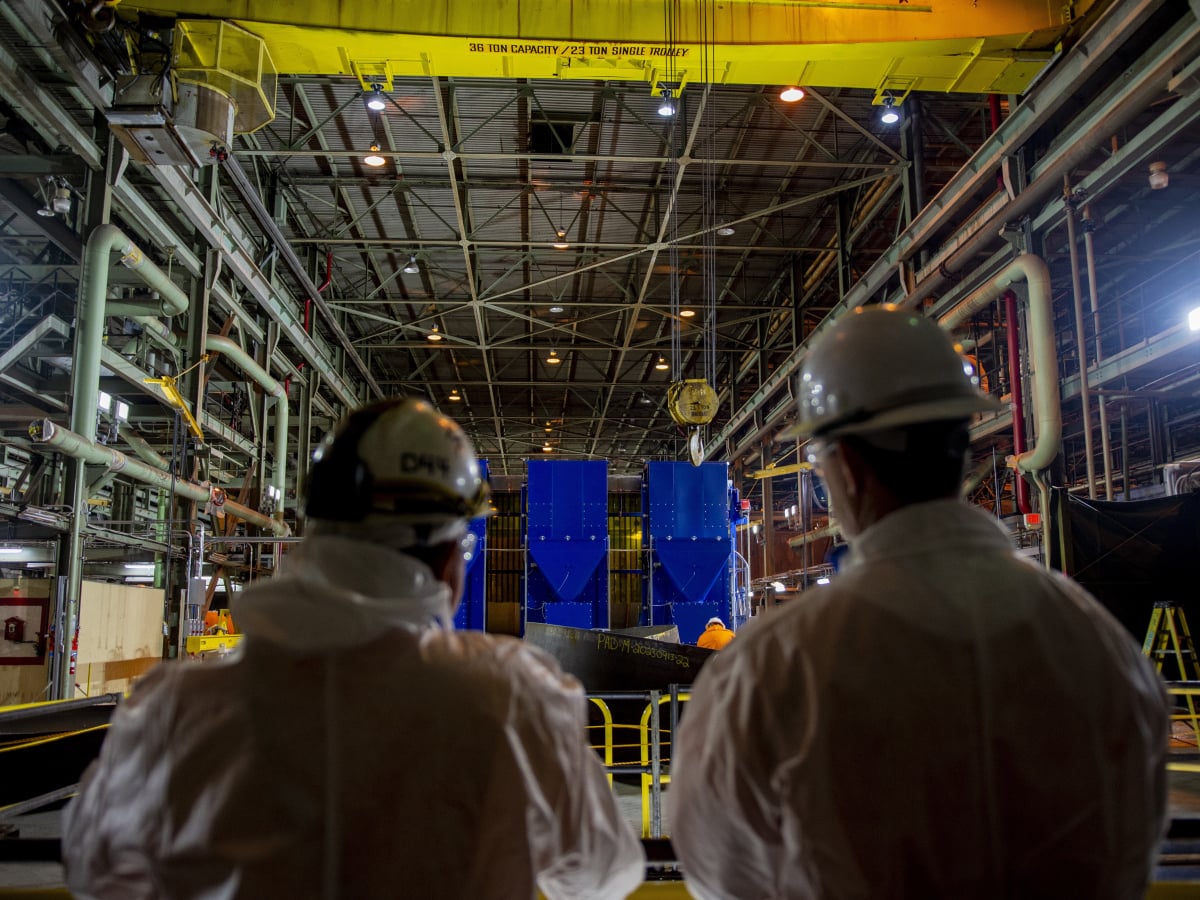
A former uranium enrichment site in Paducah, Ky., will become one of the largest artificial intelligence data center campuses in the country under a $100 billion, privately funded investment project announced by the U.S. Department of Energy and a coalition of energy, infrastructure and utility companies.
The partnership coalition includes Brookfield, NextEra Energy, Big Rivers Electric Power Corp., Jackson Purchase Energy Cooperative and Paducah Power System.
Brookfield was selected late last year following a request for proposals to lease the land, develop and operate the data center campus.
READ ALSO: Has Data Center Development Hit a Wall?
At the same time, NextEra Energy was selected to build and own the dedicated energy infrastructure that will power the site. Big Rivers Electric Power Corp. will provide wholesale electric service. Jackson Purchase Energy Cooperative will provide retail electric service, and Paducah Power System will serve as a community partner.
The project at DOE’s Paducah site in Western Kentucky supports the DOE’s Energy Hubs Initiative, which aims to convert former DOE sites into centers for affordable energy production, advanced manufacturing, technological innovation and economic growth.
The Paducah project is one of the largest economic development investments in Kentucky’s history and is expected to create approximately 8,000 construction jobs and 600 permanent jobs.
Battery storage and natural gas generation
Once completed in 2032, the campus will support up to 1.8 gigawatts of utility capacity and more than 1.2 gigawatts of compute capacity. It will be backed by up to 4.6 gigawatts of dedicated generation resources paid for and built specifically for the project. The project is expected to generate more than enough energy to power the campus, with extra electricity going to the main grid to help reduce energy costs for residential and business ratepayers.
NextEra Energy plans to develop 2 gigawatts of new grid-connected natural gas-fired generation, upgrade existing transmission infrastructure and deploy up to 2.6 gigawatts of battery energy storage to support a new 1.8-gigawatt AI and high-performance computing innovation campus. NextEra Energy will add power generation resources in stages as the campus is built out, ensuring the data center’s growing power needs are met by new supply.
Federal and state officials have worked for many years to transition and clean up the former Paducah Gaseous Diffusion Plant from its Cold War-era use as a uranium enrichment site to private industry.
Due to previous operations at the Paducah site, it is already equipped with transmission capacity, water infrastructure, fiber connectivity, roads and land that can support a project of this size. Coalition members said the existing infrastructure significantly accelerates the timeline to begin work on the development.
Focus on protecting ratepayers
The power service agreement remains subject to approval by the Kentucky Public Service Commission.
Gov. Andy Beshear’s office said in a statement he had not been briefed by any of the companies or agencies involved in the Paducah plan and “has a number of questions related to power, environmental impact, jobs and whether the project will pay the community its fair share of taxes.”
The DOE said the planned data center campus will be on federally owned land and is consistent with President Trump’s Ratepayer Protection Pledge. Ensuring that electricity rates don’t rise because of data centers was the focus of an event last Thursday at the White House, where 23 governors signed the president’s non-binding pledge aimed at protecting residential ratepayers from absorbing electricity costs for data centers.
That same day, OpenAI and Effingham County, Ga., officials announced OpenAI will build a $20 billion, 3.2-gigawatt data center campus at the Savannah Gateway Industrial Hub in Rincon, Ga. It will be one of the largest private investments in Coastal Georgia history. Plans call for the 1,400-acre data center campus to be delivered in phases between 2028 and 2032.
OpenAI has contracted with Georgia Power to provide the 3.2 gigawatts of power to the site. Under Georgia Public Service Commission rules, electric service and infrastructure costs cannot be passed on to existing ratepayers.
Concerns about rising electricity rates, water consumption and noise pollution are driving increasing pushback against proposed AI-driven data centers. Earlier this month, New York became the first state to enact a moratorium on data center projects of 50 megawatts or higher as the state develops a framework for future development.




You must be logged in to post a comment.