


Louisville-Area Bourbon Campus Lands $45M Loan
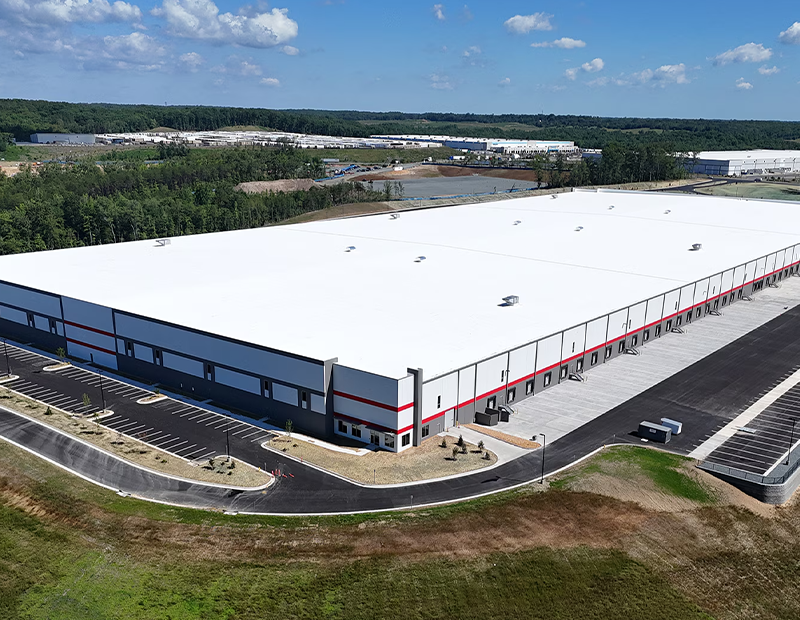
The facility occupies 108 acres.

The developers of The Blending House, a 108-acre campus in Shelbyville, Ky., being built for storing and blending bourbon, have received a $45 million permanent loan. MetLife Agricultural Finance provided the funding in a deal arranged by Northmarq.
The Koetter Group and The Spirits Group own the property.
Scheduled for delivery in the fourth quarter and 96 percent preleased, the facility is at 1917 Vigo Road in Shelby County, close to Interstate 64 and about 30 miles east of Louisville. Upon completion, The Blending House will encompass seven rickhouses, where bourbon is stored and aged in charred-oak barrels, and a 33,500-square-foot blending and bottling facility.
READ ALSO: Industrial Real Estate Trends
A Northmarq spokesperson declined to disclose any of the facility’s tenants or their brands.
Northmarq Senior Vice President Randall Waddell arranged the financing. This permanent fixed-rate financing, which replaces construction financing previously arranged by Waddell, is structured on a seven-year term.
The Blending House is designed for post-distillation needs and integrates maturation and storage, bulk whiskey sourcing, blending, bottling, and back-office functions for third-party spirits brands, according to the developers. The campus will have a total storage capacity exceeding 143,000 barrels.
Shifting demand
Recent years have been difficult for the U.S. distilled-spirits industry. In June, for example, CBS Mornings reported that bourbon giant Jim Beam has halted all distilling at its main still for the remainder of the year, citing slipping demand.
Distillers in Kentucky—where bourbon is a $9 billion-a-year industry—are now sitting on a record-high roughly 16 million barrels of bourbon going through the aging process, according to CBS. Meanwhile, U.S. alcohol consumption last year fell to a 90-year low.
“Consumer demand trends and trade-related uncertainty are an important consideration for the industry, but this project is less a reflection of short-term sales expectations and more a response to long-term barrel storage requirements,” Waddell told Commercial Property Executive. “With significant inventory already in aging cycles, distillers continue to prioritize storage solutions that offer safety, durability and compliance with evolving building and operational standards.”






You must be logged in to post a comment.