


Seattle’s Unsteady Office Sector Taps the Brakes
The market’s metrics lagged behind most of its peers, according to Yardi Matrix.
Seattle’s unsteady office sector continued to lag behind, with most of its metrics below other gateway markets, according to Yardi Matrix data. The metro posted the highest vacancy rate among the largest U.S. cities at the end of August, surpassing Austin, Texas.
Additionally, Seattle saw a year-over-year decrease in the average listing rates during the same month. The metro also lagged behind all of its peers in terms of office investment volume.
Earlier this year, Seattle’s City Council approved legislation to streamline turning vacant offices into housing. The measure scraps several building-size and design rules, letting developers cut costs and move faster. The initiative is part of a broader push to repurpose underused downtown offices while boosting the city’s much-needed housing supply.
Office deliveries plummet year-over-year
Seattle’s office sector comprised 731,963 square feet of office space under construction as of August, according to Yardi Matrix. This accounted for 0.5 percent of its total office stock, on par with national office real estate trends.
Except for Chicago (490,876 square feet), the metro lagged behind all gateway markets. Boston (5.6 million square feet) took the lead nationally, followed by Manhattan (3.4 million square feet) and Dallas (2.7 million square feet)
When also taking into account projects in planning stages, Seattle’s pipeline accounted for 1.4 percent of its total inventory. That figure was still below the 1.9 percent national threshold. Austin and Boston (6 percent) ranked first in the country.
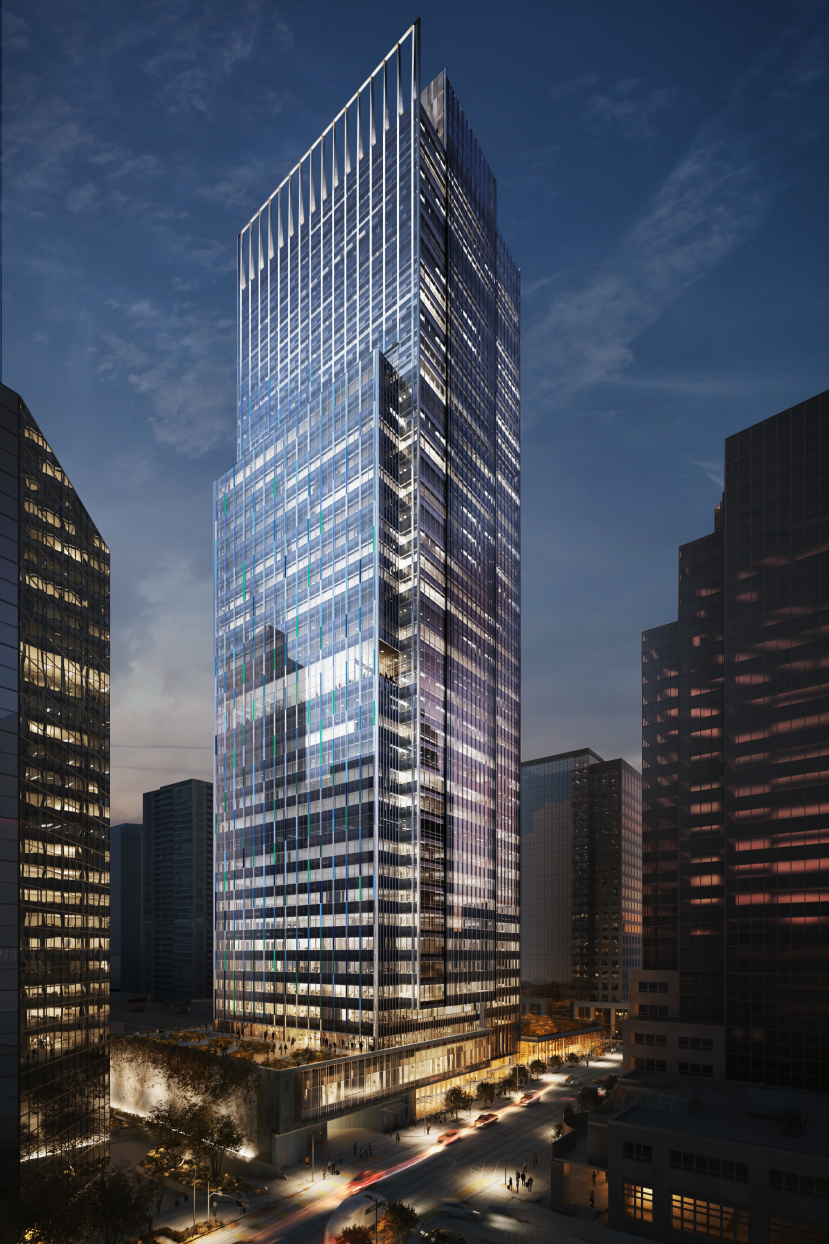
One of the construction projects in Seattle is Vulcan Real Estate’s 555 Tower. Also dubbed Sonic, the almost 1 million-square-foot building welcomed its first tenants in 2023.
In terms of completions, only two office projects came online year-to-date as of August, spanning 377,788 square feet and only accounting for 0.2 percent of the market’s inventory. This marks an almost 90 percent year-over-year drop, underscoring commercial property trends.
Seattle sale prices remain below national threshold
Seattle’s office investment volume year-to-date lagged behind all gateway metros. Transactions in the metro totaled $248 million, with assets trading for $124 per square foot on average.
This figure was well below the $268 per square foot national threshold. Manhattan ($528 per square foot), the Bay Area ($378 per square foot) and San Diego ($332 per square foot) registered some of the highest prices. Manhattan ($5 billion) and the Bay Area ($3.4 billion) also ranked first in terms of total sales.
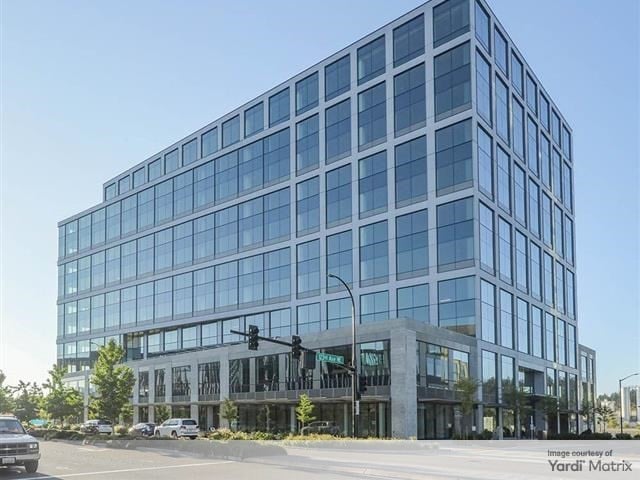
Earlier this summer, Shorenstein Investment Advisers transferred the controlling interest in Blocks 5 and 6 at The Spring District, two Bellevue, Wash., buildings totaling 670,000 square feet. Blackstone acquired the assets. Shorenstein, in partnership with Wright Runstad & Co., also sold Block 13, a 200,000-square-foot property within the same campus.
Highest office vacancy rate nationally
Seattle’s office vacancy rate at the end of August clocked in at 27.2 percent, the metro having the most available space nationally. It was followed by Austin (26.5 percent) and San Francisco (25.9 percent). The national average was 18.7 percent in the same month, dropping 80 basis points year-over-year.
Compared to the same month of 2024, Seattle’s rate rose 2.3 percent. San Diego posted the highest year-over-year increase in the vacancy rate among the largest metros, increasing 350 basis points.
Earlier this year, Microsoft left its 750,000-square-foot offices at Bravern Towers. The campus owners—Invesco and Australian Retirement Trust—recently defaulted on the $304 million CMBS loan backing the assets, according to Bloomberg, expediting the repositioning process.
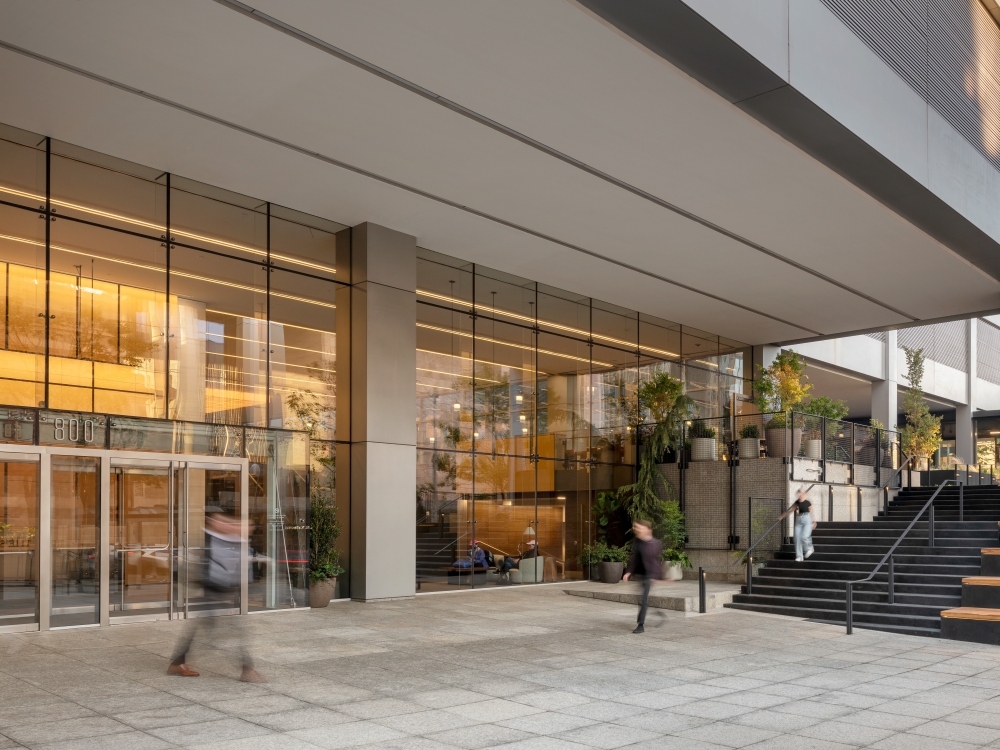
In the second quarter of this year, EQ Office landed a 79,189-square-foot tenant at 800 Fifth, its 42-story office building in Seattle. Casey Family Programs will use the space as its headquarters. At the time of the agreement, the deal was the largest new lease in the city’s downtown this year.
Seattle’s life science footprint ranked in the top 10 nationally for the previous year, attracting companies for its fast-growing and affordable biotech labor pool. Earlier this year, UW Medicine’s Institute for Protein Design signed a lease for 31,837 square feet at Cascadian at 330 Yale. A subsidiary of KKR owns the nine-story building that came online in 2021.
Seattle’s coworking sector remains steady
Seattle’s coworking inventory as of August reached 3.1 million square feet across 157 locations at the end of August, accounting for 2 percent of its total office stock. This figure was slightly below the 2.1 percent national average.
Compared to its peers, Seattle ranked in the middle. Miami (4.2 percent) had the largest share of coworking stock out of office space. Washington, D.C. (1.7 percent) and Boston (2.1 percent) were at the opposite end of the spectrum.
Regus continued to have the largest shared-space footprint in the metro, with 508,962 square feet across 25 locations. The coworking provider was followed by WeWork (345,315 square feet) and extraSlice (296,437 square feet).



You must be logged in to post a comment.