

2026 Office Outlook: Discipline Takes Center Stage
Next year, the office market will reward clarity, performance and strategic focus. Here’s what to watch in 2026.
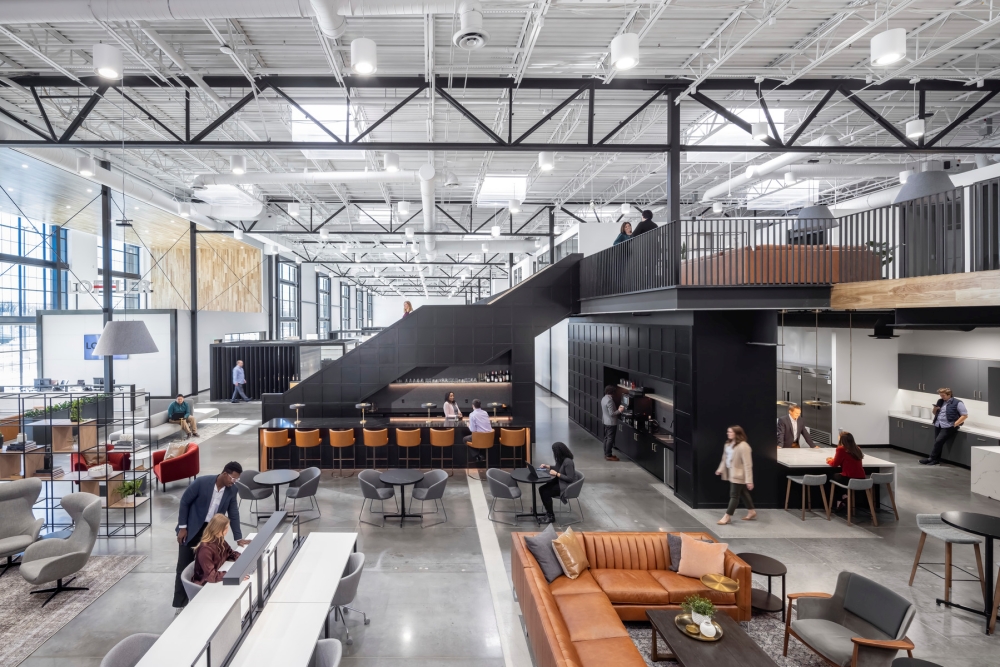
The U.S. office sector is heading into 2026 with a clearer sense of direction than at any point in recent years. After an extended period of volatility, 2025 brought a measure of clarity, even if the results were not always comfortable.
Hybrid work shifted from an experiment to an expectation, capital began to cautiously reengage, and a new hierarchy emerged in which building performance—not just location—became the defining line between competitive assets and those falling behind. Together, these shifts set the tone for 2026: a year driven by focus, discipline and measurable performance.
“2025 was a year of adjustment,” said Jordan Lang, president of McCourt Partners. “After several years of resetting expectations, we began to see the outlines of a more stable market.”
That reset marked a turning point. Rather than waiting for a traditional rebound, the industry started reshaping itself around new economic, cultural and technological realities, forces that now anchor the office outlook for 2026. Today, the sector appears less like an industry exiting crisis and more like one entering a more disciplined, modern and performance-driven era.
LISTEN TO: FTI Experts’ Hub Podcast—From 2020 Office Forecasts to 2026 Realities
Recalibrating the office model
The office sector didn’t simply evolve in 2025. It fundamentally redefined itself, setting a new framework for what the workplace will look like in 2026.
“Hybrid work remained dominant, but companies moved from ‘optional’ office days to structured anchor days focused on collaboration and innovation,” said Doug Ressler, manager of business intelligence at Yardi Matrix. “Offices were redesigned for flexible zones—spaces that can switch between collaborative and focused work.”
This shift reflected two converging pressures: Employees continued pushing for flexibility, while companies sought to justify real estate costs for a geographically dispersed workforce. The result was a more intentional workplace model, one built around purposeful presence, not daily attendance.
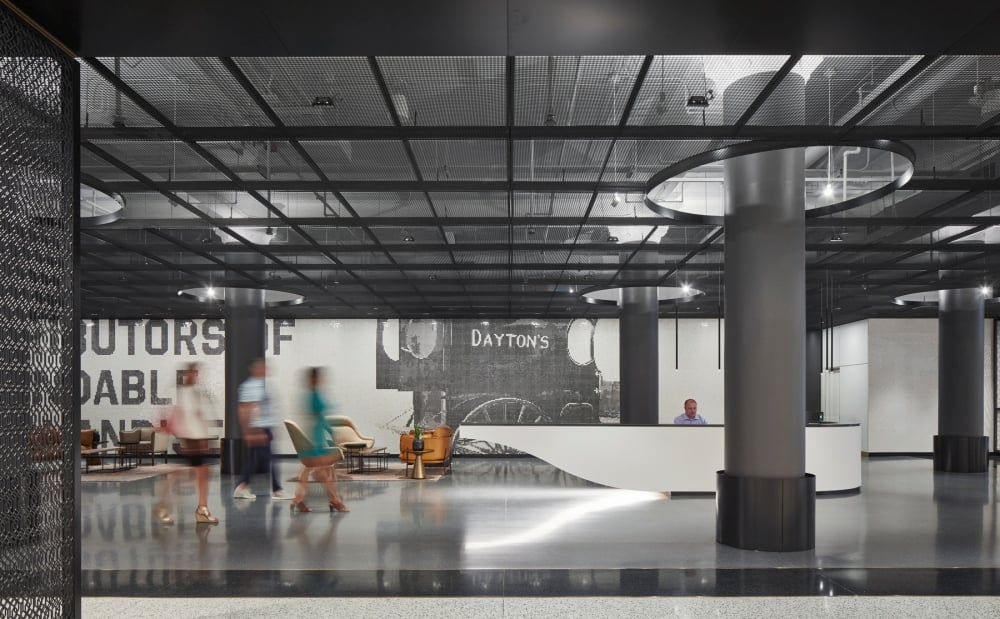
Early signs of stabilization appeared in the numbers. Yardi Matrix data shows the national vacancy rate fell to 18.6 percent in September 2025, an 80-basis-point improvement from 2024 but still far from pre-pandemic norms. Leasing volume reached 52.4 million square feet in the third quarter, according to JLL, just shy of post-pandemic highs. Sublease availability tightened, and limited new construction pushed overall availability to levels last seen before 2016, Avison Young reported.
Even as fundamentals improved, the market’s dividing lines sharpened.
“Prime assets in core markets experienced steady leasing activity, while older and less efficient buildings struggled to compete,” noted Ayush Kapahi, principal & founding partner of HKS Real Estate Advisors. “On the capital markets side, transaction volume improved as sellers adjusted pricing expectations and capital began to re-engage…The market remains shaped by higher interest rates, the long-term adoption of hybrid work and a sharp focus on tenant credit, location and building quality.”
That reengagement is visible in financing trends, as well. Mike McDonald, senior managing director & co-head of JLL’s National Office Investment Sales and Advisory platform, points to a dramatic rebound in debt availability: 2025 brought an 86 percent year-over-year increase in loan originations compared to January – October 2024, driven by debt funds, life companies and select banks. Institutional capital—including heavyweights like Blackstone—returned opportunistically to gateway markets such as New York, San Francisco and Bellevue, Wash.
For others, this year’s defining theme was acceptance. “Higher rates and new work patterns are here for the foreseeable future,” said Lang. Market participants responded accordingly: Leasing improved in select submarkets, supply tightened as groundbreakings slowed sharply and demand clustered around well-located, modern offices with strong amenity and technology packages.
READ ALSO: 18 CRE Trends We’re Taking Into 2026
But challenges remain. Hybrid work still limits absorption and elevated vacancy continues to pressure net operating incomes, especially for commodity-grade buildings. The outcome is a deeply bifurcated market: on one side, high-quality Class A and “smart” offices pulling ahead, and on the other, a growing stock of outdated, under-financed assets facing distress, conversion or outright demolition.
“We are estimating that over 250 million square feet of office will be demolished or removed from the inventory entirely, which will vastly outweigh new construction,” McDonald expects.
As 2025 draws to a close, the message is clear: The post-pandemic office is not dead, but it has fundamentally changed. What succeeds now is not what succeeded before.
How office demand will evolve
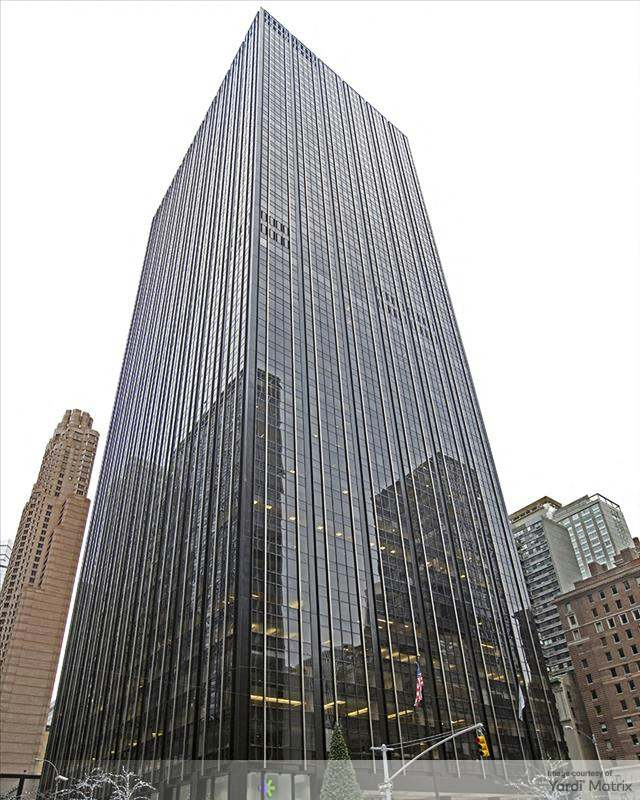
The 2026 office outlook points toward a smaller, more intentional footprint, one defined by flexibility, quality and strategic location rather than sheer square footage. Companies are shifting away from large, centralized headquarters and toward modern, tech-enabled environments that better support hybrid work patterns and evolving workforce expectations.
Long-term forecasts reinforce this reset. McKinsey projects that office demand will remain below pre-pandemic levels through 2030, with San Francisco and New York experiencing the steepest declines. At the same time, the North American flex office market is expected to nearly double, from $14.9 billion in 2025 to $28.9 billion by 2030, as companies adopt asset-light strategies, shorter lease terms and more distributed operational footprints. Flexible space is increasingly seen as a tool for rapid expansion without the capital burden of traditional buildouts.
“We expect demand to remain stable but concentrated in high-quality, well-located assets,” said Kapahi. “Hybrid work is now the norm, meaning tenants will continue to optimize space for flexibility and efficiency rather than expansion.”
This recalibration is influencing not only how much space companies take, but where they take it. Many organizations are reshaping their networks by adopting hub-and-spoke models, maintaining a core headquarters while leasing smaller satellite offices or coworking suites closer to where employees live, according to Ressler. This decentralized model supports distributed teams, reduces commute-related friction and helps companies manage costs more effectively.
READ ALSO: How Lifestylization Is Making Office Work
Talent competition is another catalyst. Demand for top-tier, amenitized space remains strong across law, finance and tech—industries that continue to pay a premium for environments that attract and retain high-value employees, noted McDonald.
But the strength at the top of the market masks uneven conditions elsewhere. Physical occupancy is expected to improve only gradually, putting pressure on owners to reposition or reinvest in buildings that no longer meet tenant expectations.
“Nationally, we are still around 55 percent of occupancy, with cumulative increases since 2021 around maybe 5 percent,” said Peter Kolaczynski, associate director at Yardi Matrix. “There is simply less of a need for office space, with that number of excess space being as high as 1.5 billion square feet nationally. A few changes that we are seeing: the recognition that there is too much space, and functionally obsolete office space being decommissioned, happening in some places more than others.”
Strategic priorities shaping the 2026 outlook
As the office market resets around hybrid work, constrained capital and heightened tenant expectations, 2026 is emerging as a year in which strategy—not scale—determines performance. Owners, occupiers and capital providers are entering a cycle that rewards discipline, clear positioning and targeted investment. Across all stakeholders, the mandate is the same: Preserve asset value, enhance competitiveness and accelerate leasing velocity.
For owners, the path forward begins with the asset itself. Buildings that have not seen meaningful upgrades will require capital, and industry leaders warn that a growing “arms race” for quality will continue to define the market. Landlords are refining their positioning around wellness, technology, operational efficiency and flexibility, according to Ressler, with wellness certifications, modern mechanical systems, strong natural light, collaborative lounges and tech-enabled meeting rooms as key differentiators, alongside flexible leasing tools such as spec suites and shorter-term agreements.
“For owners, clarity of plan is everything,” Lang believes.
Meanwhile, occupiers continue to hold leverage. With the market still in transition, tenants can lock in high-quality space on favorable terms while structuring leases that support long-term flexibility. Sustainability has also become a driving factor in decision-making. Ressler urges companies to integrate decarbonization goals into site selection and to collaborate with landlords on retrofit strategies that support both ESG mandates and operational performance. Utilization data is increasingly shaping these decisions, enabling occupiers to right-size footprints and design “flexible neighborhoods” that support hybrid work and employee well-being.
Capital providers are recalibrating just as carefully. ESG priorities are rising across the investment landscape, and lenders are emphasizing sustainable assets, retrofit strategies and analytics-driven underwriting. Innovative financing—blending tools such as historic tax credits, LIHTC and green funding—is becoming increasingly important for repositioning aging stock and supporting long-term resilience.
The road ahead
The office outlook for 2026 points toward a period of growing clarity. Hybrid work is no longer viewed as a disruption but as the baseline operating model, and the market is steadily recalibrating around that reality. Demand is stabilizing at a structurally lower level, yet capital, tenants and developers appear more aligned than ever on what the next generation of office space must deliver. Across expert perspectives, one theme stands out: normalization on new terms.
Ressler expects utilization to stabilize at 55 or 65 percent of pre-2020 norms, with large corporate footprints continuing to contract. McKinsey’s long-term projections—demand down as much as 20 percent in San Francisco and 16 percent in New York—reinforce this trajectory.
At the same time, coworking and flexible workspace is set to expand meaningfully, driven by evolving coworking trends that prioritize agility and tenant convenience. Kolaczynski anticipates coworking’s share to rise sharply, noting that coworking is still only 2.2 percent of office space, yet poised to grow to 8 to 10 percent in the coming years.
“Owners will lean more heavily into coworking and flexible arrangements to fill vacant space,” Kolaczynski believes. “Whether this is an owner partnering with a coworking operator or rebranding specific vacant floors/suites as their individual coworking brand, the need for full-service space with flexible terms and footprints to meet corporate and enterprise tenant needs will become a must have.”
Limited new development will further sharpen the focus on quality. JLL estimates that less than 7 million square feet of new office space will be delivered by year’s end—the lowest total since the global financial crisis—intensifying competition for top-tier, highly amenitized “jewel-box” projects in prime locations.
If 2025 marked the point when the sector stopped falling, 2026 may be the year it begins to rebuild with intention.
“The noise around rates and policy shifts will eventually fade,” Lang said. “What endures is the need for great places to live, work and gather.”


You must be logged in to post a comment.