


Port Proximity Driving Houston Spec Industrial
A key submarket is seeing little new preleased space.
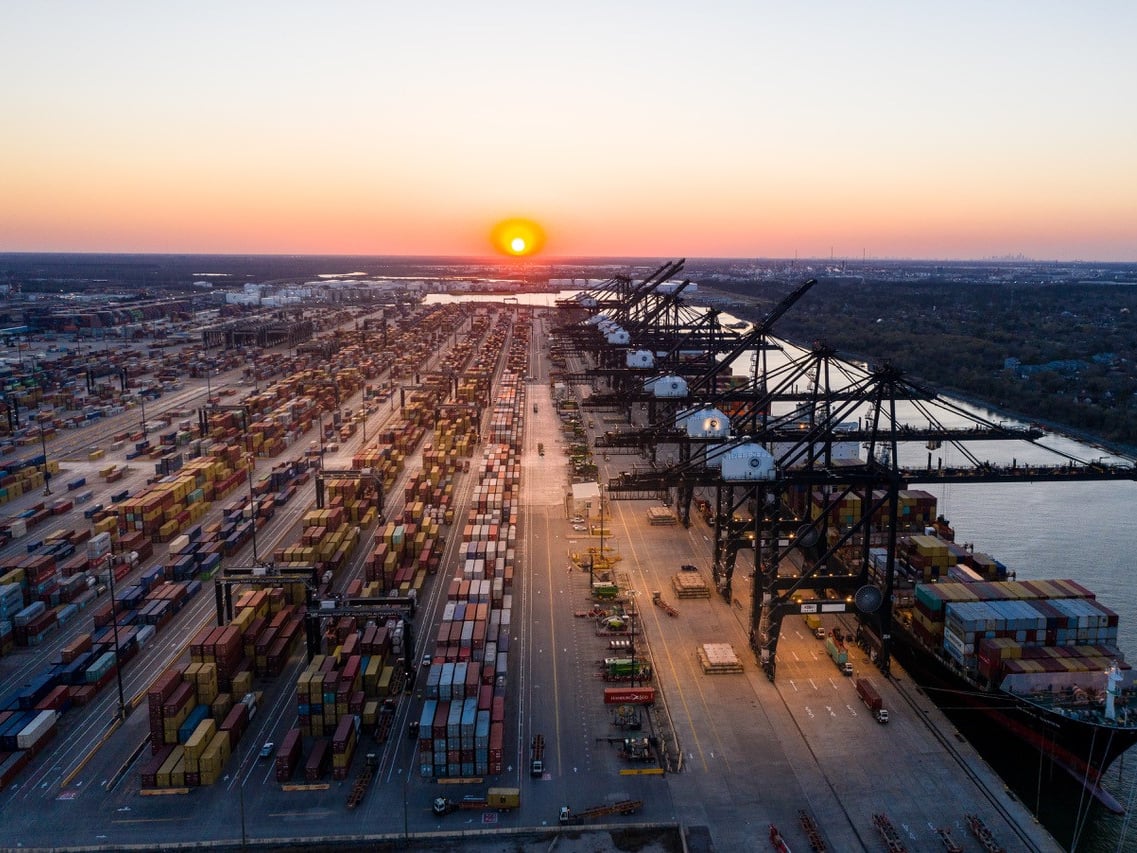
Houston speculative industrial development has kept its expansion pace, particularly in the port-driven Southeast submarket. New construction velocity set a high bar for absorption, but leasing retained its tempo as supply and demand across the broader market remained mostly level.
Zooming in, this development balance lagged in the Southeast area, however, where deliveries outpaced absorption during the second quarter of 2026, according to Lee & Associates’ Port of Houston Market Report.
More than 2.2 million square feet came online between April and June across that submarket. Just 3.3 percent of space was preleased, showing just how much of last quarter’s industrial deliveries were speculative. At a market level, the share of preleased space stood at 10.8 percent.
READ ALSO: Data Centers Are Creating Spillover Industrial Demand. Will It Last?
The speculative supply glut is also reflected in the Southeast submarket’s vacancy, which stood at 11.3 percent in June, as plenty of product was still going through lease-up. The figure was nearly half that across the whole Houston market, at just 6.4 percent.
Even with an increase in the amount of available space, triple-net industrial leases remained competitive, with the average figure at $0.73 per square foot, nearly 8 percent below the market average.
Houston speculative industrial development expands
Still, the North and Northwest submarkets also captured some of Houston’s speculative industrial development, Mary Doetterl, research director at Lee & Associates, told Commercial Property Executive. The two areas serve as regional and national distribution hubs, complementing the Southeast’s demand drivers, which include petrochemical facilities and global trade infrastructure, in addition to the port ecosystem.
Developers are looking to capitalize on several tenant profiles. For instance, “Facilities closest to the Port of Houston are typically occupied by importers, exporters, manufacturers, freight forwarders and logistics providers that depend on efficient cargo movement,” according to Doetterl.
“Farther from the port, tenant demand shifts toward regional distribution, e-commerce fulfillment and consumer-focused logistics operations,” she continued. Triten Real Estate Partners exemplified this trend with its May completion of a 400,000-square-foot distribution center in Humble, Texas.
Ports are not closed ecosystems
Port markets sustain first-hand exposure to changes in global trade, as the flow of imports and exports directly impacts such metros before goods continue their way up the supply chain through regional distribution networks. “At the same time, broader industrial demand influences port activity by driving warehouse development, manufacturing expansion and logistics investment,” Doetterl added.
Houston’s sustained industrial demand is downstream from the performance of its port, which recorded an all-time high in TEUs handled last year, having nearly 100 percent of Texas’ market share and more than two-thirds of the U.S. Gulf Coast’s container traffic. It is also first for waterborne tonnage and the largest petrochemical complex in the U.S.
The market “benefits from a highly diversified industrial base supported by energy, petrochemicals, manufacturing, logistics and international trade. Combined with the Port of Houston’s continued infrastructure investments, these industries generate demand across a wide range of industrial property types,” Doetterl concluded.




You must be logged in to post a comment.