


Eli Lilly Picks Site for $6B Manufacturing Plant
The project marks the largest industrial private investment in Alabama history.
Known as Rocket City for its impact on the nation’s high-tech aerospace and defense industries, Huntsville, Ala., will become the site of a $6 billion manufacturing facility for pharmaceutical giant Eli Lilly and Co., as part of its more than $50 billion plan to expand U.S. operations. Construction will start next year and is expected to be completed by 2032.
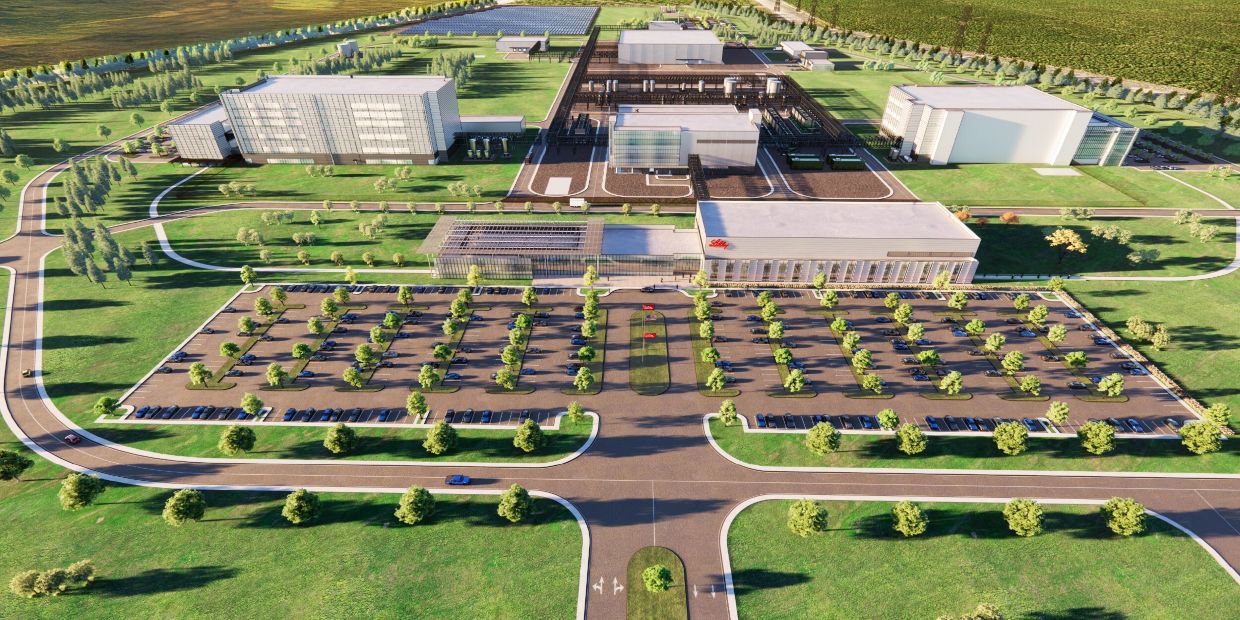
The Indianapolis-based company selected a 250-acre site in the Greenbrier South section of Huntsville near Interstate 565 in Limestone County for a plant that will produce orforglipron, Lilly’s first oral, small molecule GLP-1 receptor agonist. The company is planning to submit orforglipron to global regulatory agencies later this year as an obesity treatment.
It is Lilly’s ninth U.S. manufacturing site announced since 2020 and the third of four new U.S. locations the company is revealing as part of its domestic production expansion. The company said in February three of the four sites would focus on manufacturing active pharmaceutical ingredients to help restore and strengthen Lilly’s supply chain. The fourth location, expected to be announced within several weeks, will be a manufacturing site for injectable therapies.
In September, Lilly announced it was developing a $5 billion plant in Richmond, Va. A week later, it confirmed it was building a $6.4 billion manufacturing facility in Houston. Commercial Property Executive reported in May that Lilly was eyeing a 236-acre site within McCord Development’s Generation Park in the Texas city for the plant. All three sites selected to date will be next-generation synthetic medicine active pharmaceutical ingredient (API) facilities, producing small molecule synthetic and peptide medicines that are used across several therapeutic areas including cardiometabolic health, oncology, immunology and neuroscience.
READ ALSO: Policy Shifts Boost Reshoring, Vacancies Rise
The Houston plant will also manufacture orforglipron, while the Richmond site will be the company’s dedicated, fully integrated API and drug product facility for Lilly’s emerging bioconjugate platform and monoclonal antibody portfolio. The Virginia property will also be used to boost Lilly’s domestic manufacturing of anti-body drug conjugates. An ADC is a targeted therapy designed to deliver potent medicines directly to diseased cells and is primarily used to treat cancer but is being explored for use fighting autoimmune diseases and other conditions.
Construction at the Richmond site is expected to be completed within five years and the Houston site is expected to be operational by 2031.
State’s largest private investment
Lilly is making the largest industrial private investment in Alabama history. The Greenbrier South site will create 450 permanent jobs, including engineers, scientists, operations personnel and lab technicians, and 3,000 construction jobs. The manufacturing plant will boost the Huntsville economy in other ways. For every dollar Lilly invests there, it estimates up to $4 in additional local economic activity. Lilly also notes that for every manufacturing job created, several more will be generated in related sectors like supply chain, logistics and retail.
David Ricks, Lilly chair & CEO, said the company was attracted by Huntsville’s track record of science and innovation, supported by advanced manufacturing expertise and a skilled workforce. He called the state an ideal location for Lilly to expand domestic manufacturing for next-generation medicines. Ricks added the investment will continue Lilly’s onshoring of API production, strengthen supply chain resilience and provide reliable medicine access for U.S. patients.
The Greenbrier South site was selected from more than 300 applications, partly due to its proximity to the HudsonAlpha Institute for Biotechnology and the region’s established bioscience infrastructure. Lilly stated the facility will be incorporating cutting-edge technologies, including machine learning, artificial intelligence and advanced data analytics. Digital automation will also be used throughout the site to streamline operations.
Alabama’s bioscience sector currently generates more than $7.3 billion in annual economic impact, reflecting broader industrial real estate trends tied to life-science manufacturing growth. It supports more than 1,800 bioscience enterprises and employs more than 15,000 people, according to Alabama Department of Commerce data.


You must be logged in to post a comment.