

Coming Full Circle: What’s Next for Atlanta’s Westin Peachtree Plaza?
Portman’s Kaunteya Chitnis discusses the landmark tower’s legacy, its return to the firm’s portfolio and the investment strategy shaping its future.
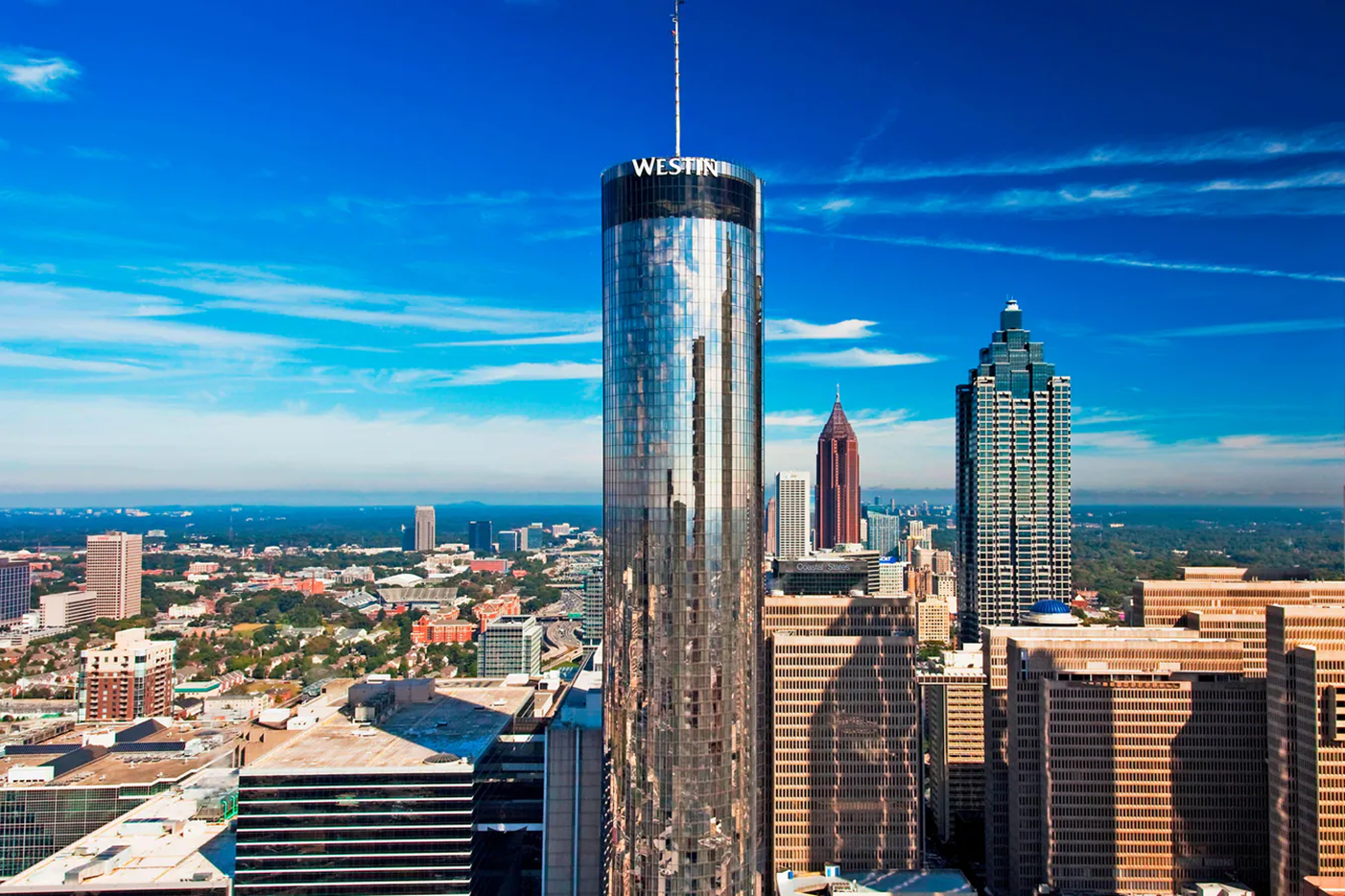
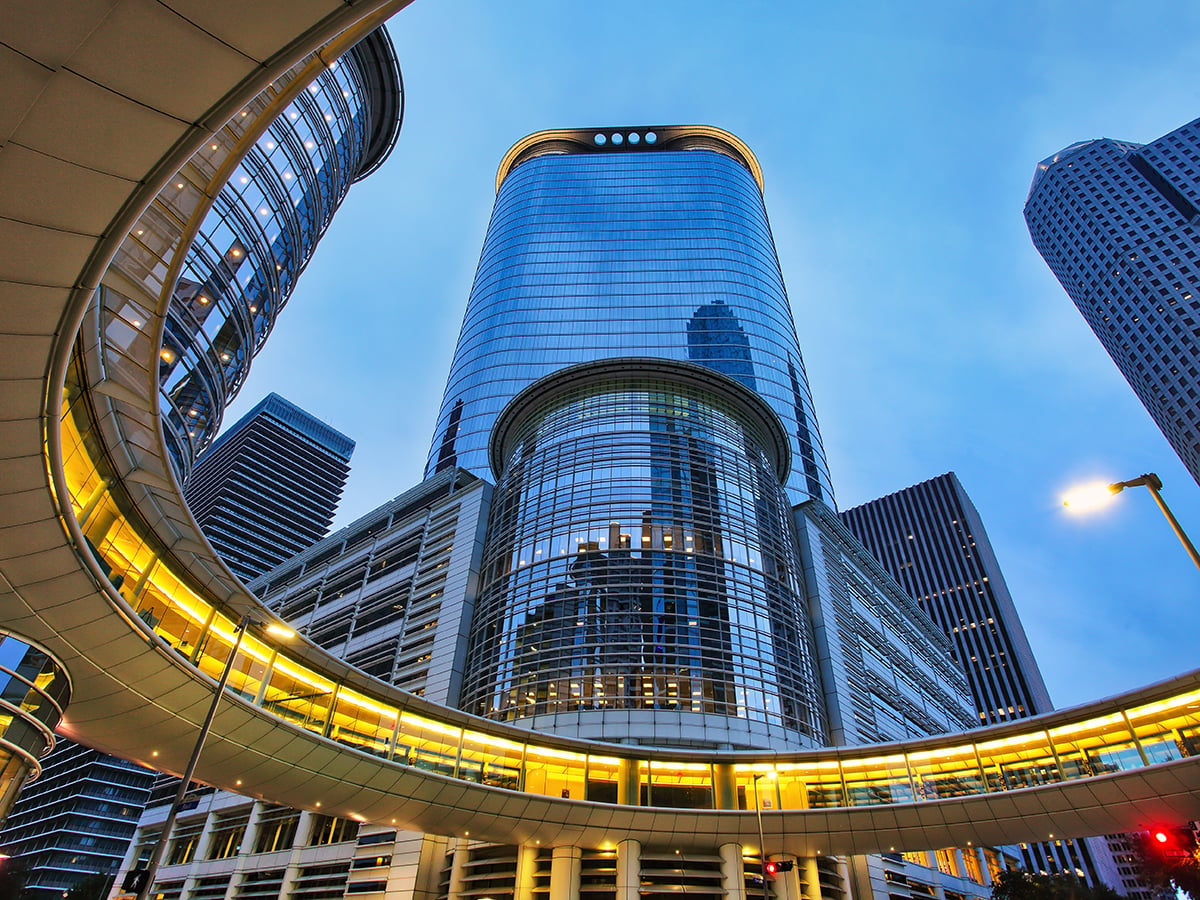
With its cylindrical silhouette and reflective glass facade, The Westin Peachtree Plaza has long been one of Atlanta’s most recognizable buildings. Designed and developed by architect and real estate developer John Portman Jr., the landmark hotel opened nearly half a century ago and has recently returned to the Portman portfolio decades after it was sold amid financial difficulties in the 1980s. The company acquired the asset through its Portman Hospitality Fund I in May.
Part of the Peachtree Center complex in the city’s downtown area, the tower rose on the former site of another hospitality property, the Henry Grady Hotel, which was demolished in 1972. Four years later, the building opened under the management of Western International Hotels, which later became Westin Hotels. The tower changed hands several times over the following decades before coming under Marriott International’s ownership in 2016. Following the recent sale to Portman, Marriott will continue to operate the hotel under the Westin flag through a long-term management agreement.
Spanning 1.2 million square feet, the skyscraper features 1,073 guestrooms and a rotating top-floor restaurant with 360-degree views of Atlanta. In a 1976 review, The New Yorker described the hotel as part of a wave of ambitious new developments reshaping the city’s hospitality landscape, where an indoor lake, a cocktail island and a glass-enclosed elevator embodied the era’s appetite for grand gestures.
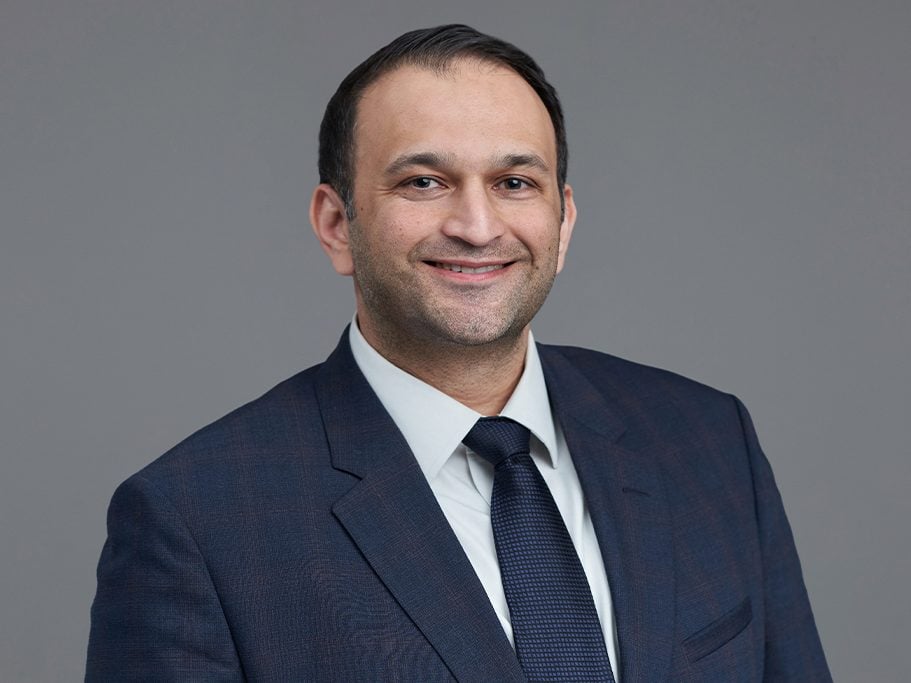
The Westin Peachtree Plaza’s next chapter will include a comprehensive renovation scheduled for completion ahead of the 2028 Super Bowl. To discuss the planned transformation, the significance of bringing the hotel back into the firm’s portfolio and Portman’s broader hospitality investment strategy, Commercial Property Executive spoke to Managing Director of Hospitality Kaunteya Chitnis.
READ ALSO: How the World Cup Boosts CRE in Secondary Markets
What did it mean for Portman to bring The Westin Peachtree Plaza back into its portfolio 50 years after John Portman Jr. designed and developed it?
Chitnis: The Westin Peachtree Plaza is one of the most recognizable buildings in Atlanta and an important part of Portman’s history. Bringing the property back into the portfolio is both a homecoming and a reflection of how Portman has evolved as an investment, development and operating platform.
At the same time, this is a forward-looking investment. The hotel occupies irreplaceable real estate in the heart of downtown Atlanta and remains one of the most recognizable hospitality assets in the country. Opportunities to acquire assets of this scale, visibility and historical significance are rare. We see tremendous potential to reposition the property for the next generation while building on the legacy that has made it a landmark.
Tell us more about the planned repositioning process.
Chitnis: As we reposition the hotel, we will honor its architectural identity while updating the guest experience to meet modern expectations around wellness, technology, flexibility and social engagement. The building already has global recognition and a strong brand affiliation, so the opportunity is really about refreshing the experience for today’s traveler while preserving the qualities that make the property iconic.
We also believe the hotel can continue serving as a gateway to downtown Atlanta, particularly as the city prepares for major events and continued investment in the urban core.
What will you be focusing on during the upcoming renovations at the hotel?
Chitnis: We are planning a comprehensive renovation that will touch every part of the guest and event experience, such as guestrooms, public spaces, food and beverage outlets, and the hotel’s significant meeting and event facilities. Our approach reflects Portman’s vertically integrated capabilities.
We are working closely with Marriott and with our in-house design and construction teams to ensure the renovation meets the standards of a top-tier full-service hotel, while also preserving the architectural integrity of the building. We will evaluate and touch every square foot of the property during our ownership period.
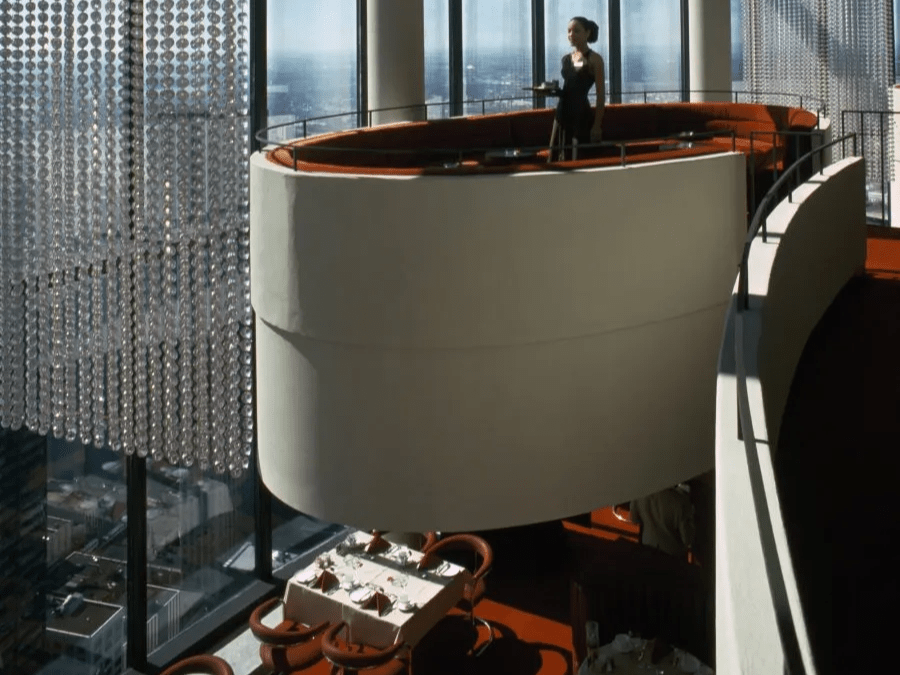
The Sundial restaurant at the Westin Peachtree Plaza in February 1976. Photo by Jerry Spearman. All images courtesy of The Portman Archives 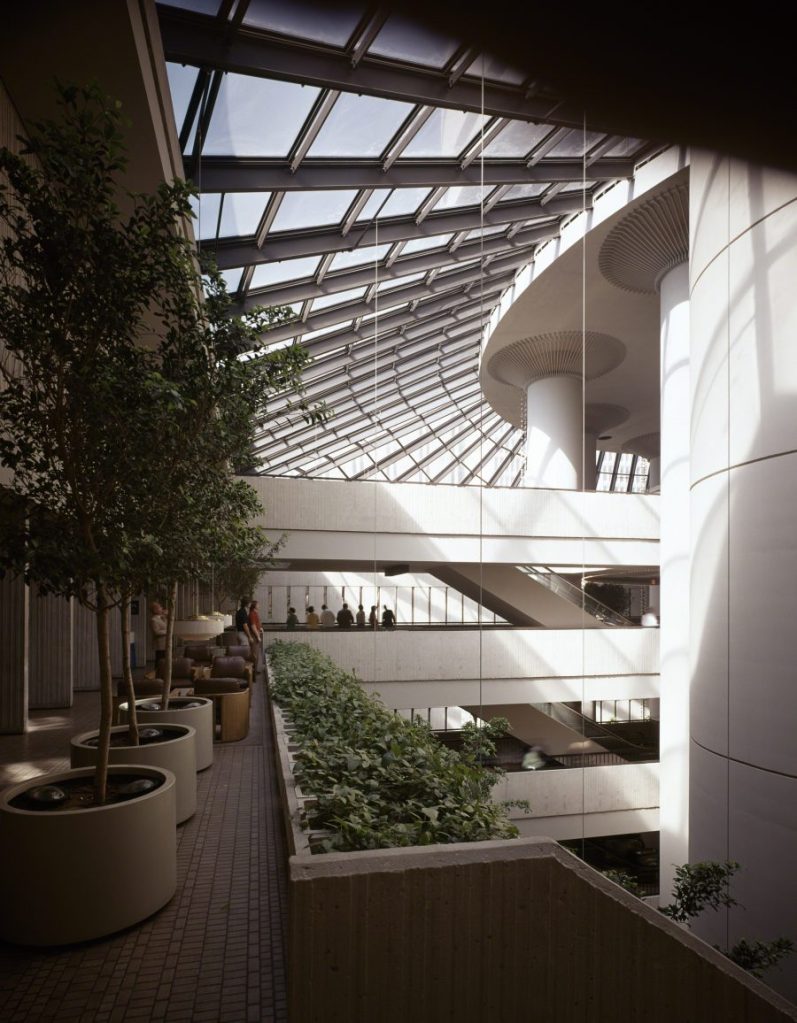
Interior of the Westin Peachtree Plaza in 1976, featuring the atrium with a north view and ballroom-level terraces on the west side. Photo by Alexandre Georges 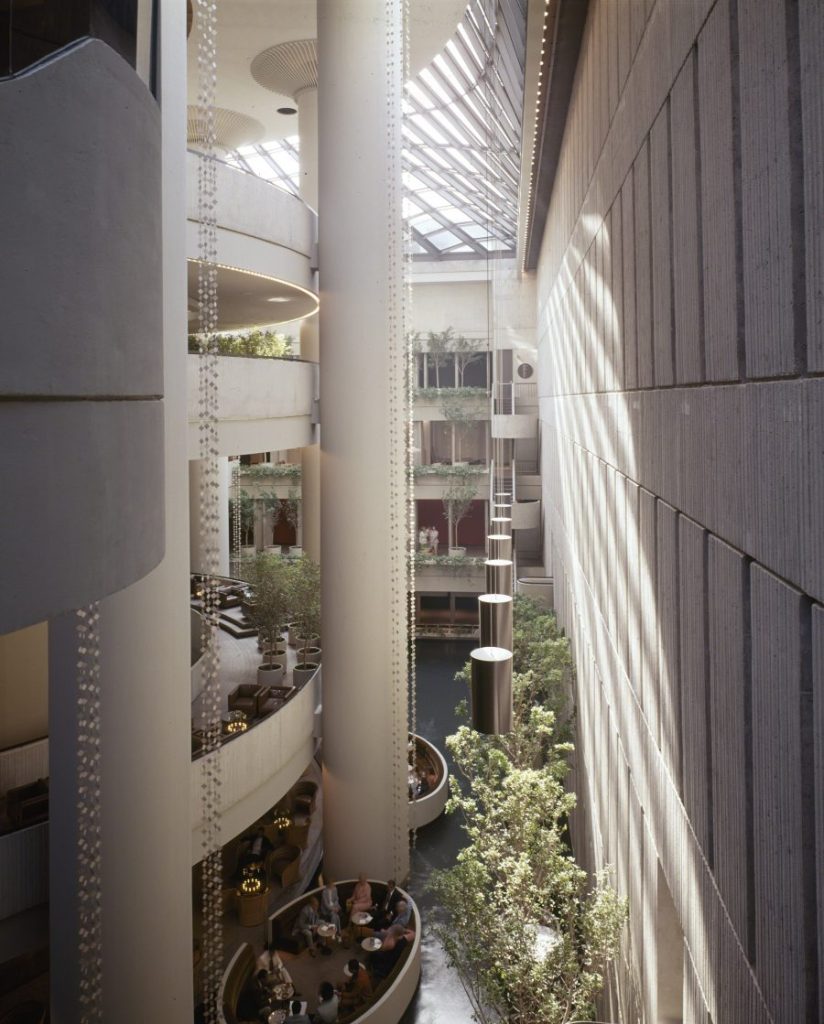
The Westin Peachtree Plaza interior, looking toward the lobby. Another 1976 photo by Alexandre Georges 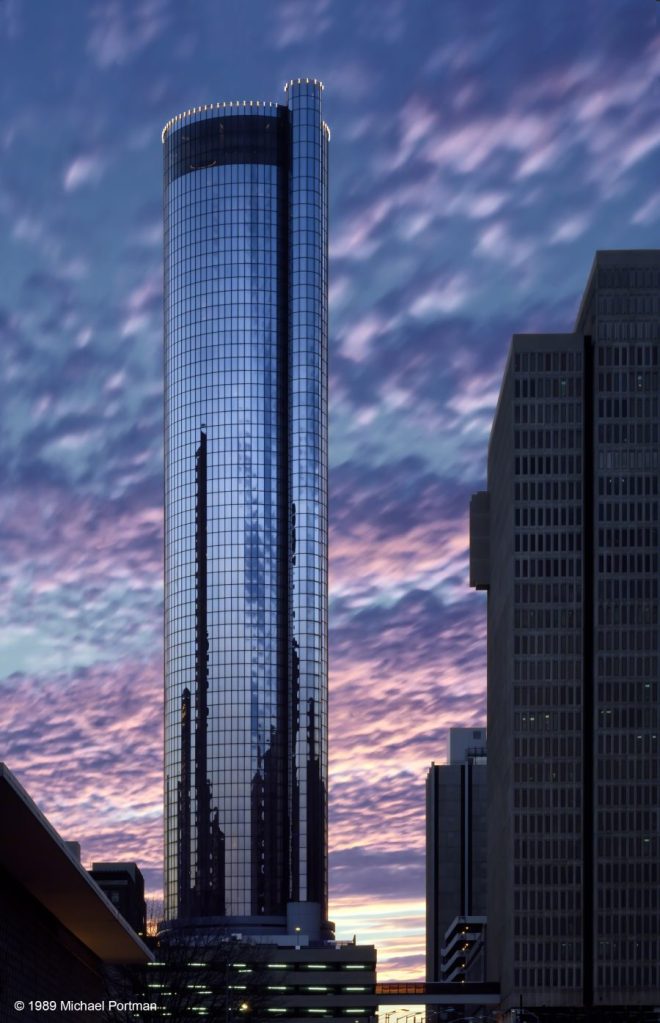
With its cylindric shape and reflective glass facade, the Westin Peachtree Plaza is one of Atlanta’s most recognizable buildings. Photo by Michael Portman, taken ca.1988-1989.
What challenges do you expect during renovation, particularly when it comes to balancing the hotel’s original design identity with today’s hospitality needs?
Chitnis: Our main challenge is the scale of the renovation and the natural logistical complications of executing a comprehensive floor-by-floor renovation while the hotel continues to serve guests. From a design perspective, the building itself is a work of art, and we have a deep archive to draw from.
We understand the original design intent, and we also understand how guest expectations have evolved over the last several decades. Balancing the two is the work, and it’s exactly the kind of work Portman is built for.
This was the first investment made through Portman Hospitality Fund I. What were the key factors you considered before moving forward with the acquisition?
Chitnis: The property fits squarely within our investment thesis: large-scale, branded and irreplaceable hospitality assets in major U.S. markets where active ownership and strategic reinvestment can drive meaningful value creation.
Our diligence was focused on the building’s long-term physical and operational durability—the qualities that allow an asset to perform across cycles—and on a renovation program developed in close coordination with our design, construction and operating partners. Our familiarity with the building, combined with conviction in the long-term opportunity, made this a compelling investment.
Broadly speaking, what does this acquisition mean for the Atlanta hospitality scene and the city’s downtown evolution?
Chitnis: Atlanta is one of the most important hospitality markets in the country, anchored by Hartsfield-Jackson International Airport, a robust convention calendar and continued corporate and entertainment growth. Downtown Atlanta in particular is continuing to evolve through infrastructure investment, entertainment growth, convention activity and large-scale mixed-use development, and the Westin Peachtree Plaza is at the center of that momentum.
In addition, with Atlanta continuing to attract major events such as Super Bowl LXII in 2028, we see a meaningful opportunity to reposition the property ahead of a major demand cycle for the city.
Looking ahead, what’s your investment strategy in the hospitality sector and how do you expect the fund to evolve in the upcoming years?
Chitnis: We continue to see compelling opportunities within the hospitality sector, particularly among large-scale, full-service hotels in gateway and high-growth U.S. markets. Many of these assets are entering a new investment cycle where ownership groups need capital, repositioning expertise and operational sophistication to remain competitive.
That dynamic is what our platform was built to address. Our strategy is centered on identifying irreplaceable assets where we can create value through thoughtful renovation, operational enhancement, and long-term stewardship.


You must be logged in to post a comment.