


Cold Storage Market Increasingly Bifurcated
The subsector is going through a cyclical reset, according to Newmark.
The U.S. cold storage market is dealing with the aftermath of a sizable spike in development in recent years, combined with a more recent softening of demand, according to a new report by Newmark. The company terms the state of the market as “moving through a cyclical reset.”
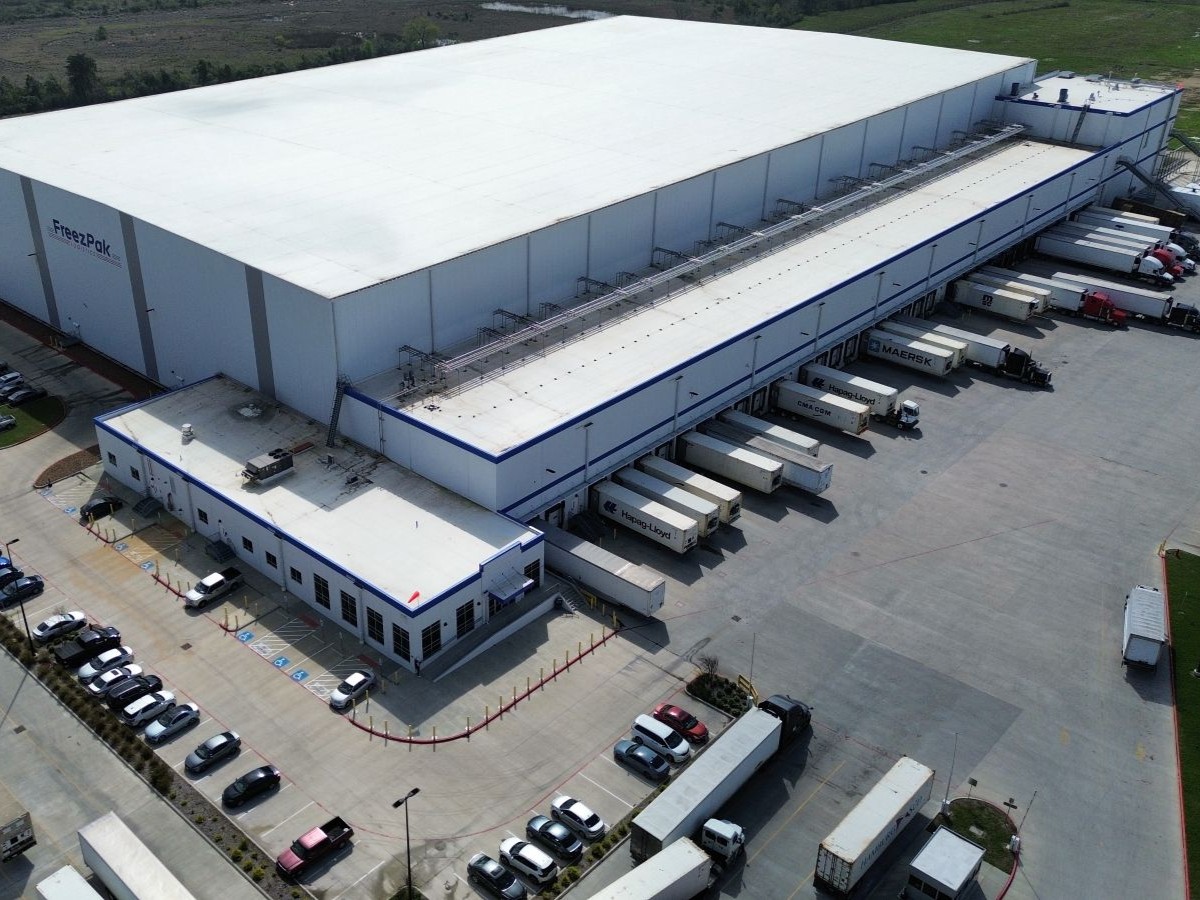
But not all of the market is suffering from soft demand. Modern (newer) cold storage space captured the lion’s share of absorption in 2025, report data shows, while older properties (legacy) took a beating in terms of tenants moving out, looking for newer space.
“What’s so interesting is just how sharp the performance divide between modern versus legacy was: record demand for new space, record move-outs from legacy space,” Newmark Head of Midwest Research Amy Binstein told Commercial Property Executive.
READ ALSO: Why the Climate’s Right for Cold Storage
Net absorption split sharply by vintage, Binstein noted. Modern facilities had a record year of positive absorption in 2025, while legacy buildings saw record net move-outs, with net absorption at about negative 3.9 million square feet versus positive 8.2 million square feet for modern products.

Vacancy has risen across both legacy and modern cold storage since 2022, Newmark reports. However, modern vacancy is largely supply-driven, as new deliveries have pushed vacancy to 6.1 percent by the end of last year. By contrast, the increase in legacy vacancy—coming in at 7.6 percent in December—reflects sustained negative net absorption.
“Roughly 73 percent of all vacant cold storage square footage now sits in older facilities, highlighting how quickly older, less efficient boxes are becoming functionally obsolete,” Binstein said.
Overall cold storage growth moderates
The current bifurcation comes on the heels of enormous interest in the niche, though cold storage does remain a niche. Even including the most recent development, the national cold storage inventory stood at 342 million square feet or about 7.5 billion cubic feet at the end of 2025, the report shows. That puts the national cold storage market at only about 1.9 percent of the overall industrial base.
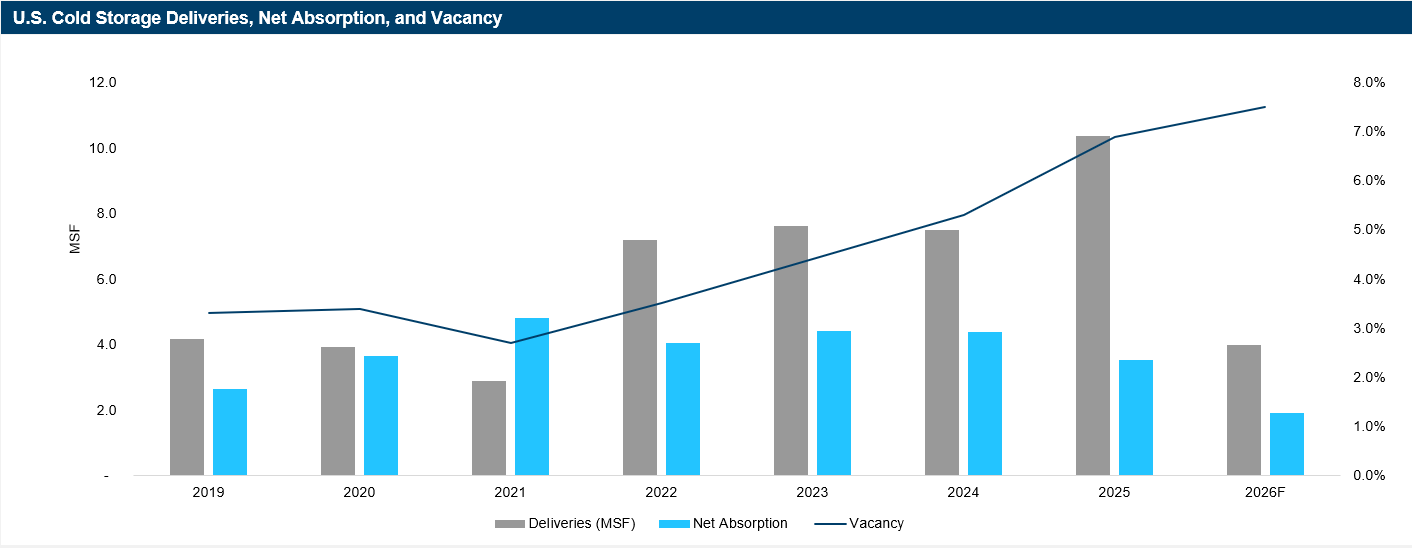
Even so, the sector excited a lot of interest immediately after the pandemic, when the demand for chilled food expanded. Americans cooked at home more frequently, received more meal kit deliveries and used online food delivery services more often.
Between 2021 and 2023, formation of new cold storage firms grew prodigiously, averaging 6.3 percent compounded annual growth rate, compared to 3.3 percent CAGR between 2017 and 2019, according to Newmark data.
Development of cold storage space grew as a result, spurred by an attractive demand and a low-interest debt environment, the report notes. By 2025, however, as the debt environment turned less attractive, the number of cold storage firms contracted modestly. Thus the development pipeline, currently at 5.9 million square feet, or 128 million cubic feet, is expected to continue moderating in turn.
Another factor affecting demand, and thus development prospects in the near future, is rents. Average cold storage taking rents have grown more than 100 percent since 2020, Newmark reports. Higher rents are driving some occupiers to explore building their own facilities, and possibly retaining ownership.
Regional variations in cold storage
Texas is home to one of the fastest-growing cold storage inventories in the country, expanding 35 percent over the last decade, far outstripping the national average, Newmark reports. That growth reflects a number of factors, such as the state’s strong population gains, but also the fact that Texas is a leader in food production.
Transit is also a demand driver, with robust refrigerated traffic at Texas’ maritime and inland ports. The border city of Laredo, the report notes, exemplifies this dynamic.
Laredo is the fourth-largest cold storage employment hub in Texas, having witnessed a 92 percent employment growth year-over-year in 2025. The rising cross-border trade in goods like avocados helped drive an expansion of local inventory, most recently with the delivery of Kotick Cold’s 61,218-square-foot facility in the fourth quarter of last year.
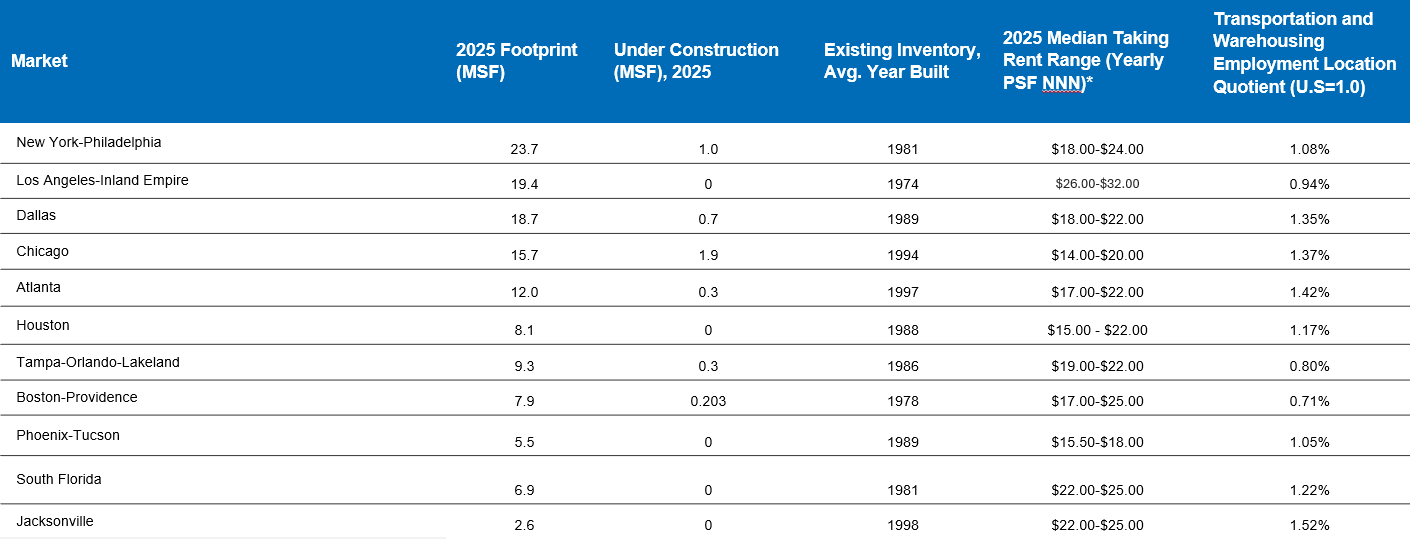
By metro, Dallas-Fort Worth is the nation’s third largest cold storage market, with 18.7 million square feet at the end of 2025, following only New York-Philadelphia and Los Angeles-the Inland Empire, but ahead of Chicago, Atlanta and another Texas market, Houston.
The market with the newest space on average is Jacksonville, Fla., where existing inventory’s average year built is 1998. The market with the oldest space on average is Los Angeles-the Inland Empire, with an average year built of 1974.



You must be logged in to post a comment.