
An Architect’s View of Dallas’ Adaptive-Reuse Momentum
Merriman Anderson Architects' Jennifer Picquet-Reyes shares insights from more than 20 conversion projects reshaping the city’s core.
Adaptive reuse is gaining powerful momentum nationwide as cities search for ways to reposition aging commercial assets. The U.S. delivered 12,700 converted apartments in 2024, according to RentCafe, with Dallas ranking fourth in the nation for units created through redevelopment. And the trend is accelerating: More than 70,000 additional conversions are projected by year-end.
Few firms have shaped this movement in the Big D more than Merriman Anderson Architects. With more than 20 downtown office conversions completed, the firm has helped transform long-vacant towers into active mixed-use destinations, demonstrating how strategic redevelopment can restore commercial value while supporting the city center’s broader evolution into a live-work-play district.
To explore what makes adaptive reuse viable in Dallas’ core urban area—and where the next opportunities lie—Commercial Property Executive spoke with Jennifer Picquet-Reyes, principal & director of hospitality, historic and adaptive reuse at MAA. She shared insights into the building types best suited for conversion and why mixed-use activation is essential for long-term performance.
How has downtown Dallas changed in recent years and how have your projects contributed to that transformation?
Picquet-Reyes: Downtown Dallas was, like many other city centers in the country, underutilized and falling into disrepair. It was around this time that Merriman Anderson chose to move in the area and bet big on adaptive reuse.
When we opened our downtown office in 2003, there were roughly 40 functionally vacant buildings and a few were tagged for demolition. Most of these buildings have been converted to new uses. These conversion projects have contributed to making downtown Dallas a mixed-use area. With a new convention center in the works, the city center will likely have an even greater residential and entertainment concentration.
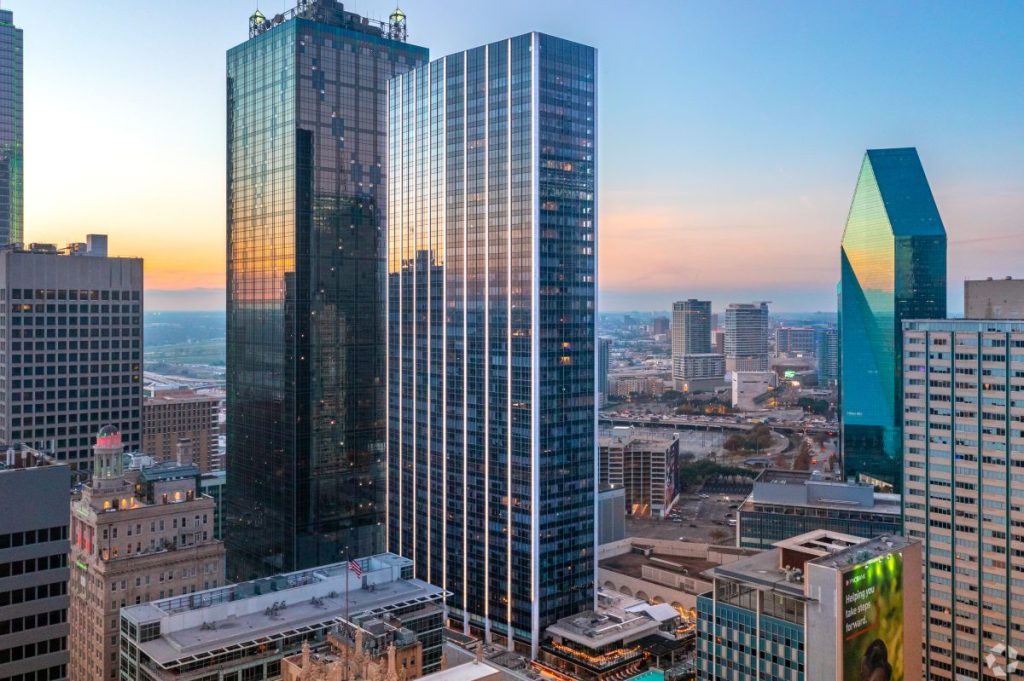
Formerly known as the First National Bank Tower, The National was one of the largest adaptive-reuse transformations in Texas history. Completed in 1965, the tower was at the time the tallest building west of the Mississippi River. All images courtesy of Merriman Anderson Architects 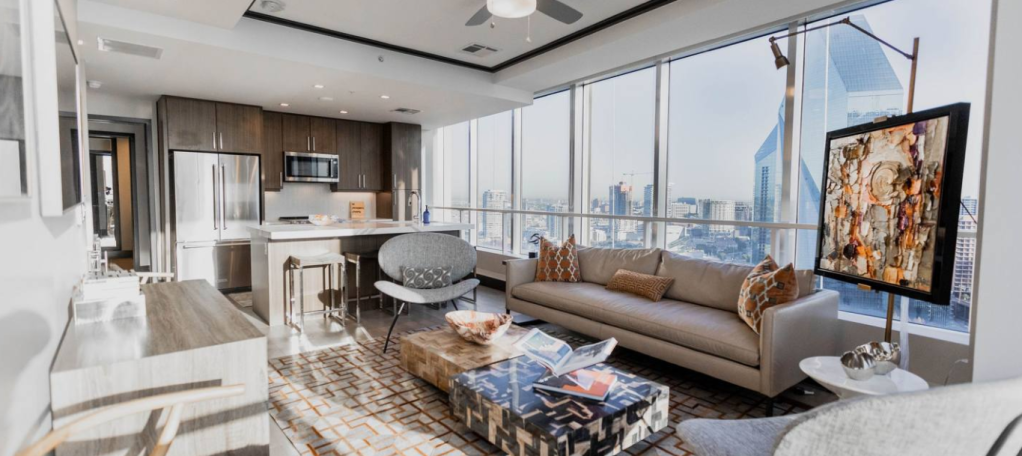
Reopened in 2020, The National includes 324 luxury apartments and a hotel, alongside office and retail spaces. 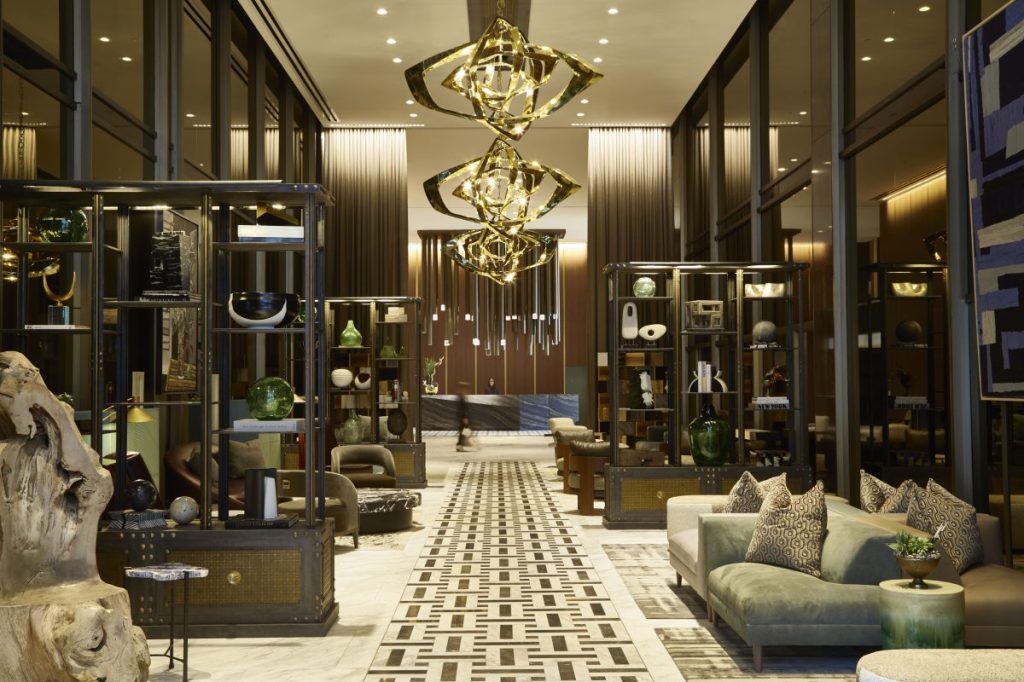
The Thompson Dallas by Hyatt hotel within The National has a mid-century modern style design. 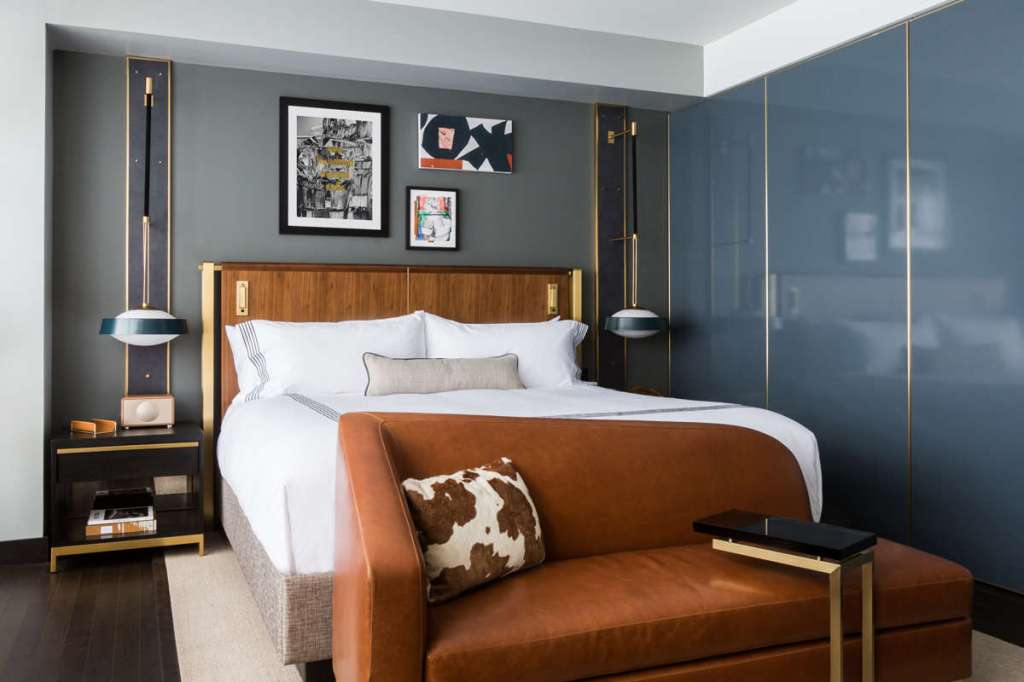
The luxury hotel comprises 219 rooms and suites featuring tailor-made furniture and integrated technology. 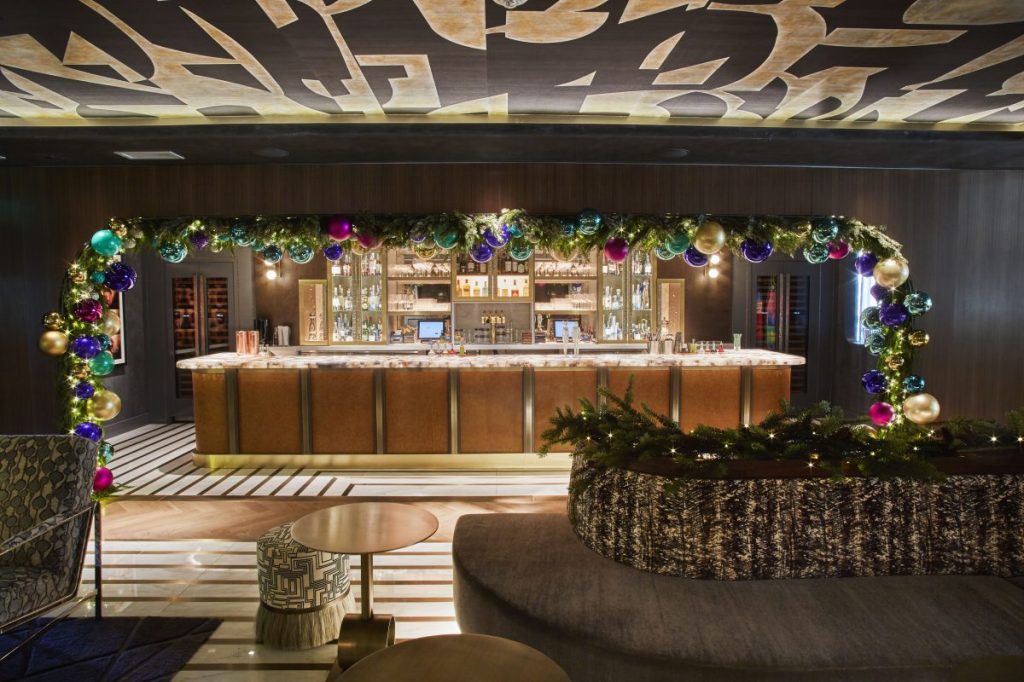
Catbird is a rooftop cocktail lounge and restaurant located on the ninth floor of The National. 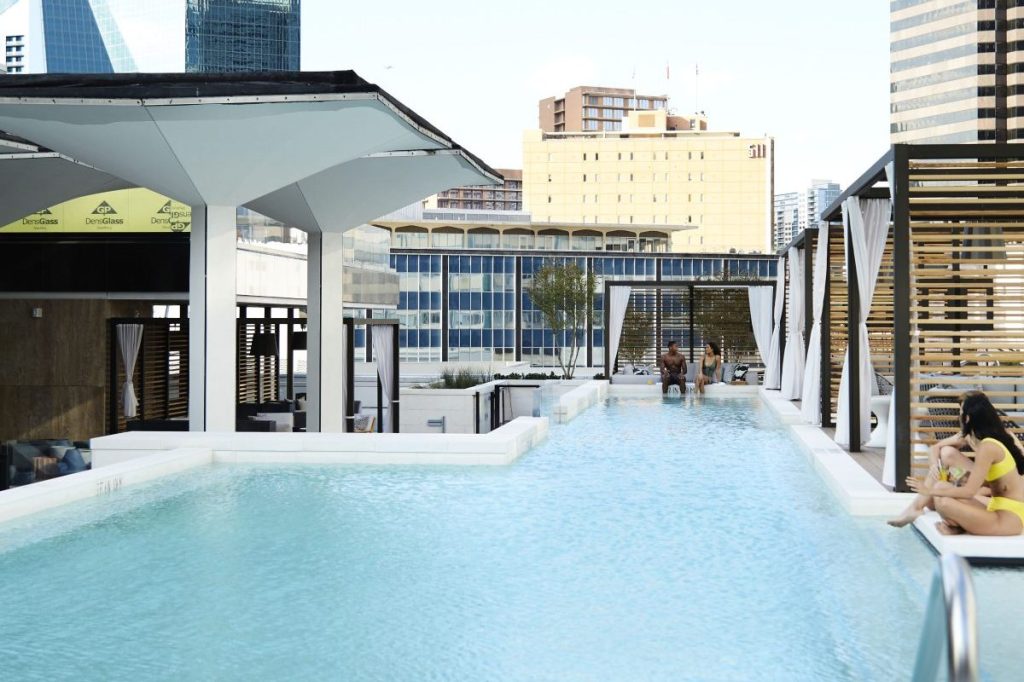
The same floor also houses a renovated pool.
The revitalization story is about adding residential units and hotel guestrooms, making the inner city a place where families live, work and play. Merriman Anderson has converted more than 20 buildings in and around downtown Dallas, including some of the largest mixed-use properties in the area, such as The Statler Hilton and The National.
Though some companies may move into the suburbs, many businesses are moving into new buildings in neighborhoods immediately outside downtown, which should be good for the economics of both downtown and its adjacent communities.
Drawing from your vast experience, which types of buildings tend to be easiest to convert?
Picquet-Reyes: The easiest buildings to convert have a smaller floorplate, many windows and a steel or flat plate concrete structure. Larger floorplates can be more challenging, but we have used our creativity to accomplish the task. For example, at the Mayflower building we cut an atrium into the larger floorplate, while at the Mosaic we added solariums to the units to bring light further into the space.
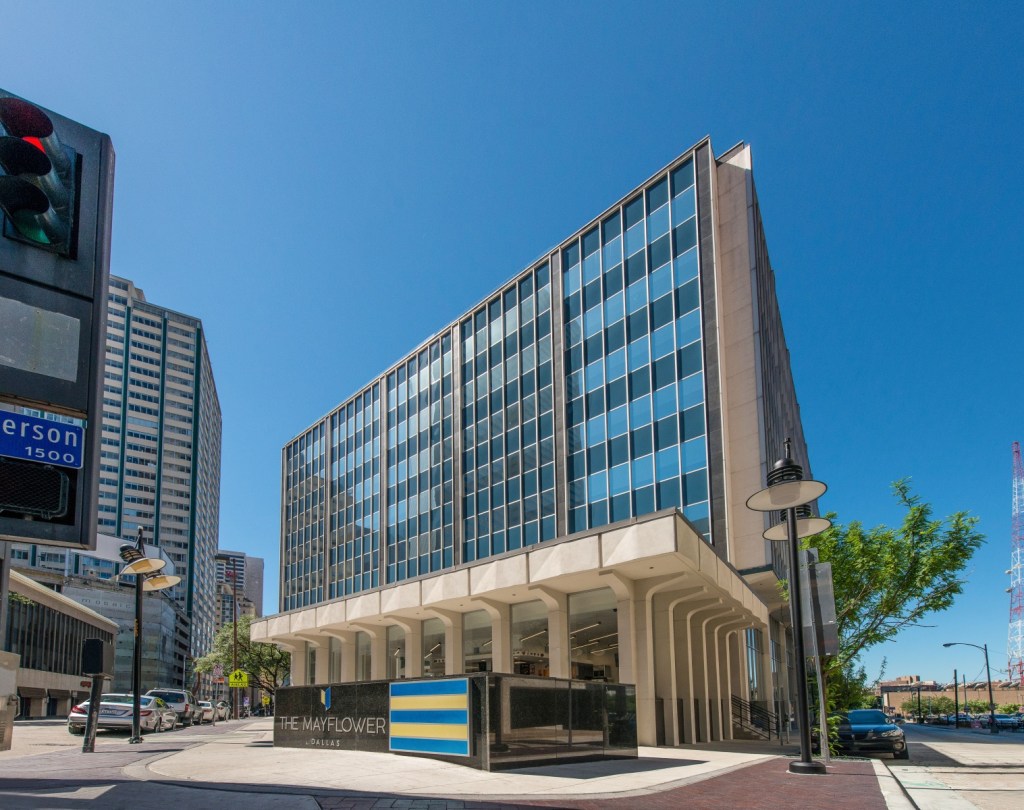
Once an aging office building, The Mayflower now stands as a contemporary multifamily community in the heart of downtown Dallas. All images courtesy of Merriman Anderson Architects 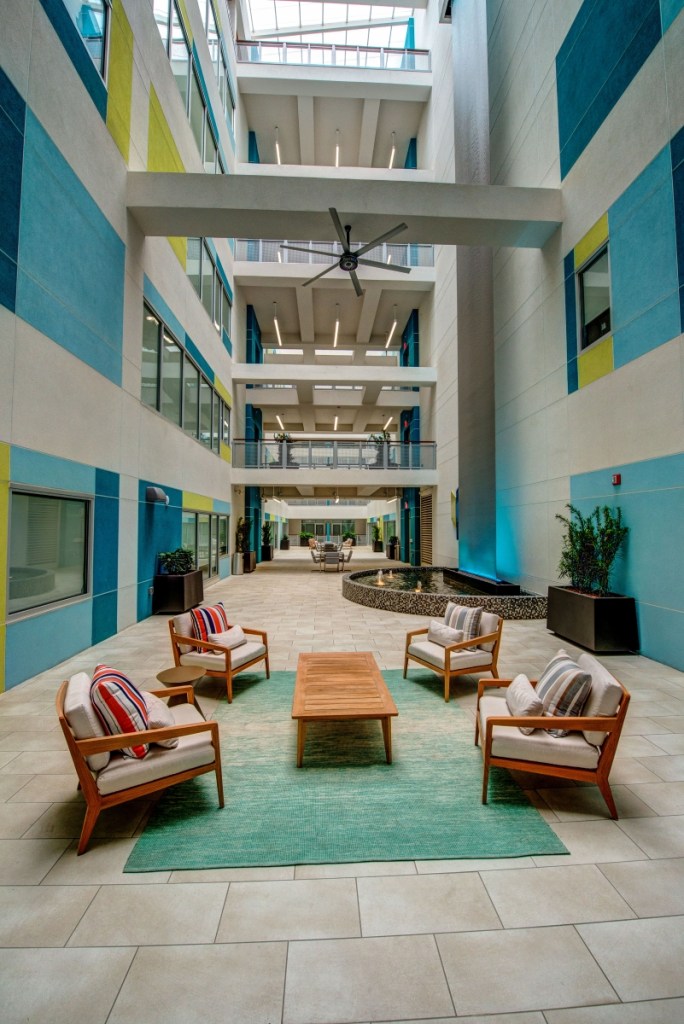
The Mayflower’s multi-story atrium features colorful panels, skylights and a central seating area designed to bring natural light deep into the building. 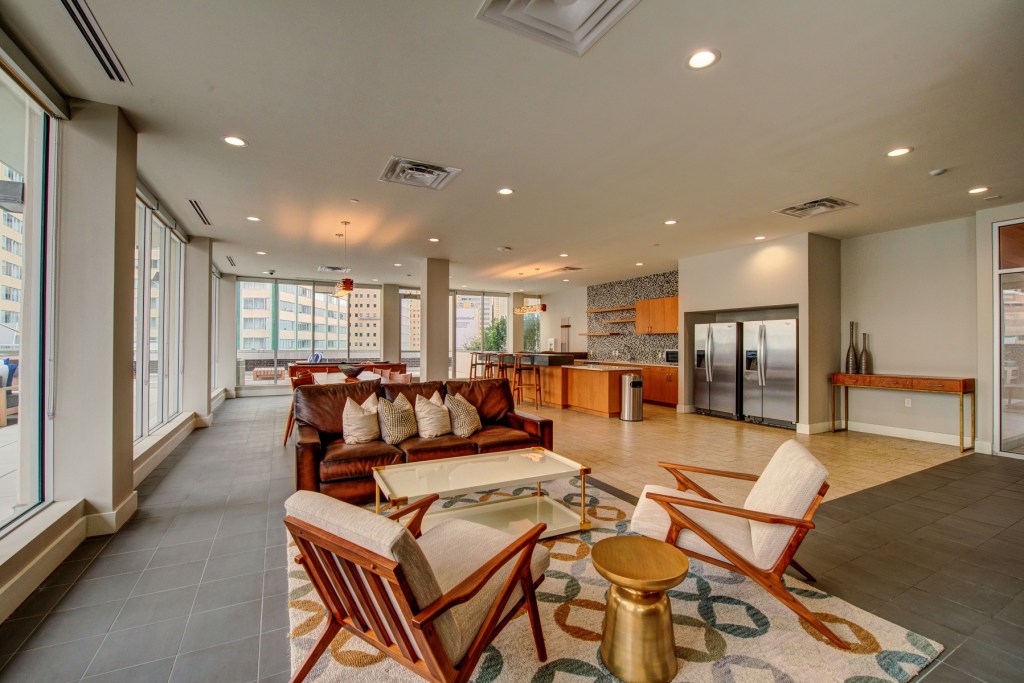
The Mayflower now features updated amenity spaces like a lounge and communal kitchen. 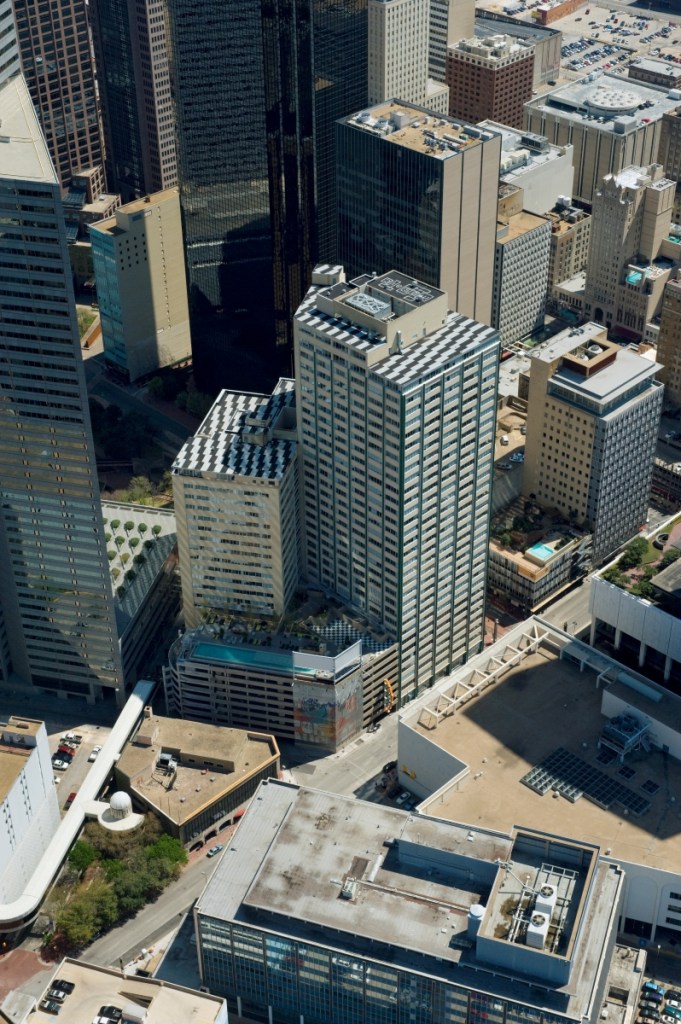
Mosaic Dallas represents the redevelopment of the former Fidelity Union Life Insurance office complex originally constructed between 1952 and 1962. 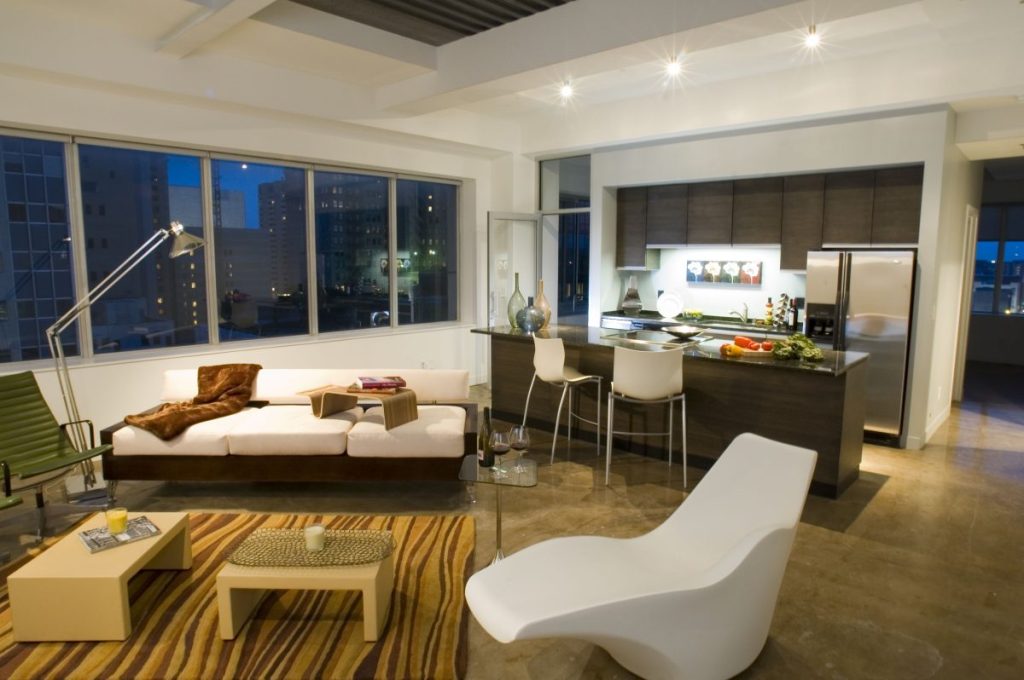
Mosaic now comprises 440 luxury apartments ranging from studios to three-bedroom units. 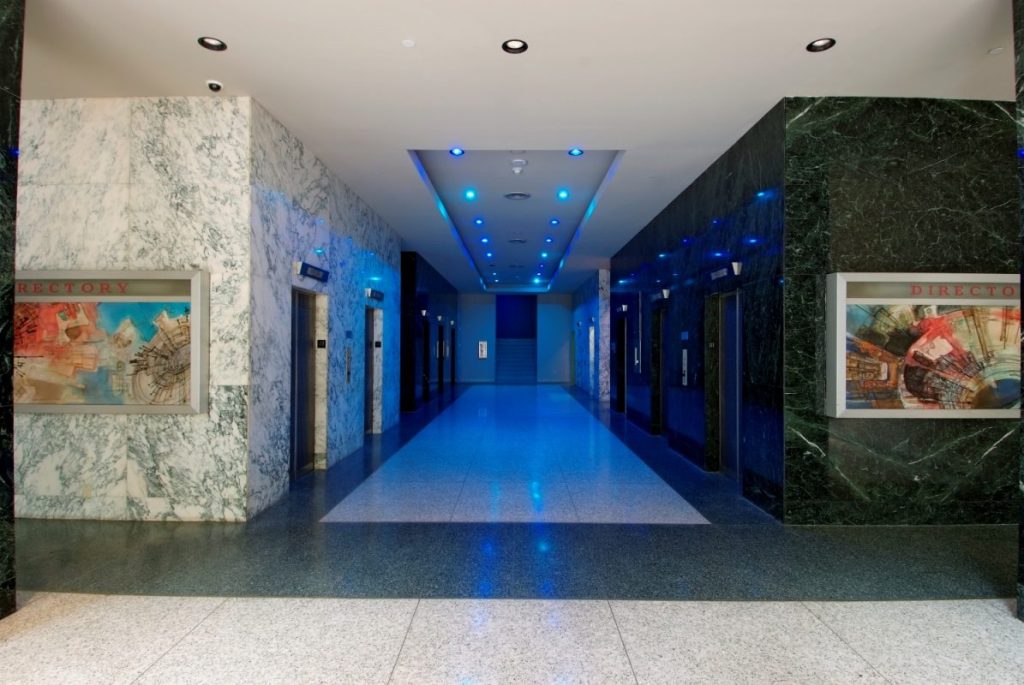
The Mosaic’s renovated lobby preserves signature mid-century marble and terrazzo elements from the property’s office era.
How has Dallas’ development environment influenced the conversion typology?
Picquet-Reyes: The City of Dallas Economic Development Department created tax increment financing districts that have encouraged development in downtown specifically and in underdeveloped areas throughout the city.
In the central business district, multifamily and hospitality are allowed by right and do not require a zoning change. They are working to reduce parking requirements for multifamily, and the Texas Senate Bill just passed allows that existing buildings will not be required to add parking even when they are changing use.
Have you noticed any changes in how developers, investors or lenders view adaptive-reuse opportunities in Dallas?
Picquet-Reyes: More developers are coming in from out of state to build new buildings and convert existing ones. Previously, most adaptive reuse in Dallas was carried out by local developers. Investors seem more excited about adaptive reuse than before, as the current office market stagnates.
Many investors, developers and lenders are exploring these projects without historic tax credits. Typically, we have seen developers leverage state and federal historic tax credits to make projects more financially viable, but that is shifting.
READ ALSO: Top Commercial Real Estate Developers
Which recent adaptive-reuse projects have been the most challenging for your team? What made them particularly complex?
Picquet-Reyes: We love challenges, and that is why we love adaptive-reuse projects. Most of the buildings that sit empty in downtown cores no longer function for the demands of the office market. The majority of vacant buildings have either aged out or have inefficient floorplates. Often, they have code deficiencies or asbestos-containing materials, as well as other significant financial challenges.
Because so many of our adaptive-reuse projects are mixed-use, one of the biggest challenges is creating separate entrances and lobbies for residents and hotel guests, as well as addressing the functional and security challenges posed by vertical transportation. With projects like The National, which has two primary entry points and multiple elevator banks, separating uses was relatively easy. However, at LTV Tower, which has a relatively small lobby and a single bank of elevators, wayfinding and security were greater challenges.
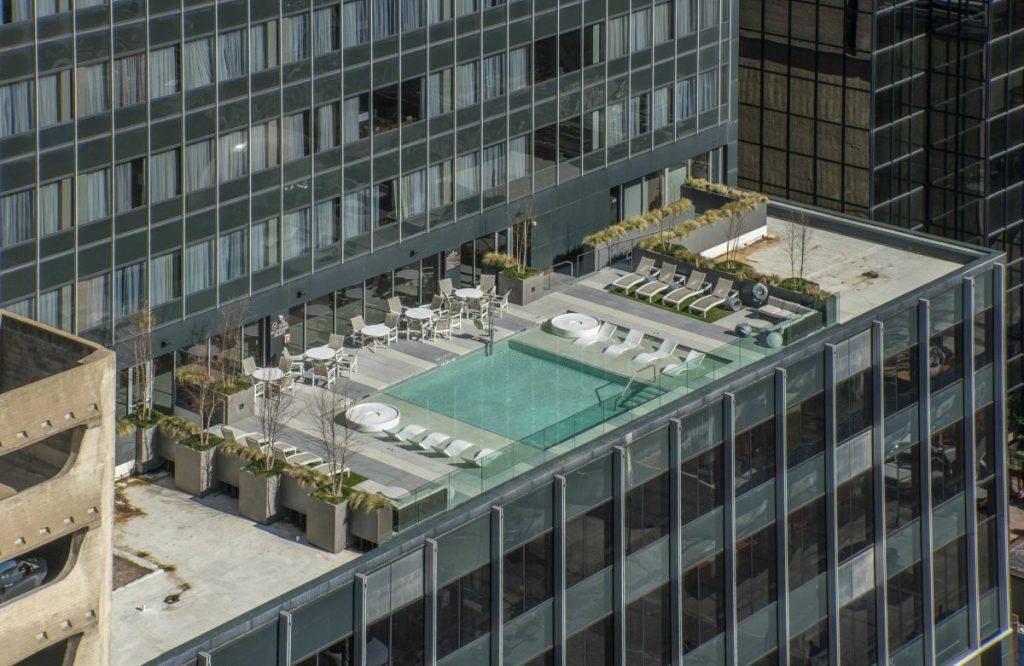
The LTV Tower’s adaptive-reuse transformation introduced a rooftop pool and amenity deck, adding resort-style features to the historic downtown high-rise. All images courtesy of Merriman Anderson Architects 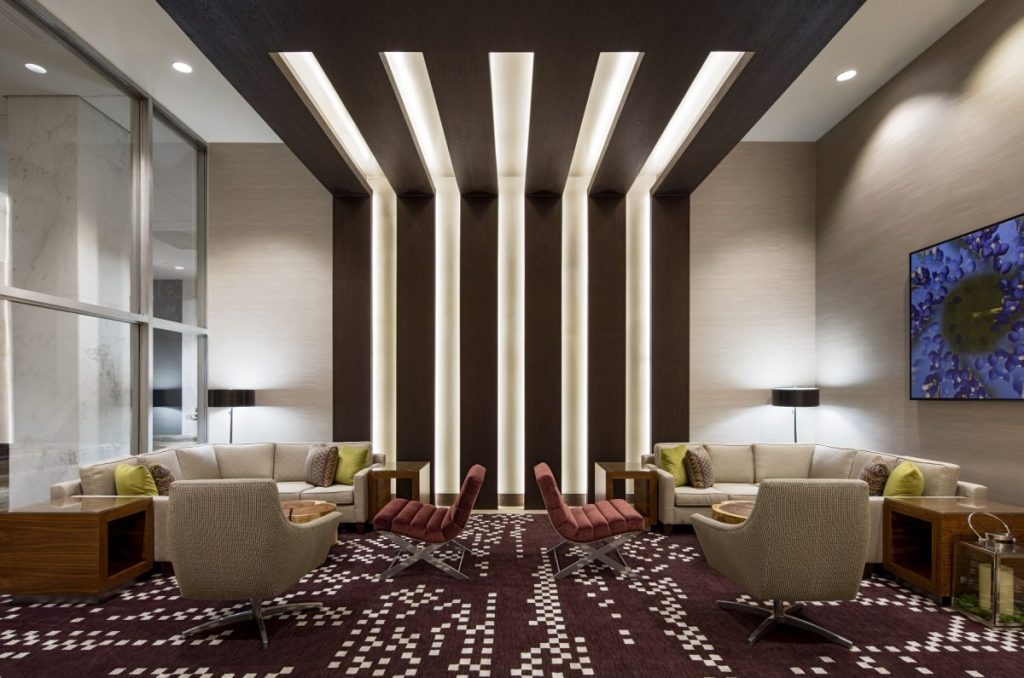
Formerly known as 1600 Pacific Tower, the building now comprises 186 luxury apartments and a 171-room hotel operated under the Hilton Garden Inn brand. 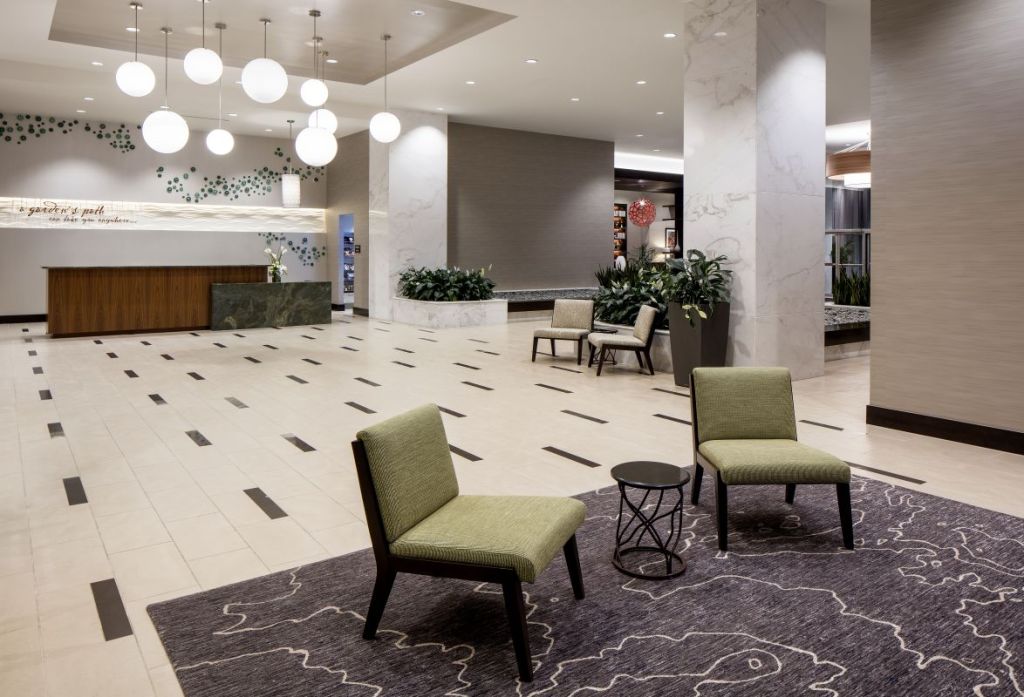
Located on the bottom half of the high-rise, the hotel features a redesigned lobby.
The biggest challenge we face regularly is the size of the floorplates, but we have created solariums and an atrium to bring in natural light. In other buildings, we have found uses that do not require natural light around the building cores, such as rentable storage units in residential buildings. Additionally, where deep units are inevitable, we have moved spaces that do not require natural light inward and even find ways to bring natural light deeper into units without compromising sound or visual privacy. The Butler Brothers Building is the best example of implementing all of these strategies into a very successful solution.
What kinds of tenants are most drawn to adaptive-reuse spaces in Dallas, and what drives that appeal?
Picquet-Reyes: People are attracted to buildings with history and a story to tell. In an age of high-tech gadgetry and convenience at our fingertips, the nostalgia that these buildings provide without compromising modern conveniences is very attractive to commercial tenants, residential tenants and hotel guests.
These buildings feature materials not always used in new construction, such as marble and other stones, decorative metals and details. These (characteristics) speak to tenants seeking a sense of place and stability.
Have you seen any measurable results, such as increased demand or neighborhood revitalization, from your Dallas projects?
Picquet-Reyes: Yes, we converted four buildings in a row on Commerce Street. They were all completely vacant and boarded up for decades. Once the first building was under construction, its neighbors became more attractive for redevelopment. They are now all vibrant parts of the streetscape and community. We have seen this throughout downtown.
What types of existing buildings in Dallas do you think hold the most potential for future reuse?
Picquet-Reyes: We like to think that any underutilized building can be renovated or converted. We have designed and converted schools, churches, office buildings and malls. However, if for no other reason than there are more offices than other types of buildings, they will continue to have the most conversions.
In the not-too-distant future, we may also see parking garages converted to other uses. In many of our new construction projects, we have examined the design considerations required to economically convert parking floors into residential, hotel or retail uses. But for now, the car is still king in Texas.
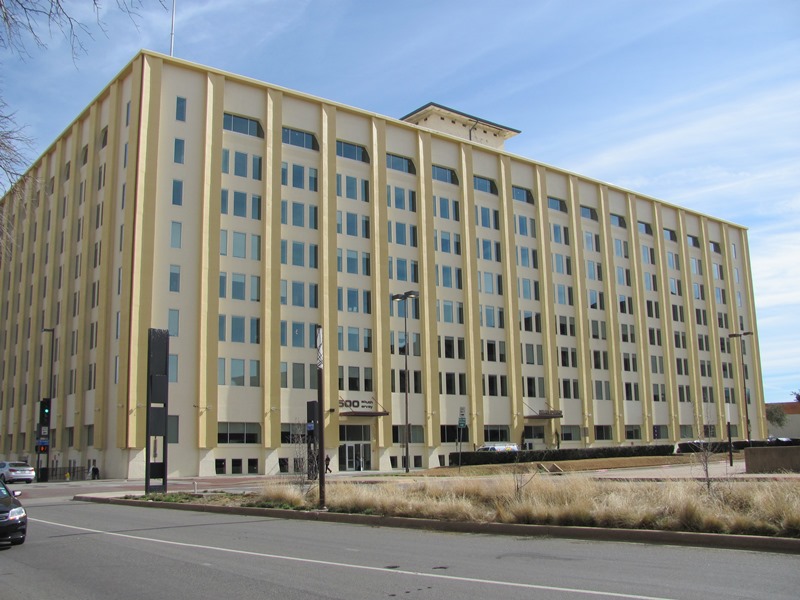
Originally constructed in 1910–1911 as a warehouse, the Butler Brothers Building had been mostly vacant between 1955 and 2016, when its redevelopment kicked off. All images courtesy of Merriman Anderson Architects 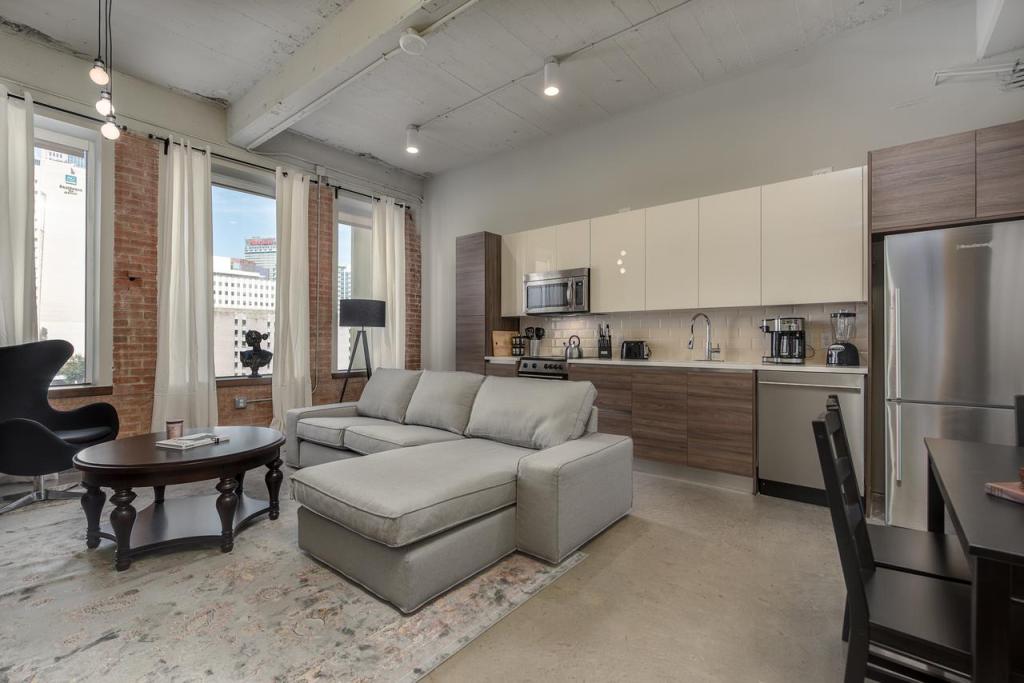
The mid-rise reopened in 2017, including more than 200 apartments and a dual-branded hotel by Marriott. 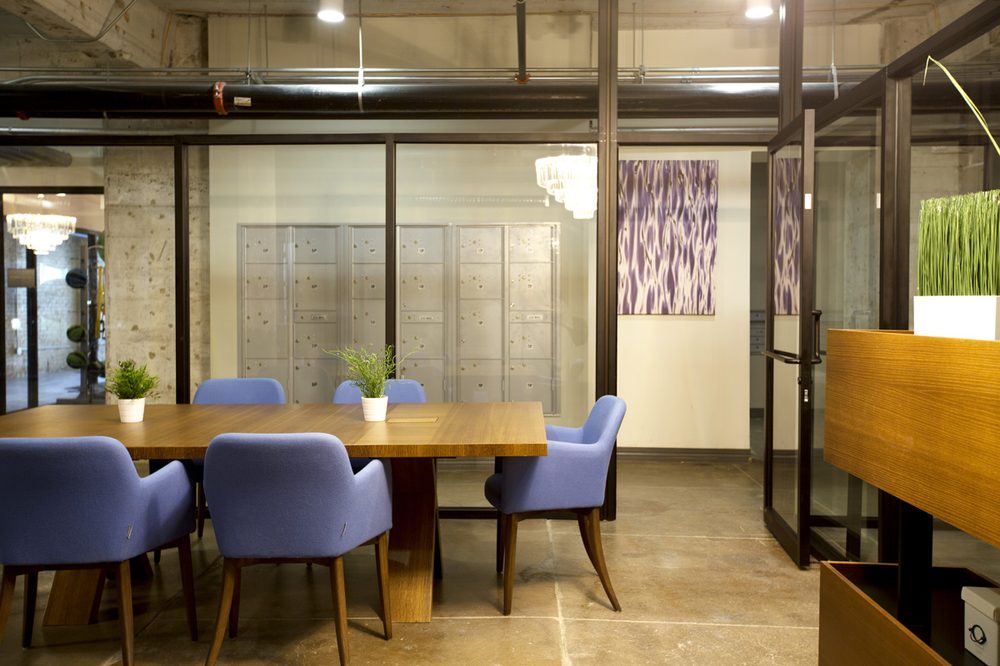
The residential component features a community office space with a conference room.
Looking ahead, what do you see as the biggest trends shaping adaptive reuse nationally, and how might they play out in the Dallas metro area?
Picquet-Reyes: Our firm has been doing adaptive-reuse work in Dallas for more than 25 years and has realized that Dallas is ahead of the curve, but many cities, especially in the South, are playing catch-up. We have also completed such projects in several other cities, including Fort Worth, Texas, Oklahoma City, Tulsa, Okla., Houston and St. Louis, Miss., and the demand for urban residential units and hotel rooms appears consistent across all of them. We believe this trend will continue.
However, as the urban cores of Dallas and other cities are reactivated, we believe we will see adaptive-reuse push out from the city center into suburban areas and surrounding cities in the DFW area. We have clients who have explored converting Class B2 or three-story office buildings with concrete tilt-wall panels as their exterior skin into apartments.
There seems to be hesitancy to be the first to do this, but once the first domino falls, it should gain momentum. The catalyst, as it has been for urban cores, could be incentives from the local jurisdiction. Although most of these suburban buildings would not be eligible for historic tax credits, cities are beginning to incentivize developers to convert empty buildings before they fall into disrepair.
You must be logged in to post a comment.