

Fed Holds Rates, but CRE Focuses on What’s Next
The industry is seeking greater clarity for the rest of the year.
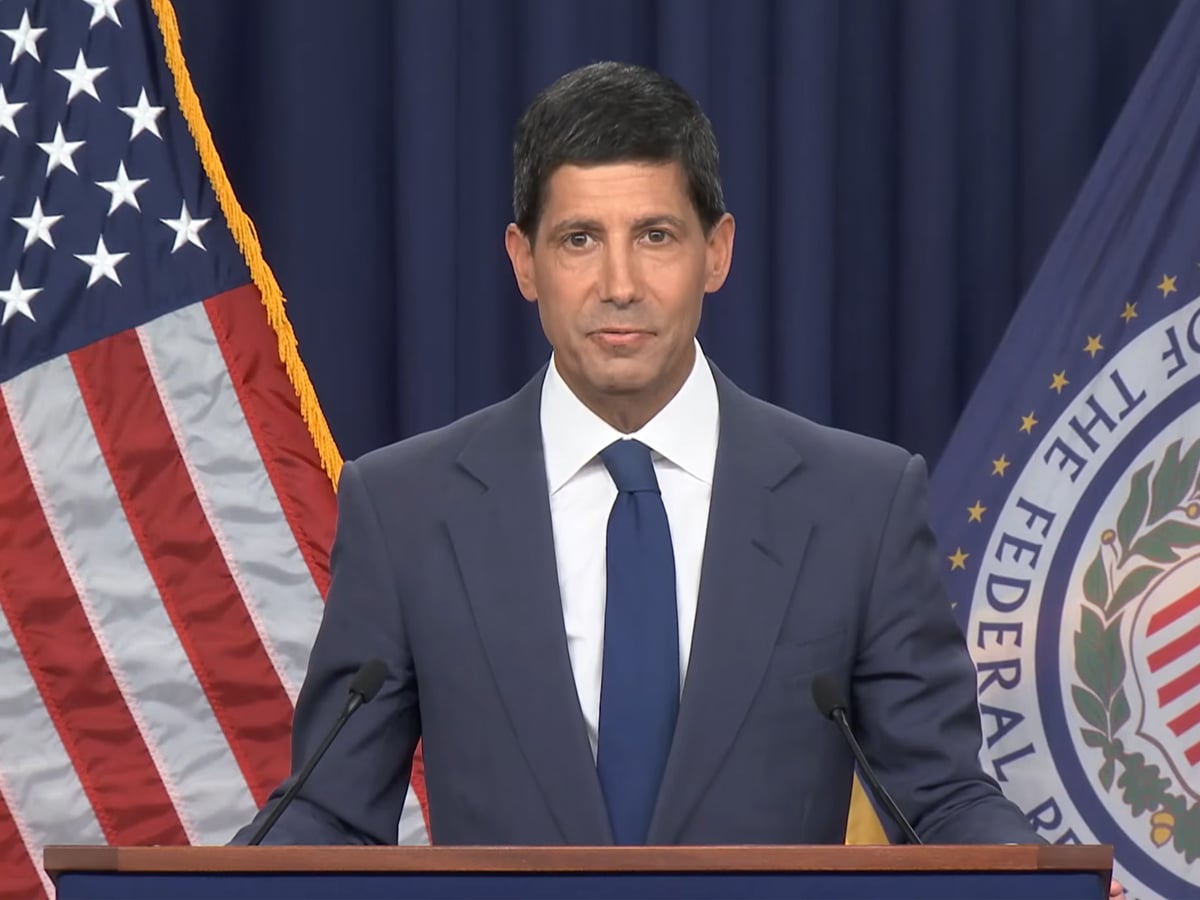
The Federal Open Market committee voted to maintain the current interest rate range of 3.5 to 3.75 at Kevin Warsh’s second meeting as Fed chairman.
While uncertainty has continued to shape commercial real estate amid elevated borrowing costs and geopolitical tensions, the market has largely adapted to operating in a higher-rate environment.
The decision came in a 9-3 vote, with committee members Beth Hammack, Neel Kashkari and Lorie Logan voting in favor of a 25-basis-point increase.
READ ALSO: Commercial and Multifamily Mortgage Debt Outstanding Crossed $5T in Q1
Ahead of Wednesday’s meeting, markets were less certain about the outcome than in recent months. CME Group’s FedWatch tool on Tuesday assigned a 68.8 percent probability to the Fed holding rates steady and a 31.5 percent probability of a 25-basis-point increase.
During his press conference, Warsh described the economy as “showing impressive resilience” despite recent shocks. He also defended the Fed’s reduced use of forward guidance, saying the committee’s statement was intentionally limited to the facts rather than forecasts and arguing that “uncertainty does not mean a lack of clarity.”
How Warsh communicates remains the focus
Although a hold was the consensus expectation, commercial real estate professionals said the industry is looking for greater clarity on monetary policy to help investors, lenders and borrowers move forward in a higher-rate environment.
At Warsh’s first meeting in June, he announced the Fed would move away from providing forward guidance and said he would not submit his own economic projections, instead emphasizing that future policy decisions would depend on incoming economic data.
“The market has already shown it can transact in a higher-rate environment when investors have conviction about where policy is headed,” Ryan Severino, chief economist & head of research at BGO, told Commercial Property Executive. “What’s been missing is not the willingness to deploy capital, or cheap capital per se, but confidence in the trajectory—of inflation, interest rates, economic growth.”
Warsh also said market participants are “learning to play the ball, not the referee,” suggesting investors should focus on incoming economic data rather than relying on forecasting and signals from policy makers.
Ed Del Beccaro, executive vice president & San Francisco Bay Area regional manager at TRI Commercial/CORFAC International, commented that Warsh’s reduced emphasis on forward guidance could prompt some employers and developers to delay investment decisions until they have a clearer picture of the Fed’s policy direction.
Treasury yields shape borrowing costs
While the Fed sets short-term interest rates, commercial real estate borrowing costs are also heavily influenced by longer-term Treasury yields and credit spreads. As a result, even when the Fed leaves the federal funds rate unchanged, financing conditions can remain elevated.
Warsh also noted that nominal and real Treasury yields had risen materially since the June meeting, describing the increase across the Treasury curve as among the most significant between meetings in the past two decades.
“For commercial real estate, the Fed funds rate is only part of the story,” said Bill Dallas, chairman of Dallas Capital. “The 10-year Treasury and credit spreads are ultimately what drive a lot of real-world borrowing costs. Until longer-term yields come down and stay down, the cost of capital remains a significant headwind for refinancing, valuations and transaction activity.”
With financing costs remaining elevated, borrowers are switching up their strategies to execute deals, rather than waiting for lower costs.
Ari Rastegar, founder & CEO of Rastegar Property Co., noted that most commercial real estate permanent loans are priced to Treasury yields or SOFR plus a credit spread, meaning borrowing costs can remain elevated even when the Fed leaves short-term rates unchanged.
He added that borrowers have responded with more conservative underwriting, lower leverage and greater use of loan extensions, mezzanine financing and preferred equity.
“Activity is not necessarily frozen,” Rastegar noted, “but it is down significantly.”




You must be logged in to post a comment.