
Why Office Landlords, Tenants Align Interests
A fundamental shift is replacing the transactional approach that has long defined the leasing market.
This article first appeared in the CPE Sneak Peek Newsletter. Subscribe now for early access to exclusive content, in-depth analysis and key trends!
Office landlords and tenants are no longer simply negotiating rent, square footage and lease terms. Increasingly, they’re working together to solve a shared problem: How to make the office a place employees want to go.
That has pushed the landlord-tenant relationship beyond the traditional transaction-driven model and closer to a customer-centric partnership. Office owners are now staying involved in how the space is experienced, activated and adapted over time, a shift that mirrors a service-oriented approach already common in other sectors.
“Every other place-based business in the world, from restaurants to hotels to resorts and casinos, operates with the end user as the customer,” Anna Squires Levine, global head of experience services, building operations and experience for CBRE, told Commercial Property Executive.
For those businesses, the satisfaction of the end user, whether it’s a hotel guest or a skier at a resort, is essential to the success of that business.
“For the last 100 years, commercial real estate has taken a different approach, which is through a financial asset management lens where you sell to the decisionmaker of a tenant company, sign the lease and you’re ready to go,” she added.
That model is now being tested as companies continue to reassess the role of the office and landlords look for ways to preserve demand in a more selective leasing environment. The current moment is an “inflection point in which office landlords are seen as real estate service providers rather than real estate space providers,” according to Peter Miscovich, executive managing director & global future of work leader for JLL.
READ ALSO: Working Out Distressed Office—One Square Foot at a Time
While many landlords have talked about the tenant experience for years, the pandemic accelerated the need to make that concept more operational. Tenants are using less space, scrutinizing costs and asking landlords to help fill some of the gaps between what they can provide inside their own suites and what employees expect from a modern workplace.
“There are synergies between landlords and tenants now because of the shift in space needs,” said Deb Kolar, chief asset officer & general manager for Accesso. “There’s downward pressure on companies to cut costs, and they don’t want to pay for meeting rooms that go mostly unused. At the same time, tenants want to know what they can leverage to draw employees back at no charge.”
For landlords, the stakes are clear: They need to attract new tenants, improve retention and keep buildings active, particularly in a higher-for-longer interest rate environment and as some companies downsize. Meanwhile, tenants need to give their employees stronger reasons to spend more time at the office.
“Most people have moved past return-to-office mandates and want their employees to want to be in the office at least some of the time,” Levine said. “Landlords need to figure out how to create that vibrancy in their buildings so that their tenants’ employees will want to be there.”
For more than a decade, employee expectations for their workplace experience have constantly increased, especially as major companies began investing in highly amenitized campuses. That has changed the competitive set for office landlords. It’s no longer enough for a building to have the right location or rent. It also needs to help the tenants support their employee retention and company culture.
“To attract new talent, companies need to offer a more elevated workplace experience,” Miscovich said. “In turn, landlords realize they need to enhance workspaces to attract tenants.”
Collaboration as competitive strategy
The flight-to-quality trend has made that shift more visible. Since the pandemic, nearly every company has considered upgrading their office space as a way to attract talent and encourage more in-person work, according to Kirill Azovtsev, vice chairman of Savills. In New York City, for example, newly constructed or renovated Class A buildings with upscale amenities have been able to push rents as much as $400 per square foot in some cases.
“These buildings not only have new lobbies and new everything but they’ve added hotel-like concierge services and ‘tenant advisory’ staff for a frictionless experience for tenants,” Azovtsev said. These upgrades reflect evolving office building trends focused on hospitality-driven amenities and workplace experiences.
But the new landlord-tenant collaboration model is not limited to trophy assets. In some ways, it may be even more important for owners of Class B and C office buildings as closer engagement with tenants can become a practical way to defend occupancy and differentiate older buildings.
“Although it’s been challenging for that segment, the dramatic decline in new construction activity should generate some trickle-down activity in which owners of existing buildings see more opportunities as the top end of the market tightens up,” said Jeff Eckert, president of agency leasing at JLL leasing advisory.
READ ALSO: Top Commercial Property Management Companies of 2026
To capture that opportunity, owners of older buildings may need to compete less on amenity checklists and more on responsiveness. That can mean working with tenants on space needs, rent structures or shared services. And in some cases, that collaboration may even begin before the lease is signed.
“For a recent headquarters search, we brought the client’s HR and workplace engagement leaders into discussions with the landlord to explain how the office would be used to support employee recruitment, retention, collaboration and company culture,” Azovtsev said. “Instead of focusing only on rent and concessions, the conversation shifted toward creating an environment that would encourage employees to come into the office.”
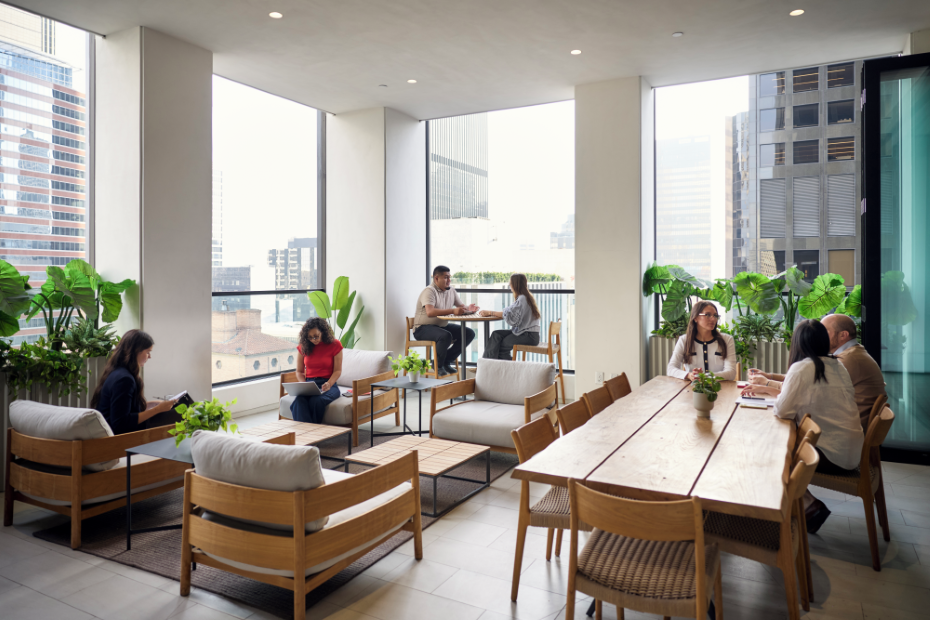
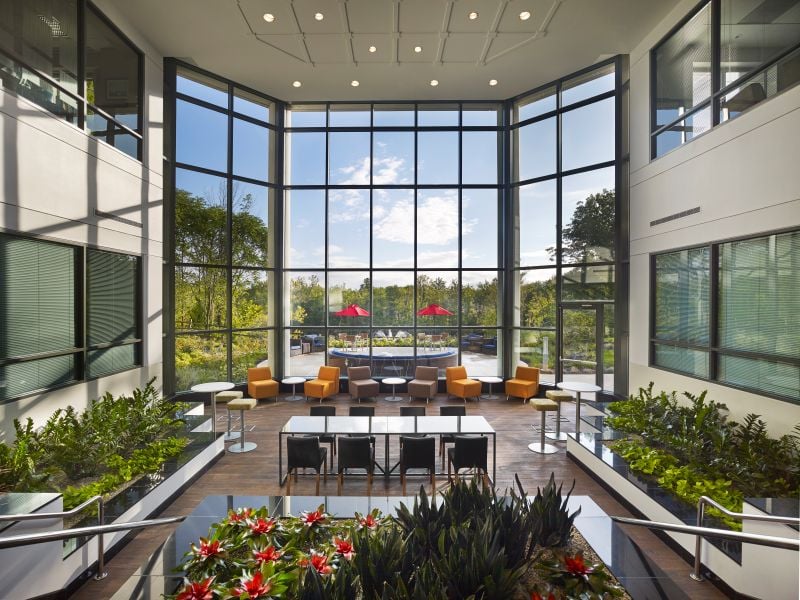
That discussion led to a broader review of wellness spaces, hospitality-style common areas, outdoor terraces, food and beverage offerings, flexible meeting spaces and programming tied to the employee experience. It also gave the landlord a clearer understanding of the tenant’s long-term objectives, allowing for a more tailored solution than a traditional lease negotiation.
Office space as productivity tool
While landlords embrace a customer-centric, service-oriented hospitality model, tenants continue to rethink the office’s role. Rather than viewing it solely as a cost center, they are asking whether their space can serve as a productivity tool.
“There’s an evolution happening, with most companies needing to balance that tension between financial pressures and productivity,” Levine said. “They know that to produce maximum profit they need high-performing teams. Research shows that the most engaged employees produce more profit for companies.”
Compared to a decade ago, Levine noted, more companies are looking to balance cost discipline with employee engagement. That balance is shaping what tenants ask of their landlords.
“One client of ours offers car service support for eldercare appointments so employees don’t have to leave work to take their parents places,” Miscovich said. “That sounds small, but it matters for the quality of life and the quality of the workforce experience for tenants and their employees.”
The most sophisticated landlords, he said, see this as a differentiator. Still, this may not be enough. Tenants increasingly want landlords that are willing to adjust to how employees actually use the building.
“Tenants want to know that a landlord has a good reputation and a great track record for interacting with tenants and being willing to listen,” Azovtsev said. “Amenities themselves are great to have, but not all employees will use them.”
That responsiveness can be as basic as addressing temperature complaints quickly or making sure the building provides reliable daily conveniences. In suburban offices, for example, food access can be especially important because employers don’t want their employees to drive offsite, which has a negative impact on productivity.
“The food truck industry has been a boon for this because we coordinate with them to come to our office parks where there are enough tenants to make this beneficial,” Kolar said. “We sometimes subsidize the food trucks to keep them coming.”
Interests align
The closer landlord-tenant relationship does not eliminate the economics of leasing. Cost remains a central question, especially as tenants look for value and landlords weigh how much service they can provide without eroding returns.
In some buildings, landlords cover operational costs for shared spaces as a percentage of leased space. In others, tenants pay separate fees to use shared amenities. Those structures can vary by asset, but they point toward the same broader shift: Workplace services are becoming part of the leasing conversation rather than an afterthought. This is, of course, more challenging for owners of older or less capitalized buildings, who cannot replicate the trophy-office playbook.
“The more progressive landlords focus on strategic collaborations,” Miscovich said. “It’s still a negotiation, but we try to focus on a win-win-win strategy for landlords, tenants and employees.”
That alignment is rapidly changing the definition of a successful office transaction. The test now is whether the building can help its tenants use space more effectively, support employees more meaningfully and create a workplace people want to commute to.
“Today’s most successful office transactions are increasingly driven by workplace strategy,” Azovtsev said. “The best landlords recognize that they’re not just leasing square footage—they’re helping tenants create environments where employees want to work, collaborate and build culture.”



You must be logged in to post a comment.