
Why US Real Estate Is Back in Play for Asian Investors
CenterSquare Investment Management's Rob Holuba on what Asian investors are watching and why this cycle is likely to look different.
After several uneven years for cross-border investment, Asian investors are showing renewed interest in U.S. real estate. But this cycle is unfolding differently from past waves of foreign capital. Higher hedging costs, a strong dollar and painful lessons from urban office exposure have made investors more selective. Even so, improving liquidity, repriced assets and stable fundamentals are putting U.S. real estate back into allocation discussions amid evolving commercial real estate trends.
For many investors in Tokyo, Seoul and Singapore, the U.S. remains attractive for its market depth, transparency, rule of law, long-term growth drivers and relative safe-haven appeal. At the same time, they’re looking beyond broad sector exposure and trophy assets, placing greater emphasis on differentiated strategies, niche property types and experienced U.S.-based partners, particularly as office real estate trends continue to shift.
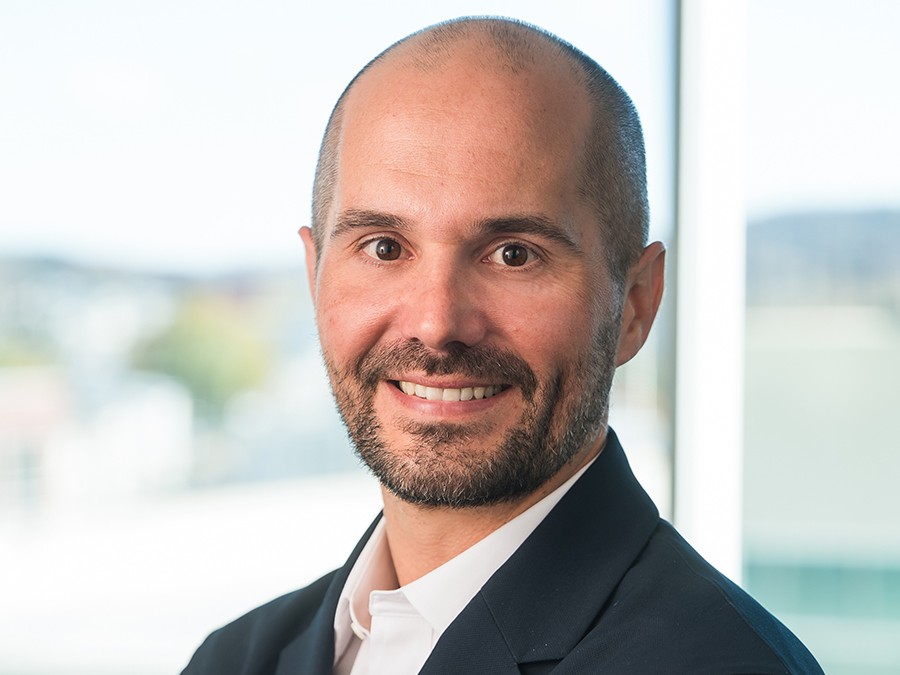
Commercial Property Executive spoke with Rob Holuba, co-chief investment officer at CenterSquare Investment Management, about where capital is moving today and what it would take for selective deployment to broaden into a more active investment cycle.
ENJOYING THIS? Listen to CPE‘s Investment Matters podcast on global capital flows!
In your recent meetings with Asian investors, what stood out most about how they view U.S. private commercial real estate right now?
Holuba: U.S. private real estate is back on the menu. Peak interest rate volatility is behind us, the market is more liquid and fundamentals are generally stable and improving, which has helped improve institutional appetite in real estate as we embark upon a new real estate cycle.
Across those conversations, did investor priorities differ meaningfully by market or was there a common thread in how they viewed U.S. opportunities?
Holuba: Conversations have varied based on the institution we have been speaking with and whether they invest money on behalf of a pension/insurance company or on behalf of high-net-worth investors. The underlying investor goals are different and so you have to be flexible on the type of investment vehicle or structure. However, the common theme across all investors is that they are looking to increase their allocation to alternatives, of which private real estate is a component, and they are looking for something unique and differentiated.
What feels different about this cycle? Where is capital most active and where is it still cautious?
Holuba: There were some mistakes—direct urban office investments—made in the most recent cycles that left quite a bit of scar tissue. But everyone lives and learns, and investors are looking at U.S. commercial real estate with more caution and are increasingly focused on having a U.S.-based partner to help them execute targeted strategies.
How much of the current interest is being driven by conditions in Asian markets—such as limited supply, high pricing or fewer scalable opportunities—versus the attractiveness of U.S. CRE itself?
Holuba: It’s not so much about relative opportunity as it is about increased diversification and a greater global opportunity set from which to choose.
Do the investors you met with view the U.S. primarily as a safe-haven market, a yield opportunity, a repricing opportunity or a long-term growth market?
Holuba: I actually think it is a combination of all four aspects. We have entered the next real estate cycle and, for the most part, prices have reset and we are investing again and at more attractive entry points. We are able to generate positive leverage and higher cash-on-cash returns.
As far as liquidity and the rule of law, the U.S. remains at the top of global opportunities and is still perceived as a safe haven with some of the most compelling growth drivers in the world, regardless of whether you like or agree with its policies.
How much of the U.S. opportunity is tied to distress, and how much is tied to fundamentally sound assets that need fresh capital, refinancing solutions or a reset capital structure?
Holuba: Most opportunities in U.S. real estate are tied to fundamentally sound assets that need fresh capital. Several asset classes are still battling supply headwinds, but for the most part, U.S. real estate fundamentals are stable and improving.
How have U.S. interest rates, hedging costs and the strong dollar changed the return threshold for Asian investors considering U.S. CRE?
Holuba: This is not my area of expertise, but we are told that hedging costs are higher and, therefore, Asian investors are seeking higher returns, core-plus and value-add.
Which U.S. property sectors are drawing the strongest conviction from Asian investors, and which remain difficult to access at the right price or risk profile?
Holuba: Asian investors seem to be in education mode. Many have had past exposure to office, multifamily and industrial, but they understand other niche sectors benefit from less competition and better fundamentals than the major sectors, and so they are listening and learning about where to pick their spots in this next cycle.
Historically, Asian investors have had outsized exposure to the office sector. Given the technology disruption and utilization of space in the U.S., they are re-educating themselves on the various sectors, with a particular emphasis on niche sectors within retail, industrial and rental housing.
Are U.S. policy risks a major concern for Asian investors right now?
Holuba: I actually found that Asian investors were less concerned with U.S. policy decisions and more concerned with China’s policy decisions, and, therefore, viewed the U.S. real estate market as a safe haven for investing capital.
Given the recovery in U.S. CRE transaction volume in 2025 and stronger APAC investment activity in 2025 and early 2026, what could turn selective Asian investment in U.S. CRE into a more active cycle this year and beyond?
Holuba: Each year, transaction volume has been improving, and we believe that 2026 will be marginally better than 2025, which was marginally better than 2024. Many Asian investors are still assessing the market, but we expect more and more partnerships to be formed with U.S. real estate managers throughout 2026 and into 2027 as the next U.S. real estate cycle gets underway.

You must be logged in to post a comment.