


How Trammell Crow Co. Is Leveraging Its Strengths in a Complex Market
New CEO Adam Nims aims to lead the next supply wave.
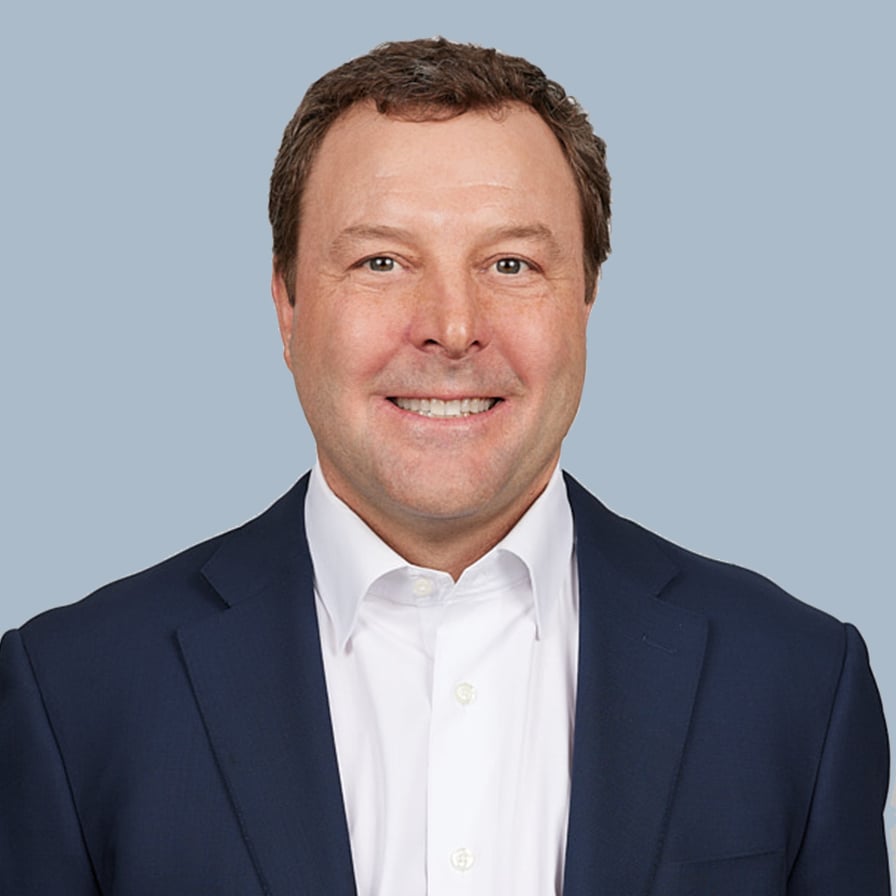
In 2006, Adam Nims joined Trammell Crow Co. as an intern. This past January, he took the helm as the 78-year-old firm’s newest CEO.
As of now, Nims isn’t planning a major strategic shift for the firm or a rejiggering of its organization. Instead, the new leader is focused on attracting and retaining top-tier talent, while also working to take better advantage of the company’s proprietary data to develop what he called a “knowledge advantage.”
“Today, we’re in a unique environment where we can be on the edge of the next supply wave,” Nims said.
In a market shaped by higher costs, tighter capital and more complex projects, Trammell Crow is being forced to rethink which projects it advances and how it delivers them. The firm is leaning on its local operating model, capital relationships and growing use of data to navigate a more demanding environment.
Local approach with a national backing
With approximately 465 employees spread across 20 domestic and six international offices, the firm is still able to compete at the local level in its markets. These regional offices have a unique edge: the backing of the world’s largest commercial real estate services firm in CBRE.
In 2006, CBRE acquired Trammell Crow in a $2.2 billion deal, turning the developer into a wholly owned subsidiary. According to Nims, Trammell Crow teams still work largely independently from the broader CBRE organization, but they can take advantage of the parent company’s broad resources, such as capital, information and data, along with back-office corporate functions like human resources and legal counsel.
“They’re competing with the other local developers,” Nims noted, but “they have this massive machine that’s behind them, and yet also the autonomy to be very entrepreneurial and act like a local developer.”
Cathy Thuringer, Trammell Crow’s president of the Western U.S., is an almost three-decade veteran of the company, having begun her career in financial analysis before moving into industrial development. She explained the company’s operating model like this: “Every business unit is essentially its own business. They’re responsible for sourcing opportunities in their markets based on what trends they see developing.”
From the past to the present
In 1948, 33-year-old Trammell Crow founded his namesake firm with the development of a Dallas warehouse. Crow was a World War II Navy veteran and the fifth of eight children whose childhoods were shaped by the Great Depression. He would go on to develop several prominent Dallas office towers, beginning with the Hartford Building in Hartford, Conn., in 1960.

Crow’s company pioneered industrial speculative development, turning the practice into a scalable, institutional business that remains a core strategy of the developer’s industrial business. The firm also established a multifamily development subsidiary, High Street Residential, in 2002.
Today, the firm is ranked first on CPE’s annual ranking of the top commercial real estate developers—a title it’s held for 12 years in a row. From 2022 to 2024, it completed more than 56 million square feet of projects, with a total value of about $18.3 billion.
But as capital becomes more selective and projects more difficult to finance, the ability to both line up funding and follow through on execution is increasingly separating viable projects from those that stall, according to Josh Posnick, Trammell Crow’s global head of capital markets.
Posnick joined the firm in January after a 12-year tenure at Mill Creek Residential Trust. His career also includes stints in leasing and development before he moved into capital markets.
“I stepped into the role at a really dynamic time in the market,” Posnick recalled, adding that Trammell Crow’s combination of a strong local execution with a global capital network is part of what attracted him to the role.
“The capital markets group is just an extension of our development teams, and I wouldn’t have come here if I didn’t think they were fundamentally best in class in their markets.”

The post-pandemic real estate landscape has caused Trammell Crow to be even choosier with the kinds of projects it undertakes. With the office market remaining more challenging, the company has zeroed in on Class A, trophy office assets that can generate demand.
The artificial intelligence boom has also provided opportunities for the development of data centers. As of the end of 2025, Trammell Crow reported controlling about 15 data center sites across more than 7,000 acres.
“It’s certainly a more complex space,” Posnick noted, “but that really does play to TCC’s strengths, specifically on the entitlements and execution side.”
Project Highlight: The Center at Needham Ranch
In January, Trammell Crow and longtime collaborator Clarion Partners won gold at the 2025 CPE Influence Awards, securing the Best Development: Industrial award for The Center at Needham Ranch, a 1.7 million-square-foot industrial park in Santa Clarita, Calif.
The 11-building development was built with sustainability and community engagement in mind, featuring more than 2 miles of public hiking and bicycle trails on the property. The developers also sustainably closed 16 orphaned oil wells on-site, removed associated pipelines and remediated the impacted soil.
Needham Ranch was a challenging undertaking from the start and required the removal of 5 million cubic yards of dirt in just the first phase of development, according to Dayton Conklin, managing director and head of industrial platform at Clarion. Conklin himself joined Clarion 19 years ago after working at Trammell Crow.
The fate of Clarion is very much tied to its work with Trammell Crow, according to Conklin. Early in Clarion’s history, he said, more than half of the company’s development deals were with Trammell Crow.
“It’s been a very, very long, successful and great relationship through multiple cycles. And it’s been a national relationship in multiple markets,” he shared.
It’s projects like Needham Ranch that Trammell Crow does best, according to Thuringer, because the company’s local and collaborative approach makes it easier to engage with local communities and find creative solutions to project barriers.
“If you plan it correctly, and if you’re meeting what the market is telling you they need, you can make a real success of a development that seems almost impossible before you break ground,” she said.

Executing in high-barrier markets
Securing capital is only part of the equation in today’s development environment. In many markets—particularly across the Western U.S.—the greater challenge lies in executing projects amid regulatory hurdles, infrastructure constraints and evolving tenant demands.
“I would say the (Western) development landscape is active but measured,” Thuringer said. “There are green shoots in certain markets and certain cities that aren’t in others.”

Trammell Crow is active in markets with steep regulatory hurdles, like California, that might make some firms skittish. However, the company’s boots-on-the-ground approach has allowed it to find opportunities within constraints and adapt to stricter environments.
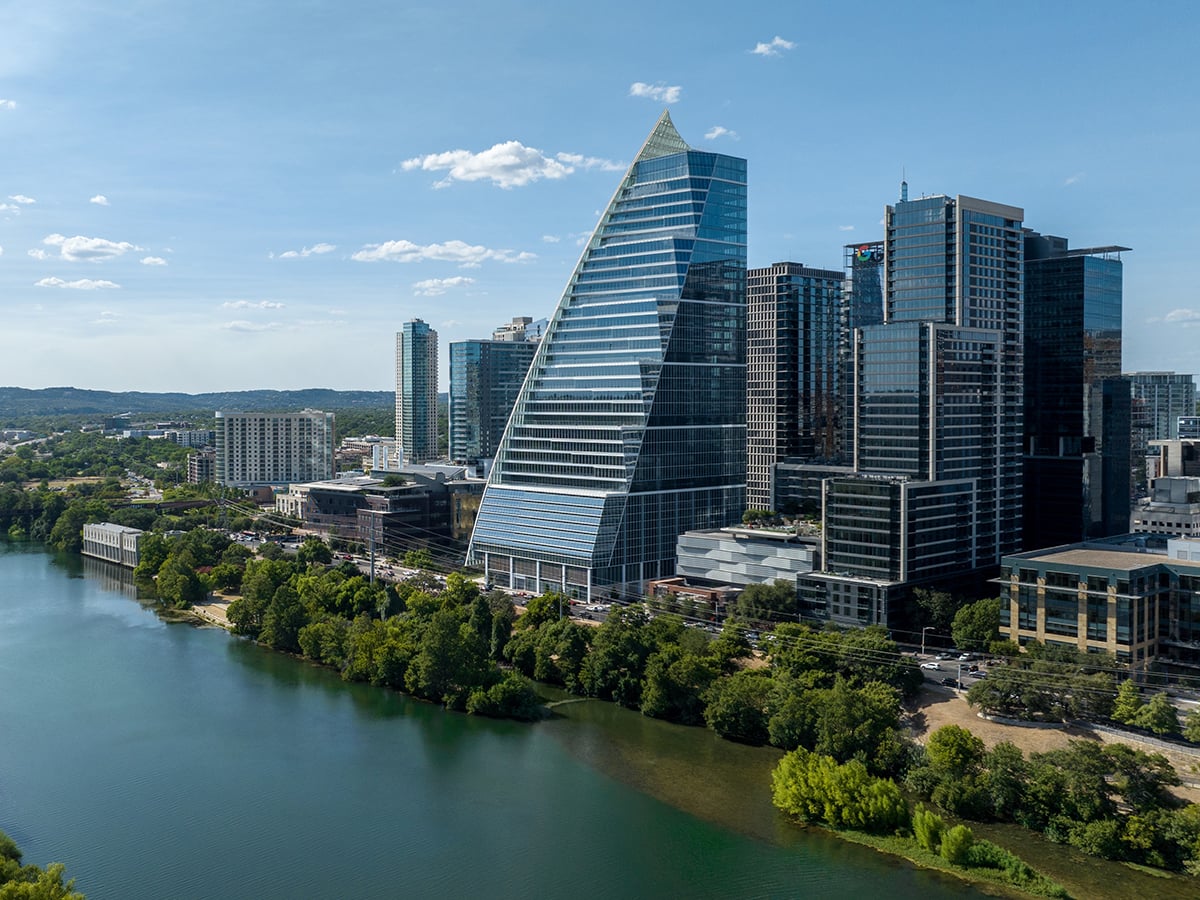
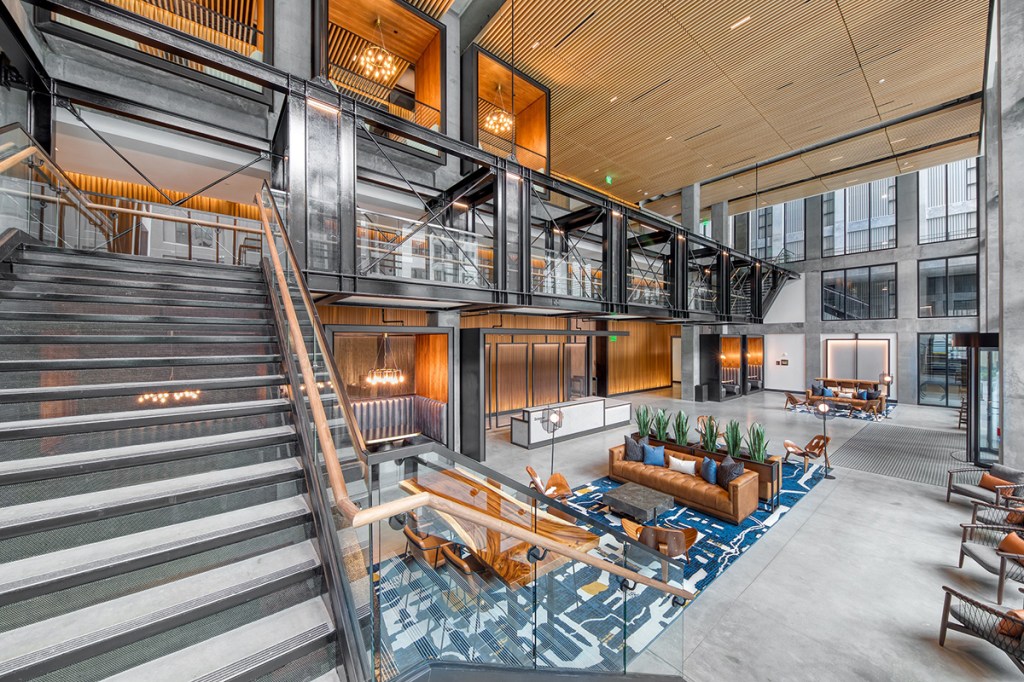
Beyond policy pressures, Nick Moulinet, central region business development leader at DPR Construction, said he’s witnessed Trammell Crow’s technical problem-solving abilities firsthand. DPR has worked with Trammell Crow on several notable projects, including the Indeed Tower in Austin, Texas, which Moulinet said faced complex construction challenges.
“Rather than shutting down atypical ideas, they trusted their partners, listened and worked through proposals collaboratively,” Moulinet noted. “That openness and willingness to consider new solutions is a key part of how we have been successful in solving big problems together.”
But problems can’t always be solved. Trammell Crow, Thuringer said, is not afraid to walk away from a development in the face of shifting market conditions if a deal no longer makes sense—even if it’s been working on securing entitlements or approvals for a year or longer.
Looking ahead
Moving forward, Nims said his goal is not to transform what Trammell Crow does. Instead, he wants to home in more closely on the firm’s strengths and take even further advantage of them.
And of course, the firm is exploring how AI will shift its workflows and allow employees to focus on what Nims called the “high-touch” aspects of their jobs.
“I think we’ll be the same company,” Nims said. “I hope we’ll be bigger, faster (and) stronger in the future, and operate more efficiently, but I don’t see the nature of the company changing tremendously.”
And Trammell Crow will continue to be discerning with the projects it takes on, Thuringer said, using the strengths it has developed over its nearly 80-year history to stand out and propel the firm forward.
“We have long established ourselves as a top-quality developer,” Thuringer said, “not a top-quantity developer.”






You must be logged in to post a comment.